
12 Best Countries to Visit in Africa in 2026
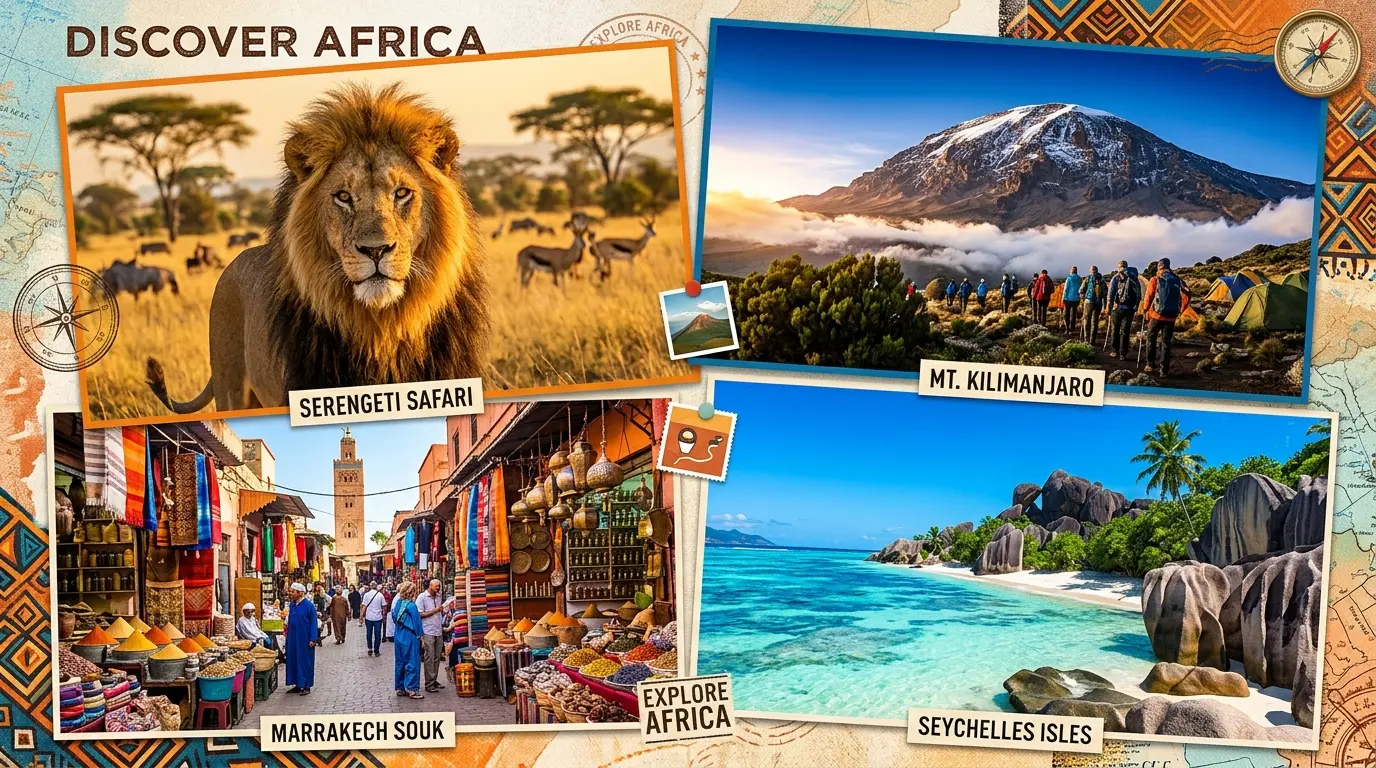
Africa has 54 countries, and the best countries to visit in Africa in 2026 come down to what you want most: wildlife, beaches, history, or value for money. This list ranks 12 destinations, from the easiest first safari to underrated island escapes, using real 2026 pricing, safety scores, and visa rules.
International visitors to Africa grew 8 percent in 2025, reaching roughly 81.3 million arrivals, yet most travelers still only hear about three or four country names. That leaves a lot of safe, affordable destinations completely off the radar. Some countries on this list cost less than $30 a day. Others charge $1,500 for a single afternoon with gorillas, and both belong here for different reasons. Each entry below explains exactly who it fits, what it costs, and why it earned its spot, so you can skip the guesswork and start planning.
How Do I Choose Which African Country To Visit?
Start with what you want to do, not where you’ve heard of. Safari, beach, culture, and budget all point to different countries. Then check three things: your daily budget, the country’s safety ranking, and how hard the visa process is. Skip name recognition and match the experience instead.
- Interest first: safari, beach, culture, or a realistic mix of all three, since very few countries do all three equally well
- Budget range: daily costs run from $10 in Ghana to resort pricing in Mauritius, with East African safaris landing in the middle
- Safety check: compare each country’s Global Peace Index score instead of relying on general assumptions, since the range runs from some of the safest nations on Earth to active conflict zones
- Visa rules: most countries offer an eVisa or visa on arrival, though requirements shift by passport, and some also require proof of yellow fever vaccination
- Timing: June through October is dry season across East and Southern Africa, the best window for game drives, while island destinations run on a different calendar
Here are the 12 picks, ranked from the easiest first-time trip to the most rewarding hidden gem. Book with licensed operators and confirm your visa a few weeks ahead.
1. South Africa: The Easiest First Safari Trip You Can Take
South Africa earns the top spot because it removes the guesswork from a first Africa trip. You get Big Five safari, a major city, and coastline, all without adding a second flight to your itinerary, and English is spoken everywhere you go.
- Delivers reliable Big Five sightings at Kruger National Park and the private Sabi Sand Nature Reserve, where sightings stay strong even outside peak season
- Best for first-timers, families, and couples who want safari and city life in one trip, with malaria-free reserves available for travelers with young kids
- Cape Town rounds out the trip with Table Mountain, wine tasting in the Cape Winelands, and coastal drives along the Garden Route
- Scores 2.347 on the Global Peace Index, backed by well-developed tourism infrastructure, modern airports, and widespread English
2. Kenya: Home Of The Great Wildebeest Migration
Ask any safari guide where modern safari tourism started, and Kenya comes up first. The Great Wildebeest Migration alone is reason enough to put this country near the top of your list, and its safari infrastructure is among the most established on the continent.
- Maasai Mara delivers the famous migration river crossings between July and October, when over a million wildebeest cross the Mara River
- Best for wildlife photographers and first-time safari travelers who want the classic savanna experience without a steep learning curve
- Amboseli pairs massive elephant herds with clear views of Kilimanjaro across the Tanzanian border, while the Lamu Archipelago adds a Swahili coast beach extension
- Budget travelers can manage on roughly $59 a day outside peak season, and the shared East African Tourist Visa simplifies combining Kenya with Rwanda or Uganda
3. Tanzania: Safari And Beach In A Single Trip
Few countries let you trade a dusty safari vehicle for a beach chair in the same week. Tanzania does exactly that, which is why so many honeymooners choose it first, pairing mainland wildlife with an Indian Ocean island finish.
- Serengeti National Park and Ngorongoro Crater cover the bulk of the Great Migration route, alongside Mount Kilimanjaro for travelers who want a trekking challenge
- Best for honeymooners and travelers who want safari and island time without changing countries or booking separate flights
- A short domestic flight connects the mainland to Zanzibar’s Stone Town, a UNESCO-listed old town shaped by Arab, Persian, and African architecture
- Ruaha National Park alone holds close to 10 percent of the world’s wild lion population, making it a serious pick for big cat enthusiasts
4. Morocco: Sahara Desert Adventure On A Real Budget
Morocco proves dramatic scenery doesn’t require a big budget. A full trip here can run $30 to $60 a day and still include camel treks into the dunes, riad stays, and mountain villages along the way.
- Atlas Mountains and Sahara Desert combine trekking, camping, and stargazing in one region, with Erg Chebbi among the most photographed dune fields in Africa
- Best for budget travelers and Europeans wanting a short-haul desert escape, since flights from major European cities often run under four hours
- Marrakech’s souks and centuries-old medinas add culture between outdoor days, from spice markets to tiled palaces
- Visa-free entry for more than 60 nationalities keeps planning simple, with no advance paperwork required for most Western passport holders
5. Egypt: The Cheapest Way To See A Wonder Of The World
Egypt turns a bucket-list trip into a bargain. The Pyramids of Giza remain the only surviving Ancient Wonder still standing, and seeing them, along with the rest of the country, won’t drain your savings.
- Nile River cruises connect Cairo to the temples of Luxor and Aswan, covering thousands of years of ancient history in a single multi-day trip
- Best for history lovers and travelers working with a tighter budget who still want a genuine bucket-list destination
- Pyramid entry costs around $6, with guided tours starting near $15, and dorm beds in Cairo run as low as $7 a night
- Daily budgets run as low as $20 to $25 outside luxury resorts, making Egypt one of the cheapest major destinations in Africa
6. Rwanda: Premium Gorilla Trekking In Africa’s Safest Capital
Rwanda charges more for gorilla trekking than any other country, and travelers pay it anyway. Volcanoes National Park is the reason, along with a capital city that runs cleaner and safer than most capitals in the world.
- A gorilla trekking permit, booked through the Rwanda Development Board, costs $1,500 per person in 2026, though a 30 percent low-season discount applies from November to May
- Best for solo travelers, first-time female travelers, and wildlife bucket-listers who value polish and short travel times between park and airport
- Kigali consistently ranks among Africa’s cleanest, safest capital cities, with plastic bags banned nationwide and corruption actively prosecuted
- Nyungwe Forest adds chimpanzee and golden monkey trekking just a few hours from Volcanoes National Park
7. Botswana: Exclusive Safari Without The Crowds
Botswana chose quality over quantity decades ago, and it still shows. The country limits visitor numbers on purpose, which protects both the wildlife and the experience for everyone who does make the trip.
- Okavango Delta is a UNESCO World Heritage inland delta unlike anywhere else on Earth, best explored by mokoro canoe or light aircraft
- Best for luxury safari travelers and repeat visitors tired of crowded parks and overbooked lodges elsewhere on the continent
- Chobe National Park hosts up to 50,000 elephants during the dry season, one of the densest elephant populations on the continent
- Global Peace Index score of roughly 1.74 makes it Africa’s most stable safari country, with low corruption and well-managed tourism policy
8. Namibia: Self-Drive Desert Landscapes For Independent Travelers
Namibia rewards travelers willing to rent a car and just drive. The country is vast, sparsely populated, and genuinely built for independent exploration, with well-maintained roads connecting its major sights.
- Namib Desert holds some of the tallest sand dunes on the planet, including Dune 45 and the stark white clay pan at Deadvlei
- Best for solo travelers, road-trippers, and photographers who prefer flexibility over a fixed group itinerary and set meal times
- Skeleton Coast shipwrecks and Etosha National Park waterholes reward slower travel, with Swakopmund serving as the adventure-sports base for sandboarding and quad biking
- Namibia’s Global Peace Index ranking improved in 2025, reinforcing its reputation as one of Africa’s safest self-drive destinations
9. Uganda: Gorilla Trekking At Half The Rwanda Price
Uganda offers the same mountain gorillas as Rwanda for nearly half the permit cost. That single fact changes a lot of travel budgets, especially for travelers planning a longer East Africa trip.
- Bwindi Impenetrable Forest gorilla permits, issued by the Uganda Wildlife Authority, cost $800, compared to Rwanda’s $1,500, with a $600 discount in April, May, and November
- Best for budget-conscious travelers who still want a premium wildlife encounter without cutting corners on safety
- Kibale Forest adds chimpanzee trekking for around $250 per permit, often combined with the gorilla trek in one itinerary
- The White Nile begins here, adding whitewater rafting near Jinja to an already packed itinerary
- Queen Elizabeth National Park rounds out the trip with boat safaris and one of Africa’s highest lion densities
10. Zambia: Where The Walking Safari Was Born
Most safaris keep you sitting in a vehicle. Zambia put walking safaris on the map, and South Luangwa National Park is still where it’s done best, guided by some of the most experienced trackers in Africa.
- Kafue National Park offers wide-open floodplains with far fewer visitors than neighboring parks, spanning roughly 22,400 square kilometers
- Best for repeat safari travelers who want a quieter, more hands-on wildlife experience over a scripted game drive
- Victoria Falls is reachable from Zambia with a fraction of the crowds on the Zimbabwe side, plus views from Livingstone Island
- Global Peace Index score of 1.9164 places it among Africa’s most peaceful countries, despite limited tourism infrastructure outside the main parks
11. Ghana: West Africa’s Safest Way In
West Africa rarely makes it onto general Africa travel lists, and that’s a real gap. Ghana closes it as the region’s safest, easiest entry point, especially for English-speaking first-time visitors who want a shorter flight from the US.
- Cape Coast Castle and the Kakum Canopy Walk combine difficult history with rainforest adventure in the same day trip
- Best for culture-focused travelers, first-time West Africa visitors, and remote workers testing out the region
- Mole National Park adds elephant safaris without East Africa’s price tag or the long-haul flight
- Holds a Level 1 U.S. State Department advisory, the safest rating available, and a Global Peace Index score of 1.898
- Accra’s markets, live music, and beaches at Labadi round out a trip that rarely takes more than a nine-hour flight from the US East Coast
12. Mauritius: The Safest Beach Escape On The Continent
Rank every African country by safety, and Mauritius comes out on top. That single fact makes it the easiest luxury beach trip to justify, even for travelers who have never been to Africa before and want a gentle introduction.
- Outranks the UK, Italy, and Sweden on the Global Peace Index, a rare feat for an African destination
- Best for honeymooners and first-time Indian Ocean travelers who want resort comfort with minimal safety planning
- Crime against tourists stays rare and mostly limited to petty theft in busy areas like Port Louis, with beach towns like Grand Baie considered very low risk
- Resort-driven tourism means minimal planning beyond booking flights and a hotel, with May to November as the driest, coolest stretch
Which African Country Fits My Budget And Safety Needs?
Line up your budget, safety priority, and travel style before booking. Comparing the best countries to visit in Africa side by side makes the trade-offs obvious fast. Ghana and Egypt work for tight budgets, Botswana and Mauritius suit bigger ones, and Rwanda, Botswana, and Namibia lead on safety.
| Country | Best For | Daily Budget | Entry | Best Time |
| South Africa | First safari and city | $40-70 | Visa-free for many | May-Sept |
| Kenya | Great Migration | ~$59+ | eVisa | June-Oct |
| Tanzania | Serengeti and Zanzibar | $40-55+ | eVisa | June-Oct |
| Morocco | Sahara and culture | $30-60 | Visa-free for 60+ | Mar-May, Sept-Nov |
| Egypt | History and the Nile | $20-25+ | eVisa or on arrival | Oct-Apr |
| Rwanda | Premium gorillas | $18-39* | eVisa or on arrival | June-Sept, Dec-Feb |
| Botswana | Exclusive safari | Higher-end | Visa-free for many | July-Sept |
| Namibia | Self-drive desert | $40-70 | Visa-free for many | July-Sept |
| Uganda | Budget gorillas | $25-40* | eVisa | June-Sept, Dec-Feb |
| Zambia | Walking safari | $35-50 | eVisa | May-Oct |
| Ghana | Cultural gateway | $10-20 | eVisa | Nov-Mar |
| Mauritius | Luxury beach | Resort-priced | Visa-free for many | May-Nov |
Prices shift with the season, so treat these ranges as a starting point and confirm current rates directly with a licensed operator before booking flights. Southern and East African countries cluster around similar dry-season windows, so pairing two neighboring countries, like Kenya and Tanzania, or Zambia and Botswana, often works better than combining destinations on opposite sides of the continent. Use the table as a quick filter, then check the FAQ below for the questions travelers ask most before they book.
Final Thoughts
South Africa, Kenya, and Tanzania cover the classic safari trip, while Rwanda and Uganda handle gorilla trekking at two different price points. Morocco and Egypt deliver history and desert on a real budget, and Ghana proves West Africa deserves a spot on this list too, alongside emerging picks like Zambia. Confirm your visa and gorilla permit dates early if wildlife trekking is the goal, since both sell out months ahead. These are the best countries to visit in Africa in 2026 based on real pricing, safety scores, and visa rules, not guesswork. Start with the country that matches your budget and interest, then build the rest of the trip around it.
FAQs
Here are the real questions travelers ask before visiting Africa, grouped from beginner to advanced.
Beginner Questions
Q: What is the best country to visit in Africa for a first trip?
South Africa is usually the best first pick because it combines Big Five safari, city life, and coastline in one country. Kenya and Tanzania are strong runners-up if the Great Migration matters more to you than variety.
Q: Is it safe to travel to Africa right now?
Yes, for most popular destinations. Mauritius, Rwanda, Botswana, and Namibia consistently score well on the Global Peace Index. Safety still varies across Africa’s 54 countries, so check advisories for your specific destination instead of treating the whole continent as one place.
Q: How many countries are in Africa?
Africa has 54 recognized countries, making it the second-largest continent after Asia. That range is exactly why “is Africa safe” is the wrong question. Some countries are extremely safe for tourists, while others carry real travel advisories.
Q: Do I need a visa to visit Africa?
It depends on your passport and destination. Morocco is visa-free for more than 60 nationalities, and Rwanda, Kenya, Tanzania, and Uganda offer eVisas or visa on arrival. Confirm requirements directly with the destination country a few weeks before you travel.
Q: What’s the best way to get around Africa between countries?
Most travelers fly between countries using regional carriers like Ethiopian Airlines, Kenya Airways, or RwandAir, since overland distances are usually too large for a short trip. Within a country, safari lodges typically arrange transfers, while cities like Cape Town and Marrakech are easy to navigate by rideshare or taxi.
Q: Is Africa expensive to visit?
It doesn’t have to be. Ghana, Egypt, and Ethiopia can run $20 to $25 a day, while gorilla trekking in Rwanda or a private safari in Botswana can run into the thousands. Africa spans the full budget spectrum, more than almost any other continent.
Intermediate Questions
Q: What is the best time of year to visit Africa?
June through October is dry season across East and Southern Africa, the best window for game drives and gorilla trekking. Beach destinations like Zanzibar and Mauritius are best from May to November. Timing depends on the region and activity you care about most.
Q: How much does a trip to Africa cost per day?
Budget travelers can manage $20 to $50 a day in Egypt, Ghana, Rwanda, or Ethiopia. Mid-range safari trips in Kenya or Tanzania cost more once park fees and game drives are added. Luxury lodges in Botswana or Mauritius run well beyond that.
Q: Is Kenya or Tanzania better for safari?
Kenya has the edge for the Maasai Mara’s river crossings and easier access from Nairobi. Tanzania wins if you want to add Zanzibar’s beaches or Kilimanjaro to the same trip. Many travelers combine both using the shared East African Tourist Visa.
Q: Rwanda or Uganda, which is better for gorilla trekking?
Uganda is cheaper, with an $800 gorilla permit against Rwanda’s $1,500, and its Bwindi terrain is thicker and wilder. Rwanda is faster to reach from Kigali and has more luxury lodges nearby. Pick Uganda for value and Rwanda for convenience.
Q: Can I combine Kenya and Tanzania in one trip?
Yes, and many travelers do exactly that using the shared East African Tourist Visa. A common route pairs the Maasai Mara in Kenya with the Serengeti in Tanzania, following the migration as it crosses the border throughout the year.
Q: Is it better to book an African safari as a package or plan it independently?
Package safaris through licensed operators handle permits, transport, and lodge bookings, which matters most in Rwanda, Uganda, and Botswana, where logistics are complex. Independent self-drive trips work well in South Africa and Namibia, where roads and rental infrastructure are more developed.
Advanced Questions
Q: How much does a gorilla trekking permit cost in 2026?
A gorilla trekking permit costs $800 per person in Uganda, $1,500 in Rwanda, and $400 in the Democratic Republic of Congo for 2026. Uganda also offers a discounted $600 permit during the low season months of April, May, and November.
Q: What is the safest country in Africa to visit?
Mauritius consistently ranks as the safest country in Africa, outranking the UK, Italy, and Sweden on the Global Peace Index. Rwanda and Botswana follow closely behind, both known for low crime and well-managed tourism.
Q: What are the most underrated countries to visit in Africa?
Zambia, Madagascar, São Tomé and Príncipe, Sierra Leone, Cape Verde, and Malawi rarely make mainstream best-country lists despite strong wildlife, culture, or beaches. They offer walking safaris, endemic species, and quiet coastlines with a fraction of the crowds.
Q: Which African countries are visa-free for tourists in 2026?
Morocco, Tunisia, The Gambia, Seychelles, Mauritius, Rwanda, Botswana, and Namibia offer visa-free or visa on arrival entry for many nationalities in 2026. Rules vary sharply by passport, so check your specific country before booking flights.
Q: What vaccinations do I need before visiting Africa?
Requirements vary by country, but yellow fever vaccination is commonly required if you’re arriving from or transiting through a country with risk of transmission. Malaria prevention medication is recommended for most safari regions. Check with a travel clinic six to eight weeks before departure for country-specific guidance.
Q: How far in advance should I book gorilla trekking permits?
Book gorilla trekking permits three to twelve months ahead, especially for the June to September and December to February high seasons. Only 96 permits are issued per day across Rwanda’s Volcanoes National Park, and Uganda limits numbers similarly across its habituated gorilla families.
Q: Can I see mountain gorillas outside of Rwanda and Uganda?
Yes, the Democratic Republic of Congo’s Virunga National Park also offers mountain gorilla trekking at a lower permit cost of around $400. Security conditions in the DRC are less stable than in Rwanda or Uganda, so most travelers still choose one of those two countries instead.
Q: Which African country offers the best value for money on safari?
Zambia and Uganda consistently offer the strongest value, combining real wildlife encounters with lower permit and lodge costs than Kenya, Tanzania, or Botswana. Zambia’s walking safaris and Uganda’s discounted gorilla permits both stretch a safari budget further without cutting the experience short.
Q: What’s the best African country for a honeymoon?
Mauritius and the Seychelles lead for pure beach honeymoons, while Tanzania offers a safari-and-Zanzibar combination that pairs wildlife with beach time in one trip. Rwanda works well for adventurous couples who want gorilla trekking built into the itinerary.
Q: What’s the difference between a Big Five safari and a walking safari?
A Big Five safari uses vehicles to track lion, leopard, elephant, rhino, and buffalo, and it’s the standard in Kenya, Tanzania, and South Africa. A walking safari, pioneered in Zambia, puts you on foot with an armed guide, trading vehicle range for a slower, more sensory wildlife experience.
Q: Do I need to speak French to visit West Africa?
Not in Ghana, which is English-speaking and the easiest West African entry point for that reason. Neighboring countries lean heavily French, so Ghana remains the more comfortable choice for English-only travelers exploring the region for the first time.


