
Babymoon Destinations: The Complete Guide to Where and When to Go

Babymoon destinations range from nearby beach towns to international resorts, with the best options balancing comfort, short flight times, and easy access to good medical care. Most expecting parents travel during the second trimester, once morning sickness has eased but before the third trimester makes long trips uncomfortable.
Picking a destination is the easy part. The harder part is figuring out when it is actually safe to fly, whether you need a doctor’s note, and which countries are worth skipping altogether. This guide walks through both.
What Is a Babymoon
A babymoon is a trip for expecting parents to relax and reconnect before their baby arrives. It can be as simple as a weekend staycation or as elaborate as an international resort stay, and it typically happens during the second trimester when travel feels the most manageable. Many hotels now build entire packages around this trip, with prenatal massage menus, pregnancy safe skincare products, and in room pregnancy pillows becoming standard at resorts that specifically market to expecting couples in 2026.
When Should You Go on a Babymoon
Most expecting parents travel between weeks 20 and 25, right in the middle of the second trimester. Morning sickness has usually faded by this point, energy levels tend to be higher, and the physical discomfort of the third trimester has not set in yet. Locals at destination spas often recommend this exact window for prenatal treatments too, since it is when most guests are comfortable enough to fully relax into a massage table.
What Week of Pregnancy Is Too Late to Fly
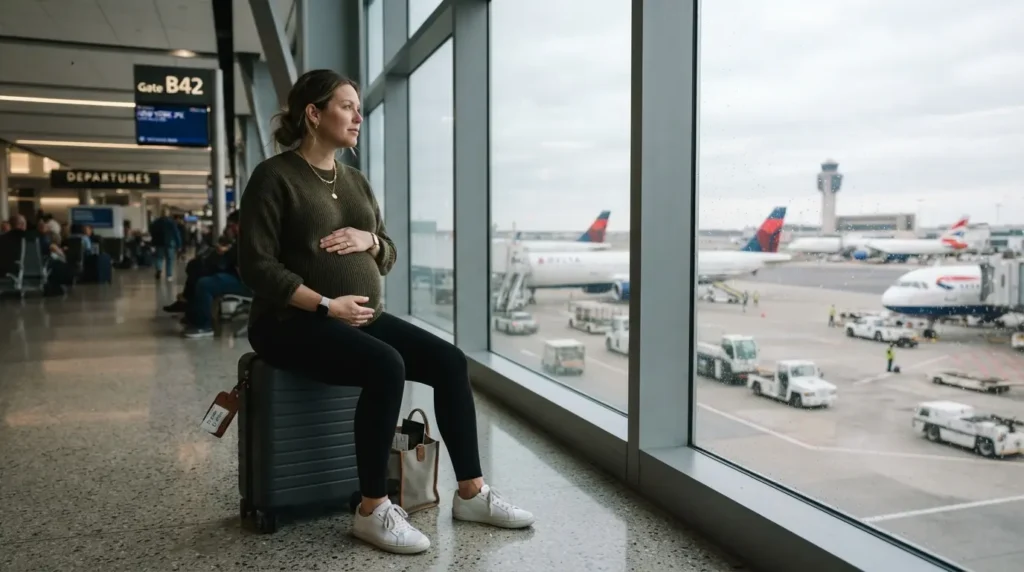
Most airlines require a medical certificate to fly after 28 weeks, and the realistic travel window for babymoon destinations closes around week 36. That said, rules genuinely vary by airline and by whether the flight is domestic or international, so this is not a one size fits all number.
Domestic US carriers are usually more relaxed and rarely ask for documentation before 36 weeks, while many international airlines start requiring a certificate at 28 weeks and stop allowing pregnant passengers to board entirely somewhere between 34 and 36 weeks. A common mistake first timers make is booking a long international flight for late in the second trimester without checking the airline’s specific cutoff first, only to find out at check in that a doctor’s note was required.
Do Airlines Require a Doctor’s Note to Fly Pregnant
Some airlines require a doctor’s note or medical certificate once a traveler passes 28 weeks, particularly on international or long haul routes. Earlier in pregnancy, no documentation is typically needed, though it never hurts to carry a note from your doctor confirming your due date and that you are cleared to travel, just in case an airline agent asks.
What Is the Difference Between a Short Haul and Long Haul Babymoon

Short haul babymoon destinations involve just a few hours in the air and tend to be more comfortable later in pregnancy, since less time sitting means less swelling and lower jet lag risk. Long haul destinations cover greater distances and cross more time zones, which makes them a better fit earlier in the second trimester when energy levels are higher and there is more buffer before any airline cutoff.
Travelers consistently find that anything under about four hours barely disrupts a pregnancy, while flights over eight or nine hours are worth scheduling as early in the second trimester as possible, both for comfort and to leave room in case plans need to shift.
[Comparison Table]
| Haul Type | Flight Length | Best Timing | Example Destinations |
| Short haul | A few hours | Later in second trimester | Cabo, Miami, Amsterdam |
| Medium haul | Five to seven hours | Mid second trimester | Dubai, Morocco |
| Long haul | Ten or more hours | Earlier in second trimester | Bali, Maldives, South Africa |
Should You Get Travel Insurance for a Babymoon
Yes, and it is worth reading the fine print closely. Standard travel insurance policies do not always cover pregnancy related complications or premature labor, so look specifically for a policy that names pregnancy coverage, along with trip cancellation in case your due date shifts or your doctor advises against travel closer to departure. Expect to pay somewhat more for a policy with pregnancy and medical coverage built in compared to a basic trip cancellation plan, though the peace of mind is generally worth the extra cost for anyone flying internationally.
What Countries Should You Avoid for a Babymoon Due to Zika or Malaria
Destinations with active Zika transmission or malaria risk are generally best avoided during pregnancy, since Zika can cause serious birth defects and antimalarial medication is not always considered safe during pregnancy. Countries requiring a yellow fever vaccination for entry, such as parts of sub Saharan Africa, are also worth skipping, since the vaccine itself is not typically recommended during pregnancy.
This does not rule out an entire continent. Popular safari style trips in malaria zones are the main thing to avoid, while cities like Cape Town in South Africa sit outside malaria risk areas and remain a genuinely good babymoon option. Checking your government’s current travel health guidance before booking, and talking to your doctor about your specific destination, is the most reliable way to confirm a country’s status before you commit to flights.
What Are the Best Babymoon Destinations in the US
Top US babymoon destinations span beach, desert, and city settings, so the pick really comes down to what kind of relaxation you want.
- Hawaii, especially Maui, for palm trees, waterfalls, and gentle snorkeling
- San Diego for sunny weather, calm beaches, and easy walkability
- Palm Springs for desert spas and mid century modern hotels
- Charleston, South Carolina for cobblestone streets and boutique hotels
- Sedona, Arizona for red rock views and a slower pace
- Savannah, Georgia for moss draped squares and Southern charm
- Napa Valley for spa treatments and gourmet dining without needing a passport
- Key West, Florida for laid back island vibes and sunset views
- New York City for a city break with easy access to major hospitals
Domestic destinations remove the passport and long flight variables entirely, which is why so many expecting parents default to them, especially for a first pregnancy where nobody is quite sure how travel will feel.
What Are the Best Adults Only Babymoon Resorts
Adults only resorts strip out kids clubs and family programming, which suits couples who want uninterrupted quiet before the baby arrives. Amangiri in Utah sits within 600 acres of the Colorado Plateau and pairs a large spa with slot canyon hikes for anyone who wants some activity alongside relaxation. Post Ranch Inn in Big Sur offers a similar adults only setup on the California coast, with hiking trails, ocean view rooms, and a spa menu built around prenatal treatments.
What Are the Best Family Friendly Babymoon Destinations
For expecting parents who already have a child, family friendly resorts let everyone enjoy the trip at once. Resorts in the Maldives and mainland Greece are popular picks specifically because they run kids clubs for a wide age range, so parents can drop an older child off for a few hours and still get real spa or pool time in as a couple. Worth noting, several of these resorts also have an adults only wing or a sister property nearby, so it is worth asking directly whether that option exists if quiet time matters as much as family time.
What Are the Best International Babymoon Destinations
International babymoon destinations range from cliffside Europe to island Asia, and the right pick usually comes down to pace. The Amalfi Coast in Italy offers dramatic coastal hotels carved into cliffs, with fresh seafood and short flights from most of Europe. Provence in southern France trades coastline for lavender fields and quiet countryside villages, best visited from roughly June through August when the fields are in full bloom.
In Asia, Ubud in Bali is built around wellness, with jungle set hotels, healthy food, and an easy hour long drive from the international airport in Denpasar. Gili Air, just off Bali’s coast, skips cars entirely in favor of horse drawn carriages and quiet beach evenings, though the tradeoff is a longer, multi step journey to actually get there. Dubai offers a shorter flight for travelers coming from Europe or the Middle East, with minimal jet lag and resort spas built specifically around prenatal care.
[Comparison Table]
| Destination | Region | Known For |
| Amalfi Coast | Europe | Cliffside hotels, coastal views |
| Provence | Europe | Lavender fields, quiet countryside |
| Ubud | Asia | Wellness resorts, jungle setting |
| Gili Air | Asia | Car free island, quiet evenings |
| Cape Town | Africa | Zika free coastal city |
| Dubai | Middle East | Short flight, minimal jet lag |
What Are the Best Babymoon Destinations for a City Break
City break babymoon destinations work well for couples who want culture without giving up walkability or access to good hospitals. Amsterdam is genuinely flat and compact, which makes it easy to cover on foot even with swollen feet, and public transport fills in the gaps when walking loses its appeal. Paris rewards slow mornings with pastries and quiet strolls along the Seine, while Singapore stands out in Asia for trustworthy street food and a well developed medical system, both reassuring details for anyone nervous about eating and healthcare access while pregnant.
What Are the Best Babymoon Destinations on a Budget
A budget babymoon usually means staying closer to home rather than booking an international resort. Coastal towns within a few hours’ drive cut out flight costs entirely, and a staycation at a nearby boutique hotel with a spa can deliver much of the same reset without the airline cutoff dates to track. Booking well outside peak season, generally avoiding major holidays and summer weekends, also brings hotel rates down noticeably compared to walking into a resort’s busiest stretch of the year.
Final Thoughts
The best babymoon destinations are the ones that match your comfort level, not just the prettiest photos on a hotel’s website. Short haul options keep travel simple later in pregnancy, while long haul destinations make more sense earlier in the second trimester when there is room to spare before any airline cutoff. Check your airline’s specific rules, confirm your destination is Zika and malaria free, and get travel insurance that actually covers pregnancy before you book anything. Do that groundwork first, and any of the babymoon destinations on this list will deliver exactly the reset you are looking for before life changes for good.
FAQs
What is a babymoon?
A babymoon is a trip for expecting parents to relax and reconnect before their baby is born, usually taken during the second trimester.
When is the best time to go on a babymoon?
The second trimester, generally between weeks 20 and 25, is considered the most comfortable window for travel during pregnancy.
Do you need a doctor’s note to fly pregnant?
Many airlines require a medical certificate after 28 weeks, especially on international or long haul flights, so check directly with your airline before booking.
What countries should be avoided for a babymoon?
Destinations with active Zika or malaria risk, or countries requiring yellow fever vaccination, are generally best avoided during pregnancy.
Should you buy travel insurance for a babymoon?
Yes, look for a policy that specifically covers pregnancy related complications and trip cancellation, not just a standard basic plan


