
Must-Have Travel Essentials for Long Flights: What Actually Works in 2026
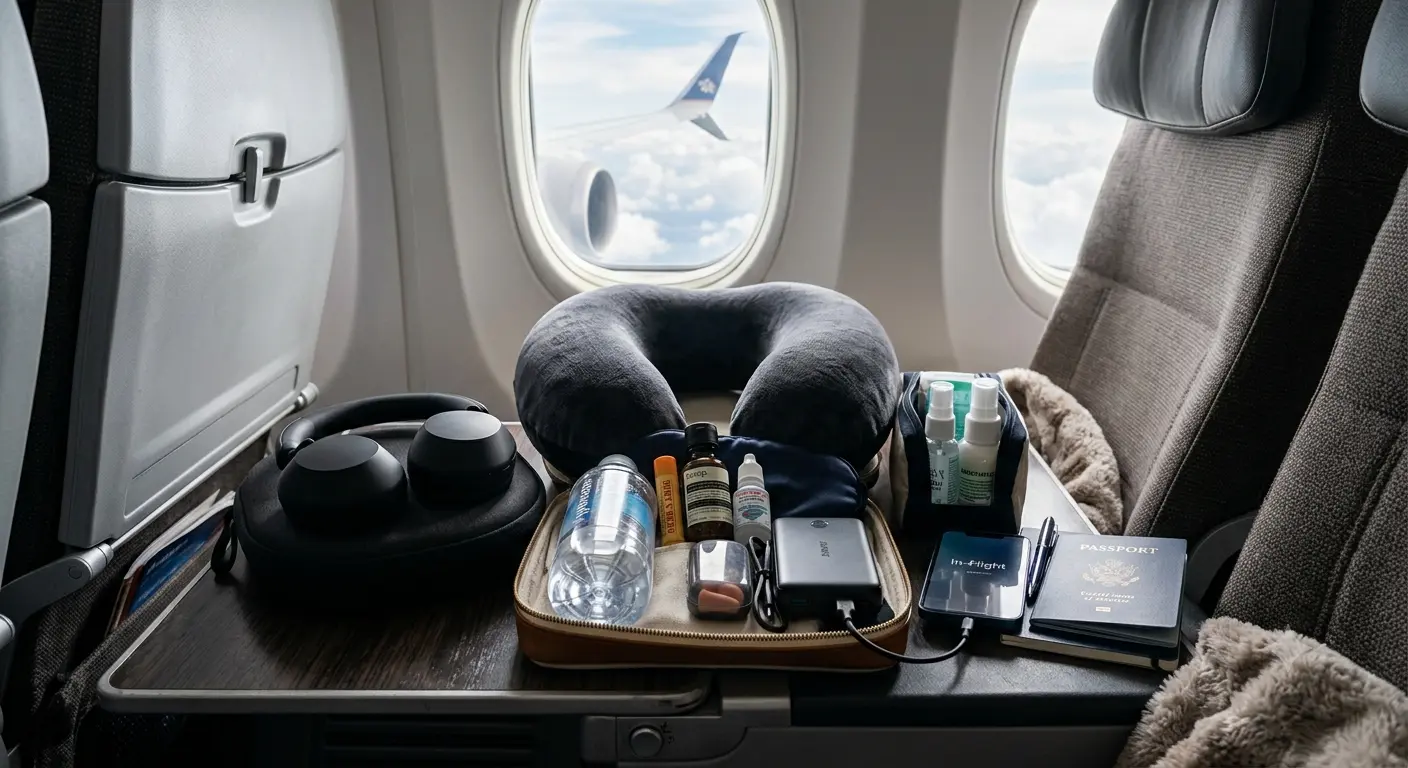
The must-have travel essentials for long flights include noise cancelling headphones, a sleep mask, compression socks, a travel neck pillow, a portable charger, disinfecting wipes, hand sanitizer, lip balm, hand cream and a reusable water bottle. These ten items directly address the biggest long-haul flight complaints: noise, dry skin, poor circulation, dead devices and germ exposure. Everything else is optional.
Most people overpack for long flights and still land feeling terrible. That happens because they bring the wrong things, not too few things. Cabin humidity drops below 20 percent. Noise levels hit 85 to 105 decibels. Your immune system takes a hit from recycled cabin air for hours on end. This guide cuts through the noise and tells you exactly what to bring and why it matters.
Must-Have Travel Essentials for Long Flights: The Core Ten
Before anything else, understand that a long haul flight is any flight over seven hours. But needs shift considerably between a seven-hour crossing and a 20-plus hour ultra-long haul journey. What works for one does not automatically work for the other.
Here is the core kit every long-haul traveller needs regardless of flight length:
- Noise cancelling headphones or earplugs
- Sleep mask
- Travel neck pillow
- Compression socks
- Portable charger
- Disinfecting wipes
- Hand sanitizer
- Lip balm and hand cream
- Reusable water bottle
- Slip-on shoes
Every item on that list solves a specific in-flight problem. Nothing is there for aesthetics.
What Should You Wear on a Long Haul Flight?
Comfortable clothing is not optional on a long flight. It directly determines whether you can sleep, move freely and stay warm when the cabin temperature swings cold.
Wear loose loungewear with four-way stretch. Spanx AirEssentials sets are a top pick because the fabric is lightweight, warm and breathable at the same time. Cashmere joggers and a matching hoodie work beautifully too, particularly on overnight international flights. The key rule is wearing layers you can add or remove easily as cabin temperature fluctuates.
Bring a cashmere travel wrap if your budget allows. The White and Warren cashmere travel wrap doubles as a blanket and a scarf and packs flat. Airline blankets exist on most long-haul flights but they are not always washed between flights. Your own is cleaner and warmer.
For shoes, go with slip-on options. OluKai Pehuea sneakers and On Running Cloud 5 both pass through airport security quickly and come off easily once you are seated. Never board a long flight in tight boots or heavy lace-up shoes.
Do Compression Socks Actually Help on Long Flights?
Yes. This is not a marketing gimmick.
Compression socks apply 15-20mmHg of graduated compression that is strongest at the ankle and eases toward the calf. This actively prevents ankle swelling, reduces deep vein thrombosis risk and keeps blood circulation moving during long periods of sitting. Bombas Merino Wool compression socks and Comrad knee-high compression socks are the two most tested and recommended options for economy class long-haul travel in 2026.
Put them on before boarding. Take them off only after landing. Pair them with travel slippers like Bombas Gripper Slippers inside the cabin so your feet stay comfortable and clean without going barefoot.
How to Build the Best Sleep Setup for Economy Class
Most people buy a neck pillow and a sleep mask and still cannot sleep on a plane. That is because both items need to actually work well individually.
For the sleep mask, the Manta Sleep Mask Pro is the best option available right now. It delivers complete blackout with adjustable velcro straps and detachable eye cups that block every angle of light including from seat back screens and overhead reading lights. The Slip pure silk sleep mask is the better choice for travellers with sensitive skin or contact lens-related eye dryness.
For neck support, the Ostrichpillow Go neck pillow compresses smaller than almost any competitor while offering real softness and head support. The TRTL Pillow Cool uses an internal support structure designed for better head and neck alignment and its breathable material makes it ideal for travellers who run hot in cramped cabins.
For noise blocking, Loop Dream earplugs deliver a 27-decibel noise reduction rating through a closed-loop design that stays in place without the bulk of foam alternatives. If you want to watch in-flight entertainment and block noise simultaneously, pair any wireless headphones with the Twelve South AirFly Pro Bluetooth wireless adapter. It plugs into the seat headphone jack and transmits audio wirelessly to your own headphones with over 25 hours of battery life.
For sleep aid, melatonin gummies timed to the destination time zone are the gentler option that supports natural circadian rhythm adjustment. Diphenhydramine-based sleep aid softgels work better for travellers who genuinely cannot sleep otherwise but carry a grogginess side effect that melatonin avoids.
How to Keep Your Skin Hydrated Mid-Flight
Dry cabin air is one of the most physically uncomfortable parts of any long-haul flight and it starts affecting your skin within the first two hours.
Apply a facial spray every two to three hours throughout the flight. Evian facial spray and Caudalie Beauty Elixir are the two most consistently recommended options among experienced long-haul travellers. Both fit inside a TSA-approved liquids bag in 3.4-ounce containers.
Apply lip balm every hour or two. The dry air at altitude dries lips faster than almost any other environment. Keep it in your front pocket or the seat pocket in front of you rather than in your overhead bag.
Use under-eye patches mid-flight to reduce puffiness. Knesko Diamond Radiance collagen eye masks come individually wrapped and pack easily into a personal item bag.
Before landing, use micellar wipes to clean your face without needing the airplane bathroom sink. Bioderma micellar cleansing wipes work well for this and leave skin refreshed rather than stripped.
How to Keep Your Devices Charged on Any Long Flight
Never rely solely on the USB charging port in your airplane seat. On more than one occasion experienced travellers have found the port at their seat non-functional. Always bring your own power.
The Anker power bank with 10,000mAh capacity and 30W fast charging is the most recommended portable charger for long flights. It charges phones multiple times, handles tablets and earbuds simultaneously and meets FAA regulations for carry-on baggage.
Pack a tech organizer to keep charging cables, your Bluetooth wireless adapter, travel adapter and SD cards in one accessible pouch. The CALPAK Tech Organizer and BAGSMART Electronic Organizer both feature zippered compartments that prevent tangling and make mid-flight charging fast and frustration-free.
Remember to download everything you want to watch or listen to before the flight departs. In-flight Wi-Fi is unreliable and expensive on most long-haul routes. Download podcasts, audiobooks and offline series directly to your device or Kindle Paperwhite before boarding.
Staying Hydrated and Protecting Your Immune System
Staying hydrated on a long flight is more complicated than just drinking water. Cabin humidity below 20 percent means your body loses moisture faster than in almost any other environment.
Bring a reusable water bottle or collapsible water bottle and fill it after clearing airport security. Add Liquid IV electrolyte drink mix to the water for enhanced hydration. The LARQ self-cleaning water bottle uses UV-C light to eliminate bio-contaminants between refills which is particularly useful on very long journeys where you refill multiple times.
For immune protection, wipe the tray table, arm rest, headrest and window shade with disinfecting wipes immediately after sitting down. This is the single highest-impact hygiene action you can take on any flight. Follow it with hand sanitizer. Use Touchland Power Mist hand sanitizer as it sprays rather than gels, giving consistent coverage without over-application.
Recycled cabin air passes through HEPA filters that remove most airborne particles at cruising altitude. The bigger threat to your immune system is the nasal dryness caused by low cabin humidity which creates entry points for viruses. Keep nasal passages moist with saline nasal spray throughout any flight over ten hours.
How to Manage Jet Lag After a Long Haul Flight
Start adjusting your sleep schedule toward the destination time zone two days before departure. On the flight itself, use your sleep mask and earplugs during the destination night-time window regardless of what time it is where you departed from.
The Fount FlyKitt system is the most advanced jet lag management tool available in 2026. Developed using research from Navy SEALs and fighter pilots, it combines custom colour-coded supplements, glasses that block 99 percent of circadian-disrupting light wavelengths and a smart app that builds a personalised plan for when to sleep, eat, take supplements and block blue light based on your specific flight schedule.
For a simpler approach, melatonin gummies timed correctly and a quality sleep mask get you most of the way there at a fraction of the cost.
How to Organize Your Carry-On for a Long Flight
Pack your carry-on with intention before you get to the airport.
Use compression packing cubes to separate clothing, toiletries and electronics. Place your sleep mask, melatonin gummies, earplugs and lip balm in an external pocket before boarding so you never need to dig through your bag mid-flight with a sleeping neighbour beside you.
Keep your passport holder with RFID wallet protection in an easy-access pocket throughout the journey. Attach an Apple AirTag or Tile Pro luggage tracker to your carry-on suitcase even when keeping it overhead to locate it immediately if your bag gets moved during the flight.
Away carry-on suitcases and Calpak Luka duffel bags are the two most consistently recommended luggage options for international long-haul travel based on size compliance, durability and organisational features.
Final Thoughts
Getting the right travel essentials for long flights before you board makes a measurable difference in how you feel when you land. Compression socks protect your circulation. A proper sleep mask actually blocks light. Disinfecting wipes reduce your real germ exposure. And a power bank with genuine capacity keeps your phone alive when the seat port fails. The ten core items in this guide solve specific problems in specific ways. Pack them every time, regardless of airline, class or destination, and you will arrive meaningfully better than you left.
FAQs
What are the most important things to bring on a 10+ hour flight?
Pack noise cancelling headphones, a sleep mask, compression socks, a travel neck pillow, a portable charger, disinfecting wipes, hand sanitizer, lip balm, hand cream and a reusable water bottle. These directly solve the most common long-haul flight problems: noise, dryness, swelling, dead devices and germ exposure.
Do compression socks really help on long flights?
Yes. Compression socks at 15-20mmHg prevent ankle swelling, reduce deep vein thrombosis risk and maintain blood circulation during long periods of sitting. Bombas and Comrad are the two most comfortable tested options for economy class travel.
How do I sleep on a plane in economy class?
Use a sleep mask for full light blocking, earplugs or noise cancelling headphones to reduce cabin noise, a memory foam travel pillow for neck support and melatonin gummies timed to your destination time zone. Wearing cozy joggers and travel slippers significantly improves the ability to fall asleep.
Can I bring a portable charger on a long flight?
Yes. Power banks up to 100Wh are allowed in carry-on bags under FAA regulations but must never go in checked luggage. The Anker power bank at 10,000mAh meets all airline requirements and is the most commonly used capacity for long haul journeys.
What is the TSA 3.4-ounce rule for carry-on liquids?
All liquids and gels in your carry-on must be in containers of 3.4 ounces or less and placed in a clear TSA-approved liquids bag. This applies to facial spray, hand sanitizer in liquid form, hand cream and any other fluid-based skincare product.
How do I keep my skin from drying out on a long flight?
Apply facial spray every two to three hours, use lip balm regularly and keep hand cream accessible throughout the flight. Apply under-eye patches mid-flight and use micellar wipes before landing to counter the effects of dry cabin air without needing the airplane bathroom.
How do I connect wireless headphones to airplane in-flight entertainment?
Use the Twelve South AirFly Pro Bluetooth wireless adapter, which plugs into the seat headphone jack and transmits audio wirelessly to your headphones or AirPods Pro with over 25 hours of battery life. It includes an adapter for the two-prong system used on most international airlines.

