Best Foods in Singapore: Hawker Dishes and Where to Eat Them
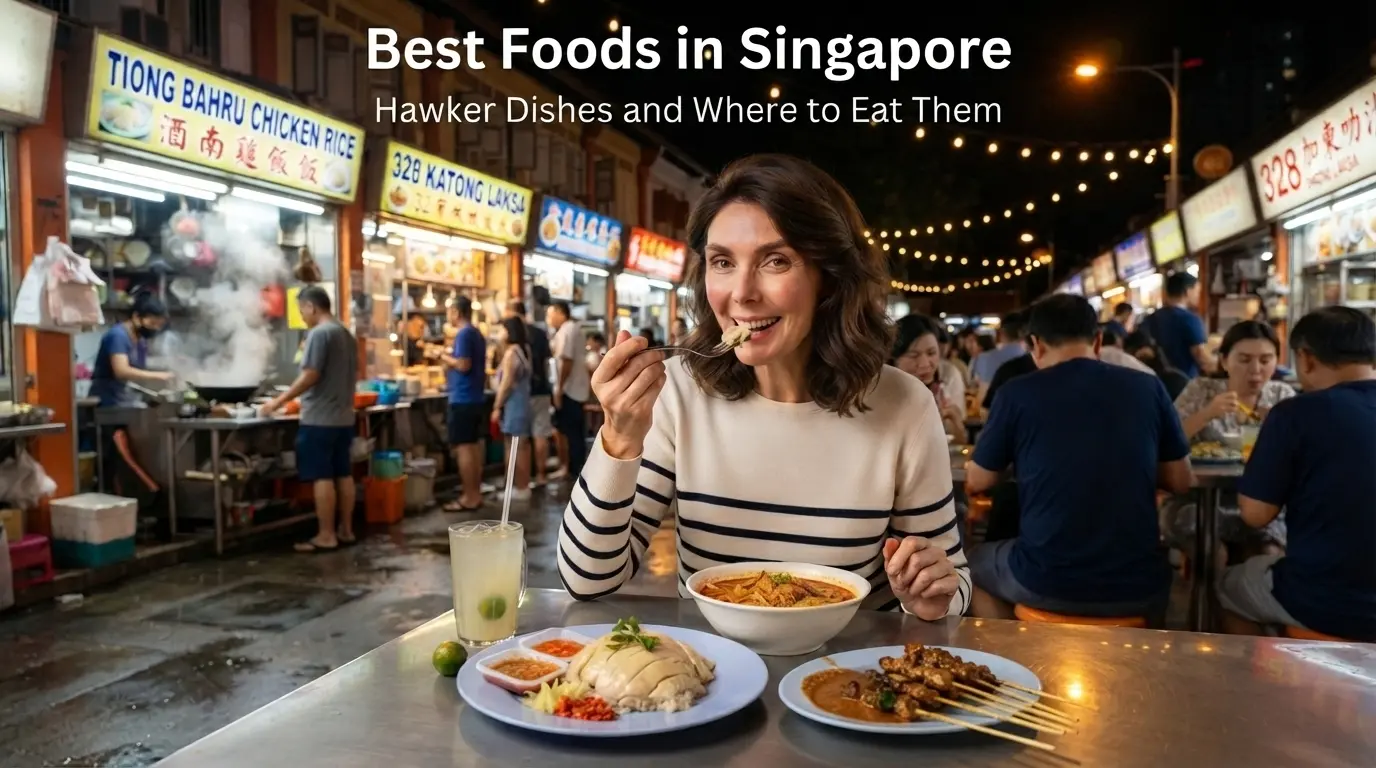
The best foods in Singapore include chicken rice, chili crab, laksa, char kway teow, and kaya toast, spanning hawker centres, kopitiams, and zi char restaurants that blend Chinese, Malay, and Indian influences into dishes found nowhere else quite the same way. With hundreds of hawker stalls scattered across dozens of food centres, deciding what to actually eat first can feel more overwhelming than the food itself.
What Is Singapore’s National Dish?
Chicken rice, sometimes called Hainanese chicken rice, is widely considered Singapore’s national dish, built from simply poached chicken served over rice cooked in the same chicken broth. Nearly every Singaporean has a favorite version, and the differences come down to how oily the rice is, how firm the chicken texture stays, and how much ginger, chili, or garlic goes into the accompanying sauces. Tian Tian Chicken Rice at Maxwell Food Centre consistently draws the longest lines and the most tourist attention, though travelers who’ve tried both note the chicken there can run softer and oilier than expected, while the rice itself earns near universal praise for its garlic and broth fragrance. A common mistake first timers make is assuming the single most famous stall is automatically the best, when regulars often point instead to quieter neighborhood spots like Yet Con on Purvis Street or Hup Hong at Yuhua Village for a firmer, less oily chicken.
What Should You Eat for Breakfast in Singapore?
Kaya toast, soft boiled eggs, and a cup of local coffee form the classic Singapore breakfast, best eaten at an old school kopitiam rather than a modern cafe. Kaya, a spreadable jam made from coconut cream, sugar, and pandan leaf, gets slathered onto charcoal toasted bread, while the eggs are cracked into a small dish and seasoned with a splash of soy sauce and a dash of white pepper. Chin Mee Chin Confectionery in the historic Katong area has served this exact combination since 1925, with tiles and furniture that look largely unchanged since opening, while Tong Ah Kopitiam near Outram Park MRT offers a butter heavy, crispier version of the same toast alongside a full zi char menu for later in the day. Expect to pay somewhere around $3 to $8 for a full breakfast set for one or two people, making it one of the most affordable ways to start a day of eating.
What Is the Best Chicken Rice in Singapore?
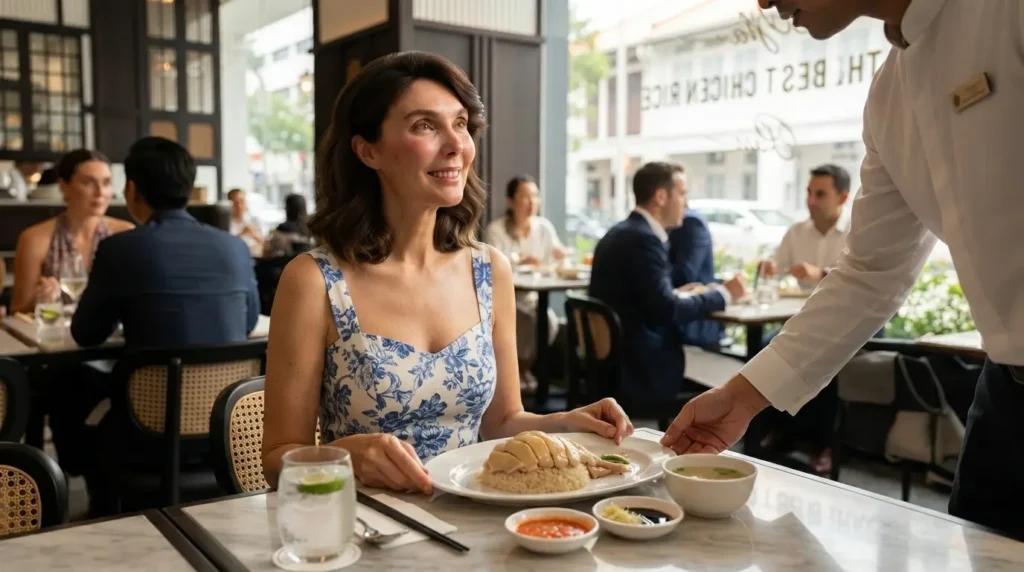
Beyond Tian Tian, several other stalls consistently earn strong recommendations from locals rather than just tourists. Yet Con, an old school Hainanese restaurant near City Hall, serves boiled chicken with pureed ginger and a sour spicy sauce that travelers describe as some of the best textured, least oily chicken in the city, though a half chicken here runs noticeably higher than hawker centre prices. Hup Hong Chicken Rice at Yuhua Village Market specializes in a roasted version instead of the standard boiled style, with a firm, silky texture and garlicky sauce that draws a loyal neighborhood following at hawker centre prices well under $5 a plate. Choosing between boiled and roasted styles really comes down to preference, since both represent legitimate, well regarded takes on the same national dish.
What Are the Best Noodle Dishes in Singapore?
| Dish | Style | What to Expect |
| Hokkien mee | Fried yellow and rice noodles | Seafood, egg, calamansi squeeze for citrus contrast |
| Char kway teow | Fried flat rice noodles | Dark soy sauce, egg, Chinese sausage, slightly sweet |
| Bak chor mee | Minced pork noodles | Vinegar, chili, dry with broth on the side |
| Wanton mee | Egg noodles with dumplings | Char siu, blanched greens, minced pork dumplings |
| Laksa | Rice noodles in curry broth | Coconut milk, cockles, sambal chili |
Hokkien mee and char kway teow both fall into the fried noodle category but taste genuinely different, with hokkien mee leaning saucier and more seafood forward while char kway teow carries a sweeter, smokier wok hei flavor from the sausage and dark soy. Bak chor mee, generally regarded as a genuinely Singaporean invention rather than an import, gets its distinctive character from a vinegar and chili sauce that coats the noodles before eating, and stalls like Hill Street Tai Hwa Pork Noodles have built decades long reputations, with wait times that can stretch past an hour during peak periods despite occasional lucky short queues on quieter weekday afternoons. Laksa stands apart from the others with its rich, coconut based curry broth, and heritage stalls like Sungei Road Laksa serve a genuinely mild, almost chowder like version compared to spicier interpretations found elsewhere.
What Is Peranakan Food?
Peranakan food comes from a community with Chinese, Malay, and sometimes Western heritage rooted in the Straits of Malacca, and it’s widely considered one of Singapore’s most distinctive cuisines. Dishes lean heavily on chili, curry pastes, shrimp paste, and local vegetables, with recipes often passed down through specific families rather than standardized across restaurants. Babi buah keluak, pork curried with a native Indonesian nut that must be buried and washed for weeks before it’s safe to eat, stands out as one of the cuisine’s most labor intensive and distinctive dishes. Katong and Joo Chiat remain the neighborhoods most closely associated with Peranakan food and traditional kueh makers, making that part of the city the natural place to seek it out.
Which Neighborhood Has the Best Food in Singapore?
| Neighborhood | Known For |
| Little India | Fish head curry, dosa, biryani, chapati |
| Katong-Joo Chiat | Peranakan food, kueh, kaya toast heritage shops |
| Kampong Gelam | Malay food, murtabak, near Sultan Mosque |
| Chinatown | Zi char, roast meat, claypot rice, wanton noodles |
Little India anchors the city’s Subcontinental food scene, with fish head curry restaurants and biryani stalls clustered within walking distance of Little India MRT station. Katong-Joo Chiat carries the strongest Peranakan identity, home to both heritage kopitiams and kueh makers preserving traditional sweets. Kampong Gelam, centered around the striking Sultan Mosque, delivers spicy Malay influenced food including some of the city’s most famous murtabak stalls. Chinatown ties the whole picture together with its density of zi char restaurants and hawker centres serving everything from roast duck to claypot rice.
How Do You Choose a Reputable Durian Seller in Singapore?
Durian carries a real reputation for scams, with certain sellers known for passing off lower grade fruit at premium prices, so sticking to an established, reputable stall matters more here than with almost any other Singapore food. Mao Shan Wang, also called Cat Mountain King, ranks among the most prized cultivars, typically running around $20 per kilogram at trustworthy sellers, and a small 2 kilogram fruit can total over $30. Combat Durian on Balestier Road has built its reputation over years specifically on trustworthiness, a genuinely important factor when a single fruit represents a real financial commitment. Locals recommend buying from sellers with visible foot traffic and a long standing presence rather than pop-up stalls that appear only during peak durian season, since reputation here directly correlates with getting what you actually paid for.
What Is the Best Seafood to Eat in Singapore?
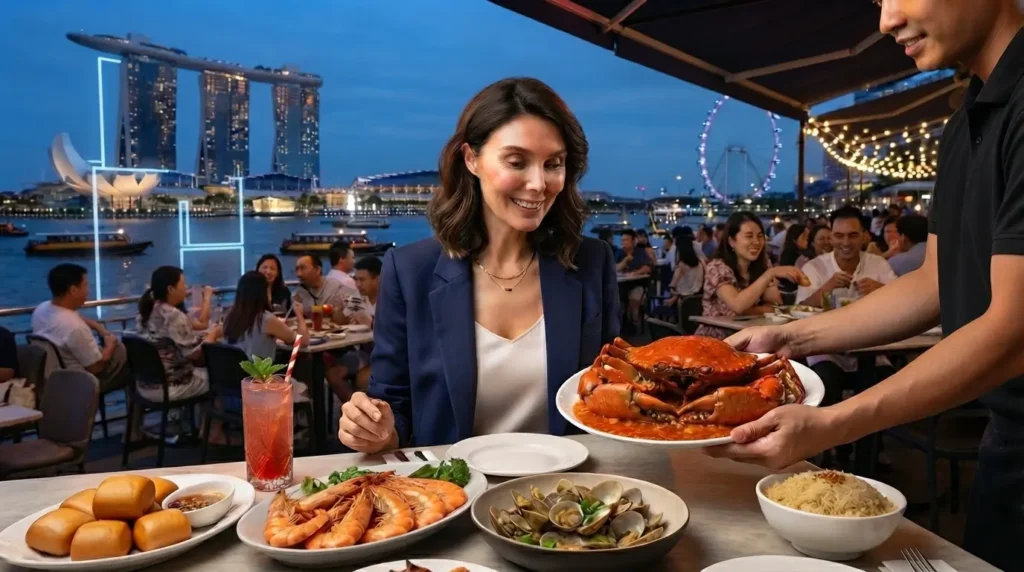
Chili crab and black pepper crab both rank among Singapore’s most iconic dishes, and despite the name, chili crab isn’t actually very spicy, leaning instead into a sweet, tangy, egg thickened sauce built around chilies more for fragrance than heat. Black pepper crab takes a drier, butter and cracked pepper approach that offers a sharper, more savory contrast to the crab’s natural sweetness. Long Beach Seafood and Eng Seng Restaurant both carry strong reputations for their versions, though eating crab in Singapore isn’t cheap, with a full meal easily running $80 to $100 or more per person depending on crab size and how many additional dishes you order. Sambal stingray offers a genuinely different and more affordable seafood option, grilled in a banana leaf with chili sambal at open air spots like Chomp Chomp Food Centre, typically running $10 to $15 for a generous portion.
What Is the Difference Between Hawker Food and Zi Char in Singapore?
Hawker food refers to dishes served at individual stalls within a hawker centre, typically specializing in just one or two dishes, ordered and eaten quickly at communal tables. Zi char, by contrast, refers to full sit down Chinese restaurants with a large stir fry and wok cooked menu, meant to be ordered family style and shared across a table. A hawker meal typically runs $3 to $10 per person, while a proper zi char dinner for two or more people, ordering several dishes to share, often lands between $30 and $50 total. Both represent completely legitimate ways to eat well in Singapore, and most visitors end up doing both across a single trip, hawker food for quick, cheap meals and zi char for a slower, more social dinner.
What Is the Best Time to Visit a Hawker Centre to Avoid Queues?
Timing matters enormously at Singapore’s most famous stalls, where the exact same queue can take five minutes on one visit and well over an hour on another. Arriving right when a stall opens, or during an off-peak window like mid-afternoon between lunch and dinner rushes, consistently produces shorter waits than arriving at the traditional noon or evening meal times. Weekday visits also tend to run shorter than weekends, when local families and tourists both converge on the same well known names. For genuinely famous stalls with long standing reputations, building in extra time or accepting the wait as part of the experience is often the more realistic approach than hoping to beat the crowd entirely.
What Should You Eat for Dessert in Singapore?
Ice kacang anchors Singapore’s dessert scene, a tower of finely shaved ice built over jellies and red beans, then doused in syrup, condensed milk, and sweet corn, with the best versions shaving ice so fine it feels closer to soft serve than a snow cone. Kueh dadar, vibrant pandan colored crepes rolled around a sweet coconut and palm sugar filling, offers a lighter, snack sized alternative found throughout Peranakan focused neighborhoods. And while it requires no cooking at all, durian deserves mention as practically its own dessert category in Singapore, treated by many locals as a legitimate meal rather than a mere snack.
Final Thoughts
Eating your way through the best foods in Singapore rewards a grazing approach over trying to find one perfect meal. Mix a hawker centre lunch with a proper zi char dinner, build in extra time for the famous stalls with real queues, and don’t skip durian just because of the smell, since a good Mao Shan Wang from a reputable seller genuinely earns its reputation. Whether it’s chicken rice at a quiet neighborhood stall or chili crab at a proper seafood restaurant, the best foods in Singapore consistently reward travelers willing to eat like a local rather than chase a single famous name.
FAQs
Is Singapore food spicy?
It varies widely by dish. Sambal based foods like stingray and rojak carry real heat, while dishes like chicken rice and chili crab stay mild despite their names, so first timers can generally ease into the spice level rather than avoiding it entirely.
Is chili crab actually spicy?
No, despite the name, chili crab leans sweet and tangy rather than hot, with the chilies contributing more fragrance and color to the thick egg based sauce than actual heat.
What is kaya toast?
Kaya toast is charcoal toasted bread spread with a sweet coconut and pandan jam called kaya, traditionally eaten alongside soft boiled eggs and coffee at an old school kopitiam for breakfast.
What is nasi lemak?
Nasi lemak is coconut milk cooked rice served with sambal chili, fried anchovies, and a choice of sides like fried chicken, egg, or curry, traditionally eaten for breakfast but common throughout the day.