
Things to Do in Salzburg, Austria: A Complete 2026 Guide
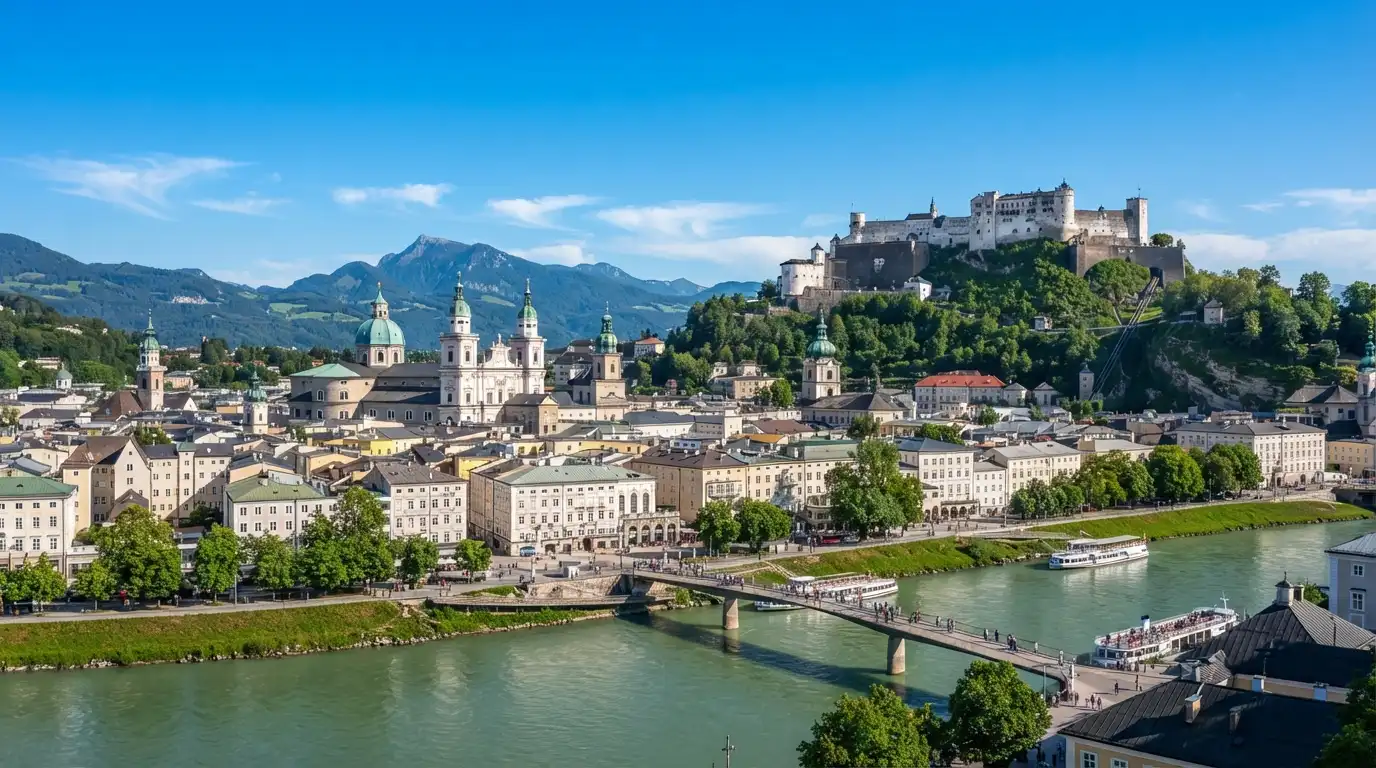
The best things to do in Salzburg include exploring the Old Town, touring Hohensalzburg Fortress, visiting Mozart’s Birthplace, and walking through Mirabell Palace and Gardens. Salzburg packs an enormous amount of history into a small, walkable city split by the Salzach River.
Most visitors arrive expecting little more than a photo stop before Vienna or Munich, and that is the biggest mistake first timers make. Salzburg rewards a slower pace, though it also has real downsides worth knowing before you plan around it.
What Is Salzburg Known For?
Salzburg is known as the birthplace of Wolfgang Amadeus Mozart and the setting for The Sound of Music, but its real draw is the Old Town itself. The Altstadt is a UNESCO World Heritage Site packed with Baroque architecture, domed churches, and cobblestone streets that split neatly between the medieval and the musical. Hohensalzburg Fortress watches over all of it from a hill above the Salzach River.
Is Salzburg Worth Visiting?
Yes, though it helps to manage expectations. Travelers consistently find Salzburg genuinely charming for an afternoon or a full day, with plenty of architecture, food, and music to fill the time. Some visitors, however, come away feeling underwhelmed compared to grander European cities, especially if they expected a full week’s worth of attractions. The honest answer is that Salzburg earns a spot on an itinerary, just maybe not the anchor of one.
How Do I Get to Salzburg?
Salzburg sits close enough to several major cities that getting there rarely requires much planning. The train from Munich takes about 1.5 to 2 hours, and the ride from Vienna runs closer to 2.5 to 3 hours. Salzburg also has its own airport with direct flights from several European hubs.
Coming from Berchtesgaden in Germany takes a scenic 30 minute drive across the border, making it one of the easiest day trip combinations in the region. Locals recommend booking train tickets in advance during summer, since prices climb and seats fill fast around the Salzburg Festival in July and August.
Is the Salzburg Card Worth It?
It depends on how many paid attractions you plan to see. The Salzburg Card costs around 35 euros for 24 hours in low season and closer to 38 euros in high season for 2026, with 48 and 72 hour options also available. The card covers free entry to Hohensalzburg Fortress, Hellbrunn Palace, the Museum of Modern Art, and free public transportation for its duration.
A common mistake first timers make is buying the card without doing the math first. If you’re planning to visit three or more paid sights in a day, the card usually pays for itself. If you only want to wander the Old Town and grab coffee, skip it and pay a la carte instead.
What Should I See in Salzburg’s Old Town?
The Altstadt centers on Getreidegasse, Salzburg’s famous shopping street lined with wrought iron guild signs and narrow passageways called through-houses that connect to parallel streets. From there, the squares of Residenzplatz and Mozartplatz open up around Salzburg Cathedral, consecrated in 1628 and one of the earliest Italian Baroque churches north of the Alps.
The DomQuartier museum complex ties several of these buildings together, giving access to the former prince-archbishop’s residence and connecting galleries in one ticket.
Is Mozart’s Birthplace Worth Visiting?
Mozart’s Birthplace, located on Getreidegasse where the composer was born in 1756, costs around 15 euros for adults and includes original instruments, family portraits, and letters. Some travelers find it one of the more overhyped stops in the city and choose to simply photograph the bright yellow exterior instead. If you’re a genuine Mozart fan, the exhibits inside add real context, but casual visitors can safely skip the ticket line.
What’s in Kapitelplatz and Residenzplatz?
Kapitelplatz sits just behind the Cathedral and holds a giant golden sphere sculpture with a man balanced on top, plus a life size chessboard where locals play in good weather. Residenzplatz, the larger square nearby, is framed by the Residenz palace and the Neue Residenz, whose glockenspiel bell tower chimes on the hour.
Is Hohensalzburg Fortress Worth It?
Hohensalzburg Fortress dates back to 1077 and is the largest fully preserved castle in Central Europe, so yes, it earns its spot on nearly every list of things to do in Salzburg. You can reach it by the funicular for around 3.40 euros one way or 4.80 euros round trip, or walk up in about 15 to 20 minutes if you don’t mind a steep incline.
The views from the fortress walls over the Old Town and surrounding Alps are the real reason to visit. The interior museums get more mixed reviews, with the armory room generally considered the most interesting exhibit and several other rooms feeling sparse. Wear supportive shoes since the walk includes stairs, gravel, and uneven cobblestone in places.
What Is the Mönchsberg Walk?
The Mönchsberg Walk is a wooded path along the ridgeline connecting Hohensalzburg Fortress to the Museum of Modern Art, running about 1.1 kilometers and taking roughly 20 to 30 minutes at an easy pace. It passes old city walls and watchtowers, and travelers who take this route instead of the funicular often say it delivers some of the best photo opportunities in the city, minus the crowds.
Are Mirabell Palace and Gardens Worth Visiting?
Mirabell Palace, built as a summer residence in 1606, and its gardens, opened to the public since 1850, are free to visit and worth the short walk across the river from Old Town. The Marble Hall inside hosts regular classical concerts, and the gardens themselves offer some of the best framed views back toward Hohensalzburg Fortress.
Opinions split here more than almost anywhere else in the city. Some travelers call it an unmissable highlight, while others find it pleasant but not essential, especially if time is tight. Either way, it costs nothing to walk through, which makes it an easy stop to fit in.
What Sound of Music Filming Locations Can I Visit in Salzburg?
Fans of the film have several real locations to track down without needing a formal tour. Nonnberg Abbey, where the real life Maria was a novice, still hosts daily mass and can be viewed from outside. Mirabell Gardens hosted much of the Do Re Mi scene, and the gazebo from Sixteen Going on Seventeen now sits inside Hellbrunn Palace’s grounds after being relocated from its original filming spot at Leopoldskron Schloss.
Guided Sound of Music tours typically run about 4 hours and add stops in the Salzkammergut Lake District, but a self guided walk covers the in town locations for free.
Should I Visit Hellbrunn Palace and Its Trick Fountains?
Hellbrunn Palace, built in the early 1600s as a pleasure palace for the prince-archbishops, is worth the roughly 20 minute bus ride from downtown, especially between April and November when the trick fountains actually run. The fountains use hidden jets and pressure tricks originally designed to soak unsuspecting dinner guests while the archbishop stayed dry, and the guided tour still catches most visitors off guard today.
Beyond the fountains, the grounds include walking trails, a small zoo nearby, and the relocated Sound of Music gazebo, making it an easy half day addition if you’re staying more than one night.
What Are the Best Day Trips from Salzburg?
Salzburg sits close to enough scenery that day trips are a common addition to any itinerary. The Salzkammergut Lake District, including Lake Fuschl and Lake Wolfgang, is reachable by car in 30 to 50 minutes and offers lakeside towns like St. Wolfgang for a slower afternoon.
Hallstatt, the postcard perfect alpine village, is farther away and better suited to an overnight stay than a rushed day trip, since the town gets genuinely overrun during peak season. Eagle’s Nest, Hitler’s former mountain retreat near Berchtesgaden, sits at 1,834 meters and requires a special bus plus a 41 second elevator ride, rewarding visitors with some of the best panoramic Alps views in the region on a clear day.
Where Should I Eat and Drink in Salzburg?
Salzburg’s food scene leans traditional Austrian, and a few dishes show up again and again. Apfelstrudel, widely considered Austria’s national dessert, pairs well with a coffee at Café Tomaselli, which has operated since 1700 and claims the title of oldest coffee house in the country. Wiener Schnitzel, a thin breaded veal cutlet, appears on nearly every traditional menu, and Salzburger Nockerl, a sweet soufflé shaped into three peaks representing the mountains around the city, is a dessert unique to Salzburg itself.
For something more historic, Stiftskeller St. Peter claims to be the oldest restaurant in Europe, with records suggesting Charlemagne dined there in 803. For beer, Augustiner Bräu Kloster Mülln has brewed on site since 1621 and serves it in massive stone mugs inside a converted monastery hall, a genuinely local experience worth the slight walk outside downtown. Expect a sit down dinner in Salzburg to run 20 to 35 euros per person at a mid range restaurant, with cafes and quick bites landing closer to 10 to 15 euros.
How Walkable Is Salzburg?
Very. Most of the Old Town’s major sights sit within a 20 to 30 minute walk of each other, and the compact layout means a car adds little value in the city center. Reaching Hellbrunn Palace or Hangar-7 near the airport is easier by bus or taxi, but everything above within the Altstadt is comfortably done on foot.
How Many Days Do You Need in Salzburg?
One full day covers the core highlights: the Old Town, Hohensalzburg Fortress, and Mirabell Gardens. Two to three days allow time to add Hellbrunn Palace, a proper day trip to the lake district, and a slower pace overall without rushing between stops. Travelers combining Salzburg with Munich or Vienna often treat it as a one or two night stop rather than a full week destination.
Is Salzburg Worth Visiting in Winter?
Yes, and for a different reason than summer. Salzburg’s Christmas markets have run for more than 500 years, making them among the oldest in Europe, and they typically open in late November and close shortly after Christmas. Winter highs average a chilly 3 to 6 degrees Celsius, or 37 to 42 degrees Fahrenheit, with around 9 hours of daylight, so dress in layers and plan daytime sightseeing accordingly. Locals recommend visiting the markets both during the day for easier photos and at night for the full festive atmosphere with mulled wine in hand.
Final Thoughts
Salzburg rewards travelers who treat it as a rich, walkable city rather than a quick photo stop before somewhere bigger. Between the fortress views, the Mozart history, and a proper Apfelstrudel at Café Tomaselli, there are enough real things to do in Salzburg to fill a satisfying day or two without feeling rushed. Plan your Salzburg Card purchase around your itinerary, book fortress and train tickets ahead in summer, and give the city time to earn its reputation rather than just passing through.
FAQs
Is Salzburg worth a day trip?
Yes, Salzburg’s compact Old Town, Hohensalzburg Fortress, and Mirabell Gardens can realistically be covered in a single day, especially from nearby Berchtesgaden or Munich.
Is the Salzburg Card worth it?
It’s worth it if you plan to visit three or more paid attractions in a day, since the card’s flat rate usually beats paying for individual tickets plus transport.
How many days do you need in Salzburg?
One day covers the highlights, while two to three days allow time for Hellbrunn Palace, day trips, and a more relaxed pace.
What is the best travel experience in Salzburg?
Most visitors point to the funicular ride up to Hohensalzburg Fortress for the panoramic views, followed closely by a walk through Mirabell Gardens at golden hour.


