Tourist Places in Varanasi: Ghats, Temples and Practical Guide for 2026
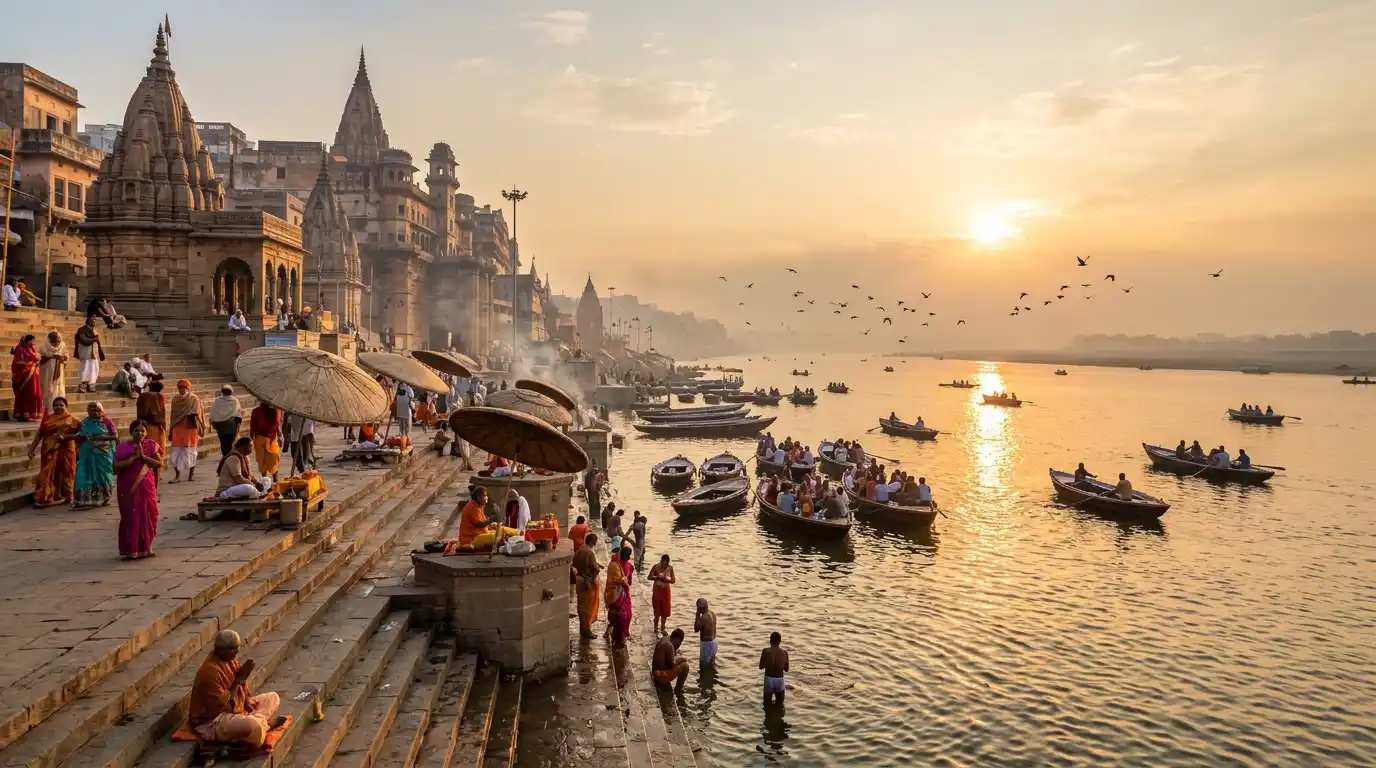
Tourist places in Varanasi centre on the Ganga ghats, Kashi Vishwanath Temple and the evening Ganga Aarti at Dashashwamedh Ghat. Sarnath, 10 to 13 kilometres away, adds Buddhist sites. Most major spots sit within walking distance of the riverfront. Best months run from October to March when temperatures stay comfortable. The city works as a two- to three-day stop with early mornings and evenings the most rewarding times.
Kashi Vishwanath Temple and Corridor
Kashi Vishwanath Temple is one of the twelve Jyotirlingas dedicated to Shiva. The new corridor, opened in 2021, connects the temple to the river with wide walkways. General entry is free, though special darshan options exist. Phones, cameras and leather items are not allowed inside. Timings run roughly from early morning to late evening. Queues form, so early arrival helps. The temple anchors the city’s spiritual identity and sits near the main ghats.
Nearby temples such as Kal Bhairav and Sankat Mochan add further stops. The area around the temple includes narrow lanes with shops selling silk and religious items. Respectful dress and behaviour are expected. Many visitors combine the temple with a walk to the ghats in the same morning.
Dashashwamedh Ghat and Ganga Aarti
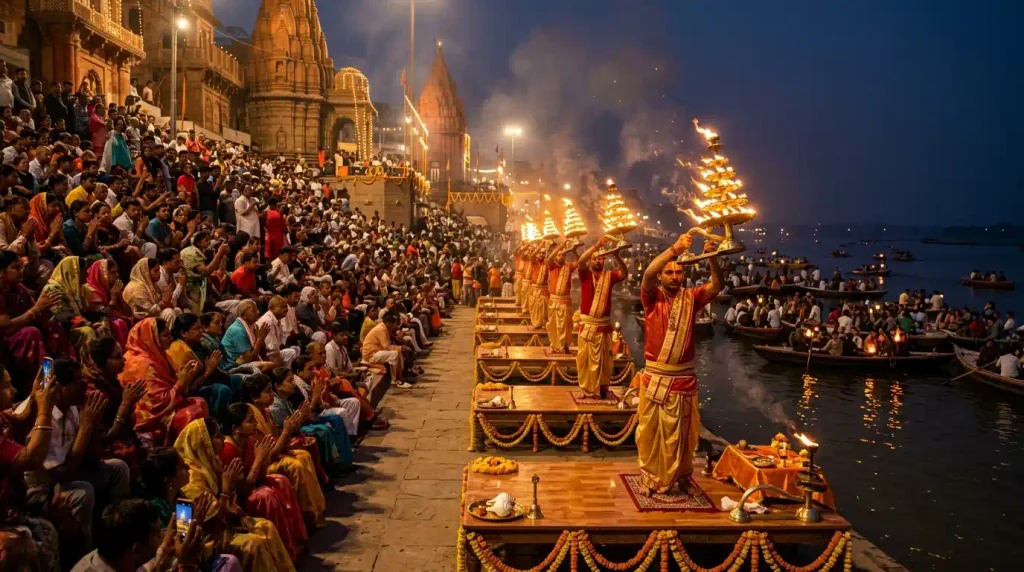
Dashashwamedh Ghat hosts the main evening Ganga Aarti, performed by priests with multi-tiered lamps. The ceremony starts around 6:45 pm in summer and earlier in winter. The steps are free to access. Arrive 45 to 60 minutes early for a good view. Boat rides offer an alternative perspective from the water. The ghat remains busy throughout the day with activity and vendors.
The aarti draws large crowds of locals and visitors. Photography is common, but stay respectful during the ritual. Nearby ghats connect via the riverfront steps. The experience defines many visits to the city. Daytime visits show a different, more everyday pace along the same stretch.
Assi Ghat and Other Riverfront Spots
Assi Ghat at the southern end offers a calmer atmosphere. Subah-e-Banaras, a free morning programme of music, yoga and aarti, runs daily. Sunrise boat rides from here or Dashashwamedh provide wide views of the riverfront. Manikarnika Ghat is the main cremation site and is best viewed from a boat rather than walked closely. More than 80 ghats line the river, each with its own character.
Walking the riverfront connects several ghats in a couple of hours. Early morning light is particularly good for photographs. The steps can be slippery, so watch footing. Local boatmen operate shared and private rides; agree on the price beforehand. The riverfront remains the heart of daily life in the city.
Sarnath Buddhist Sites
Sarnath, where the Buddha gave his first sermon, lies 10 to 13 kilometres northeast. The Dhamek Stupa, Chaukhandi Stupa and museum form the main attractions. The museum holds the Lion Capital of Ashoka. Entry fees apply, and the museum closes on Fridays. Allow three to four hours including travel. Shared taxis or auto-rickshaws make the trip straightforward from the city centre.
The site feels quieter than the main city. Gardens and the main stupa area allow walking. It pairs well with a morning in Varanasi and an afternoon here. The combination of Hindu and Buddhist heritage within a short distance is unique to the area.
Ramnagar Fort and Other Stops
Ramnagar Fort sits on the opposite bank of the Ganga, about 14 kilometres from the centre. The 18th-century palace includes a museum with vintage vehicles and artefacts. Entry is modest. The fort offers river views and a different perspective on the city. Bharat Kala Bhavan museum on the Banaras Hindu University campus holds paintings and sculptures. Both make good secondary stops if time allows.
Silk weaving workshops in the old lanes show Banarasi silk production. Markets near the temple and ghats sell textiles and souvenirs. These add cultural context beyond the main religious sites. Distances remain short, so multiple stops fit into a single day with local transport.
Getting Around and Practical Tips
Auto-rickshaws and cycle rickshaws cover short distances. Walking works best along the ghats. The nearest airport is about 26 kilometres away. Trains reach Varanasi Junction. The currency is the Indian rupee. Cash is useful for small purchases and boat rides. Modest clothing is expected at temples. Early starts avoid the strongest heat and largest crowds.
Street food is widely available, though choose busy stalls. Many hotels and guesthouses sit near the river. October to March is the most comfortable period. Summers are hot and the monsoon brings heavy rain. For other travel ideas, see Agra things to do and Islamabad things to do.
Suggested Two-Day Plan
Day one: early temple visit, walk the ghats, afternoon rest, evening aarti at Dashashwamedh. Day two: sunrise boat ride, Assi Ghat morning programme, then Sarnath in the afternoon. Add Ramnagar Fort if energy remains. The compact layout means little time is lost in transit. Organised boat tours handle the river portion smoothly.
Many visitors extend with nearby sites or continue to other parts of India. The city rewards slow exploration over rushing between sights. Local guides can add context at the temple and ghats. Related spiritual and cultural travel appears in bucket list travel.
Boat prices are typically negotiated; shared rides cost less than private ones. The riverfront changes character from dawn to night. Respecting local customs around cremation ghats and temples keeps the visit positive. The combination of living tradition and major sites makes the stop memorable within a short timeframe.
Comparison of Main Varanasi Spots
| Place | Distance from Centre | Best Time | Entry |
|---|---|---|---|
| Kashi Vishwanath | Walking | Early morning | Free (special options paid) |
| Dashashwamedh Ghat | Walking | Evening aarti | Free |
| Assi Ghat | Walking / short ride | Sunrise | Free |
| Sarnath | 10-13 km | Morning | Paid for museum |
| Ramnagar Fort | 14 km | Daytime | Modest fee |
Local Silk and Markets
Banarasi silk weaving remains a traditional craft. Workshops in the old city lanes demonstrate the process and sell finished sarees and fabrics. Markets near the ghats and temple area offer a range of goods. Bargaining is common. These stops add a commercial and cultural layer to the spiritual sites. Many visitors allocate an hour or two for browsing.
The lanes can be crowded, so morning or late afternoon works better. Quality varies, so examine items carefully. The silk tradition dates back centuries and remains a signature product of the city. Combining a market visit with the temple area is practical.
FAQs
Tourist place varanasi
Main tourist places include Kashi Vishwanath Temple, Dashashwamedh Ghat for the evening aarti, Assi Ghat and Sarnath 10-13 km away. Most riverfront spots are walkable. October to March offers the best weather. Two to three days cover the highlights.
What are the top places to visit in Varanasi?
Kashi Vishwanath Temple, the ghats especially Dashashwamedh and Assi, the Ganga Aarti and Sarnath rank highest. Ramnagar Fort and local markets add further interest. The riverfront connects many of them.
When is the Ganga Aarti held?
Around 6:45 pm in summer and earlier in winter at Dashashwamedh Ghat. Arrive early for a good view. The steps are free. Boat options provide another angle.
How far is Sarnath from Varanasi?
About 10 to 13 kilometres. Travel takes 30 to 45 minutes by auto or taxi. Allow half a day including the sites and museum. The museum closes on Fridays.
Is entry to Kashi Vishwanath free?
General entry is free. Special darshan and certain rituals have fees. Phones and cameras are not permitted inside. Early morning reduces waiting time.
What is the best time to visit Varanasi?
October to March for comfortable temperatures. Summers are very hot. The monsoon brings heavy rain. Early mornings and evenings are the most pleasant times of day year-round.
How do I get around Varanasi?
Walking works along the ghats. Auto-rickshaws cover longer distances. Cycle rickshaws suit short hops. Agree on fares before starting. The compact centre reduces the need for long rides.
Are boat rides worth it?
Yes, especially at sunrise for riverfront views. Shared and private options exist. Agree on the price and duration first. They offer a different perspective from the steps.
What should I wear?
Modest clothing that covers shoulders and knees is expected at temples. Comfortable shoes help on the steps. Light layers suit the climate. Remove shoes where required.
How many days are enough?
Two to three days cover the main temple, ghats, aarti and Sarnath. A longer stay allows slower exploration of lanes and secondary sites. Many combine it with other northern India stops.
Is the city walkable?
The main ghats and temple area are walkable. Distances between key riverfront spots are short. Longer trips to Sarnath or the fort need transport. Early starts make walking more comfortable.
What currency is used?
The Indian rupee. Cash is useful for boats, small shops and auto-rickshaws. Cards work in many hotels and larger restaurants. ATMs are available in the city.