
Old Towns in Europe: What to Know Before You Visit in 2026
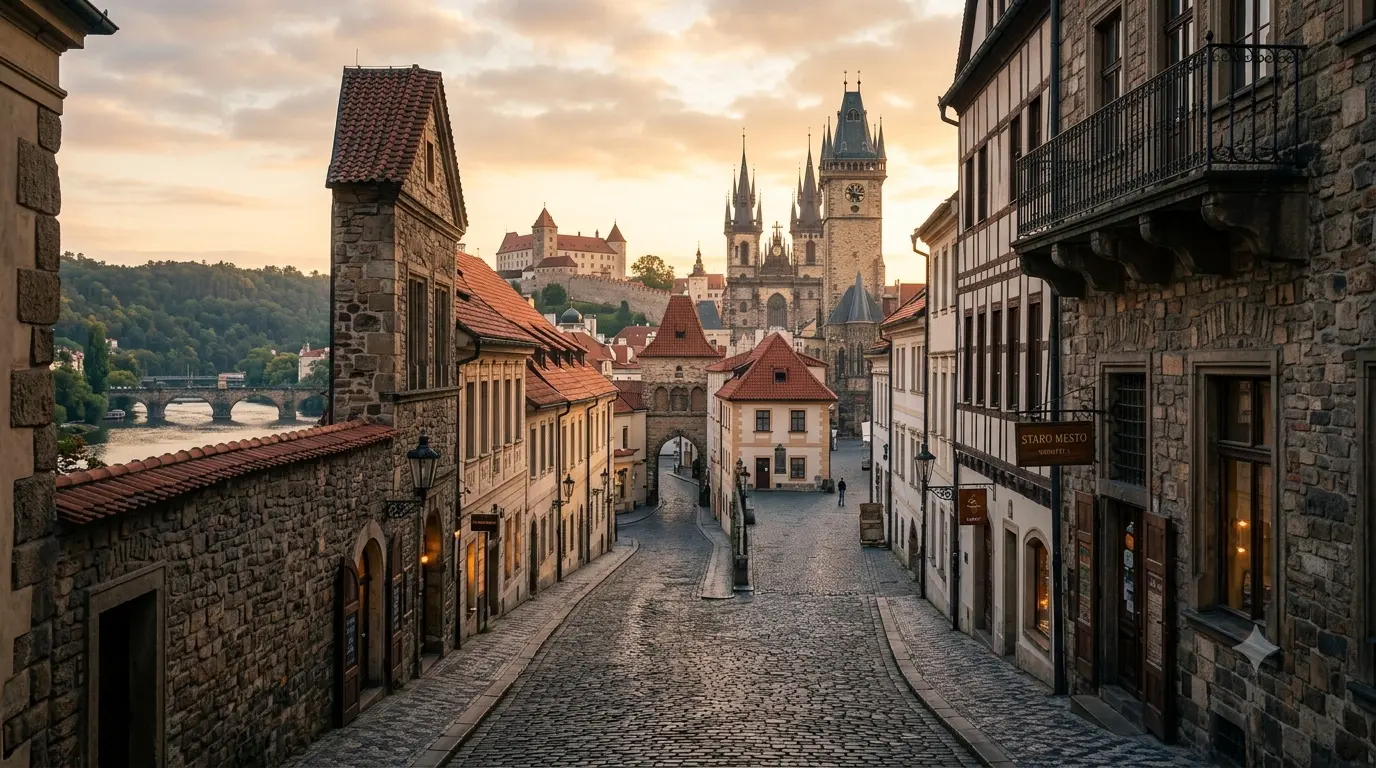
Old towns in Europe are the protected historic cores of cities and villages, built from medieval architecture, cobblestone streets, and a central town square, often with UNESCO World Heritage status. Dubrovnik, Prague, and Kraków lead most lists, though dozens of quieter options exist. Picking the right one, without the cruise ship crowds, is where planning usually goes wrong.
What Is an Old Town in Europe?
An old town is the protected historic center of a city, usually surrounded by modern development, built around a town square, sometimes as a full walled city with intact city walls. The line between old town and city center can blur in places like Vilnius or Belgrade, where historic and modern districts overlap.
The best examples share a look. Gothic architecture, Baroque architecture, and Renaissance architecture mix with half-timbered houses, Gothic spires, and narrow winding streets. A hilltop castle, a cathedral or monastery, and a central clock tower usually round out the scene. Locals and guidebooks often call these places a fairytale town or storybook town, and the label usually fits.
Which Old Towns Should You Visit First?
The most famous names appear on nearly every serious list, so start there, then branch into quieter alternatives once you know the style you like.
Central and Eastern Europe holds the grandest examples. Kraków’s core centers on Kazimierz and a park-ringed old town. Prague pairs its astronomical clock with Charles Bridge and a Kutná Hora day trip. Český Krumlov, four hours south of Prague, wraps around a 13th century castle on the Vltava River. Warsaw, Wrocław, Gdańsk, Lviv, Sibiu, and Sighișoara round out the region with rebuilt, walled, and lesser known historic centers.
Austria and Switzerland add mountain scenery. Salzburg’s Baroque old town sits below Hohensalzburg Fortress. Hallstatt combines lake and alpine views. Lucerne’s Kapellbrücke, a covered wooden bridge dating to 1333, anchors a compact medieval old town on the Reuss River.
Western Europe favors canals and half-timbered charm. Bruges remains the benchmark, its Market Square and Belfry framed by water on nearly every side. Colmar and Eguisheim sit inside Alsace wine country, while Rothenburg ob der Tauber, Rüdesheim am Rhein, and Meissen show off Germany’s best-preserved medieval cores.
The Balkans and Adriatic coast hold the continent’s most complete walled cities. Dubrovnik, a former merchant republic, tops nearly every ranking. Kotor, Perast, Split, Korčula, Piran, and Mostar offer similar walled charm with far fewer visitors.
Northern Europe and the Baltics keep things compact. Tallinn’s walled medieval old town rivals anything in Central Europe, and Stockholm’s Gamla Stan is Scandinavia’s classic pick.
The British Isles add a quieter register. Edinburgh‘s Royal Mile leads the pack, with St Ives, Lacock, Kilkenny, and Glendalough offering smaller scale history.
Valletta, Malta’s entire capital, packs roughly 320 monuments into 55 hectares, dense enough to explore fully in a single focused day.
What Food and Experiences Should You Try?
Food traditions shift sharply by region, so plan around the town rather than a generic checklist, starting with Stockholm’s fika and Swedish meatballs. Tallinn serves elk soup in old town taverns. Český Krumlov is known for chimney cakes sold from street stalls. Óbidos pours ginja, a cherry liqueur, from small chocolate cups. Colmar’s Alsace wine route runs on Riesling and Gewürztraminer.
Beyond food, book activities that match a town’s history. Dubrovnik runs Game of Thrones walking tours past its filming locations. Kotor pairs well with whitewater rafting on nearby Tara Canyon. Laguardia offers wine cellar tastings inside its underground tunnels. A guided or self-guided walking tour is usually the most efficient way to cover any old town’s highlights in one visit.
When Is the Best Time to Visit?
Timing matters more than almost any other planning decision, and it changes by destination. Dubrovnik’s high season runs roughly May through September, when heat, cruise arrivals, and hotel prices peak together. Travelers consistently find that April and October deliver the best balance, warm enough for comfortable walking, with thinner crowds and lower prices than midsummer.
Inside the walls, most local guides recommend starting between 8 and 9 in the morning, ahead of the heat and the day’s cruise passengers. The full circuit takes 1.5 to 2 hours on foot, with little to no shade, so sunscreen and a hat matter more than usual.
Shoulder season logic applies broadly, not just in Croatia. Spring and early autumn generally offer the same tradeoff everywhere, fewer crowds, milder weather, and softer prices than peak summer. Christmas markets are the exception. Rothenburg ob der Tauber and Meissen are both built for a December visit, when their squares become walk-through advent calendars no summer trip can replicate.
How Physically Demanding Is an Old Town to Explore?
Cobblestone streets and tower climbs make some destinations far more strenuous than they first appear. Český Krumlov’s castle tower involves 162 steps. Lviv’s City Hall bell tower has 220 spiral steps, worn smooth and uneven in places. The climb up to Nafplion’s old town from the harbor covers 137 steps.
A few practical notes apply almost everywhere in this category:
- Cobblestones get slippery when wet, so flat, sturdy shoes matter more than fashion
- Tower and wall walks rarely have elevators or accessible routes
- Bags and strollers become awkward on narrow stairs and uneven paths
- Heat and lack of shade are common on open-air walls and towers, especially in July and August
Most towns stay walkable for average fitness levels, but anyone with mobility concerns should research specific towers and staircases first.
How Do You Plan a Multi-Town Trip?
Several destinations sit close enough to a major city to combine into one trip. Nafplion is roughly a two hour drive from Athens. Český Krumlov sits four hours south of Prague, close enough for a long day trip or an overnight stay. Menton is 35 minutes from Nice, and Girona is 38 minutes from Barcelona by train.
For pairings without an easy day trip option, a short overnight stay usually beats rushing through in a few hours. Larger centers like Kraków or Prague reward a longer stay, while compact towns like Perast or Piran need only half a day.
Is Overtourism a Problem in 2026?
Yes, and it now shapes how several major destinations manage visitors. Dubrovnik restricts vehicle access in its historic buffer zone from March through November 2026, alongside a prepaid parking system near the main gates. Cruise ship arrivals remain the single biggest driver of daily crowding, and checking the day’s cruise schedule beforehand is an underused but useful planning step.
Kotor faces an even sharper version of the same pressure. UNESCO has been reviewing the Bay of Kotor’s World Heritage status, driven largely by cruise ship and day tripper volume overwhelming a town of just 5,000 residents. Bruges, another destination regularly named among the continent’s best, draws roughly eight million visitors a year against a resident population of around 120,000.
None of this means these places aren’t worth visiting. It means timing and realistic expectations matter more than they did a decade ago.
What Tools Help You Plan the Trip?
A few platforms cover most of the planning work. Booking.com and Stay22 handle accommodation and hotel deals. Viator covers guided tours and bookable activities, including Dubrovnik’s Game of Thrones route. Discover Cars handles rental car bookings for road trips between towns, and TripAdvisor stays useful for specific reviews. World Nomads is commonly recommended for travel insurance on multi-country trips.
Final Thoughts
Old towns in Europe reward travelers who plan around timing and realistic expectations, not just a list of names. Shoulder season months, early starts, and a willingness to look past the most famous seven or eight options open up a far better experience than chasing the same crowded squares everyone else photographs. Whether the goal is Dubrovnik’s walls, Prague’s clock tower, or a quieter pick like Piran, matching the town to the season and to a traveler’s pace matters more than any single ranking.
FAQs
What’s the difference between an old town and a city center?
An old town is the historic, protected core, often with older architecture and car-free streets. A city center can include modern buildings and business districts outside that historic boundary.
Which old town should you visit first?
Prague, Kraków, and Dubrovnik are the most recommended starting points, combining dramatic architecture with strong transport links and tour infrastructure for first-time visitors.
Is Prague’s old town worth visiting?
Yes. Its astronomical clock and Charles Bridge are genuinely historic, not just photogenic, and the surrounding streets remain walkable and well preserved despite heavy tourist numbers.
What is the prettiest old town in Europe?
There’s no single answer, since it depends on style. Bruges wins for canals, Kotor for dramatic mountain scenery, and Český Krumlov for classic fairytale charm.
Is Dubrovnik’s old town too touristy?
During peak summer months and heavy cruise ship days, it can feel crowded. Visiting in April or October, and arriving before 9 in the morning, avoids most of the congestion.
How much does it cost to visit Dubrovnik’s old town?
As of 2026, the city walls ticket costs 40 euros for adults and 15 euros for children aged 7 to 18, with kids under 7 free. A Dubrovnik Pass covers the walls plus other sites, worth it on a longer stay, though short visits often skip the walls for the free streets instead.
Is Český Krumlov worth a day trip from Prague?
Yes, for most travelers. The four hour distance each way makes for a long day, so those wanting more time often choose an overnight stay instead.
What are some old towns that aren’t touristy?
Sibiu, Piran, Vipavski Križ, and Collonges-la-Rouge see far fewer visitors than Prague or Dubrovnik while offering comparable medieval architecture and history.
How do you avoid crowds in Prague’s old town?
Visit early morning or during shoulder season. Expect the Old Town Square and Charles Bridge to stay busiest regardless of timing, since they’re the city’s two most photographed spots.
Old town versus new town in Edinburgh, which is better?
The old town, anchored by the Royal Mile and Edinburgh Castle, holds most of the historic sightseeing. The New Town is worth adding afterward, but it’s rarely the priority on a first visit.
How much money do you need per day in Europe?
Daily budgets vary widely by country and travel style, from modest hostel and street food spending to much higher comfort level costs. It helps to budget per destination rather than assume one number fits the whole trip.
Is it safe to walk around an old town square at night?
Generally, yes. Violent crime against tourists is rare after dark, and well lit, busy squares like those in Prague or Tallinn stay populated well into the evening. Pickpocketing is more a daytime, crowd driven risk than a nighttime one, though it still pays to stick to lit main streets and skip empty side alleys late at night.
How do you plan a multi-city old town itinerary by train?
Group destinations by region instead of jumping across the continent. Central Europe’s rail network connects Prague, Kraków, and nearby cities easily, while Balkan and Adriatic coast towns often need buses and ferries alongside trains.
Which old towns have tourist number restrictions?
Dubrovnik restricts vehicle access in its historic core, and Kotor’s UNESCO status is under active review because of overcrowding, both direct responses to visitor volume.
Is Venice’s old town still worth visiting given overtourism?
Venice sits outside this guide’s core destinations, but the same overtourism pattern affecting Dubrovnik and Kotor applies there too, making shoulder season timing just as important.
What are the best old towns for a longer, slower stay?
Larger centers like Kraków, Prague, and Split reward multiple days better than compact towns like Perast, finished in a few hours.
Which UNESCO old towns are still relatively uncrowded?
Sibiu, Vipavski Križ, and Piran all carry UNESCO recognition or UNESCO-adjacent status without the visitor volume of Dubrovnik or Prague.


