Caring for Pensacola FL Trees: A Local Guide to Gulf Coast Tree Health
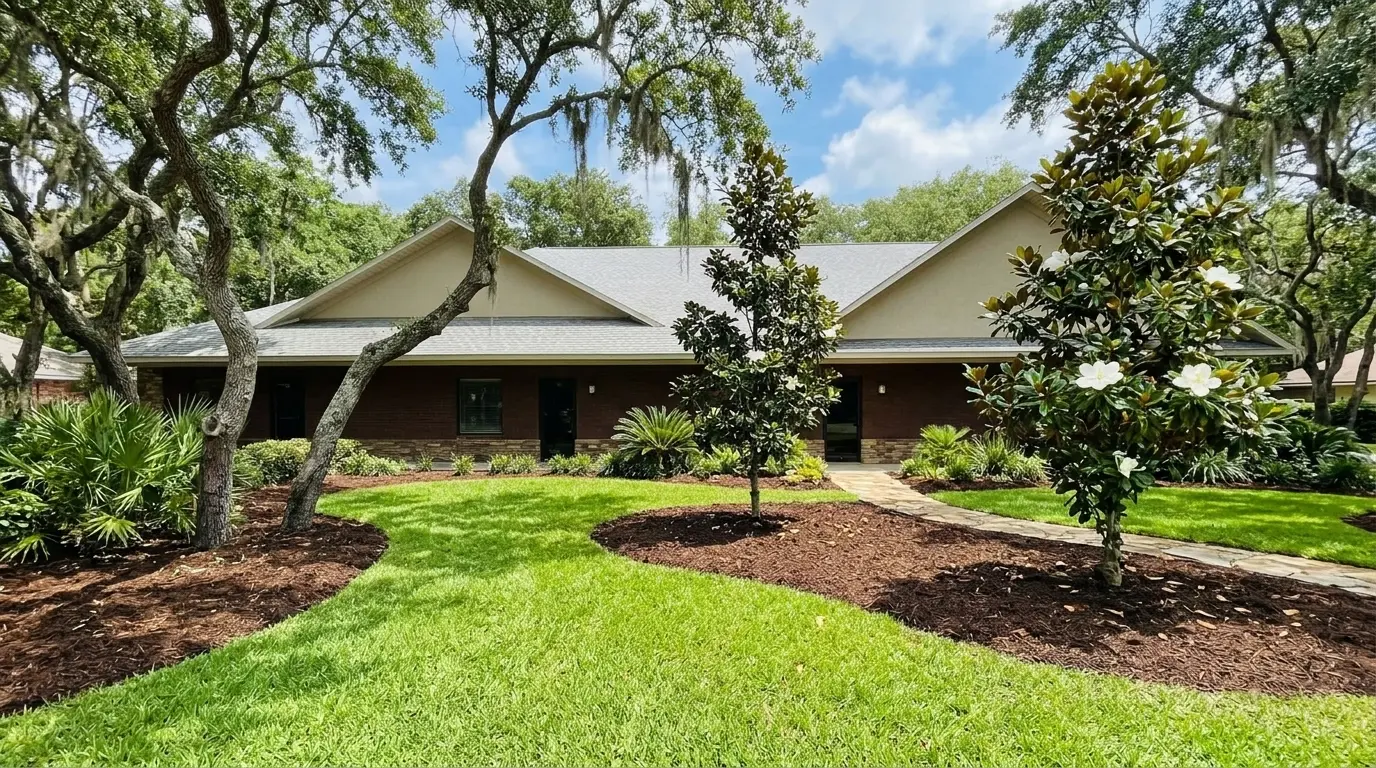
Table of Contents
- Why Pensacola’s Climate Shapes Tree Care
- Choosing the Right Trees for Pensacola Yards
- Pruning With Hurricanes in Mind
- Watering, Mulching, and Feeding Sandy Soil
- Watching for Pests and Diseases
- When to Call a Professional
- Building a Healthier Pensacola Canopy
Pensacola sits where the Gulf of Mexico meets the bays and bayous of the western Florida Panhandle, and its trees reflect that setting. Live oaks drape moss over quiet neighborhoods near Bayou Texar, longleaf pines line the sandy roads leading out toward Perdido Key, and magnolias and crape myrtles fill yards from East Hill to Cordova Mall. These trees give the city its character, shade, and natural beauty. They also face conditions that few other regions of the country encounter, from salt-laden breezes and hurricane-force winds to sandy soils that drain quickly and summers thick with humidity.
Understanding those conditions is the first step toward keeping Pensacola’s trees healthy for decades to come. Whether you own a historic home downtown or a newer property in a growing subdivision off Nine Mile Road, the same principles apply. Good planting decisions, thoughtful pruning, careful watering, and prompt attention to pests and storm damage can make the difference between a tree that thrives and one that becomes a hazard. For local property owners seeking professional help, D’s Trees in Pensacola FL, can be a useful starting point when exploring services such as tree removal in Pensacola for damaged, declining, or hazardous trees.
Why Pensacola’s Climate Shapes Tree Care
Pensacola falls within a humid subtropical climate. Summers are long and hot, with afternoon thunderstorms that often arrive without warning. Winters are mild, but occasional cold snaps can stress tender species and expose trees that were planted outside their comfort zone. Rainfall is generous, sometimes arriving in heavy bursts that saturate the ground and then give way to days of intense sun.
The city’s proximity to the Gulf adds another layer of complexity. Salt spray carried inland by south winds can burn foliage on trees that are not salt-tolerant, while sea breezes help moderate temperatures and keep many coastal species healthy. Trees planted close to the water often develop deeper, more wind-resistant root systems, but those planted in shallow, compacted fill can struggle. Knowing which species handle salt exposure and which prefer shelter is essential for any Pensacola landscape.
Sandy soil is another defining feature of the area. Much of the region sits on sand and sandy loam that drains rapidly and holds few nutrients. Water and fertilizer can pass through the root zone before a tree has a chance to use them. Mulching deeply, watering slowly and deeply rather than frequently and lightly, and feeding with slow-release products suited to sandy soils can help trees build reserves that carry them through dry spells.
Choosing the Right Trees for Pensacola Yards
Native and well-adapted species tend to perform best in Pensacola. Southern live oak is among the most iconic, valued for its broad canopy, evergreen foliage, and strong wood. It needs room to spread, so planting it too close to a house or driveway can create conflicts later. Longleaf pine, once dominant across the region, is another excellent choice for larger properties, offering a distinctive look and considerable tolerance for sandy, dry conditions.
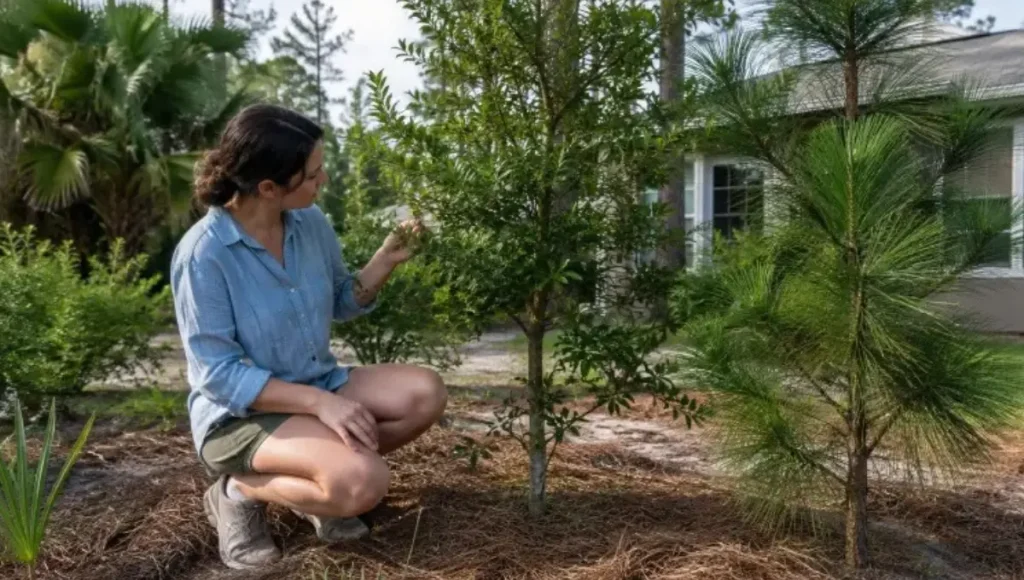
For smaller yards, options such as crape myrtle, dogwood, redbud, and Japanese maple can add seasonal color without overwhelming the space. Magnolias bring glossy leaves and large fragrant blooms, though they also drop heavy leaves and seed pods that require regular cleanup. Palms, including sabal palms, are a familiar sight throughout the city and handle coastal wind well, but they should be planted in locations where their fronds and trunks will not threaten structures or power lines.
When selecting a tree, consider its mature size, root behavior, and wind resistance as carefully as its appearance. Planting a fast-growing species with brittle wood under power lines or over a roof is a common source of storm damage in Escambia County. Matching the tree to the space is one of the most effective ways to avoid problems down the road.
Pruning With Hurricanes in Mind
Pensacola has learned hard lessons from major storms, including Hurricane Ivan in 2004 and Hurricane Sally in 2020. Both storms toppled large trees, snapped limbs, and left neighborhoods scattered with debris. Many of those failures traced back to weak structure, poor past pruning, or trees that had been allowed to grow into unstable shapes.
Proper pruning is one of the best ways to improve a tree’s storm resistance. Removing dead, diseased, and crossing branches helps create a sound framework. Thinning the canopy allows wind to pass through rather than catching on dense foliage, and reducing the weight of heavy limbs lowers the risk of breakage. The University of Florida’s IFAS Extension office offers practical guidance on this approach in its hurricane pruning resources for Florida landscapes, which is worth reviewing before any major cutting begins.
Timing matters as well. In Pensacola, the hurricane season runs from June through November, and many homeowners prefer to complete structural pruning in late winter or early spring, before new growth and peak storm activity. Avoid heavy pruning during the growing season, since large cuts can stress trees during the hottest months and invite insect and disease problems. Never top a tree, because the sprouts that follow are weakly attached and often fail in the next storm.
Watering, Mulching, and Feeding Sandy Soil
Newly planted trees in Pensacola need consistent moisture for their first two growing seasons. During dry periods, a slow soak once or twice a week is generally more effective than daily sprinkling. Drip irrigation or a soaker hose placed at the outer edge of the root zone allows water to reach deeper roots, where it does the most good.
Mulch is equally important. A layer of two to three inches of pine straw, shredded hardwood, or composted bark helps retain moisture, moderate soil temperature, and suppress weeds. Pine straw is especially popular in the area and works well around many species, but it should be pulled back from the trunk to prevent moisture buildup and bark damage. Keep mulch in a wide circle rather than a tight mound around the base of the tree.
Fertilizing should be done carefully. Sandy soils leach nutrients quickly, which makes slow-release formulations a practical choice. Soil testing through the University of Florida or a local extension service can reveal specific deficiencies, such as low iron or magnesium, which are common in the region and can cause yellowing leaves even when the tree receives adequate water.
Watching for Pests and Diseases
Warm, humid conditions favor a range of pests and diseases in the Pensacola area. Live oaks are vulnerable to oak wilt and to bark beetles that can weaken trees already stressed by drought or construction. Crape myrtles are frequently affected by aphids and powdery mildew, especially in shaded or crowded spots with poor airflow. Pines can suffer from pine beetles and needle diseases, particularly after storms have left them damaged or stressed.
Early detection makes treatment far more effective. Look for thinning canopies, unusual dieback at the tips of branches, sawdust or small holes in the bark, sticky residue on leaves, or fungal growth on the trunk or roots. Mushrooms growing at the base of a tree can signal root decay, which may require a professional evaluation. Keeping records of when problems first appear helps arborists identify patterns and recommend the right response.
When to Call a Professional
Some tree work is well within the reach of a determined homeowner, such as removing small deadwood or raking up fallen debris. Other tasks carry real risk and are best left to trained, insured professionals. Removing limbs near power lines, working on large trees at height, dealing with trees leaning toward homes, and handling storm-damaged trees with split trunks or hanging branches all call for expertise and proper equipment.
When hiring help, look for licensed and insured companies with certified arborists on staff. Ask for references, request written estimates that describe the work in detail, and be cautious of anyone who recommends unnecessary removal or who pressures you to decide immediately after a storm. Good arborists will explain their reasoning, show you the condition of the tree, and discuss alternatives such as cabling, pruning, or monitoring before recommending removal.
For those seeking local assistance, D’s Trees, located at 4499 Woodbine Rd, Pace, FL 32571, can be reached at (850) 999-0110 or through https://ds-trees.com/. The company’s location is shown on Google Maps for those planning a visit or wanting directions to their office.
Building a Healthier Pensacola Canopy
Pensacola’s tree canopy is one of its greatest assets. It cools streets, filters stormwater, supports wildlife, and gives neighborhoods a sense of history and permanence. Protecting that canopy depends on the decisions made in individual yards, from the species planted to the care given in the years that follow.
Every healthy tree contributes to a more resilient city. By choosing well-adapted species, pruning with storm risk in mind, managing water and mulch carefully, watching for early signs of trouble, and seeking qualified help when needed, Pensacola residents can ensure that the live oaks, pines, and magnolias that define the area continue to thrive. The reward is shade on hot afternoons, beauty through every season, and trees that stand strong when the next storm rolls in off the Gulf.