
What Is an English Countryside Village? A Complete Travel Guide
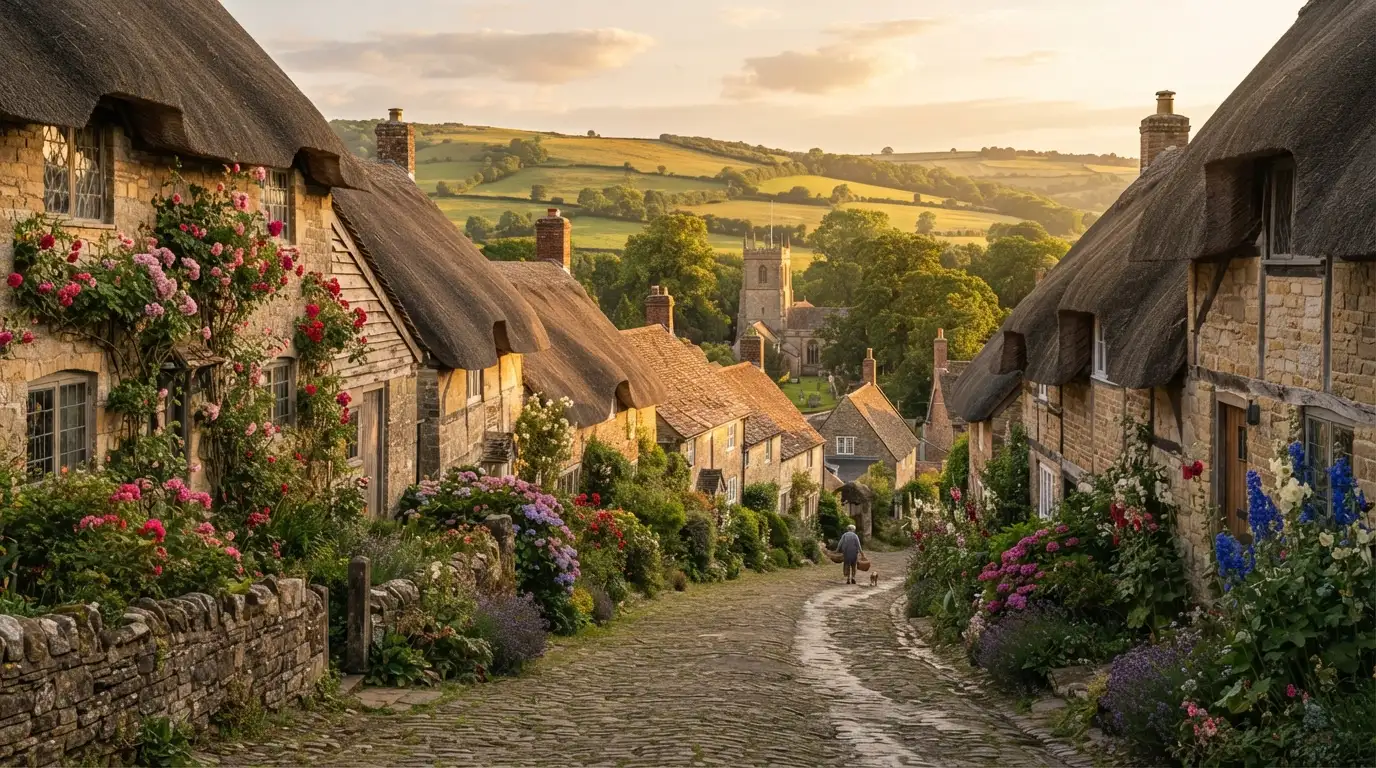
An English countryside village is a small, traditionally rural settlement built from local stone or thatch, centered around a market square, a parish church, and a handful of pubs and shops. The Cotswolds, the Lake District, and the Yorkshire Dales each offer their own version of this, and picking the right one can feel overwhelming.
If you have spent any time scrolling travel blogs, you already know the same five villages show up on every list. This guide skips the repetition and gets into what actually matters: which regions fit your trip, what things cost, when to go, and how to get around without a car.
What Makes Cotswolds Villages Different From Other Countryside Regions?
Cotswolds villages are built almost entirely from honey colored limestone, which gives the whole region a warm, golden glow that photographs beautifully in late afternoon light. This is different from the thatched cottages common in southern counties like Kent and Sussex, or the grey slate and stone found in the Lake District and Yorkshire Dales.
The uniformity is what makes the Cotswolds feel so cohesive. Nearly every building, from a tiny cottage to a grand manor house, shares the same warm stone tone, which is why the region gets described as a living postcard so often.
What Are the Most Beautiful Cotswolds Villages to Visit?
Bibury
Bibury is frequently called the most beautiful village in England, a title first given by designer William Morris. The main draw is Arlington Row, a line of 600 year old weaver’s cottages running alongside a footpath by the River Coln.
Travelers consistently find mornings before 10 AM the quietest window here, since coach tours tend to arrive by mid morning. Beyond Arlington Row, Bibury Trout Farm and St Mary’s Church round out a visit that takes roughly two hours.
Castle Combe
Often called the prettiest village in England, Castle Combe hasn’t seen a new house built in over 400 years. The village centers on Bybrook Bridge and a 14th century market cross, and its untouched streets have made it a favorite film location for movies like Stardust and War Horse.
A common mistake first timers make is treating Castle Combe like an outdoor museum. Water Lane is mostly private homes, so wandering quietly and skipping close up photos of front doors and windows goes a long way with residents.
Bourton-on-the-Water
Known as the Venice of the Cotswolds, Bourton-on-the-Water gets its nickname from the River Windrush, which is crossed by five low stone bridges through the village center. It’s busier and more built up than Castle Combe or Bibury, with a model village, a motoring museum, and a hedge maze to fill an afternoon.
Broadway
Broadway is nicknamed the Jewel of the Cotswolds, and its main draw beyond the honey stone High Street is Broadway Tower, an 18th century folly on Beacon Hill. Entry runs around 14 pounds for adults, and the climb rewards you with views across more than a dozen counties on a clear day. If you’re visiting in late July or early August, the nearby lavender farm is in full bloom and worth the short detour.
Stow-on-the-Wold
This hilltop market town centers on a large Market Square lined with antique shops and pubs. The real draw is a side door at St Edward’s Church, framed by two ancient yew trees, which is often cited as inspiration for the Doors of Durin in Lord of the Rings.
Upper Slaughter and Lower Slaughter
These sister villages sit about a 30 minute walk apart, connected by the River Eye. Lower Slaughter is the more photogenic of the two, with a stone Old Mill and quiet lanes that rarely see the crowds found elsewhere in the Cotswolds.
What Are the Most Beautiful Villages Outside the Cotswolds?
Rye in East Sussex is worth the trip for Mermaid Street alone, a cobbled lane lined with timber framed houses less than two hours from London. Corfe Castle in Dorset centers on a nearly 1,000 year old ruined castle overlooking the village. Shaftesbury is famous for Gold Hill, the steep cobbled street that appeared in a 1970s Hovis bread advert and offers sweeping views across Blackmore Vale.
Lacock, managed by the National Trust, feels frozen in time and has appeared in Pride and Prejudice, Downton Abbey, and Harry Potter. In the Lake District, Grasmere draws visitors tied to poet William Wordsworth’s Dove Cottage, with lakeside trails starting right from the village.
Which Region Should You Visit for the Best English Countryside Experience?
| Region | Known For | Distance from London | Best For |
| Cotswolds | Honey stone villages, tea rooms | About 2 hours | Day trips, easy village hopping |
| Lake District | Mountains, lakes, hiking | About 4 to 5 hours | Serious walkers and hikers |
| Yorkshire Dales | Limestone valleys, waterfalls | About 4 hours | Rugged scenery, fewer crowds |
| Peak District | Moorland, rock climbing | About 2.5 hours | Outdoor sports, stately homes |
| South Downs | Chalk cliffs, coastal walks | About 2 hours | Coastal views, day trips |
| New Forest | Wild ponies, woodland | About 2 hours | Family days out, cycling |
When Is the Best Time to Visit English Countryside Villages?
Spring, from April to May, brings blooming flowers, lambs in the fields, and noticeably thinner crowds than summer. Summer, June through August, has the most reliable weather but also the heaviest tourist numbers, especially at Bibury and Castle Combe on weekends.
Autumn, September through November, is genuine shoulder season. Hotel prices drop, crowds thin out, and the woodlands turn orange and gold, though rain becomes more frequent as the season goes on. Winter, December through March, is quiet but often grey, foggy, and cold, and most locals recommend skipping a winter trip unless you specifically want empty streets and don’t mind the weather.
How Do You Get Around English Villages Without a Car?
Trains connect London to gateway towns fairly easily. London to Moreton-in-Marsh for the Cotswolds takes about an hour and 25 minutes, while London to Oxenholme for the Lake District runs closer to two hours and 40 minutes.
The tricky part is the final stretch. Many villages, including Castle Combe, have no train station at all, and local bus service can be surprisingly sparse, sometimes as few as four buses a day with none running on Sundays. Because of this, three main options work best:
- Book a local tour company that picks up from the nearest train station
- Hire a car for full flexibility, though narrow country lanes and crowded parking in peak season take some getting used to
- Join an organized day tour from London, which handles both transport and route planning
For visitors without a car, a guided tour or a private transfer from the train station is usually the least stressful choice.
How Many Days Do You Need to Explore the Cotswolds?
A full week gives you enough time to properly explore the Cotswolds, staying in two different base towns and covering the standout villages at an unrushed pace. If you’re tighter on time, a single day tour covering Bibury, Bourton-on-the-Water, and Stow-on-the-Wold gives a solid introduction, though you’ll be moving quickly between stops.
How Much Does Visiting an English Countryside Village Actually Cost?
| Expense | Typical Price Range |
| Train from London (one way) | 20 to 45 pounds depending on route and timing |
| Guided day tour from London | 70 to 120 pounds per person |
| Cream tea for two | 15 to 25 pounds |
| Pub lunch per person | 15 to 25 pounds |
| Broadway Tower entry | Around 14 pounds for adults |
| Overnight village stay (mid range) | 130 to 250 pounds per night |
Prices vary by season and village, and popular spots like Castle Combe and Bibury tend to sit at the higher end of these ranges during summer weekends.
Is Castle Combe or the Cotswolds Overrated?
Popular villages like Castle Combe and Bibury can genuinely feel crowded and a little too commercial by midday, especially on summer weekends when coach tours arrive in waves. That said, the crowding is time dependent rather than a reason to skip these places entirely. Arriving before 9 AM or visiting during shoulder season still delivers the quiet, storybook version most visitors are hoping for. If you only have one shot and it lands on a busy August Saturday, a lesser known stop like Stanton or the Slaughters will likely feel more rewarding than fighting crowds at the famous spots.
How Should Visitors Behave in Residential English Villages?
Many Cotswolds cottages, including those on Arlington Row and Water Lane in Castle Combe, are private homes, not attractions. Stick to public paths, keep your voice down early in the morning and in the evening, and avoid photographing residents or peering into windows and gardens. Locals recommend simply treating these streets the way you’d want a stranger to treat your own neighborhood.
What Are the Best Villages Near London by Train?
Kingham, Old Amersham, Cookham, Brockenhurst, Eynsford, Great Missenden, and Aylesford are all reachable by direct train from London, with most village centers a 10 to 20 minute walk from the station. These make for easier half day or full day trips than the Cotswolds, since there’s no need to arrange local transport once you arrive.
Final Thoughts
Choosing the right English countryside village comes down to matching the region to what you actually want from the trip, not just picking whatever shows up first on Instagram. Plan around shoulder season or early mornings if crowds worry you, budget realistically using the ranges above, and treat residential streets in places like Castle Combe with the same respect you’d want shown to your own street. Start with two or three villages instead of ten, and you’ll actually get to enjoy them.
FAQs
What is the prettiest village in England?
Castle Combe and Bibury are the two most commonly named, though the title is unofficial and based on architectural preservation rather than any formal ranking.
Is the Cotswolds worth visiting?
Yes. The region packs some of England’s most preserved honey stone villages and rolling countryside into an area about two hours from London.
Cotswolds vs Lake District, which is better?
The Cotswolds suits travelers who want quaint villages and easy day trips, while the Lake District suits travelers who want mountain scenery and serious hiking trails.
Are honesty stalls still a thing in English villages?
Yes. These honor system stalls selling homemade cake, jam, or chutney are still a common sight in Cotswolds villages and other rural areas.
How do locals feel about tourists in Castle Combe?
Castle Combe remains a lived in residential village, and visitor guidance consistently asks travelers to respect privacy since the cottages are private homes, not museum pieces.
What’s the difference between the Cotswolds and the Yorkshire Dales?
The Cotswolds is defined by golden limestone villages and gentle hills across southern England, while the Yorkshire Dales has rugged limestone valleys, waterfalls, and dry stone walls in the north.


