Authentic Mexican Food: Traditional Dishes from Tacos to Mole
Authentic Mexican food rests on corn, beans and chiles grown for thousands of years, combined with pork, cheese and spices introduced after Spanish contact. UNESCO recognized traditional Mexican cuisine in 2010. Regional styles vary from Oaxaca moles to Yucatán cochinita pibil and Mexico City street tacos. Soft corn tortillas form the base of most meals.
Cooking techniques include stone grinding, pit roasting and complex sauces that simmer for hours. Street stalls and home kitchens both preserve these methods. Visitors find the strongest versions at busy local taquerías and markets rather than tourist menus.
Tacos and Street Food
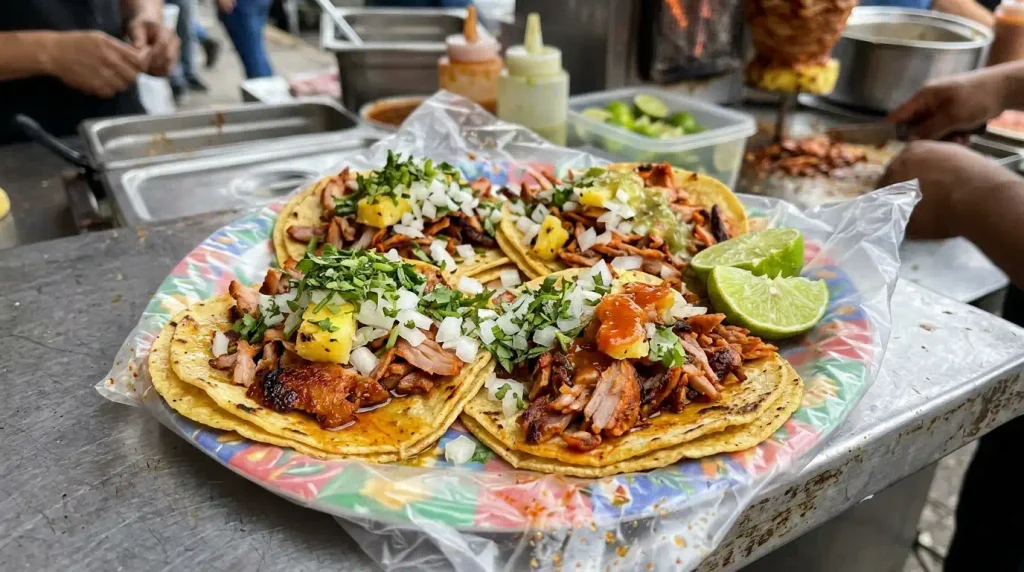
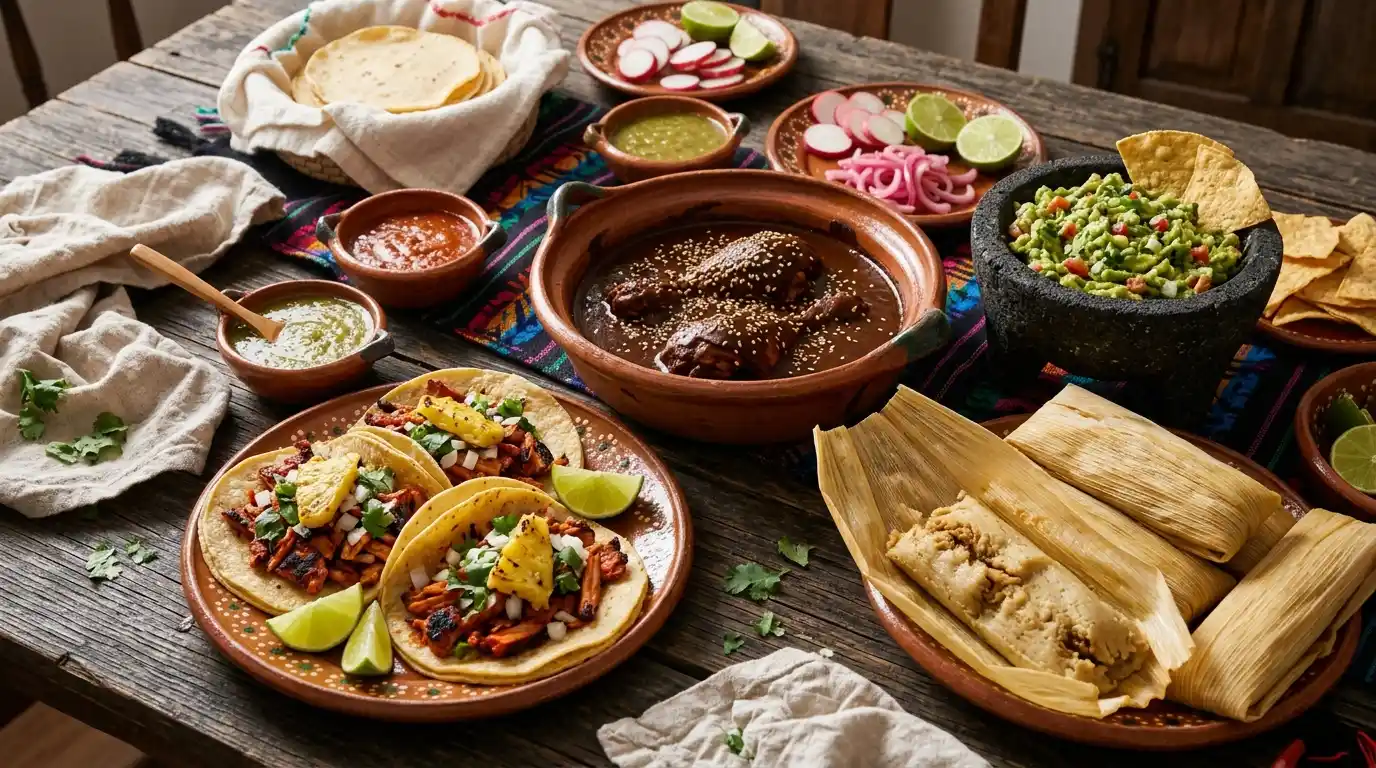
Tacos use soft corn tortillas filled with meat, salsa, onion and cilantro. Al pastor stacks marinated pork on a vertical spit with pineapple on top, a technique adapted from Lebanese shawarma by immigrants in the 20th century. The meat slices thin and serves with the fruit. A typical order costs 20-35 MXN per taco in 2026 street stalls.
Other street items include elote (grilled corn with cheese and chile) and tlayudas from Oaxaca, large toasted tortillas spread with beans and cheese. Tostadas stay crisp and hold fresh toppings. These appear from morning markets through late-night stands.
Mole and Complex Sauces
Mole poblano from Puebla combines chiles, chocolate, nuts and spices into a dark sauce served over turkey or chicken. Oaxaca produces several moles, with mole negro the most intense from charred ingredients. Preparation takes hours and often involves many family members. The sauce coats meat or enchiladas.
Enchiladas dip tortillas in warm chile sauce and roll them around fillings. Chiles rellenos stuff poblano peppers, batter them and fry them. These dishes appear at both everyday meals and celebrations.
Tamales and Corn Preparations
Tamales wrap masa dough and fillings in corn husks or banana leaves and steam them. Fillings range from meat to cheese to sweet versions. The method dates back thousands of years and remains common across every state. Markets sell them hot in the morning.
Pozole is a hominy stew with meat and chile, linked to pre-Hispanic rituals. Menudo uses tripe in a spicy broth and often appears on weekends. These corn-based dishes show the continuity of ancient ingredients.
Regional Specialties
Yucatán cooks cochinita pibil by marinating pork in achiote and sour orange, then roasting it in a pit. Sopa de lima uses citrus and turkey. Northern regions grill beef and use flour tortillas more often. Pacific coast towns grill whole fish. Each area adapts the core ingredients to local produce and climate.
Chiles en nogada from Puebla stuffs poblano peppers with meat and fruit, then covers them in walnut cream and pomegranate seeds. The colors match the Mexican flag and the dish appears mainly around September Independence celebrations.
How Dishes Are Eaten
Meals center on the tortilla as both utensil and base. Diners add salsa from small bowls at the table. Lime wedges squeeze over many plates. Family-style sharing is common for larger stews. Street food is eaten standing or at small counters with quick service.
Breakfast might include chilaquiles of tortilla chips simmered in salsa, or huevos rancheros. Lunch remains the main meal in many households. Dinner stays lighter in traditional patterns.
Where to Find Authentic Versions
Busy night taquerías in Mexico City serve al pastor. Mercado 20 de Noviembre in Oaxaca offers tlayudas and moles. Sunday markets in the Yucatán feature cochinita pibil. Local fondas serve daily plates at lower prices. Tourist areas sometimes simplify recipes, so look for places filled with residents.
Prices stay accessible. Street tacos cost little. Full regional plates at markets range higher but remain reasonable compared with formal restaurants.
Comparison of Key Dishes
| Dish | Region | Main Elements | Typical Setting |
|---|---|---|---|
| Tacos al pastor | Mexico City | Spit-roasted pork, pineapple | Street stall |
| Mole negro | Oaxaca | Complex chile-chocolate sauce | Market or restaurant |
| Cochinita pibil | Yucatán | Achiote pork, pit roasted | Sunday market |
| Tamales | Nationwide | Masa and filling, steamed | Morning market |
These examples show how the same foundations produce distinct regional plates.
FAQs
Authentic Mexican food
Authentic Mexican food uses corn tortillas, beans, chiles and regional techniques such as pit roasting and long-simmered moles. It differs by state and appears at street stalls and home kitchens across the country.
What is the base of most dishes?
Corn in the form of tortillas, masa and hominy. Beans and a wide range of chiles complete the foundation that has lasted for thousands of years.
How does al pastor differ from other tacos?
Pork is marinated and stacked on a vertical spit with pineapple on top. The method came from Lebanese immigrants and adapted to local ingredients in Mexico City.
What is mole?
A complex sauce of chiles, spices, nuts and sometimes chocolate. Puebla and Oaxaca each have signature versions that take hours to prepare and serve over meat.
Where should visitors eat?
Busy local taquerías, markets and fondas. Places filled with residents usually keep traditional recipes better than tourist-oriented restaurants.
Is the food always spicy?
Chiles provide flavor more than pure heat in many dishes. Diners control intensity by adding salsa at the table. Some regional plates stay mild.
What role does UNESCO recognition play?
In 2010 traditional Mexican cuisine entered the list of Intangible Cultural Heritage, recognizing the farming, techniques and community meals centered on corn, beans and chiles.
How do regions differ?
Oaxaca emphasizes moles and tlayudas. Yucatán uses achiote and sour orange. The north grills beef. Coastal areas focus on fresh fish. Each adapts core ingredients.
What currency is used?
The Mexican peso (MXN). Street food prices stay low. Cards work in larger places; cash helps at small stalls.
Are there vegetarian options?
Beans, cheese, vegetables and some moles work without meat. Many traditional plates center on pork or other proteins, so choices vary by location.
What is cochinita pibil?
Pork marinated in achiote and sour orange, then slow-roasted in a pit. It is a signature Yucatán dish often found at Sunday markets.
How are tamales made?
Masa dough and fillings wrap in corn husks or leaves and steam. The method is ancient and remains common for breakfast and snacks across Mexico.