Rotterdam Things to Do in 2026: Architecture, Markets and Port Views
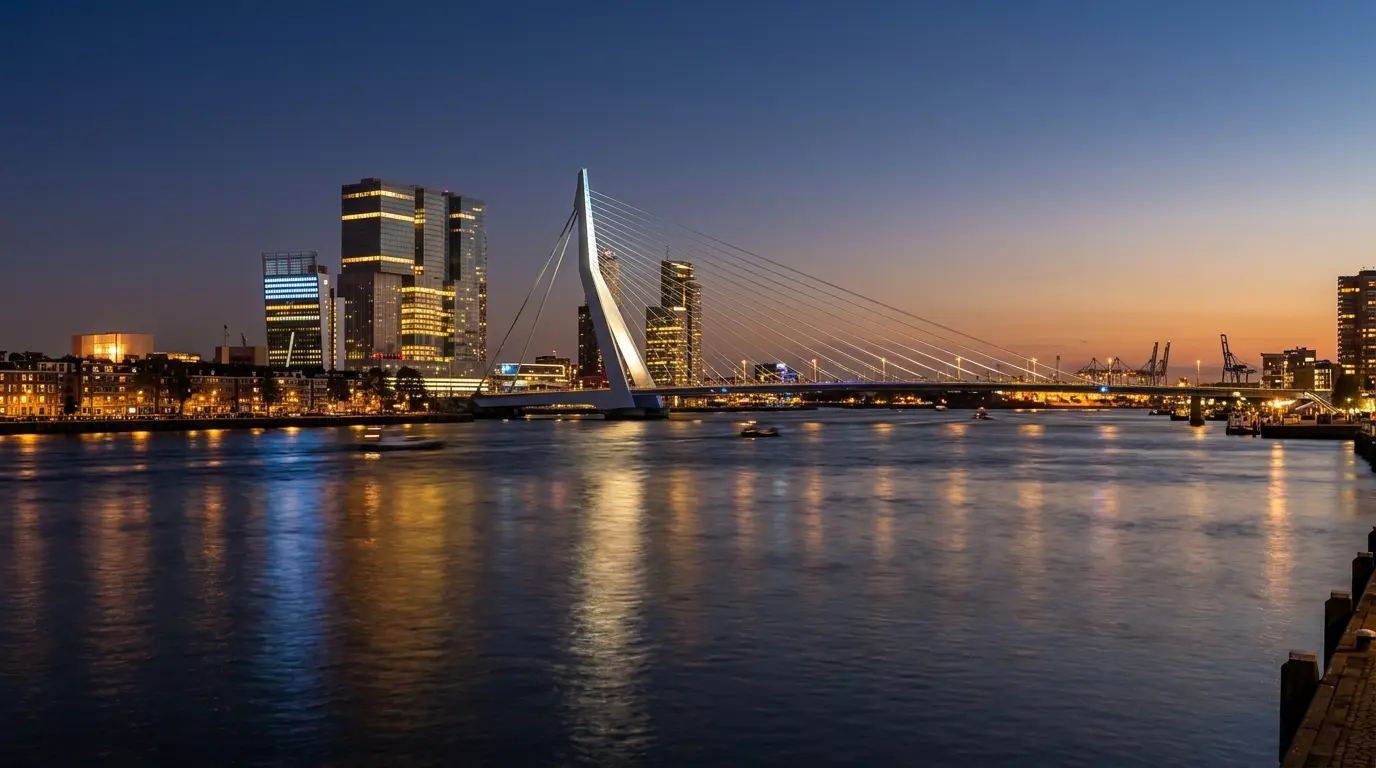
Rotterdam things to do center on modern architecture rebuilt after 1940, the Markthal food hall, Cube Houses, Erasmus Bridge and Euromast views. Visitors walk the historic Delfshaven district and ride water taxis on the Maas River. Most sites sit within 2-4 kilometres of the central station.
The city rebuilt itself after wartime bombing and now stands as the Netherlands’ second-largest urban area. Population sits near 660,000 inside the metro region of 1.5 million. English works almost everywhere. Currency is the euro. Peak season runs April to September when outdoor seating fills along the waterfront.
Cube Houses and Markthal
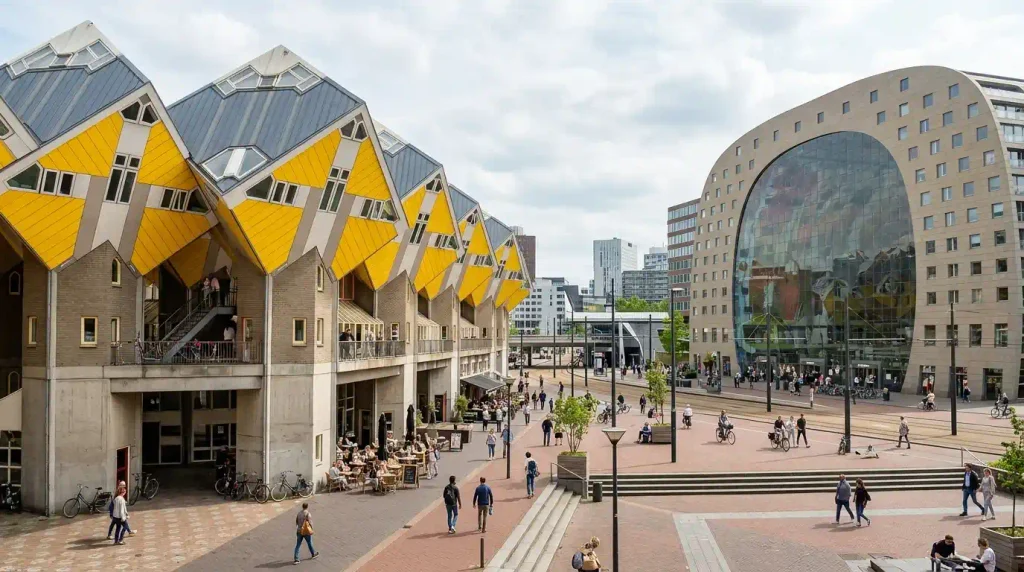
The Cube Houses by Piet Blom rise on Overblaak. Each yellow cube tilts on a hexagonal base and represents a tree in an abstract forest. Walkers pass underneath free of charge. One show house opens for tickets and shows the odd interior layout. The site sits a short walk from the central station.
Directly opposite stands the Markthal. The horseshoe-shaped building by MVRDV opened in 2014 and holds more than 100 food stalls under a painted ceiling of fruit and vegetables. Entry stays free. Most stalls open until 20:00 and until 21:00 on Fridays. Fresh fish, Dutch cheese and international snacks fill the counters. Apartments sit above the market arches.
Both landmarks sit next to the Old Harbour. Historic ships moor here and terraces line the water. The area forms a compact loop that takes under two hours on foot.
Erasmus Bridge and Waterfront
The Erasmus Bridge spans 802 metres across the Maas. Locals call it the Swan for its white pylon. Pedestrians and cyclists cross free. The bridge links the city centre to the Kop van Zuid district and Hotel New York, the former headquarters of the Holland America Line.
Water taxis run regularly and cover short hops in minutes. A ride offers clear views of the port cranes and modern towers. The port itself ranks as Europe’s largest and handles massive container traffic. Guided boat tours depart from several docks and last one to two hours.
Nearby sits the SS Rotterdam, a preserved ocean liner turned hotel. Visitors can tour public decks on some days. The waterfront path continues past the Fenix Museum of Migration, which opened in a restored warehouse in May 2025. The Tornado staircase rises through the building to a rooftop harbour view.
Euromast and Higher Views
The Euromast tower reaches 185 metres. Observation decks give wide views over the port and skyline. The tower closes on Mondays in some seasons, so check ahead. A revolving restaurant sits near the top. The site lies about 2 kilometres from the centre and connects by tram or bus.
For comparison, other Dutch cities offer different outlooks. Amsterdam focuses on canals while Rotterdam emphasizes post-war modern design. Both cities sit roughly 70 kilometres apart by train.
Historic Delfshaven
Delfshaven is the only central district that escaped the 1940 bombing. Narrow canals, windmills and brick warehouses remain. The Pilgrim Fathers Church stands here. The group that sailed on the Mayflower prayed inside before departing in 1620. The district sits about 3 kilometres west of the centre and feels quieter than the modern core.
Cafes and small museums line the water. A short walk covers the main sights in under an hour. Trams run frequently from the central station.
Museums and Modern Art
Kunsthal Rotterdam shows changing exhibitions of art, design and photography. Depot Boijmans Van Beuningen stores the museum collection in a mirrored bowl-shaped building that visitors can enter. Both sites sit near the Museumpark, a short tram ride from the centre.
The Nederlands Fotomuseum moved to the historic Pakhuis Santos warehouse on Katendrecht in February 2026. Photography collections fill the restored space. The Fenix Museum focuses on migration stories through art and personal objects.
Day trips reach Kinderdijk windmills about 15 kilometres away or Delft ceramics about 12 kilometres north. Trains and buses cover both routes in under 30 minutes.
Practical Tips for Visitors
Central Station handles frequent trains from Amsterdam (about 70 minutes) and Schiphol Airport. Metro, tram and bus tickets cover the city. Walking works for the main landmarks because most sit within 3 kilometres.
Hotels cluster near the station and along the waterfront. Mid-range rooms often fall between €120 and €200 per night in 2026 depending on season. Street food and market stalls keep daily meal costs lower than formal restaurants.
The city hosts events such as the World Port Days and seasonal festivals. Check local listings for temporary closures of towers or museums.
Comparison of Main Attractions
| Attraction | Distance from Station | Entry | Time Needed |
|---|---|---|---|
| Cube Houses | 0.8 km | Free to walk | 30 minutes |
| Markthal | 0.9 km | Free | 45 minutes |
| Erasmus Bridge | 1.5 km | Free | 20 minutes |
| Euromast | 2.2 km | Ticketed | 1 hour |
| Delfshaven | 3 km | Free | 1 hour |
All five sites fit into a single day with public transport. Visitors who stay longer add museums or a port tour.
FAQs
Rotterdam things to do
Top activities include the Cube Houses, Markthal food hall, Erasmus Bridge, Euromast tower and historic Delfshaven. Water taxis and port views add outdoor time. Most landmarks sit close together in the centre.
How long does it take to see the main sights?
A focused day covers the Cube Houses, Markthal, bridge and one museum. Adding Delfshaven and Euromast needs a second half-day. Walking plus short tram rides works well.
Is Rotterdam good for a day trip from Amsterdam?
Yes. Trains run frequently and take about 70 minutes. The architecture differs sharply from Amsterdam canals, so the contrast rewards the trip.
What currency is used in Rotterdam?
The euro. Cards work almost everywhere. ATMs sit in the central station and along main streets.
Are the Cube Houses open inside?
The street level stays free to walk through. One show house charges for entry and displays the tilted rooms and original furniture.
Does the Euromast close on certain days?
It closes on Mondays in some seasons. Confirm the schedule before visiting, especially outside summer.
How do water taxis work?
They operate on the Maas and stop at marked docks. Rides last a few minutes and give clear views of the bridge and port. Tickets are bought on board or at docks.
Is English widely spoken?
Yes. Most residents in tourist areas and staff at hotels and museums speak English. Dutch is the local language.
What is the best time to visit?
April to September brings milder weather and longer days. Outdoor seating at the Markthal and waterfront fills in summer. Winter stays milder than inland cities but shorter on daylight.
Can visitors reach Kinderdijk easily?
Yes. Buses and water buses cover the roughly 15-kilometre trip. The windmills form a UNESCO site and take a half-day from the city.
Are there free attractions?
The Cube Houses exterior, Markthal, Erasmus Bridge, Old Harbour and Delfshaven streets all cost nothing to enter or walk. Museums and the Euromast charge entry.
Where to stay near the main sights?
Hotels near Central Station put the Cube Houses and Markthal within walking distance. Waterfront properties near Hotel New York offer port views and easy access to the bridge.