
Living on a Boat: What It Actually Costs and What to Expect
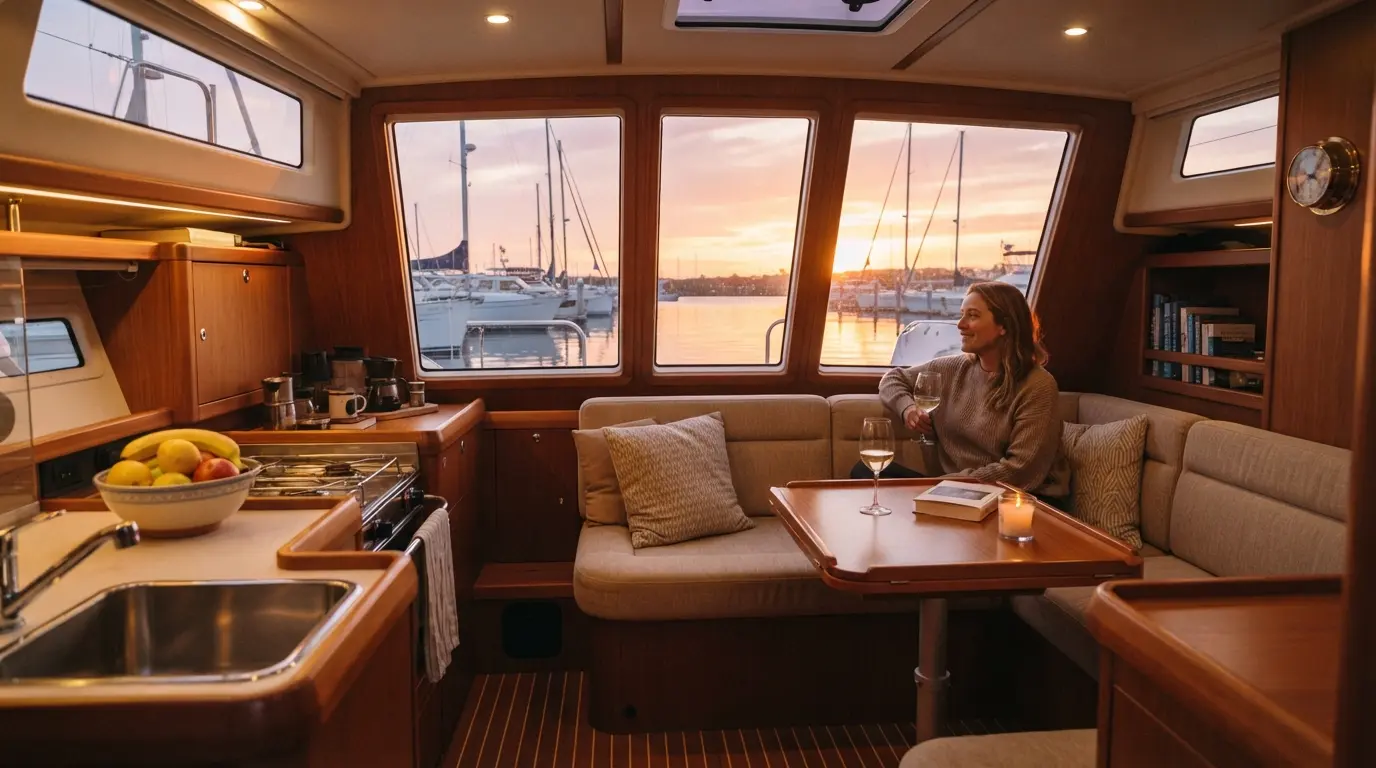
Living on a boat means using a vessel as your full time home instead of a house or apartment, whether docked in a marina or moving between anchorages. Most people spend around $4,000 a month depending on boat size and location, trading square footage for freedom and a view that changes whenever you want it to.
It sounds simple until you start asking the real questions. How much does insurance actually cost. Where can you legally anchor overnight. What happens when a storm rolls in and you have nowhere solid to stand. This guide answers those questions directly, based on what actual liveaboards deal with day to day, not just the highlight reel version of the lifestyle.
What Does Living on a Boat Actually Mean?
Living on a boat means your vessel becomes your primary address, not a weekend escape. Some people stay parked in one marina slip for years. Others go full time cruising, moving the boat every few days or weeks and calling wherever they drop anchor home for the night.
There is no single version of this lifestyle. A retired couple who never leaves a quiet marina in the Florida Keys is living aboard just as much as a family sailing across the Caribbean. What connects them is giving up a fixed land address in exchange for something smaller, more mobile, and generally closer to the water than most people ever get.
How Much Does It Cost to Live on a Boat?
Budgets vary widely, but a commonly cited number among full time liveaboards is around $4,000 a month for a couple, covering insurance, slip or mooring fees, fuel, food, and basic maintenance. That figure climbs fast if you are financing a larger boat or docking in an expensive region.
Boat insurance is one of the biggest line items people underestimate. Expect to pay somewhere between $500 and $1,000 a month, especially in hurricane prone states like Florida, with your rate shaped by boat length, horsepower, your credit score, your age, and your boating experience. A newer sailor with a 40 foot boat in a coastal hurricane zone will pay noticeably more than an experienced owner with a smaller, older vessel farther inland.
Marina slip fees are the next major cost, and they are not flat across the board. A vacant marina with open slips will often cut you a better monthly rate than a popular one with a waiting list. Mooring fields, where you tie to a fixed buoy instead of a dock, typically run about half the price of a marina slip, which makes them a solid middle ground if you want more stability than anchoring but do not want full marina costs.
Other recurring expenses include:
- Boat maintenance and marine parts, which often run more expensive than household equivalents
- Fuel for both moving the boat and running a generator
- Provisioning, meaning groceries and water
- Waste management and pump out fees
- Health insurance, which is easy to forget but essential if you are away from a fixed doctor
Property taxes and electricity usually cost less than a house, since you are heating and cooling a much smaller space. That is where some of the savings come from, but maintenance tends to eat into it.
What Size Boat Do You Need to Live On?
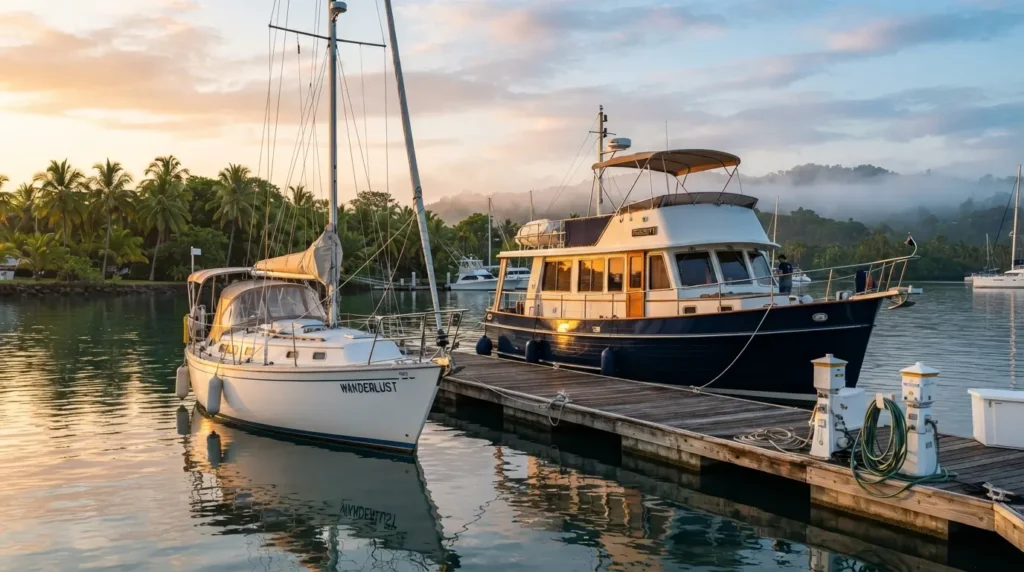
Most yacht brokers point couples toward a boat between 35 and 45 feet. That range gives enough interior space and storage to feel livable without becoming a headache to dock, maneuver, or afford. Go much bigger and slip fees, insurance, and maintenance all climb with the length.
A practical minimum is around 30 feet, though some experienced sailors do live comfortably on boats as small as 25 to 30 feet with a strict minimalist approach and efficient storage. Families with kids typically lean toward motorboats over 40 feet or sailboats over 50 feet, simply because more people means more gear, more food storage, and more need for private space.
What Type of Boat Is Best for Living Aboard?
The right boat type depends on your budget, your cruising goals, and how much you value space versus fuel efficiency.
Trawler yachts are known for fuel efficient engines and long range capability, which makes them a favorite for people planning extended cruising, like traveling America’s Great Loop. Their displacement hulls sit low and stay stable, even in rougher water, which matters a lot once you are living aboard full time instead of just visiting for a weekend.
Sailing catamarans offer wide beams and dual hulls, translating into more interior space and noticeably less rolling than a single hull sailboat. The tradeoff is docking. Their width can be hard to fit into standard marina slips, and not every marina can accommodate a catamaran without paying a premium.
Sailboats remain the most cost effective option for people who want to rely on wind instead of constant fuel spending. Interior space is more limited than a trawler or catamaran, so storage requires more creativity, but the lower operating cost and self sufficiency appeal to long term budget conscious cruisers.
| Boat Type | Space | Fuel Efficiency | Docking Ease | Typical Cost |
| Trawler Yacht | Good | High | Moderate | Mid to high |
| Sailing Catamaran | Best | Moderate | Harder | Mid to high |
| Sailboat | Limited | Best (wind powered) | Easiest | Lowest |
Can You Live on a Boat for Free?
Technically yes, but only if you keep moving. Living on a boat for free generally means relying entirely on free anchorage instead of paying for a marina or mooring, and most regions cap how long you can anchor in one spot before local regulations kick in.
This works for full time cruisers with flexible schedules, but it falls apart quickly if you need a fixed location for work, school runs, or medical appointments. Constant relocation also adds fuel costs and wear on the boat, so free is rarely as free as it sounds once you factor in the tradeoffs.
Where Can You Legally Anchor or Dock Long Term?
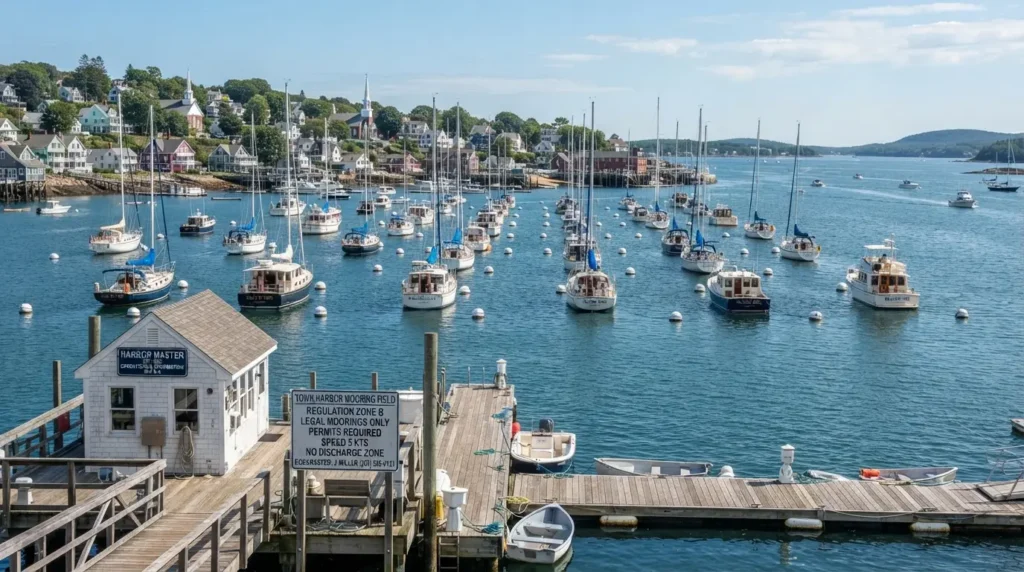
Anchoring rules vary significantly by county and state, and this trips up more new liveaboards than almost anything else on this list. Broward County, Florida, for example, limits boat owners from anchoring more than 45 days in certain lakes, and similar time caps exist in other popular cruising regions.
Florida law also allows municipal governments to manage their own anchorages, which means the rules in one county can look completely different from the next one over. If you anchor for 10 days or longer in a permitted mooring field or a no discharge zone, you may need to show proof of a recent pump out.
Tools like Active Captain, a community based mapping platform, list close to 14,500 anchorages with notes from other boaters about depth, holding, and local restrictions. Checking it before you drop anchor in an unfamiliar area is one of the smartest habits a new liveaboard can build, since local ordinances are rarely posted anywhere obvious on the water itself.
What Are the Pros of Living on a Boat?
The upside list is long, and it is a big reason the lifestyle keeps attracting new converts every year.
- Freedom to relocate your entire home whenever the weather, mood, or opportunity calls for it
- Daily connection to nature, from sunrise coffee on deck to dolphins passing by the hull
- A minimalist lifestyle that naturally reduces clutter and impulse spending
- Lower day to day costs on rent, property tax, and utilities compared to a similarly sized home
- A tight knit cruising community where neighbors genuinely look out for each other
Many liveaboards also report better physical health simply from walking more, swimming regularly, and spending less time sitting in traffic or scrolling indoors.
What Are the Cons of Living on a Boat?
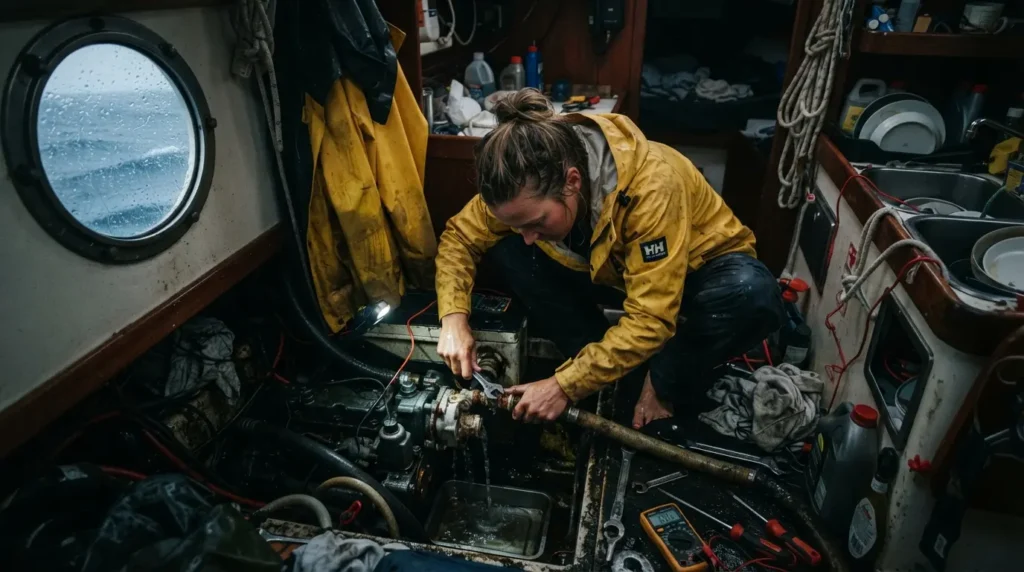
The downsides are real, and honest sources are upfront about them instead of glossing over the hard parts.
Limited space is the most obvious one. Closets shrink, storage becomes a daily puzzle, and finding a place for safety gear, spares, and groceries takes real planning. Maintenance is the second big issue. Boats require more frequent attention than houses, and marine parts often cost more than household equivalents, sometimes 20 percent more for comparable components.
Weather dependence is another constant. A storm can force you to move your entire home with little notice, and hauling a boat out of the water before hurricane season becomes a race against a limited number of available boatyard slots. Seasickness catches even experienced sailors off guard on rough passages, and sleep disruption from wind, anchor alarms, and shifting swell is one of the most underrated adjustments new liveaboards face. It is common to feel completely fine most nights and then get jolted awake more than once during a rough one.
How Do You Make Money While Living on a Boat?
Remote work has made this lifestyle far more accessible than it used to be. Common income paths among liveaboards include software development, teaching English online, marine trade work like being a licensed electrician, and content creation.
YouTube income varies, but a frequently cited range is $5 to $15 per 1,000 views, meaning a video with 200,000 views might earn somewhere between $1,000 and $3,000 before taxes. It is not a reliable primary income for most people, but it can supplement other work nicely for those willing to document the lifestyle consistently.
How Do You Get Mail and Deliveries While Living on a Boat?
This is a logistics gap that catches first timers off guard more than almost anything else. Since there is rarely a doorstep or dock cart waiting at your slip, most liveaboards rely on a mail forwarding service, a trusted family member’s address, or the marina office itself if it accepts packages on residents’ behalf. Planning this out before you move aboard saves a surprising amount of frustration later.
Can You Live on a Boat With Kids or Pets?
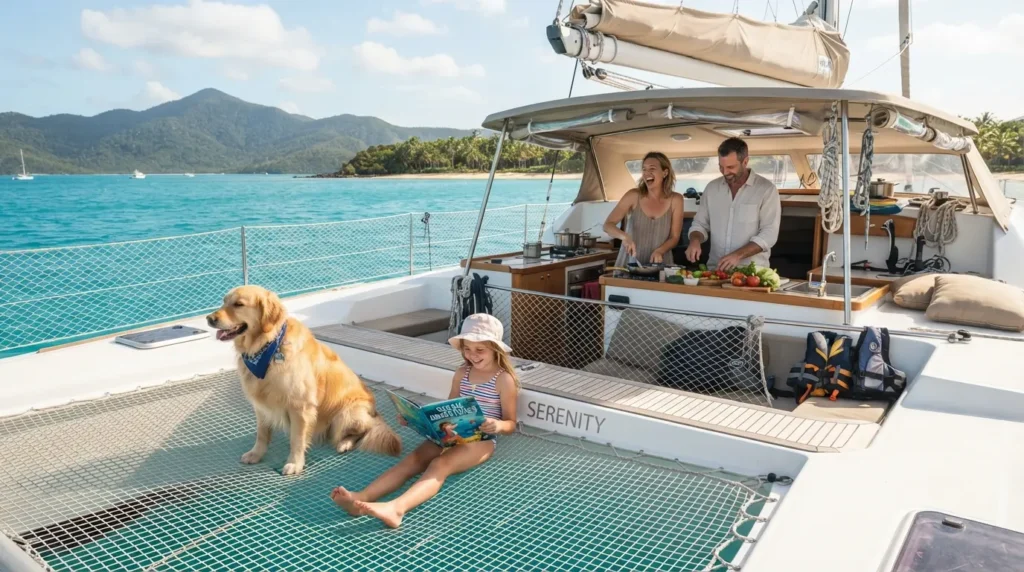
Yes, though both take extra planning. Kids trade classroom based socialization for a more hands on, responsibility heavy childhood, and many families supplement with online curriculums and boating community meetups to keep social connections strong.
Pets need time to adjust to small spaces, stairs, and open water nearby. Life jackets, secure railings, and teaching a dog how to climb back aboard if it falls in are all worth sorting out before the first night at anchor, not after.
How Do You Handle Power, Water, and Internet Aboard?
Power usually comes from a mix of shore power at the dock, solar panels, and a generator, all feeding into a battery bank that determines how much you can run without plugging in. A common upgrade path for full time cruisers includes doubling battery capacity and adding a solar arch once they start spending more nights at anchor instead of connected to the dock.
Water comes from marina hookups, hauling jugs by hand, or investing in a watermaker that converts seawater into fresh water, which is expensive upfront but transformative for full time cruisers. Internet has shifted dramatically in the last few years, with Starlink now the go to option for reliable connectivity at anchor, replacing the old habit of hunting for decent marina WiFi.
What Are the Biggest Safety Concerns of Living on a Boat?
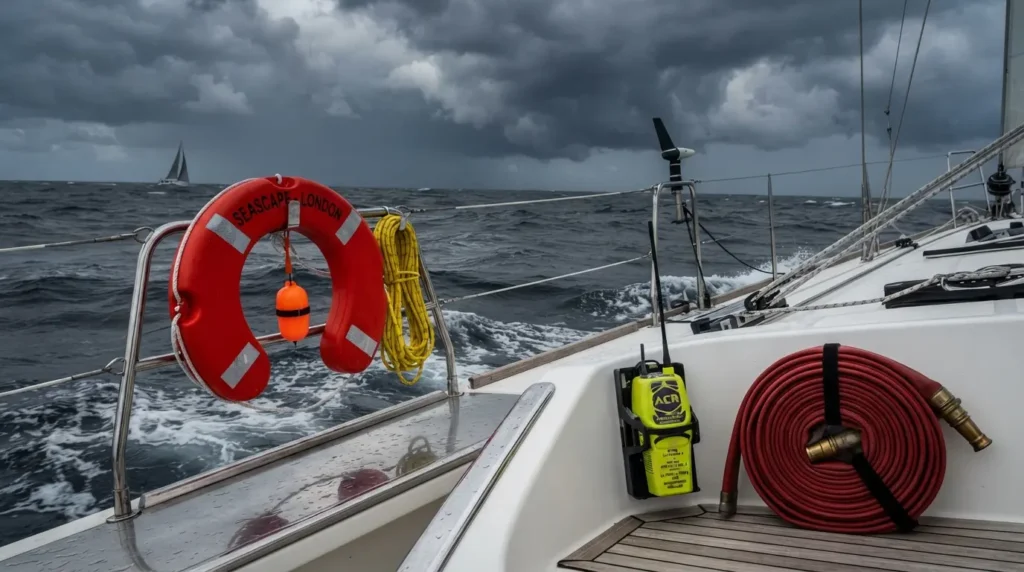
Weather tops the list, followed by dock safety at night, especially for anyone walking from a parking lot to a slip alone. Kids and pets near open water need constant awareness, and equipment failures like a dying bilge pump or a battery that will not hold a charge can turn into serious problems quickly if ignored.
CO2 detectors, smoke alarms, and propane sniffers are considered non negotiable safety basics, along with periodic checks of fire extinguishers and battery levels.
Living on a Boat at a Marina vs Living at Anchor: Which Is Better?
| Factor | Marina Living | Anchor Living |
| Cost | Higher (slip fees) | Free or low cost |
| Power Access | Reliable shore power | Solar or generator dependent |
| Social Life | Easier, built in neighbors | More isolated |
| Mobility | Fixed location | Fully mobile |
Marina living suits people who want stability, easy socializing, and dependable power without managing their own electrical system closely. Anchor living suits people chasing lower costs and more privacy, provided they are comfortable managing their own water and power and staying on top of weather planning.
How Do You Become a Live a board?
The general path looks like this. Research anchoring regulations for the areas you want to spend time in. Get a boat licence if your state requires one. Choose a boat type and size that matches your budget and crew. Line up insurance and either a marina slip or mooring spot. Start downsizing your belongings early, since it always takes longer than expected. Get a professional survey done before buying, even on a boat that looks great. Then move aboard gradually rather than all at once if you can manage it.
Final Thoughts
Living on a boat is not a shortcut to a cheaper, easier life. It is a genuine lifestyle shift that trades space and predictability for mobility, nature, and a tighter community than most neighborhoods ever offer. The people who do it well go in with a real budget, a clear plan for anchoring and insurance, and honest expectations about the maintenance workload ahead. If that tradeoff sounds appealing rather than exhausting, living on a boat might genuinely be worth the leap.
FAQs
Can you live on a boat year round?
Yes, with the right setup. Cold climates need proper heating and insulation, while warm climates need enough battery capacity to run fans or air conditioning. A solid plan for water and winterization matters wherever you are based.
Is living on a boat cheaper than renting an apartment?
Often, yes, on day to day costs like rent and utilities. Maintenance and slip fees can offset those savings though, so a realistic monthly budget usually lands close to $4,000 depending on boat size and lifestyle choices.
Do you need boating experience to live on a boat?
No. Many successful liveaboards start with zero experience and learn through online safety courses, mentorship from other boaters, and simply spending time on the water. Taking it slow and hiring a captain for the first few months is a smart way to ease in.
How do live a boards handle hurricane season?
Most either haul their boat out at a yard well before storm season fills up, or secure it in a well protected marina slip with a clear hurricane plan already in place. Waiting too long is the most common mistake, since haul out slots disappear fast once a storm is tracking toward the coast.


