
Things to Do in Stuttgart: The Complete 2026 Guide to Attractions, Food, and Day Trips
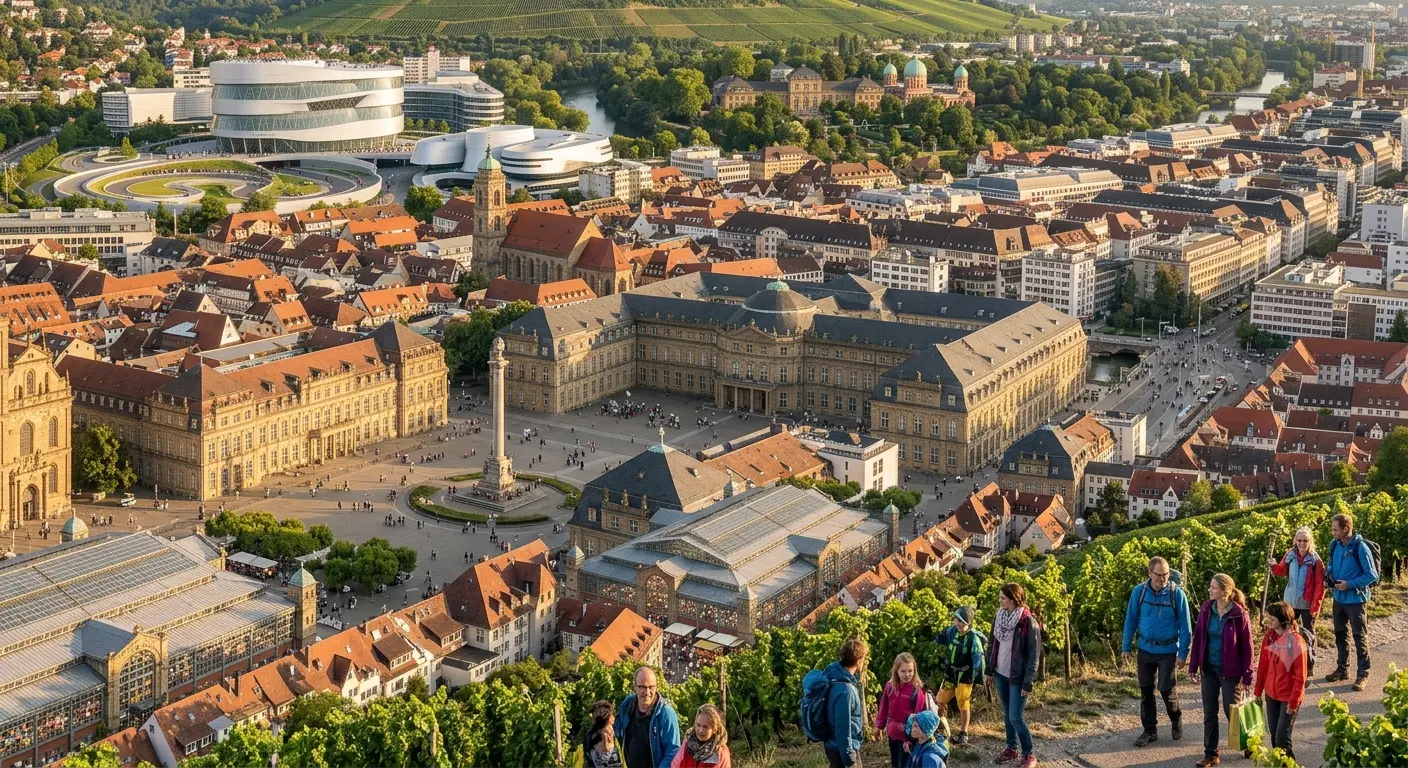
Things to do in Stuttgart range from world class car museums to hillside vineyard walks and a library that looks like something from a sci fi film. Most visitors expect an industrial city built around Mercedes and Porsche, then get surprised by how green and walkable it actually is. That gap between expectation and reality is exactly why Stuttgart trips tend to run short on planning and long on regret about what got skipped.
What Are the Best Things to Do in Stuttgart?
The short list covers Schlossplatz and Königstrasse for the city center, the Mercedes Benz and Porsche Museums for car history, Stuttgart Stadtbibliothek for architecture lovers, and Wilhelma Zoo for families. Add a wine hike through the vineyards that ring the city and you have a well rounded trip without needing a car.
A StuttCard covers most of these in one pass, and the public transport network makes it easy to string them together without wasting a morning on logistics.
Is Stuttgart Worth Visiting?
Yes, especially if you care about cars, art, or wine more than medieval old towns. Stuttgart does not have the half timbered charm of Bamberg or Regensburg. It is fair to say the historic center feels thinner than other German cities its size. What it does have is genuinely excellent museums, some of the greenest streets in the country, and vineyards planted right into the hillsides above downtown.
Travelers consistently find that Stuttgart rewards people who look past the car factory reputation. The city works well as a standalone trip or as a stop on a longer Baden Württemberg itinerary.
What Is Stuttgart Famous For, and How Many Days Do You Need?
Stuttgart is best known as the birthplace of the automobile and home to Mercedes Benz and Porsche headquarters. It is also one of Germany’s greenest cities, ringed by hillside vineyards, and host to Cannstatter Volksfest, the world’s second largest beer festival after Oktoberfest.
One full day covers the city center highlights. Two to three days lets you add a day trip to Ludwigsburg Palace or Esslingen plus a wine hike. A week suits anyone who wants to explore the wider region at a relaxed pace rather than rushing between sights.
What Are the Best Museums to Visit in Stuttgart?
Staatsgalerie Stuttgart, Landesmuseum Württemberg, and Kunstmuseum Stuttgart cover art and regional history, while the Mercedes Benz and Porsche Museums are the obvious draws for car fans. For something different, the Schweinemuseum and Linden Museum are both worth the detour.
Expect to pay around 18 euros for the Mercedes Benz Museum and around 10 euros for the Porsche Museum as of 2026. Museum prices shift year to year. Treat these as a realistic range rather than a locked in figure, and check each museum’s own site before you go. Both accept the StuttCard.
One newer name worth knowing is Miniaturwelten Stuttgart, billed as Europe’s largest city model. It has quietly become one of the most booked attractions in the city on sites like GetYourGuide, though it barely shows up in older Stuttgart guides.
Is the StuttCard Worth Buying?
It depends on how many attractions you plan to hit. The StuttCard bundles free or discounted entry to more than 50 partners, including the Mercedes Benz Museum, Porsche Museum, and Staatsgalerie, plus optional public transport.
- Visiting one or two museums: usually cheaper to pay separately
- Visiting three or more attractions in a day: the card typically pays for itself
- Adding public transport to the mix: tips the math further in the card’s favor
A common mistake first timers make is buying the card for a slow, one museum day and assuming it saved money when it did not.
What Are the Best Free Attractions in Stuttgart?
Schlossplatz costs nothing to enjoy, and neither does a walk through the vineyard trails above the city. Karlshöhe and Santiago de Chile Platz both offer skyline views without an entry fee, and Rosenstein Park is free year round. Cannstatter Volksfest itself has free entry too, since you only pay for rides, food, and drink once inside.
What Are the Best Neighborhoods to Explore in Stuttgart?
Bohnenviertel is the standout for an evening out. It is a former workshop quarter south of Marktplatz. Today it is a run of candlelit wine bars packed onto cobblestone streets. Locals recommend ordering a Viertele, a quarter liter glass, of Trollinger or Lemberger. Expect to pay around four euros a glass, and expect tables to stay full well past dinner and often until midnight.
Degerloch feels like a small town of its own with its own high street, Bad Cannstatt is Stuttgart’s oldest district with half timbered houses along the Neckar, and Leonhardsviertel suits a night out with bars and jazz clubs.
What Is Cannstatter Volksfest and When Is It in 2026?
Cannstatter Volksfest runs from September 25 to October 11 in 2026 at the Cannstatter Wasen fairgrounds. Entry is free, and the festival draws around four million visitors over its 17 days for giant beer tents, fairground rides, and a traders market.
It is considered the world’s second largest beer festival after Munich’s Oktoberfest, though locals will tell you the atmosphere feels less touristy and more regional, with Swabian wine tents standing alongside the beer halls. Book nearby hotels early if your trip lands during the festival, since rooms fill up fast.
What Local Foods Should You Try in Stuttgart?
Maultaschen is the dish to know first, doughy pockets stuffed with minced meat, spinach, and onions, often served in broth or pan fried with egg. Pair it with Käsespätzle or a glass of local Trollinger. Stuttgarter Markthalle, a market hall dating back over a century, is the easiest single stop to sample several options without committing to a full sit down meal.
What Should You Know About Tipping, Cash, and Etiquette in Stuttgart?
Stuttgart runs more on cash than many visitors expect, so keep some on hand for smaller vendors and wine stands. Tipping means rounding up the bill rather than calculating a percentage, so a 23 euro dinner becomes a flat 25.
Wine stands at festivals typically charge a Pfand, a glass deposit of around two to three euros, refunded when you return the glass. Locals also observe Ruhezeit, quiet hours on Sundays and during midday in residential areas, so save the loud plans for elsewhere on those windows.
How Do You Get to and Around Stuttgart?
High speed trains from Munich take about two hours and run nearly every hour, with tickets around 50 euros. A budget bus option takes closer to two and a half hours for under 10 euros, though it only stops at the airport or the city outskirts.
From Stuttgart Airport, the S-Bahn reaches the Hauptbahnhof in anywhere from about 27 minutes on a direct S2 or S3 service to closer to 45 minutes depending on connections. Check the current VVS schedule before you travel. A single ticket costs around four euros. Taxis take roughly 25 minutes but cost noticeably more. The train is the better call for most visitors, unless you are hauling heavy luggage or arriving very late at night.
Once in the city, the S-Bahn, U-Bahn, and bus network run by VVS covers everything well, and the hilly terrain makes the Stadtbahn a better bet than walking to hillside spots like Killesberg. Download the VVS app before you land so you are not fumbling with ticket machines at the platform.
What Are the Best Day Trips and Wine Hikes from Stuttgart?
Ludwigsburg Palace, one of Europe’s largest Baroque palaces, sits about 20 minutes away by train. It is worth a half day on its own, especially the Marble Hall and the smaller Favorite Castle nearby. Esslingen is a medieval town with its own wine hiking trail and a Christmas market that uses open flame lighting in December, and it makes an easy half day trip too. Hohenzollern Castle is a longer drive but delivers a genuine fairytale castle experience, so budget two to three hours once you factor in the grounds.
For a shorter outing, the Stuttgart Wine Hiking Trail runs from Uhlbach to Rotenberg past working vineyards and ends near the Sepulchral Chapel. Organized wine hikes, called Weinwanderung, run most weekends from May to September, and public transport reaches most trailheads.
Is Stuttgart Good for Couples or Families?
Both, depending on the day. For couples, Leonhardsviertel offers bars and jazz clubs, Kunstmuseum’s top floor restaurant looks out over Schlossplatz, and a sunset walk to the Sepulchral Chapel is one of the most romantic views in the city.
For families, Wilhelma Zoo combines a zoo and botanical garden in one historic park, Killesberg Park has a small train and playground, and the Naturkunde Museum lets kids dig for fossils. Cannstatter Volksfest also runs a discounted Family Day each Wednesday during the festival.
Conclusion
The best things to do in Stuttgart rarely show up on the surface level car museum lists. Pair the Mercedes Benz or Porsche Museum with a wine hike, a stop in Bohnenviertel, and a look at Cannstatter Volksfest dates before you book, and the trip stops feeling like a one note automotive detour. Start with one full day for the city center, then add a day trip if you have the time. That mix is what turns a quick stopover into a trip worth the extra night.
FAQs
What’s the best way to spend one day in Stuttgart?
Start at Schlossplatz and Königstrasse, pick either the Mercedes Benz or Porsche Museum based on your interest, then end the day in Bohnenviertel or at Stuttgart Stadtbibliothek.
What are some lesser known sights in Stuttgart?
Birkenkopf, a hill built from World War Two rubble with sweeping city views, is one of the most overlooked spots. The observation deck at the main train station also offers a rare look at the ongoing Stuttgart 21 construction project.
Should I visit Stuttgart or Frankfurt?
Stuttgart suits travelers who want vineyards, car museums, and a quieter, greener city. Frankfurt is more international and lively with better long haul flight connections. Neither choice is wrong, they just serve different trip styles.
Are there free attractions in the city?
Yes. Schlossplatz, the vineyard trails, Karlshöhe, Santiago de Chile Platz, and Rosenstein Park all cost nothing, and Cannstatter Volksfest has free entry too.


