
Things to Do in Trieste: The Complete 2026 Travel Guide
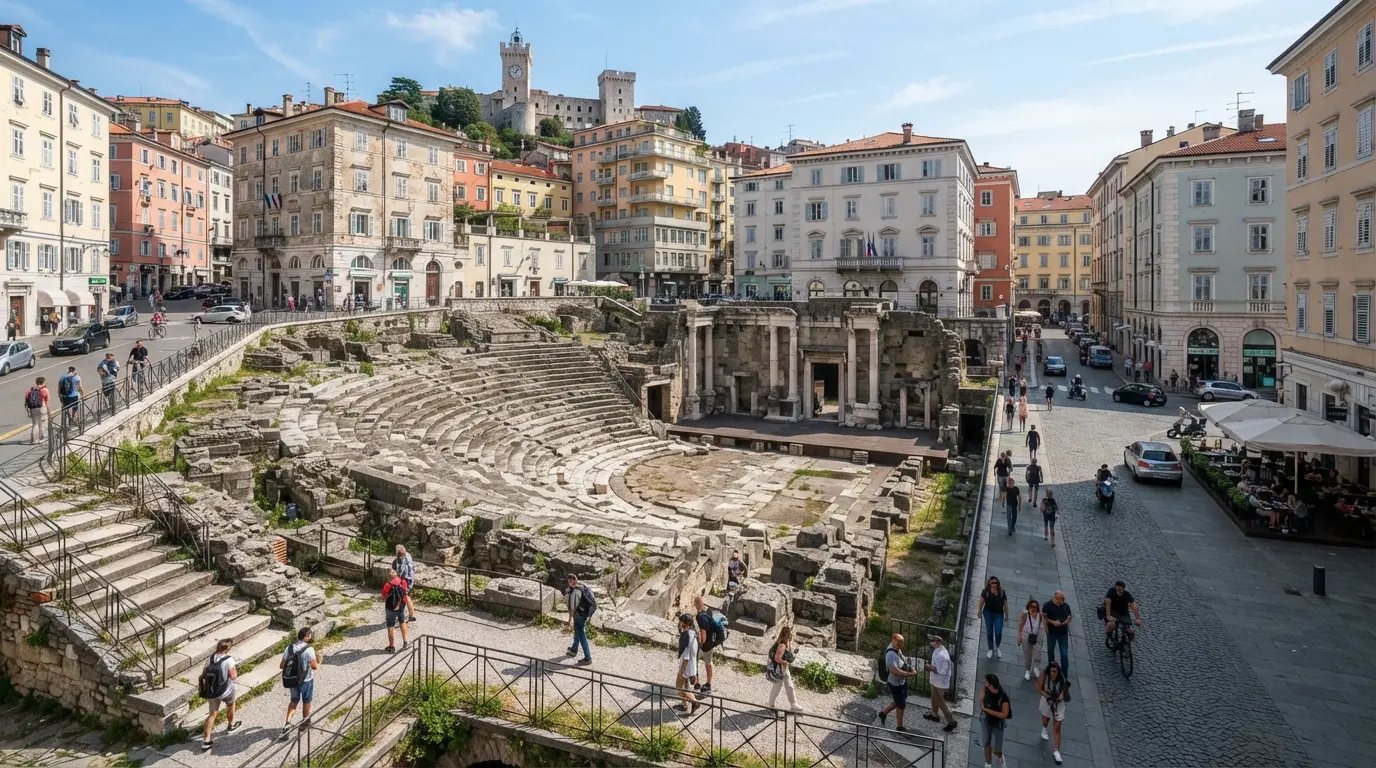
Things to do in Trieste range from sipping espresso in a 200 year old cafe to exploring a clifftop castle with a tragic love story behind it. This small Italian city on the Adriatic blends Roman ruins, Habsburg architecture, and coastal charm into a walkable center most visitors underestimate before they arrive.
Trieste sits tucked into the far northeastern corner of Italy, right against the Slovenian border, and that location shapes everything about it. It doesn’t look or feel like Rome, Florence, or Venice. Instead it carries the weight of the Austro-Hungarian Empire, a Roman past, and a modern Italian identity all at once. Travelers who expect a quiet stopover often leave surprised at how much the city packs into such a compact footprint.
Is Trieste Worth Visiting
Yes, and the appeal comes down to variety without the crowds. Trieste offers Habsburg era architecture, a strong coffee culture, Roman ruins, and Adriatic coastline, all without the tourist density found in Venice or Rome. Walk in almost any direction from the center and within twenty minutes you might pass a Roman theater, a grand canal, and a hilltop castle with sea views.
The tradeoff is that Trieste isn’t a city built around checklist sightseeing. There’s no single blockbuster monument pulling in tour buses by the hour. What it offers instead is atmosphere: elegant cafes, quiet piazzas, and a food scene shaped by three different cultures colliding on one coastline.
Is Trieste Touristy or a Hidden Gem
Trieste is still relatively undiscovered compared to Italy’s major destinations, though that’s shifting. Cruise ship traffic has increased steadily in recent summers, and both domestic and international visitor numbers are climbing year over year. Prices remain noticeably lower than Venice or Florence for now, but locals who have watched the city change over the past several years expect that gap to narrow.
What Is Trieste Known For
Trieste holds the title of coffee capital of Italy, and it earns it. Illy, one of the country’s most recognized coffee brands, was founded here, and coffee houses dominate the streetscape in a way that feels different from the rest of Italy. Beyond coffee, Trieste is known for its Austro-Hungarian architecture, the sweeping Piazza Unità d’Italia, the seaside Castello di Miramare, and a history that swung between empires for centuries before settling into modern Italy in 1954.
How Many Days Do I Need in Trieste
One full day is enough to cover the city center highlights: Piazza Unità d’Italia, a walk along the Canal Grande, and the climb up to Castello di San Giusto. Travelers with two to three days can add Castello di Miramare, an afternoon at Barcola, a visit to an osmiza in the hills, and still have time left for a day trip across the border into Slovenia or Croatia.
A common mistake first timers make is treating Trieste as a quick one day stop squeezed between Venice and Ljubljana. That works fine for a taste of the city, but it means skipping Miramare Castle, the coastal walking paths, and the slower pleasures that make Trieste worth a return visit rather than a single afternoon.
What Is the Best Time to Visit Trieste
Each season here delivers something different. Summer brings hot, sunny days perfect for swimming at Barcola, though the canal area and open piazzas can get uncomfortably warm by midday. Fall is widely considered the sweet spot: temperatures moderate, humidity drops, and on clear days you can see the mountains across the bay while sitting outside with a coffee.
Winter turns windy and can feel colder than the thermometer suggests, largely due to humidity, but it rarely snows, and Piazza Unità d’Italia transforms into a Christmas market with an outdoor ice rink from late November through early January. Spring mirrors fall in mildness and is ideal for anyone who wants outdoor cafe time without summer’s peak crowds or heat.
What Are the Top Things to Do in Trieste
The core list of things to do in Trieste centers on a handful of sights within easy walking distance of each other, plus two standout destinations just outside the center.
- Piazza Unità d’Italia, the city’s central square and best sunset spot
- Castello di Miramare, a seaside castle with sweeping gardens
- Castello di San Giusto, a hilltop fortress with panoramic views
- Canal Grande, lined with cafes, churches, and evening energy
- Teatro Romano, an open air Roman theater in the middle of the modern city
- Museo Revoltella, a 19th century palace turned art museum
- Opicina Tramway, a historic hybrid tram and funicular
Pair any of these with coffee at a historic cafe like Caffè San Marco, open since 1914, or Caffè degli Specchi right on the main square since 1839, and you’ve covered the essential Trieste experience.
What Is Piazza Unità d’Italia and Why Is It Famous
Piazza Unità d’Italia holds the distinction of being the largest sea facing square in Europe, bordered on three sides by grand government buildings from the Austro-Hungarian era and open to the Adriatic on the fourth. It’s the natural meeting point of the city and works equally well as a daytime stroll or an evening destination for watching the sun sink over the water.
How Much Does It Cost to Visit Miramare Castle in 2026
As of 2026, a full price ticket to Miramare Castle runs 17 euros, with a reduced rate of 7 euros for visitors between 18 and 25. Entry to the castle is free on the first Sunday of every month, a detail worth building a trip around if your dates are flexible. The surrounding park, spread across more than 20 hectares of gardens, is free to enter year round.
| Attraction | Price | Notes |
| Miramare Castle, full ticket | 17 euros | Includes museum and audio guide |
| Miramare Castle, reduced (18-25) | 7 euros | ID required |
| Miramare Park | Free | Open year round |
| San Giusto Castle | Around 7 euros | Includes weapons museum |
| San Giusto Cathedral bell tower | Small fee | Worth it for the view |
How Do I Get From Trieste to Castello di Miramare
Bus line 6 runs from near the train station out to Miramare, taking about 25 to 30 minutes along a scenic coastal route, with the closest stop about a 10 minute walk from the castle entrance. A regional train to Miramare station is faster, at around 9 minutes, followed by a short walk through the park. Drivers can take the SS14 coastal road, a 15 to 20 minute trip, though parking near the entrance fills quickly on summer weekends, so arriving early matters if you want a close spot.
What Is Castello di San Giusto and Is It Worth Visiting
Castello di San Giusto is a 15th century hilltop castle offering some of the best panoramic views in the city, looking out over both Trieste and the Adriatic. Entry runs around 7 euros and includes access to a museum of medieval weapons and the Lapidario Tergestino, a collection of ancient artifacts including pieces recovered from the nearby Roman amphitheater excavation. The climb up is steep in parts, so it’s worth pacing yourself, especially in summer heat.
What Is Trieste’s Coffee Culture and How Do I Order Coffee There
Ordering coffee in Trieste comes with its own vocabulary, and getting it right marks you as someone who’s done their homework. Locals ask for un caffè when they want an espresso, since the word coffee here defaults to that strong single shot rather than anything milkier. Il nero is the straight espresso by another name, the local standard order at most counters.
Il capo refers to a small cappuccino, more compact than what you’d get elsewhere in Italy, and capo in B is that same drink served in a glass rather than a ceramic cup, a distinctly Triestine habit that surprises first time visitors. Cappuccino after lunch is generally an Italy wide faux pas, though bartenders in Trieste will usually still make you one if you ask, just don’t be surprised by a raised eyebrow.
What Food and Drink Should I Try in Trieste
Trieste’s food scene reflects its three way cultural inheritance, mixing Italian technique with Austrian heartiness and a Slavic influence from across the nearby Slovenian border. Jota anchors the savory side, a hearty stew built from beans and sauerkraut that traces directly back to the city’s Austro-Hungarian roots. Scampi alla busara, a garlicky tomato based seafood dish, represents the Adriatic side of the menu, and it pairs naturally with the fresh branzino found at harbor side restaurants.
Gnocchi di pane and bollito misto, boiled meats typically served with horseradish or mustard, round out the heartier end of the menu, usually found at buffet style Triestino taverns rather than upscale restaurants. For dessert, seek out putizza and presnitz, both rolled pastries packed with dried fruit and nuts that reveal the Austrian pastry influence at work. Evenings call for an aperitivo, ideally paired with a glass of local Friuli-Venezia Giulia wine, a region increasingly recognized for quality without the price tag of more famous Italian wine areas.
What Is an Osmiza and How Do I Visit One
An osmiza is a farm based eatery unique to the hills around Trieste, growing out of shared culture with neighboring Slovenia. Rather than a full restaurant menu, expect homemade wine alongside a spread of cold cuts and cheese, sometimes more if the farm is larger. Hours are notoriously inconsistent and shift by season, with far more options open on summer weekends than in the depths of winter. Checking a dedicated osmiza listing site before heading out saves a wasted trip up into the hills to find a shuttered gate.
Where Is the Best Neighborhood to Stay in Trieste
Cavana stands out as the top pick for anyone prioritizing nightlife and walkability, a small neighborhood of colorful buildings and narrow alleyways that comes alive after dark with aperitivo bars and casual dining. Staying near the Canal Grande suits first time visitors who want quick access to the train station along with a dense cluster of restaurants and cafes nearby. A base near Piazza Unità d’Italia delivers sea views and prime location, though expect to pay a premium for that positioning, and note that hotel inventory across Trieste overall runs smaller than what you’d find in more heavily touristed Italian cities.
Can I Swim in Trieste
Trieste doesn’t offer the postcard sandy beaches found elsewhere on the Italian coast, but that doesn’t rule out a swim. Barcola delivers rocky entry points along a long coastal promenade that gets packed with locals sunbathing, walking dogs, and swimming throughout summer. La Lanterna, known locally as Pedocin, adds a genuinely unusual angle: it’s Europe’s last remaining public beach still divided by gender, a tradition dating to the 19th century that continues today. For something closer to a traditional beach day, Sistiana Bay sits about 20 minutes outside the city, offering a mix of sand and pebbles between dramatic cliffs.
What Day Trips Can I Take From Trieste
Trieste’s location puts Slovenia and Croatia within easy striking distance, making day trips one of the city’s biggest draws for travelers with extra time.
| Destination | Distance/Time | Transport Option |
| Muggia | 30 minutes | Delfino Verde ferry |
| Piran, Slovenia | 40 minutes | Car |
| Ljubljana, Slovenia | 1 hour by car, 1.5 hours by train | Car or train |
| Motovun, Croatia | 1 hour | Car |
| Rovinj, Croatia | 1.5 hours | Car |
| Pula, Croatia | 1.5 hours | Car |
Do I Need a Car to Visit Slovenia or Croatia From Trieste
Ljubljana is the exception here, reachable comfortably by train in about 90 minutes. Nearly everywhere else across the border, including Piran, Rovinj, Motovun, and Pula, requires either a rental car or an organized tour, since public transit connections between Italy and its neighbors remain limited and often inconvenient for a single day trip.
Is the Opicina Tramway Running in 2026
The Opicina Tramway has a history of intermittent closures for repairs, so travelers should check current operating status before planning a trip around it. When running, it combines a standard city tram with a funicular assisted climb, hauling passengers up steep hillsides to the village of Opicina, a ride that’s been in operation since 1902 and remains a genuine local icon when the schedule cooperates.
Is Trieste Safe to Visit
Trieste is widely considered safe, including for solo travelers walking at night, with low rates of petty theft or scams compared to more heavily touristed Italian cities. The one area where extra caution gets mentioned consistently is directly in front of the train station after dark, a spot worth being alert around rather than avoiding entirely.
Final Thoughts
Trieste rewards travelers willing to slow down rather than rush through a checklist. Between the coffee culture, the Habsburg architecture, and the easy access to Slovenia and Croatia, there are enough things to do in Trieste to fill anywhere from one focused day to a full week. Start with the city center, add Miramare Castle if you have a second day, and let an osmiza or a Barcola swim round out the experience before it changes shape with the crowds arriving each summer.
FAQs
Do I need to speak Italian in Trieste?
No. English works fine in tourist areas like the Canal Grande and Piazza Unità d’Italia, though locals appreciate basic Italian phrases if you wander outside the center.
Is Trieste a good day trip from Venice?
It’s possible but tight, since the train runs about two hours each way, making an overnight stay a more comfortable option than squeezing it into a single day.
What is Trieste’s connection to James Joyce?
James Joyce lived in Trieste for more than a decade and wrote much of his early work here, and the city still honors him with a statue along the Canal Grande.
Is Trieste dog friendly?
Yes. Most restaurants and shops welcome dogs, and booking platforms list numerous dog friendly accommodation options near the center.
What is the segregated beach in Trieste?
La Lanterna, known locally as Pedocin, is Europe’s last remaining public beach divided by gender, a 19th century tradition still practiced today.


