
How to Start a Travel Blog in 2026: The Honest Step-by-Step Guide
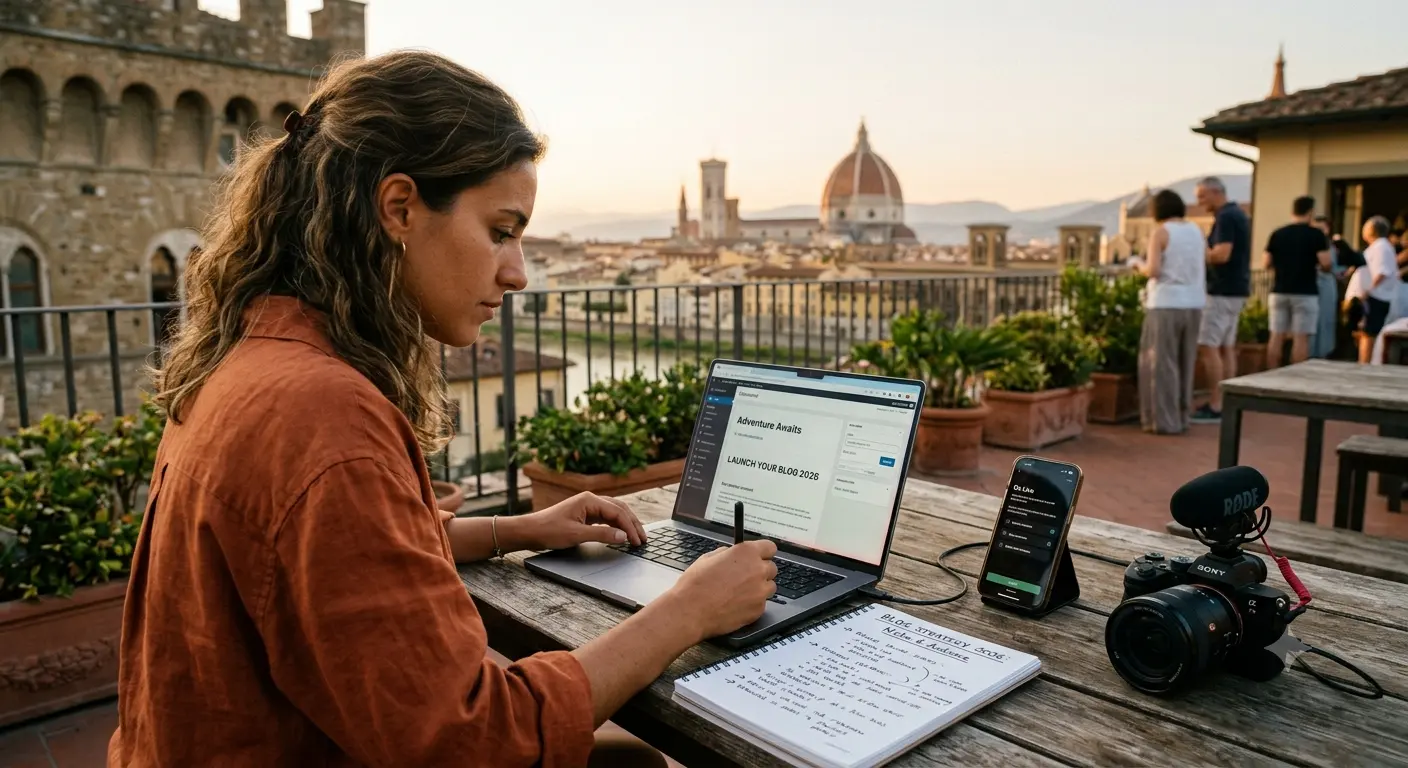
To start a travel blog, register a domain name, set up web hosting with Bluehost or Dreamhost, install WordPress.org, choose a premium WordPress theme and begin publishing posts consistently. The technical setup takes under an hour. Building a real audience and earning travel blogging income takes longer, and this guide covers both parts with full honesty.
Most guides about how to start a travel blog walk you through the tech setup, recommend a hosting affiliate and stop there. This one goes further. You will get the niche strategy, the realistic income timeline, the monetization framework and the 2026-specific challenges that no other article is addressing yet.
Is It Too Late to Start a Travel Blog in 2026?
No. The space is crowded but not closed.
Travel bloggers who started anonymously as recently as 2024 are already earning $3,000 per month in passive income within two years. What changed is the strategy required. Publishing generic destination content no longer works the way it did in 2012. Narrow niche selection, firsthand experience content and a proper travel blog SEO strategy are now non-negotiable.
The bloggers failing in 2026 are the ones writing content that Google’s AI Overviews now answer directly without sending any clicks to a blog. The ones succeeding publish specific personal experience-driven posts that AI simply cannot replicate.
How to Choose a Travel Blog Niche That Actually Pays
Your travel blog niche determines your income ceiling before you write a single word. Here is how to think about it practically:
- Luxury travel blog niches attract premium brand partnerships with airlines hotels and high-end gear brands
- Adventure travel blog content drives strong affiliate marketing income through gear retailer links
- Food travel blog content supports affiliate links and digital product sales like ebooks simultaneously
- Budget travel blog niches generate solid display advertising revenue and booking platform commissions
- Family travel blog and solo travel blog audiences unlock underserved brand deal opportunities
Do not pick a niche based purely on what you love. Pick one where what you love overlaps with what brands want to pay for and what readers actively search for every day.
How to Pick a Travel Blog Name That Works Long-Term
Bloggers waste weeks on this. Here is the short version.
Check your chosen name on Namechk before anything else. This tool shows whether the name is available across every major social platform at once. If it is not available consistently across Instagram Pinterest and Facebook then move on. You need to own that name everywhere.
Avoid names that tie you to a single country age or travel style. A name like “My African Adventures” locks you into one continent. “Thirty-Year-Old Traveller” creates a problem when you turn forty. Choose something that can grow with you over a decade. Keep it under five words, skip hyphens and register the .com domain extension only.
How Much Does It Cost to Start a Travel Blog?
The real number is under $50 for your first year. Here is the honest breakdown:
- Domain name: $10 to $13 per year through GoDaddy or Namecheap and often free when bundled with hosting
- Shared hosting: $1.99 to $2.49 per month through Bluehost or Dreamhost
- SSL certificate: free with both hosts above
- Premium WordPress theme: $30 to $100 one-time payment through Themeforest or StudioPress
- Blog logo design: $5 to $200 through Fiverr depending on complexity
- Email marketing: free through Mailerlite for your first 1,000 subscribers
You do not need to spend more than this to launch. Thrive Leads, Hootsuite and Canva come later once you understand what your blog actually needs.
Step-by-Step Travel Blog Setup [How-To]
Step 1: Register Your Domain Name
Buy your domain through Namecheap or GoDaddy or get it free when you sign up with Bluehost or Dreamhost. Run the name through Namechk first to verify social media availability. Always enable domain privacy protection at checkout. Without it your personal address becomes publicly searchable in the WHOIS database.
Step 2: Choose Web Hosting
New travel bloggers should start on shared hosting. It is affordable for low traffic volumes and simple to set up. Bluehost starts at $1.99 per month and Dreamhost at $2.49 per month. Both include a free domain name, a free SSL certificate and one-click WordPress.org installation. SiteGround handles higher traffic better if you anticipate quick growth.
When your travel blog traffic consistently passes 50,000 monthly pageviews upgrade to VPS hosting. Shared hosting slows your site at that level and site speed directly affects your search rankings.
Step 3: Install WordPress.org
Always use WordPress.org on your own hosting. Never use WordPress.com for a travel blog you plan to monetize. WordPress.org gives you full content ownership, lets you run affiliate links freely, install any WordPress plugins you choose and switch themes without restriction. WordPress.com blocks most of this by default.
One-click WordPress installation is available in the dashboard of both Bluehost and Dreamhost. The process takes under five minutes.
Step 4: Choose Your WordPress Theme
Your theme controls how your blog looks and performs on mobile. Get a premium WordPress theme from day one. Free themes stop receiving updates over time and that creates security vulnerabilities.
Strong options include Thrive Theme Builder for conversion-focused design, Genesis Framework through StudioPress for clean SEO performance and Avada from Themeforest for full visual flexibility with Elementor built in. Pick one and move forward. You can always change it later.
Step 5: Install Essential WordPress Plugins
Install these before publishing your first post:
- WordPress SEO by Yoast for on-page optimization
- Akismet for spam comment filtering
- W3 Total Cache to improve site speed
- UpdraftPlus or BackWPUp for regular backups
- Wordfence Security for firewall and malware protection
- Jetpack for basic site statistics
Add Mailerlite and Thrive Leads when you are ready to build your email list.
Writing Travel Blog Content That Ranks in 2026
Write posts between 1,000 and 2,000 words. Use a content calendar to publish consistently at least once per week. The content types that generate the most travel blog traffic are destination guides with real firsthand detail, how-to travel posts targeting specific search queries and top 10 listicles that travel audiences share on Pinterest.
Do not write about anything you have not personally experienced. Google’s helpful content system identifies surface-level content quickly and buries it in rankings. Your personal travel observations are the one thing AI cannot replicate, so lean into them hard in every post.
What AI Overviews Mean for Your Travel Blog in 2026
This is the conversation no competitor guide is having and you need to understand it before you start.
Google’s AI Overviews now answer basic travel questions directly on the search results page. Generic destination summaries are being displaced at scale without clicks going to any travel blog. What survives this shift is specific opinionated firsthand content. Your “I spent 11 days in rural Japan on $40 a day and here is exactly what I ate” post cannot be replicated by AI. Your general “things to do in Tokyo” post is already being buried.
If you use AI writing tools in your workflow use them for outlines and research only. Write all firsthand narrative yourself. Google penalises travel blog content that reads generated rather than experienced.
How to Monetize a Travel Blog
Affiliate marketing produces income earliest. Sign up for Amazon Associates, Commission Junction, ShareASale, Flex Offers and Affiliate Window. Embed affiliate links naturally inside destination guides and gear posts. Your first commission typically arrives within three to six months.
Display advertising through Google AdSense works from day one but pays very little until you hit 10,000 monthly pageviews. At that threshold apply to premium ad networks for significantly better rates.
Sponsored content and brand partnerships become available once your audience is engaged. Accept only long-term brand partnerships that match your niche. Tourism board deals and press trips are valuable but do not rely on them as your primary income because they require constant active work to maintain.
Digital products like ebooks and online courses deliver passive income once built and protect your revenue from search algorithm changes because they do not depend on Google rankings to sell.
Realistic Travel Blog Income Timeline
Here is the honest version nobody else publishes:
- Months 3 to 6: First affiliate marketing commission
- Month 10 to 14: First $500 per month through display advertising plus affiliate income
- Month 12 to 18: Reaching the 10,000 monthly pageviews threshold for premium ad networks
- Month 18 to 24: Crossing $3,000 per month in passive income
- Year 3 to 5: Six figure travel blogging income through digital products and scale
Most bloggers quit in month four because results have not arrived yet. The ones who reach year two are exactly the ones who changed the travel blogging industry.
Build Your Email List From Day One
Your email list is the only audience you truly own. Social platforms change algorithms. Search rankings shift. Your list stays yours.
Use Mailerlite because it is free for the first 1,000 subscribers and simple to configure. Add signup forms using Thrive Leads across your highest traffic posts. Send a newsletter with tips that go deeper than your blog posts cover. Give readers a real reason to hand over their email address and they will.
What Legal Setup Does a Travel Blogger Actually Need?
This is the gap nobody covers until it becomes a real problem. When your travel blog starts earning money you need to:
- Register a business entity such as an LLC for liability protection
- Track all travel blog expenses as potential tax deductions
- Add FTC-compliant disclosures on every post containing affiliate links or sponsored content
- Add a GDPR-compliant privacy policy if your email list includes European readers
Set these up early. Fixing legal issues retroactively costs far more than doing it properly from the start.
Final Thoughts
Knowing how to start a travel blog correctly in 2026 means going in with realistic expectations from the beginning. The technical setup is genuinely affordable and takes less than an hour. The hard part is producing firsthand experience content consistently for twelve to twenty-four months before income reflects your effort. That gap is where most bloggers quit. Treat your travel blog like a business from day one, pick a niche with real monetization depth and build your email list alongside every other growth channel. Those three decisions separate the blogs that are still earning in year five from the ones that went quiet in month four.
FAQs
Is it too late to start a travel blog in 2026?
No. Niche travel blogs with genuine firsthand expertise still earn consistent travel blogging income. The bloggers failing are publishing generic content that AI Overviews now answer without sending clicks anywhere.
What is the best platform for a travel blog?
WordPress.org with shared hosting from Bluehost or Dreamhost. It gives you full content ownership, affiliate marketing freedom and plugin access that WordPress.com and Squarespace cannot match.
How long before a travel blog makes money?
Most travel bloggers earn their first affiliate marketing commission within three to six months and reach $500 per month around month twelve. Passive income at $3,000 per month typically arrives between months eighteen and twenty-four.
What WordPress plugins does a travel blog need?
WordPress SEO by Yoast, Akismet, W3 Total Cache, Wordfence Security, UpdraftPlus and Jetpack as your core set. Add Thrive Leads and Mailerlite for email list building once you go live.


