
How to Winterize Your Garden: The Complete 2026 Checklist for Every Zone
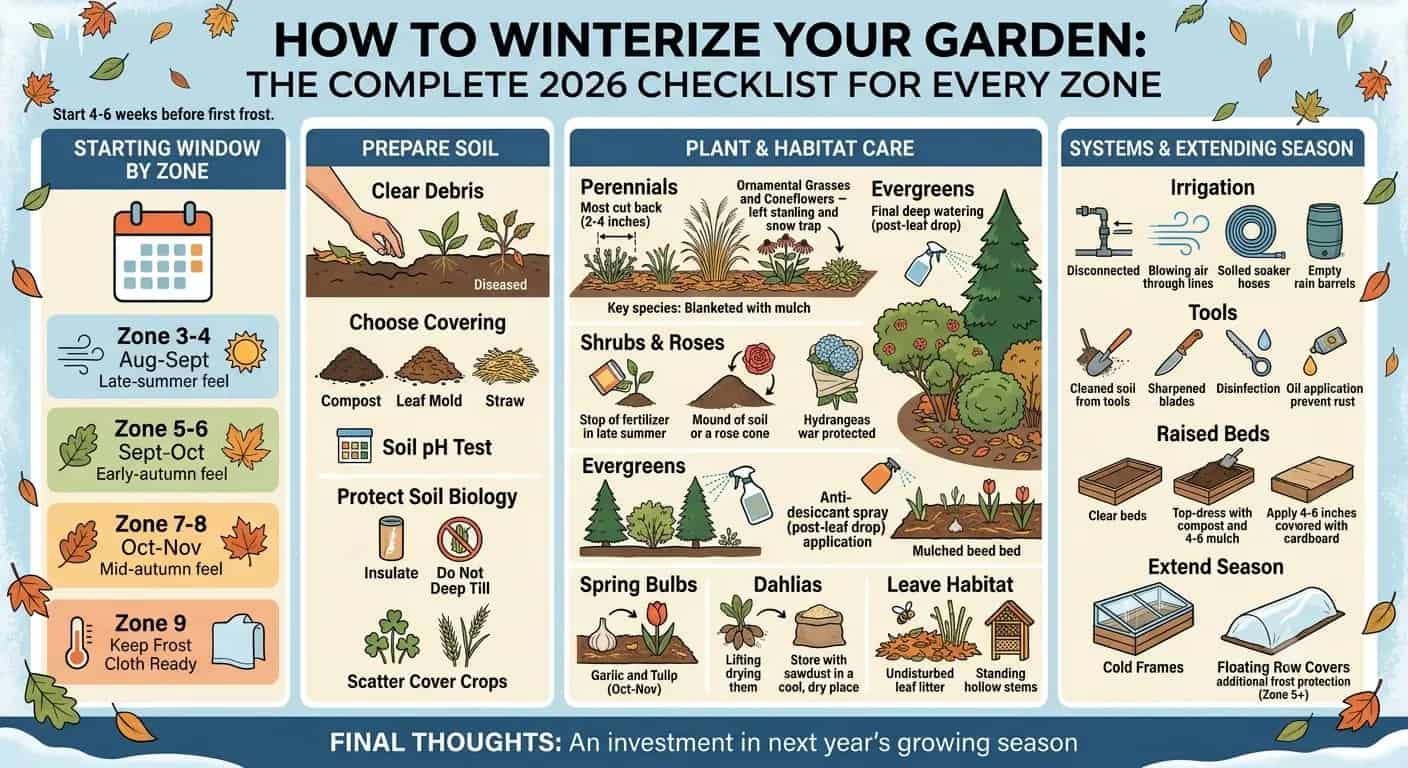
Winterizing your garden means protecting your soil, plants, irrigation systems, and tools from frost damage and freeze-thaw cycles before cold weather arrives. Start four to six weeks before your average first frost date. The right steps depend on your USDA hardiness zone, but mulching, cutting back perennials, draining irrigation lines, and planting spring bulbs apply in every region.
What Does It Actually Mean to Winterize Your Garden?
Most gardeners think fall cleanup is enough. It is not. True garden winterization is a set of proactive steps that protect soil health, plant root systems, beneficial insect populations, and irrigation equipment through the sustained cold and repeated freeze-thaw cycles that winter brings.
Skip it and spring becomes a recovery mission. Overwinter pests hatch from insect eggs left inside garden debris. Soil nutrient depletion leaves beds struggling to support new growth. Drip irrigation tubing cracks when residual water freezes and expands. Perennials that belong in your zone die because they never fully hardened off before the killing frost arrived.
When Should You Start Winterizing Your Garden?
Start winterizing your garden four to six weeks before your region’s average first frost date. For most North American gardeners that window looks like this:
- Zone 3 and 4: Begin in late August to early September
- Zone 5 and 6: Begin in late September through October
- Zone 7 and 8: Begin in late October to early November
- Zone 9: Focus mainly on keeping frost cloth ready for unexpected cold snaps
One important update for 2026: climate variability has shifted average first frost dates across many regions. Traditional zone calendars are no longer fully reliable everywhere. Monitor your local forecasts, track your own microclimate patterns, and keep floating row covers and cold frames ready for fast-moving early freezes rather than relying on fixed seasonal dates alone.
How to Prepare Garden Soil for Winter
The goal when you prepare garden soil for winter is not just to tidy up beds. It is to set the biological foundation your plants need in spring. These four steps make the biggest difference.
Clear garden debris correctly Remove all spent annuals, diseased plant material, and weeds from your beds. Diseased plants belong in the trash, not the compost pile. Leaving diseased material behind creates overwintering sites for fungal spores, insect eggs, and grubs that reactivate the moment temperatures rise in spring.
Choose the right soil covering Three options work well for winter soil protection:
- Compost delivers the best nutrient value but takes five months to one year to mature fully in a compost tumbler before you apply it to beds
- Leaf mold takes less preparation: rake shredded leaves into a pile under a tarp and let them decompose for several weeks before spreading on garden beds
- Straw mulch and wood chips work immediately as insulation at five to seven inches depth but provide fewer nutrients than compost or leaf mold
Test soil pH before the ground freezes Fall is the ideal time for soil testing. Lime applications and soil amendments need the entire dormant season to break down into the soil before spring planting begins. A simple soil test kit removes the guesswork from pH correction and fertilizer decisions.
Protect your soil biology Mycorrhizal fungi and beneficial soil bacteria form the underground network that makes nutrients accessible to plant roots. Most garden content never covers this. These organisms survive best under undisturbed insulated soil. Avoid deep fall tilling in beds with no serious pest infestation. Instead, cover exposed soil with two to three inches of organic matter as insulation through the dormant months.
Should You Plant Cover Crops Before Winter?
If any garden beds will sit empty through winter, plant cover crops. Scatter winter rye, oats, buckwheat, or clover over cleared beds, lightly rake them in, and water once. These plants suppress weeds, prevent soil erosion, and add organic matter when you till them into beds the following spring. Clover is the most effective nitrogen fixer among common winter cover crop options, making it especially valuable in vegetable beds that feed heavy summer crops.
Root vegetables like carrots and turnips already in the ground can stay put. Cover them with a generous layer of straw mulch to lock moisture and nutrients into the soil through the dormant months.
How to Winterize Every Type of Plant in Your Garden
Each plant category needs specific care. Here is what actually works for each one:
Perennials Cut most perennials back to two to four inches above the plant crown after the first killing frost. Leave ornamental grasses, purple coneflowers, and black-eyed Susans standing through winter. Their seed heads feed foraging birds and their upright stems trap insulating snow cover that protects crowns in exposed garden areas. Blanket northern perennial beds with four to six inches of mulch after the ground freezes to prevent damage from repeated freeze-thaw cycles.
Ornamental Shrubs and Roses Stop applying fall fertilizer to ornamental shrubs by late summer so they harden off and enter natural cold dormancy on schedule. After the killing frost, mound six to twelve inches of soil over tender rose bases or use rose cones for protection. Wrap sensitive spring-blooming hydrangeas and once-flowering shrubs in burlap to protect the flower buds that carry next year’s spring blooms. Leave winterberries and red-twig dogwood stems for winter interest and wildlife.
Evergreens Evergreen foliage keeps losing moisture to winter sun and drying winds even when frozen soil prevents roots from replacing that water. This desiccation causes the brown scorched foliage many gardeners blame on cold when dehydration is the real cause. Give northern evergreens a deep watering after deciduous plants drop their leaves and before the ground freezes hard. Then apply anti-desiccant spray to broadleaf evergreens like rhododendrons, hollies, and camellias in late November and reapply in January. This professional landscaping technique prevents winter burn that shows up every spring as brown, dead-looking leaves on otherwise healthy plants.
Container Plants Move tropical perennials like coleus and hibiscus indoors before overnight temperatures consistently drop below 50 degrees Fahrenheit. Place hardy container plants in an unheated garage or basement where they experience natural winter dormancy without needing supplemental light. Containers staying outdoors need insulation from burlap, straw, or bubble wrap and should be grouped together in a wind-sheltered corner to reduce heat loss from exposed sides.
Dahlia Tubers and Spring Bulbs Lift dahlia tubers before the first hard frost. Cut stems to six inches above the soil surface and leave them in the ground a few extra days so tubers develop new eyes. Dig carefully, dry on cardboard, and store in a perforated plastic bag with sawdust in a cool dry space until spring planting time.
Plant garlic, tulip bulbs, and daffodil bulbs between October and November before the ground freezes solid. These spring bulbs need cold stratification through the dormant season to bloom correctly. Add a layer of straw mulch over the garlic bed to protect roots and prevent squirrels from digging through the planting area all winter.
What Most Gardens Miss: Leaving Habitat for Beneficial Insects
Full fall cleanup sounds like responsible gardening. In reality, total removal eliminates the overwintering habitat that native bees, predatory beetles, and parasitic wasps need to survive winter and return to your garden in spring as natural pest controllers.
The smarter approach is selective cleanup. Remove diseased material, invasive weeds, and heavy annual debris completely. Leave hollow perennial stems, ornamental seed heads, and a designated patch of undisturbed leaf litter as intentional beneficial insect habitat through the dormant season. Adding a simple insect hotel in a sheltered garden corner gives overwintering pollinators a structure separate from your main planting beds.
How to Winterize Irrigation Systems, Rain Barrels, and Garden Tools
Drip irrigation and soaker hoses Disconnect drip irrigation tubing and emitters before temperatures drop below 32 degrees Fahrenheit. Blow compressed air through in-ground sprinkler lines to clear residual water from every section. Coil soaker hoses and store them in a dry location indoors. Set smart irrigation controllers to winterized mode or bring the unit inside. A cracked drip emitter or burst pipe costs far more in spring repairs than the 20 minutes of prevention requires.
Rain barrels Empty rain barrels completely and store them inverted or bring them indoors. Water left sitting in a barrel freezes, expands, and cracks the barrel or the spigot fitting before spring arrives.
Garden tools Clean soil from all tools after the final fall use. Sharpen hand pruner and garden shear blades. Wipe all cutting tools with a diluted bleach solution to eliminate disease pathogens carried from plant to plant. Apply a light coat of oil to metal surfaces to prevent rust through the storage season. Store row cover hoops, plant supports, and garden fabric clean and completely dry.
How to Winterize Raised Garden Beds and Extend the Growing Season
Raised beds freeze faster than in-ground beds because cold air contacts them on three sides instead of just the surface above. Clear all spent plant material after the final harvest. Top-dress raised beds with two to three inches of compost to replace nutrients heavy feeders consumed during the growing season. Add four to six inches of straw mulch or shredded leaves over the surface to insulate soil through winter.
For beds staying empty, cover the surface with cardboard weighted down by a thin mulch layer. This protects soil structure and suppresses early spring weeds without any additional inputs.
Place cold frames over raised beds to trap daytime solar heat and extend the growing season into late fall. Cool-season crops like kale, spinach, and collards keep producing weeks past the first frost date inside a cold frame. Layer floating row covers inside cold frames in Zone 5 and colder for maximum frost protection without extra equipment.
Use Winter as an Active Garden Planning Season
Winter is the highest-leverage planning period in the gardening calendar. Order seed catalogs and lock in variety selections before popular cultivars sell out in January. Map crop rotation changes on paper now to prevent disease buildup in the same beds next season. Mark perennial locations with stakes or labels before snow covers them so you do not disturb root systems during early spring work. Review what worked and what failed while the details are still clear.
Final Thoughts
Winterizing your garden is the single most important investment you make in next year’s growing season. Protect soil biology, cut back plants at the right time for your zone, drain every section of your irrigation system, leave deliberate habitat for beneficial insects, and treat the dormant months as an active planning season. The care you put in before the first frost is the foundation of everything your garden produces when spring returns.
FAQs
Do you need to remove mulch from your garden in spring? Remove heavy winter mulch from around perennial crowns before new growth pushes through in early spring. Thick mulch left on warming soil causes crown rot. Leave a light one to two inch layer around established plants and rake the excess into pathways or add it to the compost pile.
Should you water your garden before winter? Yes. Give perennials, shrubs, and especially evergreens a final deep watering after deciduous plants drop their leaves but before the ground freezes hard. Evergreens keep losing moisture to winter wind and sun even when frozen soil prevents roots from absorbing replacement water, making pre-freeze hydration critical for all broadleaf varieties.
Should you till your garden in fall? Shallow tilling in seriously pest-infested beds surfaces insect eggs and grubs to freezing temperatures and lowers spring pest pressure. Deep fall tilling however destroys soil structure, exposes mycorrhizal fungi and beneficial soil bacteria to fatal cold, and increases soil erosion through winter. For most home gardens, mulching and avoiding the tiller produces better long-term soil health.
How much mulch should you put on a garden for winter? Apply four to six inches of organic mulch such as straw, shredded leaves, or pine needles around perennials and shrubs after the ground freezes. Raised beds need the same depth or slightly more due to faster heat loss. Avoid thick matting materials that block air circulation and cause plant crowns to rot underneath the insulating layer.
Can you leave dead plants in the garden over winter? Leave healthy ornamental grasses, seed heads, and hollow perennial stems for beneficial insect overwintering habitat and bird foraging through winter. Remove all diseased plants, spent annual vegetables, and invasive weeds immediately after the season ends. Selective removal protects your garden ecosystem while eliminating the overwintering sites that harbor pests and fungal spores.
What do you do with container plants when temperatures drop? Move tropical perennials like coleus and hibiscus indoors before nights consistently fall below 50 degrees Fahrenheit. Place hardy container plants in an unheated garage or basement for natural dormancy without needing supplemental light. Wrap any containers staying outdoors in burlap or straw and group them together in a protected wind-sheltered location.
When should you plant garlic and spring bulbs? Plant garlic, tulip bulbs, and daffodils from October through November before the ground freezes solid. Spring bulbs need cold stratification through the dormant season to bloom properly. Cover the garlic bed with straw mulch after planting to insulate roots through the coldest weeks and protect the planting area from squirrels.


