
Banff Must Do: The Complete Guide to Things to Do in Banff in 2026
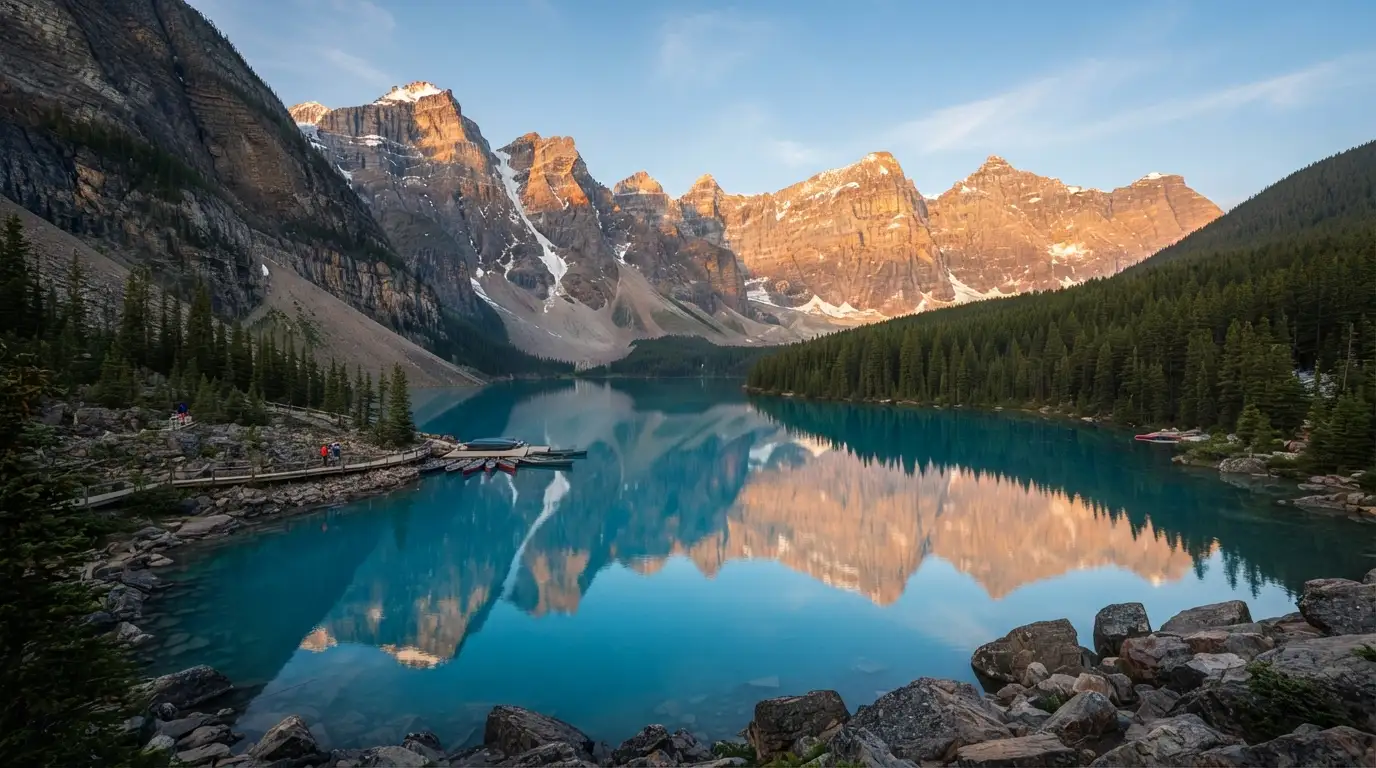
The Banff must do list starts with three things nearly every visitor circles first: the Banff Gondola, Lake Louise, and Moraine Lake, followed closely by Johnston Canyon and a soak at Banff Upper Hot Springs. These cover the mountain views, the glacial lakes, and the classic Rockies scenery in one trip, and they set the pace for everything else worth planning around them.
Here’s the thing most guides don’t tell you upfront. Banff is genuinely one of the most photogenic places in Canada, but it’s also one of the most logistically confusing. Parking fills up before sunrise. Shuttle tickets release on a schedule nobody explains clearly. And Moraine Lake, the lake everyone wants a photo of, hasn’t allowed private cars since 2023. If you’re planning a trip and keep hitting conflicting information, you’re not imagining it. This guide untangles the actual logistics along with the best things to do in Banff, so you can spend less time confused and more time standing in front of turquoise water.
How Many Days Do You Need in Banff?
Three full days is the sweet spot for a first Banff trip, enough time for the gondola, Lake Louise, Moraine Lake, and one canyon hike without rushing. Two days works if you’re tight on time and skip the Icefields Parkway. A single banff day trip from Calgary is possible but limits you to one or two major stops.
Most travelers underestimate drive times inside the park. Distances on the map look short, but pulling over for wildlife, photo stops, and parking searches adds up fast. Here’s a realistic breakdown:
- One day: Banff Gondola plus downtown Banff and Bow Falls
- Two days: add Lake Louise and Johnston Canyon
- Three days: add Moraine Lake (with a shuttle reservation) and Lake Minnewanka
- Four plus days: add the Icefields Parkway and Columbia Icefield, which eats a full day on its own
A common mistake first-timers make is trying to fit Lake Louise, Moraine Lake, and the Icefields Parkway into a single day. The distances and shuttle schedules make that a stressful, rushed day rather than an enjoyable one.
Is Banff Worth Visiting?
Yes, Banff is genuinely one of the most beautiful national parks in the world, with turquoise glacial lakes, snow-capped peaks, and wildlife that regularly wanders into view from the road. Banff National Park sits inside the Canadian Rockies and delivers dramatic mountain scenery within easy reach of a small, walkable town.
What sets Banff apart from other mountain destinations is accessibility. You can have breakfast on Banff Avenue and be standing at the base of a glacier by early afternoon. Few places let you move from cozy town cafes to genuine high-alpine terrain that quickly.
What Is the Banff Gondola and Is It Worth It?
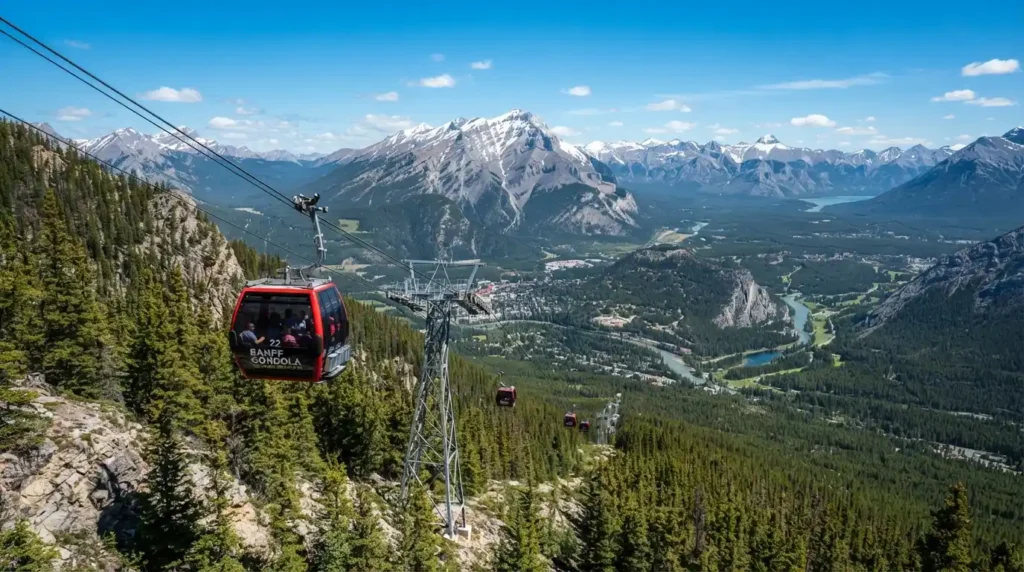
The Banff Gondola is an 8-minute cable car ride climbing 698 metres up Sulphur Mountain to a summit station sitting at 2,281 metres elevation, with 360-degree views of six mountain ranges and the Bow Valley below. It’s one of the most reliably rewarding things to do in Banff regardless of weather or fitness level.
At the top, an interpretive boardwalk leads to Sanson’s Peak, with interactive exhibits along the way and Sky Bistro, one of Canada’s highest-elevation restaurants, if you want lunch with a view. Ticket prices vary by season and typically run higher in peak summer, so booking online in advance usually saves money over walk-up rates. Because you’re gaining nearly 700 metres of elevation quickly, some visitors feel the altitude shift, especially anyone not used to mountain elevation. It’s mild for most people, but worth knowing if you have respiratory or heart conditions. Arrive early morning or after 4pm to avoid the busiest midday crowds, particularly through July and August.
Can You Still Drive to Moraine Lake?
No, Moraine Lake Road has been permanently closed to private vehicles since 2023, and there is no visitor parking at the lake itself. Access now requires a Parks Canada shuttle reservation, a Roam Transit Super Pass, a licensed tour, a bicycle, or hiking in.
This is genuinely the single biggest surprise for first-time visitors researching a banff must see itinerary. The classic image of Moraine Lake and the Valley of the Ten Peaks is still very much achievable, but the planning looks different than it did a few years ago.
[Cost Table]
| Access Option | Approx. Cost | Notes |
| Parks Canada shuttle reservation | Reservation fee plus park pass | Books out fast in peak summer |
| Roam Reservable Super Pass | Around $30 per person | Covers Banff, Canmore, and Lake Louise routes plus Lake Connector Shuttle |
| Licensed commercial tour | $150 to $250+ per person | Includes transport and often Lake Louise combined |
| Bicycle | Free (plus bike rental if needed) | Roughly 14 miles uphill from Lake Louise village |
How Do You Get a Moraine Lake Shuttle Reservation?
Parks Canada releases Moraine Lake shuttle tickets in two waves, roughly 40 percent in advance starting mid-April and the remaining 60 percent released two days before each departure date. Reservations open at 8am Mountain time on the rolling release days, and popular summer dates sell out within minutes.
The shuttle departs from the Park and Ride near the Lake Louise Summer Gondola, roughly 50 minutes from downtown Banff by car. If your date shows sold out, check back two days before your trip when the rolling batch releases. Travelers without a car can reach the Park and Ride via the Roam Super Pass from Banff, then transfer onto the Lake Connector Shuttle for the final leg to Moraine Lake.
Is Banff or Lake Louise Better?
Banff Townsite offers more restaurants, shops, and lodging variety, while Lake Louise offers quieter, more concentrated access to the lake, glacier views, and hiking trails. Most first-time visitors base themselves in Banff and day trip to Lake Louise, about a 45-minute drive away.
If your priority is nightlife, dining variety, and walkability, stay in Banff. If your priority is being steps from the lake at sunrise before tour buses arrive, Lake Louise village makes more sense, though it comes with far fewer dining options.
What Should You Do in Downtown Banff?
Banff Avenue is the town’s main strip for shops, restaurants, and craft beer, with Bow Falls and the Bow River an easy flat walk away for anyone wanting scenery without a car. Cave and Basin National Historic Site and the historic Fairmont Banff Springs are both worth an hour if you want history alongside the views.
Bow Falls is one of the better free things to do in Banff, and walking there from downtown along the river is more scenic than driving and parking at the upper lot. Evenings in town lean toward casual mountain-town dining rather than formal, though a handful of higher-end spots exist for anyone wanting a proper night out.
What Are the Best Free Things to Do in Banff?
Vermilion Lakes, the Banff Legacy Trail, Tunnel Mountain, and Surprise Corner are all free things to do in Banff that cost nothing beyond your park pass. The Hoodoos Trail, a 10km out-and-back path, is another solid free option with minimal elevation gain.
Tunnel Mountain in particular is worth prioritizing early in a trip since it delivers wide views of the Banff Townsite, the Bow Valley, and the surrounding peaks, which helps orient you for the rest of the visit. None of these require a shuttle reservation or advance booking, which makes them useful backup plans if Moraine Lake shuttles sell out.
What Is Johnston Canyon and Is It Worth the Hike?
Johnston Canyon is a catwalk trail bolted into limestone canyon walls above a turquoise creek, with the Lower Falls reachable in 1.1km (about 30 minutes) and the Upper Falls in 2.7km (about 1.5 hours round trip). It’s consistently ranked among the top things to do in Banff for travelers who want a scenic hike without technical difficulty.
For those wanting more, continuing past the Upper Falls leads to the Ink Pots, a set of mineral springs bubbling through blue-green pools in an alpine meadow. Arrive before 8am or after 5pm to avoid the tour bus crowds that build steadily through midday in peak summer.
Should You Visit the Columbia Icefield and Athabasca Glacier?
The Columbia Icefield along the Icefields Parkway is worth the trip if you have a full day, with the round trip from Banff running about 230km. The Athabasca Glacier can be walked onto a designated safe section via a guided Ice Explorer tour rather than approached independently.
Leave early, since this is a long day of driving with frequent, worthwhile stops along the Icefields Parkway itself. Travelers on a tight banff must do itinerary sometimes skip this one, and that’s a reasonable call if you only have two or three days, since Lake Louise and Moraine Lake deliver comparable scenery closer to town.
What Are the Best Things to Do in Banff for Wildlife and Water?
Lake Minnewanka offers boat cruises, canoeing, and a scenic loop drive that’s genuinely one of the more underrated activities in Banff. Guided wildlife and grizzly bear tours, horseback rides, and whitewater rafting round out the more active side of a Banff itinerary.
The Marsh Loop near Lake Minnewanka is a gentle, flat walk with good odds of spotting elk or bighorn sheep, especially early morning or near dusk. These wildlife-focused activities usually require separate bookings from your park pass, so factor that into your budget if they’re a priority.
What Is the Best Time to Visit Banff?
Summer, from June through August, offers the fullest access to Moraine Lake, Lake Louise, and hiking trails, while October brings fall colors, thinner crowds, and cooler hiking weather before winter closures begin. Both are strong choices depending on what you want from the trip.
Things to do in Banff summer center on lake access, longer daylight, and full shuttle operations, but come with the highest crowds and prices. Things to do in Banff in October shift toward quieter trails, golden larch season in nearby areas, and noticeably thinner lines at the gondola, though some services like the Moraine Lake shuttle wind down by mid-October.
[Comparison Table]
| Season | Best For | Downsides |
| Summer (Jun-Aug) | Full lake access, longest daylight, all shuttles running | Highest crowds, sold-out shuttles, priciest lodging |
| October (Shoulder) | Quieter trails, fall colors, easier parking | Shorter daylight, cooler temps, some services winding down |
| Winter (Dec-Mar) | Skiing, hot springs, snowshoeing, fewer crowds | Moraine Lake and some trails closed or inaccessible |
Do You Need a Car in Banff?
No, you don’t need a car in Banff, especially if you’re staying in the townsite and relying on Roam Transit for Lake Louise and Moraine Lake connections. A car adds flexibility for the Icefields Parkway and Bow Valley Parkway, but isn’t essential for a first-timer itinerary.
Roam Transit connects Banff to Canmore and Lake Louise, and the Reservable Super Pass covers the Lake Connector Shuttle for Moraine Lake in one fare. This is genuinely one of the most useful things to do in Banff without a car and often skipped by competitor guides written with a rental car assumed.
What Does the Banff National Park Pass Actually Cover?
A Banff National Park day pass costs $12.25 per adult or $24.50 per family or group, and covers entry to the park and most parking lots, but not the gondola, hot springs, boat tours, or Moraine Lake shuttle. An annual Discovery Pass runs $83.50 for adults, valid at over 80 Parks Canada sites nationwide.
From June 19 to September 7, 2026, the Canada Strong Pass makes park admission completely free, no pass required, though this does not extend to parking or paid attractions. Lake Louise lakeshore parking carries a separate $42 per vehicle per day fee, charged on top of your park pass and applying even during the free-entry window. This single detail catches more first-time visitors off guard than almost anything else in trip budgeting.
[Cost Table]
| Item | Approx. 2026 Cost | Covered by Park Pass? |
| Daily adult park pass | $12.25 | N/A |
| Family/group day pass | $24.50 | N/A |
| Annual Discovery Pass | $83.50 | N/A |
| Lake Louise lakeshore parking | $42 per vehicle/day | No, separate fee |
| Roam Reservable Super Pass | Around $30 | No, separate fare |
| Banff Gondola | Varies by season | No, separate ticket |
| Upper Hot Springs admission | Varies by season | No, separate fee |
Is a Day Trip to Banff from Calgary Worth It?
Yes, a banff day trip from Calgary is worth it, with the drive taking around 90 minutes each way, though it limits you to one or two major stops rather than a full itinerary. The gondola plus downtown Banff, or Lake Louise plus Johnston Canyon, are realistic single-day combinations.
Anyone considering a day trip to Banff from Calgary should build in buffer time for parking searches and wildlife stops on the highway, both of which routinely add 20 to 30 minutes each way that isn’t obvious from a map.
Conclusion
The real Banff must do list isn’t just a checklist of pretty lakes, it’s a handful of experiences worth the planning they require. Lock in your Moraine Lake shuttle early, know exactly what your park pass does and doesn’t cover, and pick a season that matches what you actually want from the trip, whether that’s peak summer lake access or a quieter October hike through fall color. Start with the Banff Gondola and downtown on day one, then build out from there based on how many days you actually have. Banff rewards a little upfront planning far more than it punishes it.
FAQs
Do you need a car in Banff?
No. Roam Transit connects Banff, Canmore, and Lake Louise, and a Super Pass covers the Moraine Lake connector shuttle without needing a rental car.
How much does it cost to visit Banff National Park?
A daily park pass runs $12.25 per adult, though entry is completely free from June 19 to September 7, 2026, under the Canada Strong Pass. Parking, the gondola, and hot springs are all separate fees.
Can you still drive to Moraine Lake?
No. Moraine Lake Road has been closed to private vehicles since 2023. Access is now by Parks Canada shuttle, Roam Super Pass, licensed tour, bike, or hike only.
Is October a good time to visit Banff?
Yes. October brings fall colors, thinner crowds, and easier parking, though daylight hours shorten and some shuttle services wind down by mid-month.
Do you need a park pass if you’re just passing through Banff?
Yes. Any stop within the park, including the townsite itself, technically requires a valid park pass, though this is waived during the Canada Strong Pass free-entry window.
How early do you need to book Moraine Lake shuttle tickets?
Book as soon as your dates open, typically mid-April for advance tickets, and check back two days before your visit when the remaining tickets release on a rolling basis.
Is the Banff Gondola worth it?
Yes, for most visitors it’s one of the most reliable Banff must do activities, offering 360-degree Rocky Mountain views in an 8-minute ride regardless of hiking ability.


