
Hart Mountain Hot Springs: The Complete 2026 Guide to Oregon’s Remote High Desert Soak
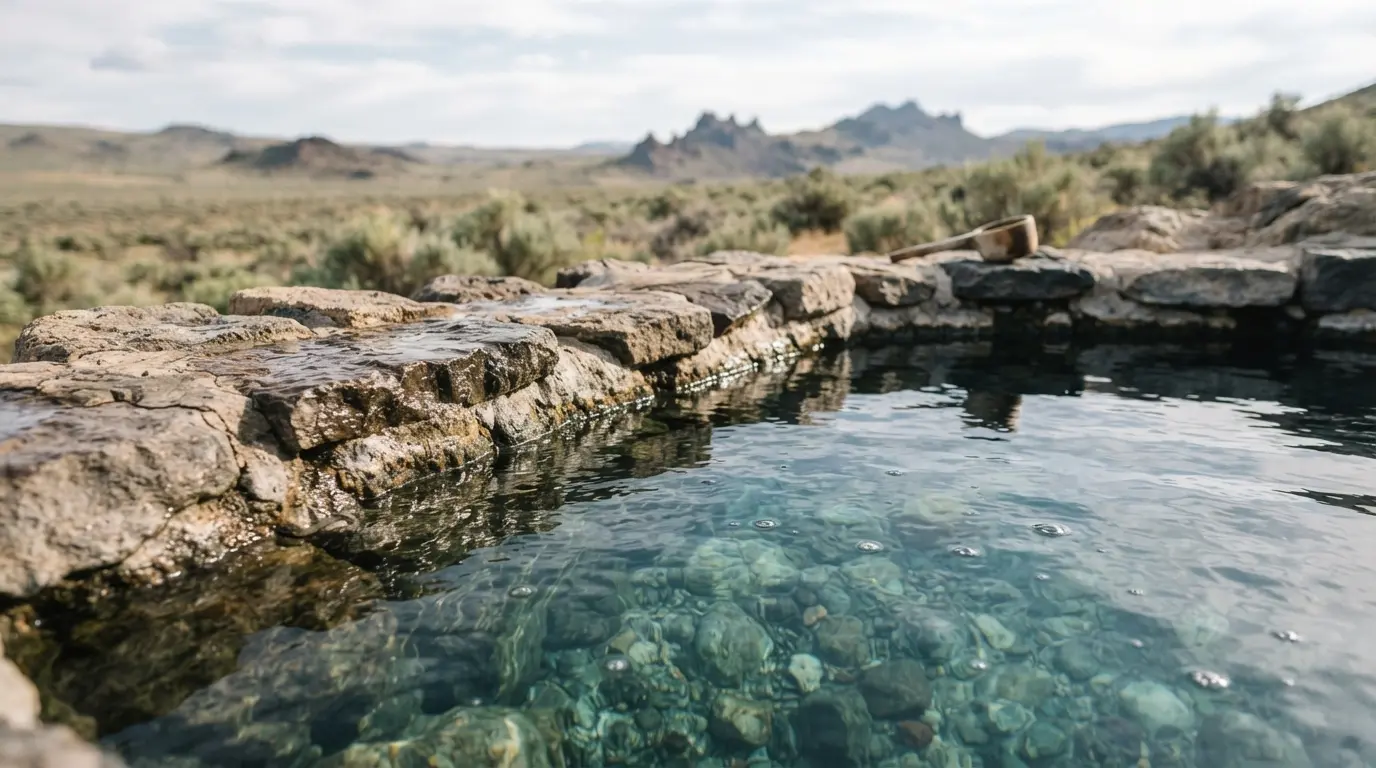
Hart Mountain Hot Springs is a free, primitive geothermal site inside the Hart Mountain National Antelope Refuge in southeastern Oregon, near Plush. It has a stone walled developed pool and a smaller natural pool in an open meadow, both fed by mineral water rising from the ground.
Getting there takes real commitment, and that scares off casual travelers. If you are willing to drive hours on gravel with zero cell service, the payoff is a soak with almost nobody else around.
What Is Hart Mountain Hot Springs
This is not a resort or a manicured park amenity. It sits on land managed by the US Fish and Wildlife Service, tucked into a refuge better known for pronghorn antelope than tourism. The developed pool has a low stone wall and a concrete deck. A short walk away, the primitive pool sits open to the sky with wide meadow views. Both are natural, both are free, and neither has a schedule or a gate.
Where Is It Located
Hart Mountain sits on a high desert plateau at roughly 5,900 feet elevation in Lake County, Oregon. The closest full service town, Lakeview, is about 67 miles southwest. Plush, a tiny community with basic gas and groceries, sits about 23 miles south.
How far is it from Boise?
Boise is just over five hours away, which makes it one of the closer major cities for anyone road tripping through the region.
How far is it from Portland, Bend, and other cities?
Portland is roughly an eight hour drive. Bend and Medford both run close to five hours. Eugene is about six hours. Spokane and Salt Lake City both sit close to nine hours out, which puts this firmly in road trip territory rather than a day trip destination for most people.
How Do You Get There
Two main routes lead in, and they are not equal. The route through Plush runs north on Hart Mountain Road for about 23 miles to the Refuge Headquarters, then continues on Hot Springs Road for another 4.4 miles to the pools and campground. The route from Frenchglen covers about 50 miles of rough washboard road, and travelers consistently call it the harder option. If you have a choice, approach from Plush.
Do you need a 4×4 to get there?
Not usually. A standard SUV with some ground clearance handles these roads fine in dry conditions. Four wheel drive becomes worth having after heavy rain or snowmelt, when the gravel turns to mud and ruts deepen fast. A common mistake first timers make is assuming any car will do year round. It will not once winter weather moves in.
Download offline maps before you leave cell range, because there is no signal anywhere in the refuge once you pass Plush.
Is There an Entry Fee
No. Hart Mountain Hot Springs has no entry fee and no day use charge. That sets it apart from many developed hot springs, where a parking fee or day pass is standard.
Is It Open After the 2024 Wildfire
Yes, it is open. The Warner Peak Fire burned through a large portion of the Hart Mountain National Antelope Refuge in August 2024, and the closure that followed kept the hot springs and campground off limits through June 2025. That closure is now over.
Current refuge updates show the campground has been reworked since reopening, with new sites laid out and buck and rail fencing installed around sensitive areas to help the creek corridor recover. Camping is only allowed within those fenced boundaries now, a real change from the scattered layout described in older guides. Before finalizing any trip, check the refuge’s current conditions page, since wildfire season can bring new closures with little warning and Inciweb tracks active fire activity nearby.
How Many Pools Are There
How hot is each pool?
The developed pool sits around 100 to 104 degrees Fahrenheit, fed by a source that bubbles up through a crack in the rocky floor. It measures roughly 8 by 11 feet and reaches about 5 feet deep in spots, deep enough that shorter soakers may need to hold the metal ladder or perch on submerged rock shelves rather than stand comfortably. The bottom is uneven, part concrete and part natural rock, and it gets slick.
The primitive pool sits about 100 yards away across an open field. It tends to run a touch warmer than the developed pool, though wind exposure can make it feel cooler on a breezy day. It is shallower, with a soft sandy bottom, so soaking here often means lying back rather than sitting upright. The tradeoff is the view. Travelers who make the short walk out often say they had the pool to themselves, even on a weekend.
| Pool | Temperature | Depth and Size | Setting |
| Developed pool | 100 to 104°F | About 8×11 ft, up to 5 ft deep | Stone wall, concrete deck, wind protection |
| Primitive pool | Similar to slightly warmer | Shallower, smaller | Open meadow, no walls, wide views |
What Is the History Behind the Springs
Local accounts trace the developed pool to a rancher who found a bubbling spring on the property and used a stick of dynamite to blast open the rock, creating the basin soakers use today. It is unverified but widely repeated, and it fits the rough, improvised character of the place. Indigenous peoples in the region are believed to have used the springs long before that for their therapeutic warmth.
When Is the Best Time to Visit
Southern Oregon’s high desert runs to extremes. Winters get genuinely cold, summers turn hot and dry, and annual rainfall averages only about 12 inches, arriving mostly as winter snow or spring rain.
Late summer through fall, roughly September through October, brings the most comfortable mix of mild days, cold nights that make the hot water feel even better, and thinner crowds. Spring can work too, though lingering snow and muddy roads are a real possibility into April or May. Summer brings the biggest crowds, mosquitoes, and the ongoing risk of wildfire, so watch Inciweb if planning a June through August trip.
What is hunting season like here?
Hart Mountain sits inside a working wildlife refuge, and hunting season in the fall brings a noticeable jump in visitor traffic and campground demand. If solitude is the goal, avoid peak hunting weekends or book your trip for a quieter fall week instead.
Can You Camp Here
Yes, and it is genuinely free. Hot Springs Campground offers 25 primitive sites on a first come, first served basis, with a 14 day stay limit and no reservation system. Each site has a fire ring, and vault toilets are scattered through the campground, though supplies like toilet paper can run low during busy stretches.
There is no potable water anywhere on site. Bring enough for drinking, cooking, and cleanup for the entire stay, plus a reserve in case plans change.
What other campgrounds are nearby?
| Campground | Sites | Water | Distance |
| Hot Springs Campground | 25 primitive sites | None on site | Right at the springs |
| Camp Hart Mountain | 8 primitive sites | Seasonal, above freezing | About 45 minutes toward Plush |
| Post Meadows Horse Camp | 6 sites with corrals | Check current conditions | Within the refuge |
Post Meadows Horse Camp rarely gets mentioned in most guides, but it is worth knowing about as a backup if the main campground fills, which happens fast during summer weekends and hunting season. Backcountry tent camping is also allowed with a free permit, as long as you camp at least half a mile from roads and 50 feet from any water source. Roadside and pull off camping is not permitted anywhere in the refuge.
Is It Clothing Optional
Yes. Clothing is optional at Hart Mountain Hot Springs, which tracks with a general pattern at Oregon’s more remote soaking spots, the farther out a hot spring sits, the more likely you are to encounter nudity. Bring a swimsuit if you would rather keep one on, since nobody will bat an eye either way.
Is It Pet Friendly
Dogs are welcome around the campground on a leash, but they are not allowed in the pools themselves.
Is There Cell Service
No, none at all, anywhere in the refuge. This is where a lot of first time visitors underestimate the risk. The nearest full medical facility sits in Lakeview, roughly 67 miles away, with no way to call for help if something goes wrong. A satellite communicator like a Garmin inReach Mini, or a Starlink setup, is worth packing for anyone spending a night out here.
What Should You Bring
- Plenty of drinking water, since none is available on site
- Slip on sandals or water shoes for the slick, uneven pool bottoms
- A swimsuit, even with clothing optional norms in place
- A quick dry towel or a light bathrobe for easier changing in the wind
- Warm layers, since nighttime temperatures can drop below freezing even in summer
- A headlamp and offline maps downloaded before you lose signal
Etiquette Here
- Follow leave no trace principles and stick to existing paths
- Never bring soap, shampoo, or sunscreen into the pools
- Skip glass containers and pack out everything you bring in, including food scraps
- Use the bathroom before heading to the springs
- Keep noise low if you are sharing a pool with other soakers
What Else Can You Do Nearby
The refuge exists mainly to protect pronghorn antelope, the fastest land animal in North America, and sightings are common across the open meadows. Bighorn sheep, mule deer, and hundreds of bird species round out the list. Hikers can tackle Petroglyph Lake, Poker Jim Ridge, Lynch’s Rim, or DeGarmo Canyon, while rockhounds head to Flook Lake for agates and jaspers. With almost no light pollution for miles, this ranks among the better stargazing spots in the state.
How Does It Compare to Other Oregon Hot Springs
| Hot Spring | Cost | Setting | Camping |
| Hart Mountain Hot Springs | Free | Remote high desert refuge | Free, first come first served |
| Alvord Hot Springs | Around 8 dollars per person | Private land, open desert | Overnight stays with 24 hour pool access |
| Willow Creek Hot Springs | Free | Remote BLM land, eastern Oregon | Primitive, free |
| Crane Hot Springs | Paid resort | Commercially developed | Lodging or RV and tent sites |
| Umpqua Hot Springs | Free | Lush western Oregon forest | Nearby national forest camping |
Alvord is worth it for a paid alternative with overnight pool access and more predictability. Willow Creek is the closest match in spirit, just as rustic and remote. Crane and Umpqua trade solitude for convenience, which makes sense if a bumpy access road and zero cell service sound like a dealbreaker.
Final Thoughts
Hart Mountain Hot Springs rewards travelers who do not mind hours of gravel road and zero cell bars. The payoff is real solitude, a genuinely free soak, and some of the darkest night skies in Oregon. Time your trip for September or October, bring more water than you think you need, and download your maps before losing signal near Plush. Show up prepared and this corner of the high desert delivers something busier hot springs cannot match.
FAQs
Is Hart Mountain Hot Springs free?
Yes, there is no entry fee and camping at the primitive sites is also free.
What is the elevation of Hart Mountain Hot Springs?
The refuge sits at approximately 5,900 feet on a high desert plateau.
Can you camp at Post Meadows Horse Camp near Hart Mountain Hot Springs?
Yes, it offers 6 sites with corrals inside the refuge, a useful overflow option when the main campground is full.
Is Hart Mountain Hot Springs busy during hunting season?
Yes, traffic and campground demand both rise noticeably during hunting season in the fall.
Is there a backup camping option if the hot springs sites are full?
Yes, both Camp Hart Mountain and Post Meadows Horse Camp offer additional first come, first served sites within the refuge.


