
Acadia National Park Fall: The Complete Guide
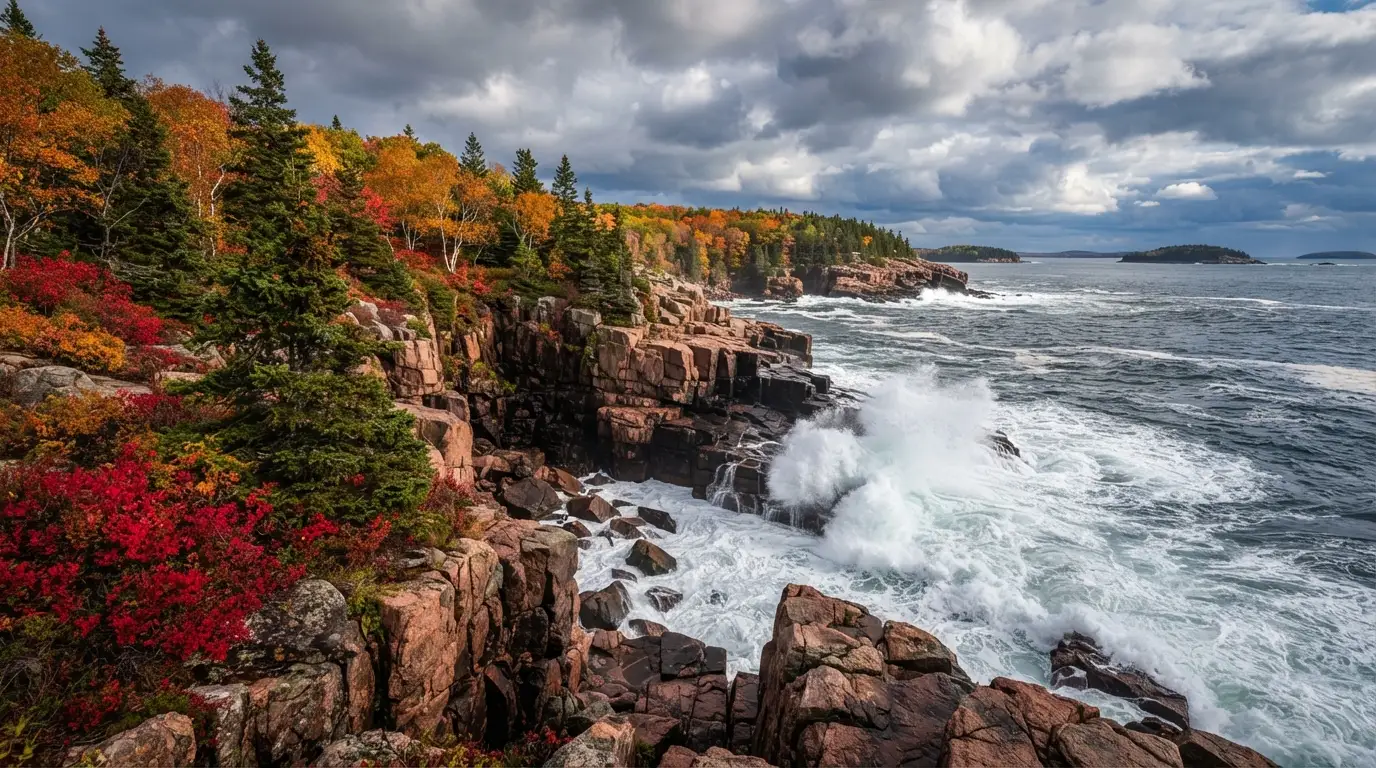
Acadia National Park in fall runs from September through late November, with peak foliage usually hitting in early to mid October. Expect cooler air, thinner crowds than summer, a required Cadillac Summit Road reservation through October 25, and daylight hours that shrink fast as the season progresses.
Planning a fall trip here sounds simple until you read five blogs with five different reservation dates and five opinions on when the leaves peak. Here is what is true for the 2026 season, without the guesswork.
When Is the Best Time to See Fall Foliage in Acadia National Park?
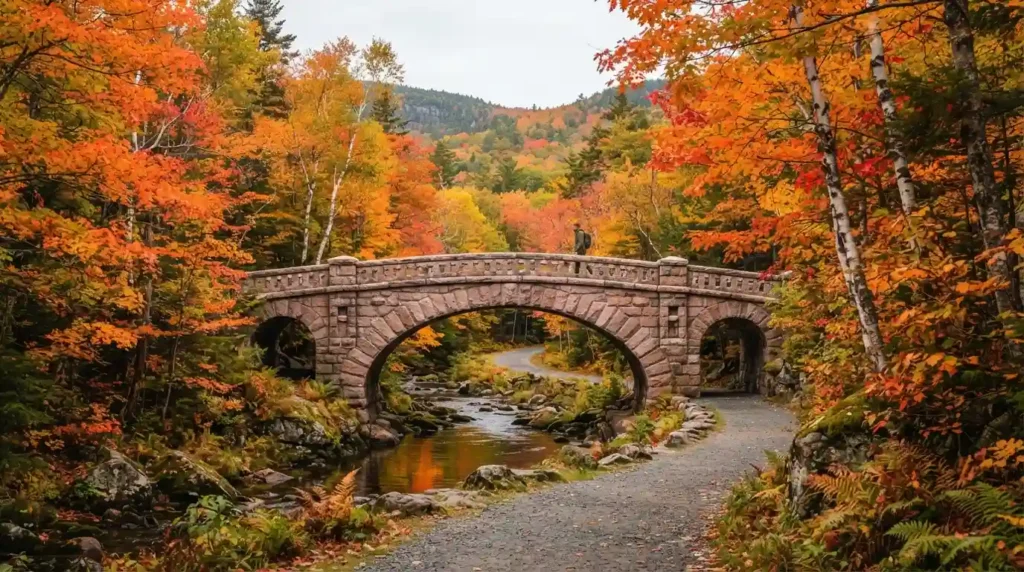
Peak foliage in Acadia typically falls in the first two weeks of October, though it can stretch later depending on rain and wind that year. Mount Desert Island sits on the coast, so it peaks later than inland Maine, and color often lingers into early November.
September still runs mostly green, with the first hints of change by month’s end. Locals recommend checking the Maine fall foliage report in the two weeks before a trip, since timing shifts every year. Weekday mornings in the second and third weeks of October offer the best mix of color and manageable crowds.
Do You Need a Reservation to Visit Acadia National Park in Fall?
No general park reservation is required to enter Acadia. A vehicle reservation is only needed for driving Cadillac Summit Road, and that runs from May 20 through October 25, 2026, at six dollars per vehicle through Recreation.gov. Hiking or biking to the summit needs no reservation.
This trips up a lot of first timers who assume the whole park requires booking ahead. It does not. Sand Beach, Jordan Pond, the carriage roads, and nearly every trail sit open first come, first served. The system exists purely to manage the tight summit parking lot.
How Does the Cadillac Mountain Reservation System Actually Work?
Thirty percent of Cadillac Summit Road reservations release ninety days ahead at 10am Eastern time, and the remaining seventy percent release two days before, also at 10am. That second release is the detail most guides skip, and it means a missed 90 day window isn’t the end of the trip.
A few specifics worth knowing:
- No departure time. Once inside, visitors can stay until the road closes at 10pm.
- Vehicles over 21 feet, including bike racks and hitches, are banned, along with RVs and trailers.
- One sunrise reservation per vehicle every seven days; a daytime reservation once per day.
- Cell service is unreliable, so save the QR code confirmation before arriving.
How Much Does It Cost to Visit Acadia National Park in 2026?
Entry costs 35 dollars per vehicle for seven days, 20 dollars per person on foot or bike, or 30 dollars per motorcycle. Frequent visitors can buy the park specific annual pass for 70 dollars, while travelers hitting multiple parks often find the 80 dollar America the Beautiful Pass pays for itself after two or three stops.
| Pass Type | Cost | Best For |
| 7-day vehicle pass | $35 | Single visits |
| Per person (foot or bike) | $20 | Walk-in or cycling visitors |
| Motorcycle | $30 | Motorcycle travelers |
| Acadia annual pass | $70 | Repeat Acadia visitors |
| America the Beautiful Pass | $80 | Multi-park travelers |
| Cadillac Summit Road reservation | $6 | Anyone driving to the summit |
Non-US residents pay an additional 100 dollars per person on top of the vehicle fee, a detail that surprises many international leaf peepers who only budget for the base cost.
How Crowded Is Acadia National Park in the Fall?
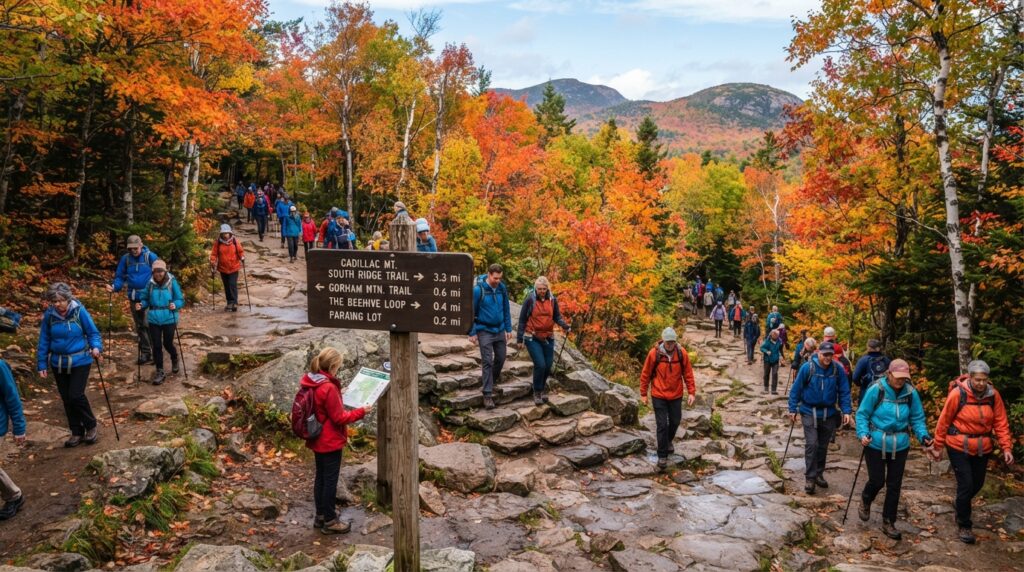
Fall is quieter than summer, but far from empty. Acadia logged over 4 million visitors in 2025, an all time record, and October weekends during peak foliage now rival the busiest days of July. Cruise ships add to the mix too. Many travelers assume cruise season ends with summer, but autumn sailings are common, and Bar Harbor residents have pushed back on the volume of ship visitors lately.
The new Acadia Gateway Center in Trenton, opened May 2026, offers 300 free parking spaces just off the island with shuttle service, a real alternative to circling for a spot at Sand Beach or the Beehive trailhead. Arriving before 8am or after 3pm remains the most reliable way to beat both traffic and tour buses.
Beehive Trail vs Precipice Trail: Which Should You Hike?
Beehive Trail is the shorter, friendlier introduction to Acadia’s iron rung hikes at roughly 1.4 to 1.5 miles with about 500 feet of gain. The trailhead sits across from Sand Beach parking, and it should be hiked counterclockwise so climbers ascend the rungs rather than descend them.
Precipice Trail is longer and more serious at 2.1 miles with over 1,000 feet of climbing, and it runs clockwise. Expect steep drop offs with little margin for error. Most experienced hikers do Beehive first before attempting Precipice, and neither should be attempted during or right after rain, when the granite turns genuinely slick.
| Beehive Trail | Precipice Trail | |
| Distance | 1.4 to 1.5 miles | 2.1 miles |
| Elevation gain | About 500 feet | Over 1,000 feet |
| Direction | Counterclockwise | Clockwise |
| Best for | First timers to ladder trails | Experienced, fit hikers |
Both trails close seasonally when peregrine falcons nest nearby, so fall is often the only time both are fully open at once.
What Are the Best Fall Hikes Besides Beehive and Precipice?
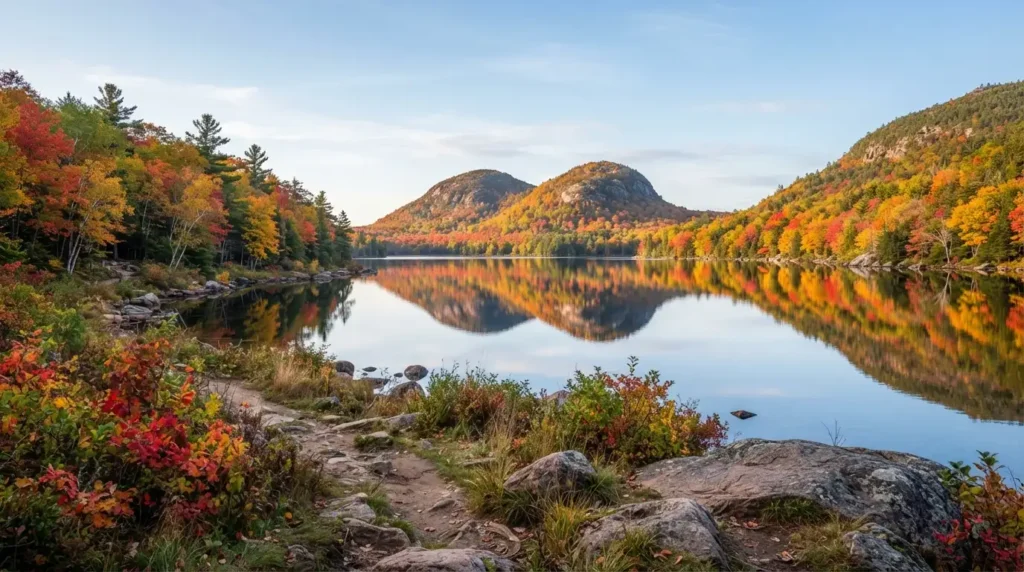
Not every great trail here involves iron rungs. Jesup Path is a flat boardwalk through white birch forest, one of the best low effort options for seeing fall color up close. Jordan Pond Path loops the lake with mountain reflections on calm days, and Gorham Mountain Trail delivers sweeping coastal views without ladders or exposure.
Hikers craving more elevation gravitate toward the Bubbles, a shorter climb to twin summits overlooking Jordan Pond, or Sargent Mountain on the quieter west side, trading crowds for a longer approach. Dorr Mountain, Great Head Trail, and Flying Mountain round out a solid list for variety.
How Do You Drive Park Loop Road and What Will You See?
Park Loop Road is a 27 mile scenic route connecting Sand Beach, Thunder Hole, Otter Point, and Jordan Pond, taking roughly 2 to 4 hours with stops. Most of the stretch between Cadillac Mountain and Jordan Pond runs one way, so plan the drive in that direction.
Sieur de Monts, a quieter stop with gardens and a nature center, sits along the route and rewards a short detour. Thunder Hole is worth timing around mid to rising tide, when waves crash into the inlet loud enough to genuinely startle first timers.
What Is It Like to Bike the Carriage Roads in Fall?
Acadia’s 45 miles of carriage roads were built by John D. Rockefeller Jr. in the early 1900s specifically to keep the park free of motor vehicles, and they remain that way today. The crushed stone surface stays smooth for casual riders, winding past 17 hand built stone bridges and lakes lined with maple and birch that turn brilliant color in October.
Bar Harbor outfitters rent standard and Class 1 e-bikes for riders who want to cover more ground without exhausting themselves. Fall mornings often bring mist over Eagle Lake, creating still, mirror like reflections that make the carriage roads one of the most photogenic parts of the park.
What Should You Know About Safety on Acadia’s Fall Trails?
Fall brings a real mix of hazards summer visitors rarely think about. Slickrock granite turns dangerously slippery in fog or light rain, daylight shrinks fast after Labor Day, and cell service drops out across most of the park’s interior. Trail rescues do happen. In July 2026, a hiker fall near Monument Cove required a coordinated response from the Coast Guard, a LifeFlight of Maine helicopter, and local rescue teams, a reminder that even busy coastal trails carry real risk.
A few practical precautions matter more in fall than any other season:
- Download offline maps before losing signal.
- Skip the iron rung trails entirely if rain fell in the last 24 hours.
- Start hikes early enough to be off exposed terrain before dusk, since November daylight can end before 4:30pm.
- Follow Leave No Trace principles, especially on fragile summit vegetation.
When Do Businesses and Roads Close for the Season in Acadia?
Many Bar Harbor restaurants and shops begin closing in mid October, and the main visitor center at Hulls Cove shuts down for the season on November 1st. Park Loop Road typically closes around December 1st once ocean side sections risk icing over, though the park stays open year round without it.
A common mistake first timers make is planning a late October trip assuming everything will still be running. Calling ahead in the final two weeks of the month avoids a locked door.
What’s the Weather Like in Acadia National Park in the Fall?
September highs sit close to 60 degrees with mild evenings, ideal hiking weather. By November, highs drop toward 40 degrees with lows near or below freezing overnight, and rain gets noticeably more frequent. The sweet spot is late September through mid October, when daytime highs hover in the low to mid 60s.
Packing layers matters more here than almost anywhere else on the East Coast. A warm, sunny afternoon can turn into a windy, 45 degree evening within hours, especially near the coast where Atlantic wind cuts through anything but a proper shell jacket.
Where Should You Eat and Stay Near Acadia in the Fall?
Bar Harbor remains the main hub for lodging and food, and it gets noticeably cheaper once the calendar flips past Columbus Day. Jordan Pond House inside the park has served popovers and tea on its lawn since the 1890s, and reservations are strongly recommended given the wait times during peak foliage weekends. Lobster rolls, lobster stew, and wild Maine blueberry pancakes show up on nearly every menu, and a proper lobster pound remains the most authentic way to try a messy, hands on lobster dinner.
Budget travelers often stay in Trenton or Ellsworth, both roughly 20 to 30 minutes away, where rates run noticeably lower than inside Bar Harbor. Inside the park, Blackwoods and Seawall campgrounds stay open into October, while Schoodic Woods offers a quieter base an hour from the main section of Acadia.
Final Thoughts
Acadia National Park in fall rewards travelers who plan around the details rather than vague advice to just show up early. Book the Cadillac Summit Road reservation the moment a date is set, watch the two day release window if the 90 day slot is gone, and build in flexibility for weather that can shift from sunny to raw within a single afternoon. Get those pieces right and the payoff is one of the most beautiful stretches of coastline in the country, lit up in color for a few unforgettable weeks.
FAQs
Is Acadia National Park worth visiting in the fall?
Yes. Fall combines peak foliage color, cooler hiking temperatures, and lighter crowds than summer, making it many repeat visitors’ favorite season.
How many days do you need in Acadia National Park?
Three to four days covers the major hikes, Park Loop Road, and the carriage roads without rushing, though a shorter two day trip can still hit the highlights.
Is Acadia National Park dog friendly?
Yes, it is one of the few national parks that welcomes leashed dogs on nearly every trail and all carriage roads, excluding trails with iron rungs or ladders.
What time does the sun rise on Cadillac Mountain in October?
Sunrise falls around 6:30 to 7am in October, and Cadillac Mountain is the first place in the continental US to see it between October and early March.


