Zagreb Must See: Top Attractions, Upper Town and Practical Guide for 2026
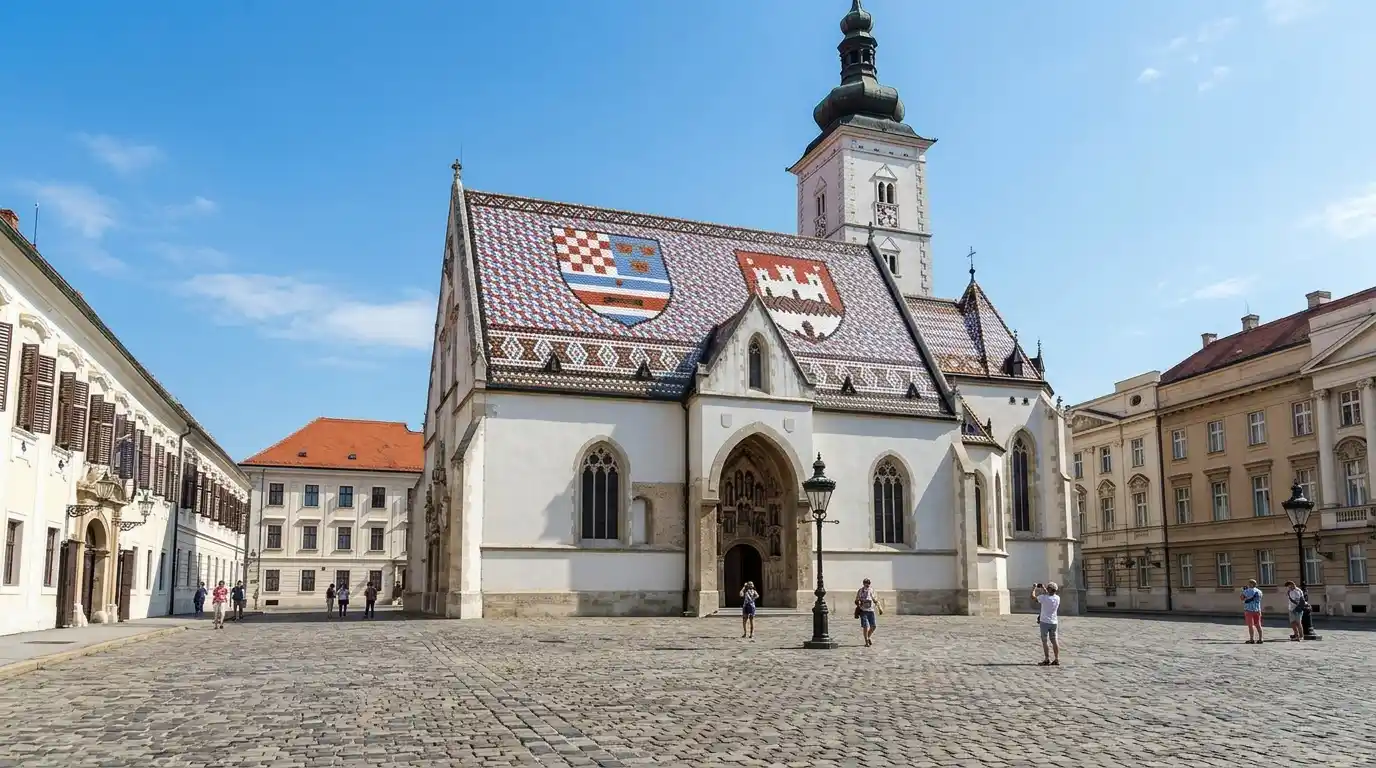
Zagreb must see spots centre on the Upper Town with St Mark’s Church and its tiled roof, the Zagreb Cathedral, Dolac Market and the Museum of Broken Relationships. The city divides into the medieval Upper Town and the 19th-century Lower Town. Most highlights are walkable. The funicular and noon cannon at Lotrščak Tower add character. Two to three days cover the main sights. The currency is the euro.
Upper Town and St Mark’s Church
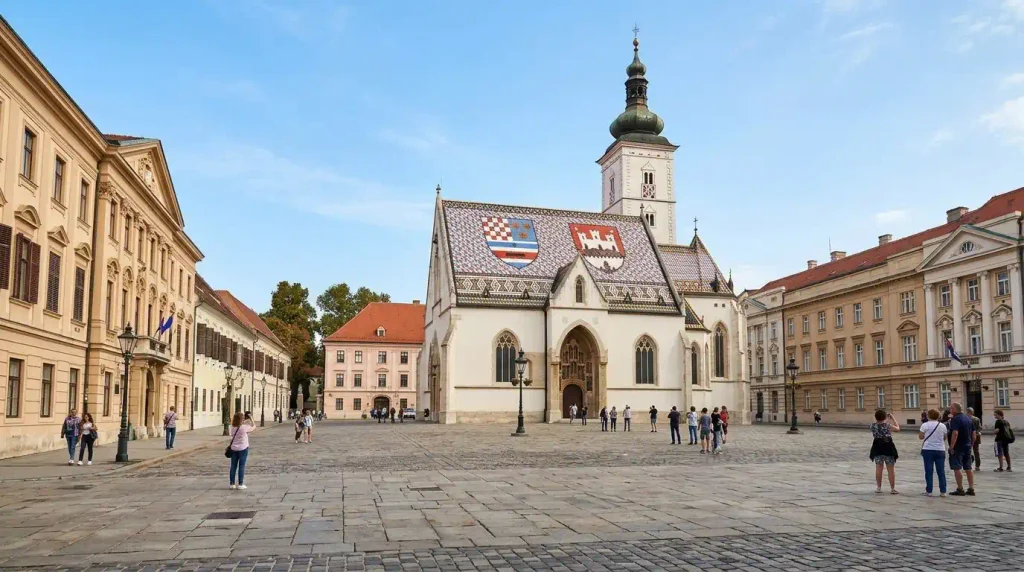
The Upper Town, or Gornji Grad, preserves medieval streets and gas lamps still lit by hand. St Mark’s Church stands out with its colourful tiled roof showing the coats of arms of Croatia, Dalmatia, Slavonia and Zagreb. The square also holds the parliament building. The area is best explored on foot. Early morning visits avoid groups for photographs. The Stone Gate, one of the original entrances, contains a small shrine that survived a fire.
Narrow lanes connect the main points. Cafes and small museums fill the streets. The atmosphere feels distinct from the busier lower areas. Combining a walk here with the funicular ride makes a clear circuit. The Upper Town rewards slow exploration over a checklist approach.
Zagreb Cathedral
The Cathedral of the Assumption of the Blessed Virgin Mary dominates the skyline with twin spires. It reopened to visitors in April 2026 after earthquake repairs, though some external work continues. The neo-Gothic interior includes an impressive organ. Entry is free, with donations appreciated. The location sits near the edge of the Upper Town and close to Dolac Market. Allow time for the exterior views as well as the inside.
The cathedral has been rebuilt several times over centuries. Its current appearance dates largely to the late 19th and early 20th centuries. It remains a central landmark. Morning light works well for photographs of the spires. The surrounding area includes other historic buildings.
Dolac Market and Ban Jelačić Square
Dolac Market, known as the belly of Zagreb, operates under red parasols with fresh produce, flowers and local goods. Morning visits see the most activity. It sits just above Ban Jelačić Square, the main central square with the equestrian statue of Ban Josip Jelačić. The square serves as a meeting point and tram hub. Both spots show everyday city life. The market winds down by early afternoon.
Covered halls below the main level hold fish and dairy stalls. The square connects easily to shopping streets such as Ilica. These areas form the practical heart of the city for visitors. Combining the market with a coffee nearby fits a relaxed morning.
Lotrščak Tower and the Funicular
Lotrščak Tower houses the Grič cannon, which fires every day at noon. The tradition dates to 1877. Climbing the tower gives views over the city. The short funicular, one of the shortest in the world at about 66 metres, links the Lower and Upper Towns. The ride takes roughly one minute and costs under one euro. Timing a visit for the cannon adds a local ritual.
The Strossmayer Promenade near the tower offers further views. Both the tower and funicular are practical ways to move between levels. They also serve as orientation points. The combination is popular with first-time visitors and takes little time.
Museum of Broken Relationships and Other Museums
The Museum of Broken Relationships displays objects and stories from ended relationships. It occupies a space in the Upper Town and draws consistent interest. Other options include the Chocolate Museum, the Nikola Tesla Technical Museum and the Museum of Contemporary Art. Most are compact and fit into a half-day or less. Opening hours vary, so check current times.
The Broken Relationships museum is unique and often recommended. It pairs well with a walk through the Upper Town. Several museums sit close together, allowing easy combinations. Entry fees are modest. They add depth beyond the outdoor sights.
Lower Town Parks and Architecture
The Lower Town features the Green Horseshoe series of parks and squares with 19th-century buildings. Zrinjevac Park often has live music in season. The area around the main train station includes grand facades. Walking from the station through the parks to Ban Jelačić Square shows the planned layout. Trams cover longer distances efficiently.
The architecture differs from the medieval Upper Town. Cafes line many streets. The parks provide green space in the centre. This section suits an afternoon stroll. It connects the arrival point with the historic core without difficulty.
Practical Information for Zagreb
Zagreb Airport lies about 17 kilometres from the centre, with buses and taxis available. The city centre is walkable for the main sights. Trams handle longer hops and accept contactless payment in many cases. The euro is the currency. Spring and autumn offer pleasant walking weather. Summers are warm and winters can be cold with possible snow. English is widely spoken in tourist areas.
Cafes form a big part of local life. Markets and restaurants serve Croatian dishes. Many sights are free or low-cost. The compact size means little time is lost in transit. For other European city ideas, see must do Rome and Barcelona must do.
Suggested Two-Day Plan
Day one: Upper Town walk including St Mark’s and the Stone Gate, cathedral, Dolac Market, noon cannon and funicular. Day two: Museum of Broken Relationships, Lower Town parks, and any remaining museums or a day trip. The layout supports this without rushing. Evenings suit cafe time or a longer meal.
Many visitors use Zagreb as a base for day trips or as a start to a wider Croatia itinerary. The city itself rewards two full days. Related European travel appears in Greece must see and old towns in Europe. Public transport and walking cover almost everything needed.
The mix of medieval and 19th-century areas gives variety within a small footprint. Local rituals such as the cannon and market add everyday colour. Planning around the noon cannon and market hours maximises the experience. The city works well for independent travellers.
Day Trips and Nearby Options
Medvednica Nature Park north of the city offers hiking trails and the Medvedgrad fortress. The trip takes under an hour by public transport or taxi. Plitvice Lakes National Park lies further away and requires a full day or overnight. Many visitors use Zagreb as a starting point for coastal Croatia. Local buses and trains connect to other towns.
The nature park provides a green contrast to the urban centre. Trails suit different levels. Combining a city stay with one day trip extends the visit usefully. Check transport times in advance for smoother planning.
FAQs
Zagreb must see
Must-see spots include St Mark’s Church with its tiled roof, Zagreb Cathedral, Dolac Market, the Museum of Broken Relationships, Lotrščak Tower for the noon cannon and the short funicular. The Upper and Lower Towns are both walkable. Two to three days cover the highlights.
What are the top attractions in Zagreb?
St Mark’s Church, the cathedral, Dolac Market, Ban Jelačić Square, the Museum of Broken Relationships and Lotrščak Tower rank highest. The Upper Town streets and the Green Horseshoe parks add further interest.
Is the Zagreb Cathedral open?
Yes, it reopened to visitors in April 2026 after repairs. Some external work may continue. Entry is free. Check current hours as they can vary with services.
What is the best time to visit Zagreb?
Spring and autumn for comfortable walking. Summers are warm. Winters are colder with possible snow and festive markets. The city is visitable year-round.
How do I get around Zagreb?
Walking covers the main sights. Trams handle longer distances. The funicular links Upper and Lower Town. The centre is compact. Contactless payment works on many trams.
Is the Museum of Broken Relationships worth it?
Yes for most visitors. The exhibits of objects and stories are distinctive. It sits in the Upper Town and takes about an hour. Entry is modest.
What is the noon cannon?
The Grič cannon at Lotrščak Tower fires every day at exactly noon. The tradition dates to 1877. It serves as a local time signal and tourist ritual. The tower also offers views.
How far is the airport?
About 17 kilometres from the centre. Airport buses and taxis run regularly. The journey takes 30 to 40 minutes depending on traffic. The main train station is in the Lower Town.
What currency is used?
The euro. Cards are widely accepted. Cash is useful for markets and smaller cafes. ATMs are available throughout the centre.
Can I see everything in one day?
The main outdoor sights fit into one full day, but two days allow museums and a more relaxed pace. The compact layout makes a single day possible for a quick overview.
Is English spoken?
Yes, widely in tourist areas, hotels and restaurants. Croatian is the local language. Menus and signs often include English. Basic phrases are appreciated.
What should I eat?
Local dishes include štrukli, various grilled meats and seasonal produce from Dolac Market. Cafes are central to daily life. Markets offer fresh options. Many restaurants serve both traditional and international food.