
Must See in Europe: The Complete Guide to Cities and Hidden Gems

Must see places in Europe span classic cities like Paris, Rome, Prague, and Budapest alongside hidden gems like Albania‘s coast and Poland‘s Kaszuby lake region. With an entire continent of countries, languages, and landscapes competing for attention, most travelers spend more time deciding where to go than actually planning what to do once they get there.
Should You Visit Classic Cities or Hidden Gems in Europe?
| Trip Style | Best For | Standout Destinations |
| Classic Cities | First-time visitors, iconic landmarks | Paris, Rome, Prague, Budapest, Athens |
| Hidden Gems | Repeat visitors, fewer crowds | Albania, Kaszuby (Poland), Calabria, Ben Nevis |
Classic cities deliver the landmarks most people picture when they imagine a European trip, the Eiffel Tower’s evening sparkle, Rome’s Colosseum, and Prague’s fairytale Old Town. Hidden gems trade some of that instant recognition for genuine stillness and authenticity, whether that’s road tripping Albania’s coastline in an open-top jeep or kayaking across one of nearly 700 lakes in Poland’s Kaszuby region. First timers to Europe generally do well starting with two or three classic cities, while travelers who’ve already covered the major highlights find real reward in venturing toward these lesser-known alternatives instead.
What Are the Best Cheap Places to Visit in Europe?
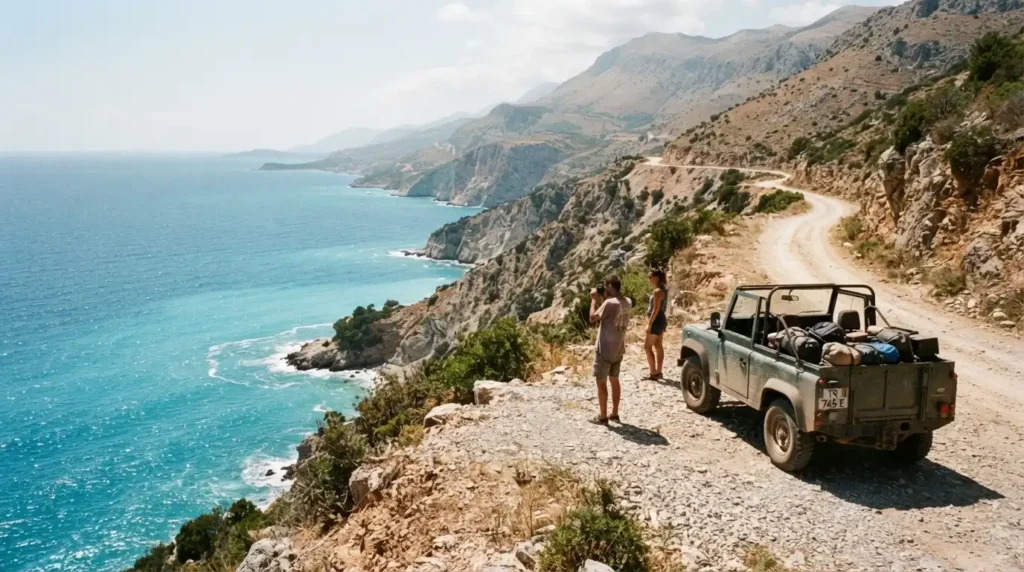
Albania consistently ranks among the most budget-friendly countries on the continent, and an 8-day road trip covering Tirana, Vlorë, Llogara National Park, and the beach towns of Dhërmi, alongside historic Gjirokaster and Berat, delivers mountains, coastline, and culture at a fraction of Western European prices. Poland’s Kaszuby region offers similarly strong value, with its nearly 700 lakes and more than 50 nature reserves providing genuinely affordable outdoor adventure, particularly around Lake Wdzydzkie for sailing and kayaking. Calabria, tucked at the very tip of Italy’s boot, delivers everything the rest of Italy offers, mountains, three national parks, and long coastlines, but with noticeably fewer tourists and correspondingly lower prices than more famous Italian regions like Tuscany or the Amalfi Coast.
What Are the Best Places to Visit in Europe with Kids?
Salzburg works well for families given its manageable size, with Mozart’s birthplace, the hilltop Hohensalzburg Fortress, and the gardens at Mirabell Palace all offering engaging, walkable stops that don’t demand a full day of standing in museum lines. Budapest similarly suits families, pairing sightseeing along the Danube with a relaxing soak at one of the city’s grand thermal spas, a genuinely different kind of activity that works for both kids and tired parents. Bruges, compact enough to explore almost entirely on foot with around 20,000 people living in its historic centre, offers boat trips along its canals and a climbable 13th century belfry that tends to genuinely excite kids old enough to handle the stairs.
What Day Trips Can You Take from Major European Cities?
| City | Day Trip | Highlight |
| Paris | Palace of Versailles | Queen’s Hamlet, palace gardens |
| Prague | Kutná Hora | Sedlec Ossuary, the Bone Church |
| Rome | Ostia Antica | Ancient Roman port town ruins |
A day trip to the Palace of Versailles from Paris rounds out a city stay perfectly, and the surrounding Queen’s Hamlet, a rustic retreat built for Marie Antoinette, offers a genuinely different atmosphere from the palace’s grand main halls. Prague travelers should build in time for Kutná Hora, home to the Sedlec Ossuary, better known as the Bone Church, a genuinely striking and slightly eerie chapel decorated with human bones. Rome’s Ostia Antica offers a quieter alternative to the crowded Colosseum and Roman Forum, an ancient Roman port town with well-preserved ruins that consistently surprises travelers who assumed all of Rome’s ancient sites required fighting through tour groups.
How Does a Eurail Pass Work?
A Eurail Pass suits travelers planning to move between several European countries by train, and non-European citizens or residents can choose between a Global Pass, covering unlimited travel across 33 countries, or a One Country Pass focused on a single destination. Within either option, travelers pick between a continuous pass, allowing train travel every single day the pass is valid, or a flexi pass, which allocates a set number of travel days usable at any point within a fixed window. A common mistake first timers make is buying a continuous pass when their actual itinerary only involves a handful of longer train journeys spread across several weeks, when a flexi pass genuinely delivers better value in that scenario. Passes are typically purchased online in advance and shipped ahead of departure, so building in enough lead time before your trip matters.
What Are the Best Places to Visit in Europe in July?
Coastal and mountain destinations both work well in July, when most of Europe sits at peak summer warmth. The Albanian coast delivers genuinely excellent beach weather during this month, with towns like Dhërmi offering warm Adriatic waters without the price tag of more established Mediterranean beach destinations. Scotland’s Ben Nevis also suits a July visit, since the milder summer conditions make the challenging hike considerably more manageable than attempting it during the colder, wetter months that dominate much of the rest of the year.
What Are the Best Places to Visit in Europe in October?

October suits destinations where cooler temperatures genuinely improve the experience rather than detract from it. Budapest works particularly well this time of year, since soaking in the city’s thermal spas feels considerably more appealing once the crisp autumn air sets in, compared to the sweltering summer months when a hot bath feels like the last thing you want. Prague and Bruges both benefit from October’s thinner crowds too, letting travelers wander cobbled Old Town streets and climb Bruges’ belfry without competing with peak summer tour groups. Bad Gastein, Austria, reached via a 1.5-hour train from Salzburg, starts transitioning toward its winter activities around this time, making it a good pick for travelers wanting an early taste of alpine scenery before the ski season fully kicks in.
What Are the Best Hidden Gems in Europe?
Beyond the budget-friendly options already covered, Ben Nevis in Scotland’s northwest Highlands attracts around 125,000 hikers a year to what’s described as the king of the UK’s mountains, formed from a collapsed volcano and reachable from nearby airports in Oban or Inverness. Belgrade, Serbia, divided by the Sava River into distinctly old and new halves, rewards visitors with daily markets and traditional Kafana cafes offering a genuine taste of the city’s chaotic, layered history. Ithaca, the small Greek island famous as the mythical home of Odysseus, offers quaint towns and quiet beaches for travelers wanting a slower island experience than Mykonos or Santorini, reachable via ferry from nearby Kefalonia. The Wild Atlantic Way along Ireland’s west coast stretches 2,500 kilometers from Kinsale in County Cork up to the Inishowen Peninsula, rewarding road trippers with hidden beaches, award-winning pubs, and some of the best surf schools and coasteering spots in the country.
Should You Fly or Take the Ferry Around Europe?
For shorter crossings, particularly between the UK and northern France, taking a ferry genuinely deserves consideration over flying. Driving from London to Dover and crossing to Calais with an operator like P&O Ferries removes the entire airport experience, security lines, luggage restrictions, and the stress of a delayed gate, replacing it with a relaxed crossing that drops you directly into destinations like Normandy without ever needing to board a plane. This approach works particularly well for regional trips within a few hundred kilometers of a coastline, though longer distances across the continent still generally favor flying or a Eurail Pass for efficiency.
Final Thoughts
Deciding on the real must see in europe list comes down to balancing iconic classic cities against the genuine reward of venturing toward lesser-known alternatives. Pair Paris or Prague with a day trip to Versailles or Kutná Hora, save Albania or Calabria for when budget matters most, and pick a Eurail Pass type that actually matches how much train travel your itinerary really needs. Whether it’s a thermal spa soak in Budapest or a road trip along Albania’s coastline, the best must see in europe destinations reward travelers who plan around both the calendar and their own appetite for crowds versus quiet.
FAQs
What is the most underrated city in Europe?
Regensburg and Nuremberg in Germany both consistently surprise first-time visitors, with Nuremberg in particular having been 90% destroyed during World War II before being carefully restored to resemble its original medieval appearance.
Is Budapest good for a thermal spa trip?
Yes, Budapest’s grand thermal baths carry a long history and remain a genuine part of Hungarian culture today, making a spa visit a relaxing way to unwind after a full day of sightseeing along the Danube.
How many countries can you visit with a Eurail Global Pass?
A Eurail Global Pass covers unlimited train travel across 33 countries, making it a strong option for travelers planning a multi-country European itinerary rather than focusing on a single destination.
What is the cheapest way to travel around Europe?
Budget-friendly destinations like Albania, Poland’s Kaszuby region, and Calabria in Italy all deliver strong value, and choosing a flexi Eurail Pass over a continuous one, or taking a ferry instead of flying for shorter regional crossings, both help stretch a European travel budget further.


