
Best Hikes in Arches National Park: A Complete 2026 Trail Guide
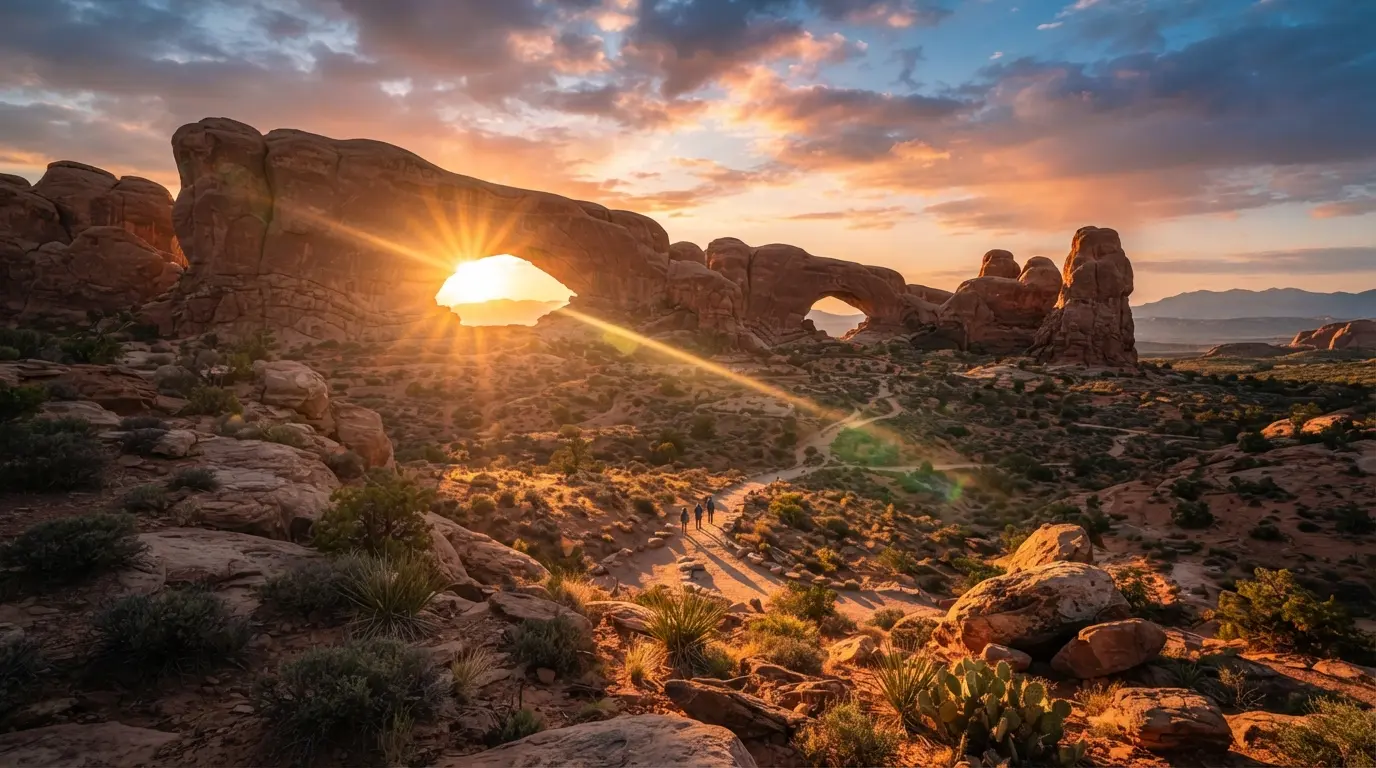
The best hikes in Arches National Park are Delicate Arch, Landscape Arch and Double O Arch, the Windows Loop, and the Devils Garden Loop, ranging from easy half mile strolls to a strenuous 8 mile trek. Each leads to a different arch or rock formation, and most can be done in under three hours.
If you have only a day or two in Moab, picking the right trail out of more than a dozen options can feel overwhelming. This guide breaks down every major hike, which ones are worth the effort, and the 2026 entry rules that have changed since most other trail guides were written.
Do You Need a Reservation to Hike in Arches National Park in 2026?
No. As of February 18, 2026, the National Park Service ended the timed entry ticket requirement at Arches National Park. For four seasons before that, visitors had to book a specific arrival window on recreation.gov just to enter during peak hours. That system is gone for 2026, so you can show up anytime during operating hours and pay the standard entrance fee.
Entrance now runs first come, first served, but two things still need booking ahead: Devils Garden Campground and Fiery Furnace permits.
The entrance fee is 30 dollars per vehicle for seven days. Visiting Canyonlands or Natural Bridges too? The Southeast Utah Parks Pass runs around 55 dollars a year, and the America the Beautiful annual pass, around 80 dollars, often pays for itself in two or three trips.
Ending the reservation system did not end the crowds. Rangers still close routes to Delicate Arch, the Windows, and Devils Garden for three to five hours once lots fill up. Arrive early or the park may decide for you.
What Is the Best Hike in Arches National Park If You Only Have One Day?
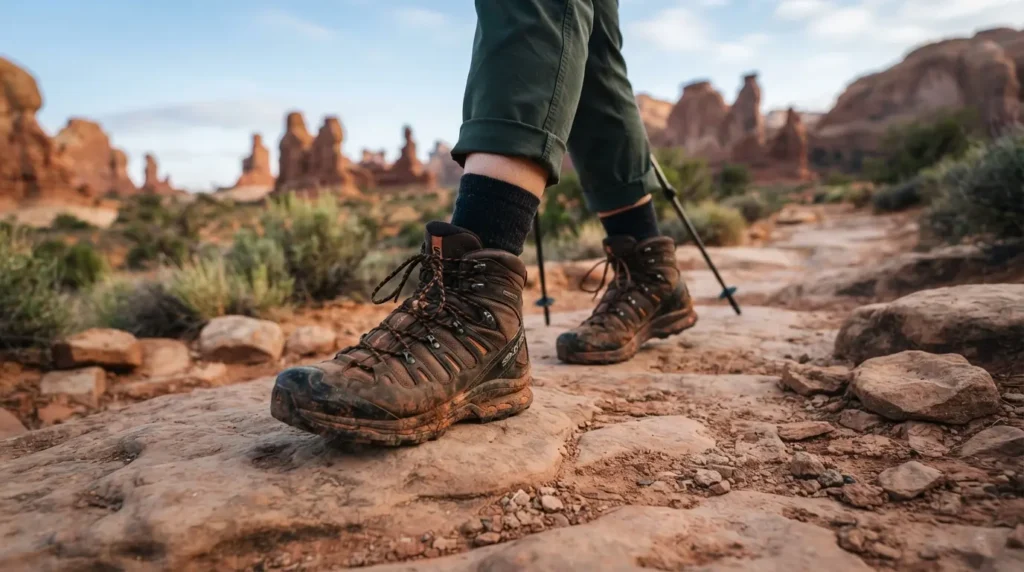
With one day, most travelers find the smartest plan pairs the iconic hike with the easy cluster near it. Start with Delicate Arch in the morning, then spend the afternoon at the Windows and Double Arch, which share a parking area and require very little effort for a big payoff.
A sample sequence:
| Time | Stop |
| 7:00 to 9:30 am | Delicate Arch |
| 10:30 to 11:30 am | Balanced Rock |
| 12:00 to 1:30 pm | The Windows and Double Arch |
| 3:00 to 5:00 pm | Landscape Arch |
This route covers most of what people search for under best hikes in Arches National Park, without the long drive time or technical terrain of Devils Garden’s back half. With energy to spare, the Devils Garden Trailhead sits about 18 miles from the visitor center and is worth the extra half day.
Delicate Arch vs Landscape Arch and Double O Arch: Which Should You Hike?
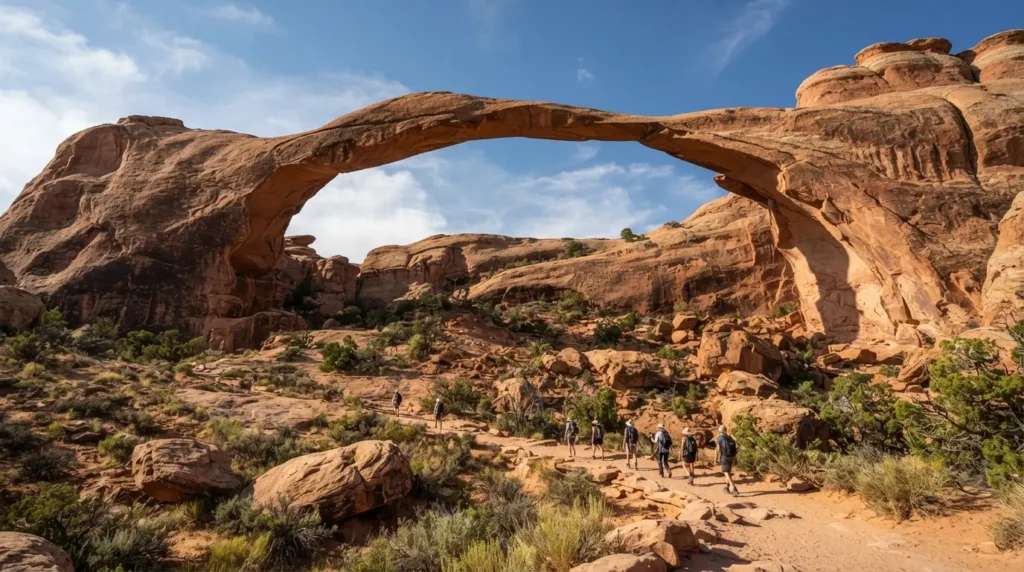
This is one of the most common questions travelers ask when planning, and the honest answer depends on what you want out of the day.
Delicate Arch is the shorter hike at 3 miles round trip with about 480 feet of elevation gain. It delivers the single most photographed formation in Utah, the same arch featured on the state license plate. The tradeoff is crowding, since a clean photo under the arch often means a short wait in line.
The Landscape Arch to Double O Arch route runs longer, trading one big payoff for a fuller hiking experience. It passes Landscape Arch, one of the longest natural stone spans on earth, then climbs a narrow sandstone ridge many hikers call the most scenic stretch in the park.
| Delicate Arch | Landscape and Double O | |
| Distance | 3 miles | 4.2 to 4.4 miles |
| Elevation gain | 480 feet | 670 to 755 feet |
| Crowds | Heaviest in the park | Thins past Landscape Arch |
Pick Delicate Arch for the iconic view and shorter time commitment. Choose Landscape and Double O for more solitude and a proper hike rather than a quick walk to a photo spot.
How Hard Is the Hike to Delicate Arch?
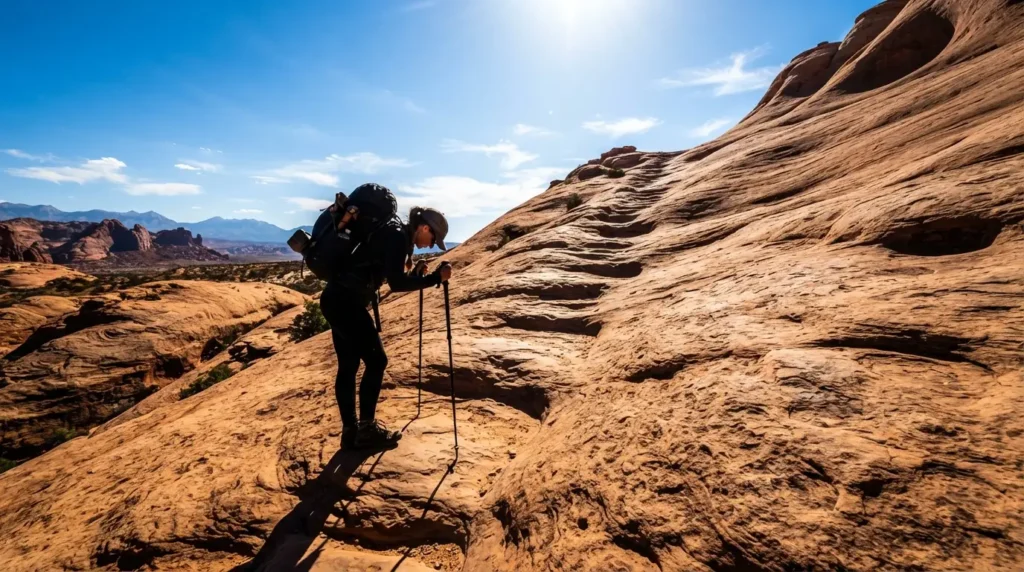
The National Park Service rates this trail as difficult, but travelers consistently find that description overstated for anyone in reasonably good shape. The 3 mile round trip climbs about 480 feet over open slickrock, with no shade for nearly the entire route.
The hike breaks into three sections. The first third follows an easy path near Wolfe Ranch, a historic homestead marking the trailhead. The middle third is the real test, a steady climb up bare sandstone that turns slippery when wet or icy. The final stretch runs along a narrow rock ledge before the arch comes into view all at once.
A common mistake first timers make is underestimating the sun exposure. Summer afternoon temperatures regularly climb past 100 degrees with no tree cover anywhere. Locals recommend sunrise or the last two hours before sunset, for cooler air and softer light on the red rock.
If the full hike is not an option, a lower viewpoint about a mile past the trailhead offers a flat, wheelchair accessible view. It will not put you under the arch, but it is a realistic alternative for anyone who cannot manage the climb.
What Should You Know Before Hiking the Devils Garden Primitive Trail?
The Primitive Trail is the park’s most demanding maintained route, and it earns that reputation honestly. Unlike the main Devils Garden path, it has no defined tread in many sections. Hikers follow small stacks of rocks called cairns instead of a marked trail, so route finding is part of the challenge, along with scrambling, narrow drop offs, and loose sand.
The trail branches off just before Landscape Arch and reconnects near the Devils Garden Trailhead after passing Navajo Arch, Partition Arch, Dark Angel, and Private Arch, some of the quietest formations in the park since most visitors never leave the main trail. Plan for 4 to 5 hours to complete the full loop, versus 2 to 3 hours for a straightforward out and back.
This is not a trail for wet or icy conditions. Slickrock that is manageable when dry turns genuinely dangerous when slick, and cairns are much harder to spot in low light or snow. Confident hikers comfortable with heights can do this without a guide, but it is worth skipping with young kids or anyone uneasy on exposed terrain.
How Do You Get a Permit for the Fiery Furnace?
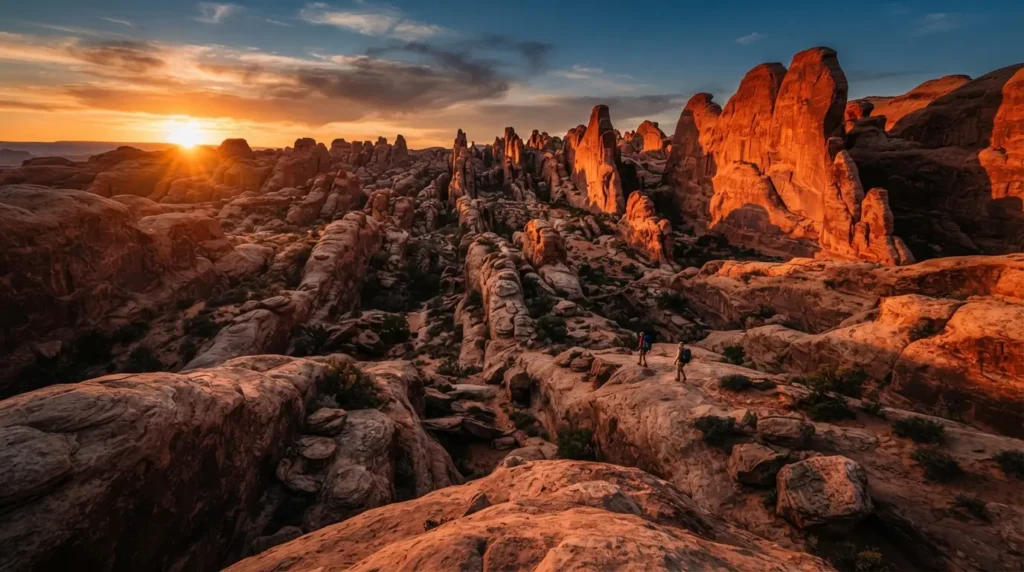
Fiery Furnace is a maze of narrow sandstone canyons that requires a permit to enter. A self guided day use permit, purchased at the visitor center, lets experienced hikers navigate using small directional arrows along an unmarked route. A ranger led hike suits first timers better, since GPS devices often fail to work in the canyons.
Ranger led tickets are booked through recreation.gov and release exactly one week ahead at 8 am Mountain time. Slots sell out within minutes during peak season, so log on right when tickets drop.
Hike counterclockwise from the parking lot either way. The tiny arrows marking the trail are placed for that direction, and hiking clockwise leaves them at your back where they are much easier to miss.
Which Hikes Are Best for Kids or Beginners?
Not every trail here needs to be a full workout. A handful of short, mostly flat routes make excellent choices for families or anyone easing into hiking.
- Balanced Rock, a 0.3 mile loop with almost no elevation change, partly paved
- Sand Dune Arch, a 0.3 to 0.4 mile walk through a shaded slot canyon with soft sand at the end, a favorite with younger kids
- The Windows Loop, about 1 mile on a well maintained gravel path leading to three arches
- Double Arch, a short 0.5 mile add on from the same parking lot
None require technical scrambling, all run under a mile and a half, and the short time commitment keeps hikers off the trail before the heat peaks.
What Are the Biggest Hazards When Hiking in Arches National Park?
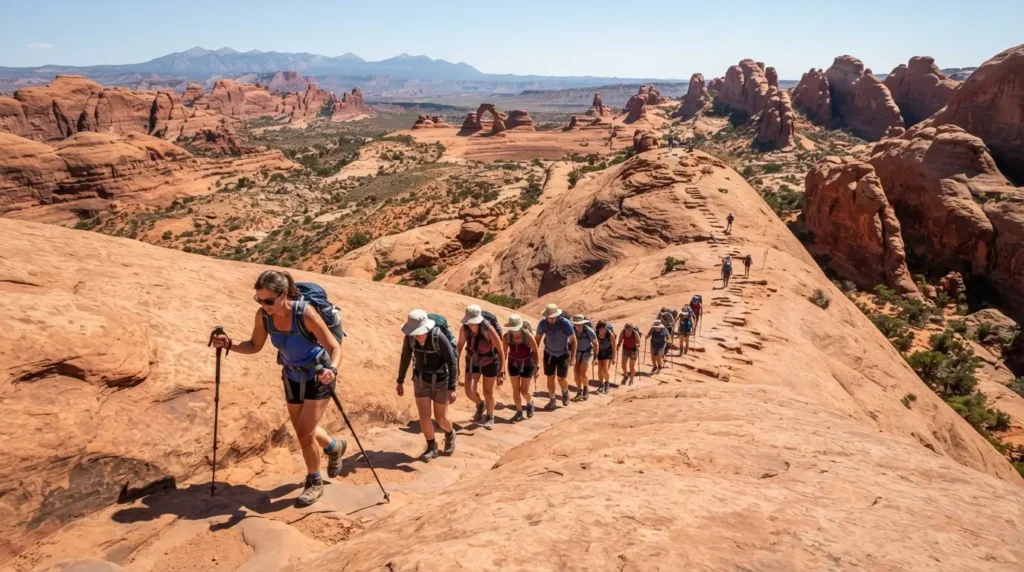
Arches sits on the Colorado Plateau, a high desert region known for sharp temperature swings and very little shade. The real hazards here matter more than at many other parks.
Heat is the top concern. Summer daytime temperatures regularly exceed 100 degrees, and most trails, including Delicate Arch and Devils Garden, offer zero shade. The park service recommends at least one liter of water per person per hour, and locals often carry more as a buffer.
Slickrock earns its name honestly. Sandstone can be slippery even when dry, and turns hazardous when wet, icy, or snow covered, which happens more often than visitors expect in winter.
A few other hazards worth knowing: no cell service across most of the park, monsoon season roughly July through September bringing sudden storms and flash flood risk, and cryptobiotic soil crust lining trail edges, easily damaged by a single footstep, so stay on marked paths.
Where Can You Get Water and Food in Arches National Park?
Water sources inside the park are limited to two spots, the Arches Visitor Center and the Devils Garden Trailhead about 18 miles in, with nothing reliable along that stretch of road.
There are no restaurants or snack stands inside the park. A handful of picnic areas, including Panorama Point and Devils Garden, give travelers a shaded spot to eat food brought from Moab and skip the 45 minute round trip back to town for lunch.
Can You Camp Inside Arches National Park?
Yes, though it takes planning. Devils Garden Campground is the only campground inside the park, and its 51 sites require reservations through recreation.gov for March through October, booking up months ahead during peak spring and fall dates.
Travelers who miss the window still have options. Several BLM campsites line Highway 128 along the Colorado River just outside the park, running on a first come, first served honor system with genuinely scenic riverside camping.
What Is the Best Time of Year and Time of Day to Hike Arches National Park?
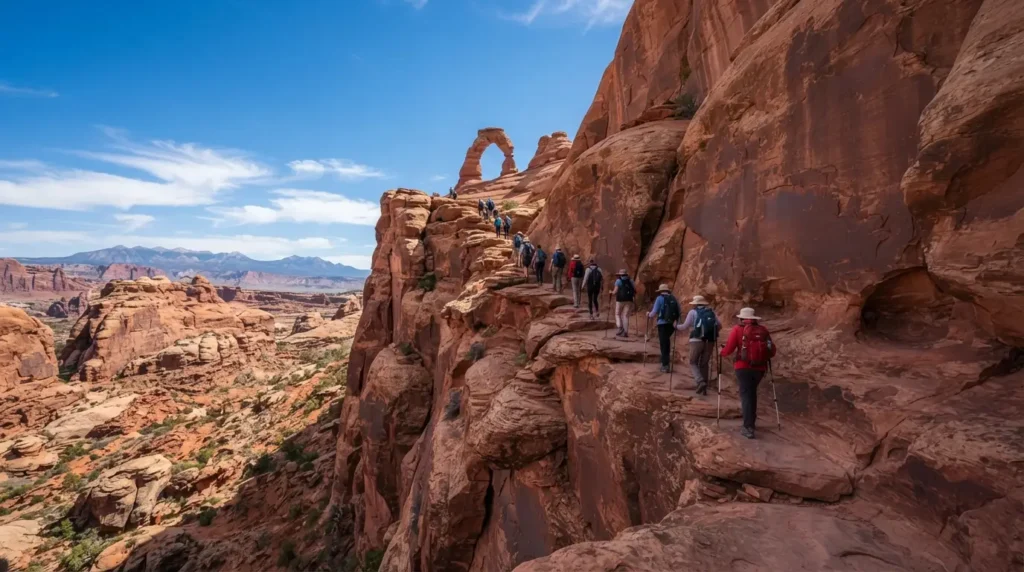
April, May, June, September, and October bring the mildest temperatures and most comfortable hiking conditions. The park stays open year round, but high heat and shadeless trails make midday hikes risky between June and August.
Within any season, hike before 8 am or after 4 pm to dodge both the worst heat and the parking lot closures that now happen once a trailhead fills. Arches is also an International Dark Sky Park, and a post sunset walk with a headlamp offers stargazing few visitors take the time to experience.
Final Thoughts
Arches National Park packs an unusual number of standout trails into a small footprint, and getting through the gate is simpler for 2026 than it has been in years. Start early, carry more water than feels necessary, and pick your route based on the time and energy you actually have. The best hikes in Arches National Park reward an early start and a full water bottle more than a rushed itinerary.
FAQs
Is Arches National Park worth it if I am not a hiker?
Yes. Balanced Rock and Double Arch are visible with less than a quarter mile of walking, and the scenic drive alone passes dozens of viewpoints.
How many days do you need in Arches National Park?
One day covers the highlights. Two days allow time to add Devils Garden and possibly a Fiery Furnace permit without rushing.
Is the Windows Loop or Devils Garden Loop better for someone with limited time?
The Windows Loop takes about an hour and covers three arches with minimal effort. Devils Garden takes half a day and suits travelers wanting a real hiking experience.
Do you need hiking boots for Arches National Park?
Boots or trail shoes with solid traction are strongly recommended, since slickrock can be slippery even when dry. Sandals or worn out sneakers cause most slips.


