
What Are the Best Must-Do Things in Tokyo Right Now? Top Attractions and Hidden Gems
Type “must do Tokyo” into Google the week before a trip and you get fifty lists that barely agree with each other. The real answer is shorter. Senso-ji Temple, Shibuya Crossing, Meiji Shrine, Shinjuku Gyoen National Garden, and one teamLab digital art museum cover the non-negotiables. Everything past that depends on your days, your budget, and whether temples or neon streets pull you in more. This guide sorts out what actually earns a spot on a Tokyo must do list in 2026, and what is fine to skip.
Tokyo rewards travelers who accept they cannot see it all. The city holds more than 14 million residents, and the wider metro area passes 37 million, the largest urban area on earth. That scale is exactly why a short, honest list beats a fifty-item scroll. Four to six days is enough to hit the top attractions in Tokyo without rushing, and this guide is built around that pace.
What Are Tokyo’s Top Attractions You Can’t Skip?
Tokyo top attractions worth building a trip around are Senso-ji Temple, Shibuya Crossing, Meiji Shrine, Shinjuku Gyoen National Garden, and either teamLab Borderless or teamLab Planets. Each sits near a major train stop, costs little or nothing to enter, and shows a genuinely different side of the city, from centuries-old ritual to floor-to-ceiling digital light.
Senso-ji Temple in Asakusa is Tokyo’s oldest temple, founded in 645, and entry is free. Walk through the red Kaminarimon Gate, down Nakamise Street for snacks and souvenirs, then into the temple grounds to try omikuji, the fortune-slip tradition. Arrive before 8am on a weekday for photos without a wall of tour groups; by mid-morning the street fills fast. This is one of the true must see things in Tokyo, and it earns the hype.
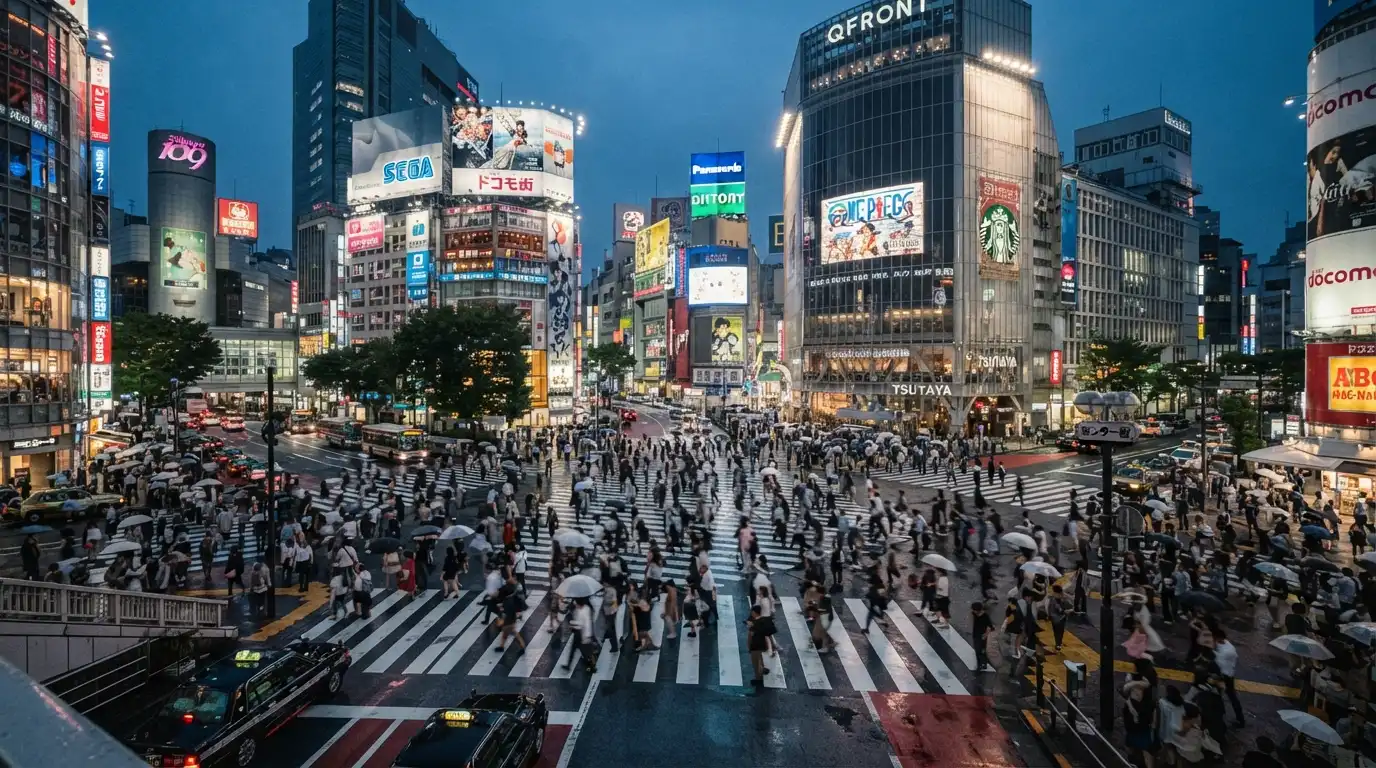
Shibuya Crossing is genuinely the busiest pedestrian intersection in the world, and it is also, honestly, just a big crosswalk. Give it five minutes, not an afternoon. Get the elevated view from the Starbucks overlooking the intersection, or pay around 2,700 yen (about 18 dollars) for Shibuya Sky’s open-air rooftop deck, which catches Mount Fuji on a clear day. Nearby, the Hachiko statue outside Shibuya Station makes an easy add-on stop.
Meiji Shrine sits inside a forest of more than 100,000 donated trees near Harajuku Station, free and open year-round. It is one of the few places in central Tokyo where the city noise actually disappears, and it connects on foot to Takeshita Street and Yoyogi Park if you want to keep moving.
For something newer, teamLab Borderless in Azabudai Hills and teamLab Planets in Toyosu are both immersive digital art museums, but they are not interchangeable. Borderless is more central and less physically interactive. Planets is barefoot and water-based, with a larger footprint after its 2025 expansion, though it is scheduled to close in 2027. Entry runs roughly 3,800 to 5,600 yen (25 to 36 dollars), and both sell out, so book one, not both, one to two months ahead.
Where Should You Stay in Tokyo, and Where to Stay in Tokyo With Kids?
Shinjuku is the best all-around base for first-timers, thanks to its huge transit hub and 24-hour food options within a few minutes’ walk. Families need a calmer pick, and where to stay in Tokyo with kids usually means Ueno or Shiba Park over Shinjuku’s nightlife district.
Shinjuku puts you steps from one of the world’s busiest stations, an easy walk to Golden Gai, and surrounded by convenience stores for a jet-lagged 2am snack run. Expect to pay from around 12,000 yen (80 dollars) a night for a solid mid-range room, and keep in mind Tokyo hotel rooms run smaller than in most Western cities.
For where to stay in Tokyo with kids, Ueno has a park, a zoo, and museums within walking distance, plus a direct Skyliner line back to Narita Airport. Shiba Park sits near Tokyo Tower and works well for a calmer second half of a trip. Shibuya and Asakusa are solid runner-up neighborhoods, the first for transit access, the second for a slower, more traditional feel.
What Are the Best Hidden Gems and Off the Beaten Path Things to Do in Tokyo?
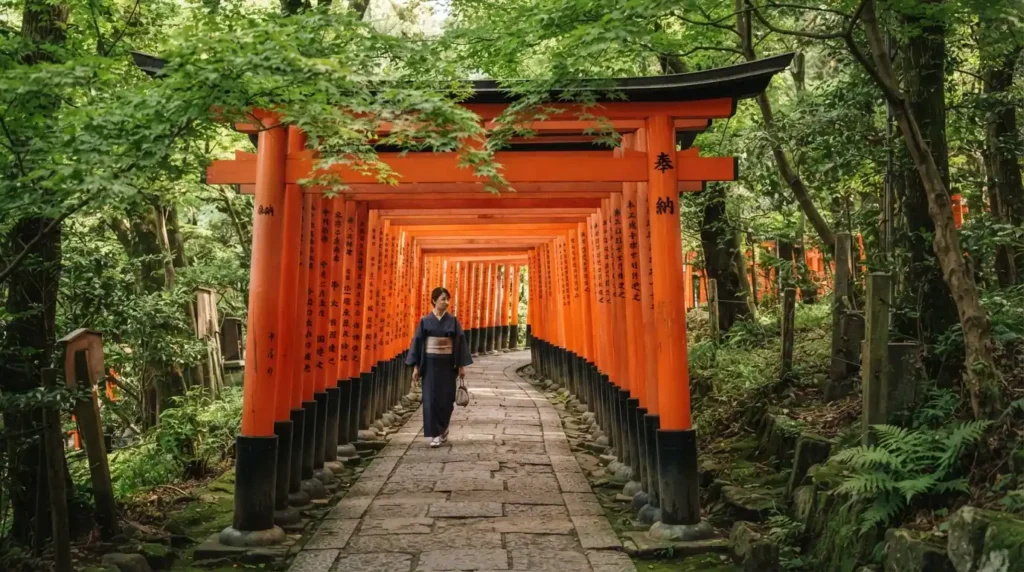
The best hidden gems in Tokyo sit just outside the main tourist strips: Yanaka Ginza’s old shopping street, Nezu Shrine’s tunnel of red torii gates, Hamarikyu Gardens’ pond-side tea house, and the Asahi Sky Room bar with a close-up view of Skytree Tower.
Yanaka Ginza is a 1950s shopping street lined with local shops instead of chain stores, near Nezu Museum and a short walk from Ueno Park, and it ends at a staircase called Yuyake Dandan worth the climb for the view. Nezu Shrine, sometimes nicknamed Little Kyoto, lines its path with vibrant red torii gates and blooms with azaleas every April and May. Hamarikyu Gardens costs around 300 yen (2 dollars) to enter and holds Nakajima Tea House, a 1700s teahouse floating on a pond, a genuinely quiet break from the crowds. For a free view, the Asahi Sky Room bar near Asakusa looks down on Senso-ji, the Sumida River, and Skytree Tower, and you only pay for your drink. These are the kinds of fun things to do in Tokyo that never make the top ten lists but stick with you longer than the crowded ones.
What Are the Best Things to Do in Tokyo at Night?
Tokyo things to do after dark center on Golden Gai and Omoide Yokocho for tiny izakaya bars, Shibuya Crossing lit up in neon, karaoke booths running about 400 to 1,000 yen an hour, and department store food basements that stay lively into the evening.
Golden Gai and Omoide Yokocho, also called Memory Lane, are both in Shinjuku and both worth a walk even if you only stay for one drink. Some bars in Golden Gai only serve regulars, and a real pattern of touts steering tourists into overpriced or unsafe bars has been reported around this area, so stick to places with visible, posted prices and skip anyone who approaches you on the street first. Karaoke is a genuinely low-pressure night out since you rent a private room instead of singing to strangers. For something calmer, Shibuya Sky and rooftop bars near Shibuya Crossing turn the same chaotic intersection into a quiet light show from above.
What Are the Best Tokyo Day Trips?
The best Tokyo day trips are Kamakura for the Great Buddha and a laid-back coastal town, Nikko for shrines and waterfalls, and Hakone for Mount Fuji views and hot springs, all reachable by train in 1 to 2 hours.
Kamakura sits about 1 hour from central Tokyo and centers on the Great Buddha at Kotoku-in (300 yen entry), along with Hasedera Temple and the Hokokuji bamboo grove. Nikko is roughly 2 hours away and holds the elaborate Toshogu Shrine (1,300 yen) plus Kegon Falls. Hakone is 1.5 to 2 hours out and pairs Lake Ashi boat cruises with the volcanic Owakudani Valley and, on a clear day, direct views of Mount Fuji. Pick one rather than cramming two into a single day. Japan’s rail network is exactly what makes these things to do near Tokyo genuinely workable without a rental car.
When Is the Best Time to Visit Tokyo’s Top Attractions?
Late October through November offers the best mix of mild weather, manageable crowds, and autumn color. Late March into early April brings cherry blossoms but also the year’s highest prices and hardest-to-get reservations.
Spring, specifically late March to early April, is when cherry blossoms peak around Shinjuku Gyoen and along the rivers, but hotel prices climb and popular restaurants book out weeks ahead. Summer, June through September, turns hot and humid enough that walking all day becomes genuinely tiring, so plan more indoor stops like teamLab or department store shopping. Fall, especially late October and November, tends to be the sweet spot, with comfortable temperatures, thinner crowds than spring, and foliage in parks like Shinjuku Gyoen and Ueno Park. Winter is quieter and colder but rarely freezing, and it is the easiest season to get into restaurants without a reservation.
How Much Does a Trip to Tokyo Actually Cost?
A realistic Tokyo trip runs from about 8,000 yen (55 dollars) a day for a tight budget traveler to 25,000 yen (165 dollars) or more per day for a comfortable mid-range trip, not counting flights. Food is where Tokyo can genuinely be cheap, even on a bigger budget.
| Daily Spend | Budget | Mid-Range | Splurge |
| Hotel | 6,000 to 9,000 yen | 12,000 to 20,000 yen | 35,000 yen and up |
| Food | 2,500 to 4,000 yen | 5,000 to 8,000 yen | 12,000 yen and up |
| Transport | 800 to 1,200 yen | 1,200 to 2,000 yen | 3,000 yen and up (taxis) |
| Attractions | 500 to 1,500 yen | 2,000 to 4,000 yen | 5,000 yen and up |
Convenience store meals from Lawson, Family Mart, or 7-Eleven run 500 to 800 yen and are genuinely good, which is how budget travelers keep food costs low. Mid-range travelers eating at casual ramen and yakitori spots should expect 1,200 to 2,000 yen per meal. Cash still matters. Many small restaurants, shrines, and older bars are cash-only, so carry yen and use 7-Eleven ATMs, which reliably accept foreign cards.
How Do You Get Around Tokyo?
A Suica or Pasmo IC card, tapped in and out of trains, subways, and buses, is the easiest way to get around Tokyo. Add one to your phone wallet before you land and skip ticket machines entirely.
From Narita Airport, the Narita Express reaches Shinjuku or Shibuya in about 1 to 1.5 hours. From Haneda Airport, which sits closer to the city, a taxi or the Keikyu Line into central Tokyo takes roughly 30 to 45 minutes. Inside the city, trains and the subway cover nearly every neighborhood on this list, and Google Maps handles routing reliably. Save taxis for late-night trips once trains stop running, usually around midnight.
What Should First-Timers Know Before Visiting Tokyo?
First-timers should know that trash cans are rare, eating while walking is frowned on, cash is still needed in many places, and mornings start slow since Tokyo runs more as a night city than a morning one.
A few honest first-timer mistakes worth avoiding:
- Packing light jackets without deep pockets, since you will be carrying your own trash most of the day
- Assuming everywhere opens by 9am. Many Shinjuku shops and cafes are still closed at 10:30am
- Skipping restaurant reservations, especially for dinner in groups of three or more
- Overpacking the itinerary. The best trips leave room to wander instead of rushing between every must do stop on this list
Conclusion
The best places to visit in Tokyo do not require a fifty-item checklist. Anchor your trip around Senso-ji Temple, Shibuya Crossing, Meiji Shrine, and one teamLab museum, add a hidden gem or two, and leave room to wander through a neighborhood like Yanaka or Shimokitazawa without a plan. That mix, more than any exhaustive list, is what actually makes a Tokyo must do trip work. Come back for a second visit. Nobody sees it all the first time, and that is fine.
FAQs
Is Tokyo expensive to visit?
It can be as cheap or as costly as you make it. Food is where Tokyo stays affordable, with solid meals under 1,000 yen, while hotels and attractions vary widely by neighborhood and season.
How many days do you need in Tokyo?
Four to six days covers the top attractions in Tokyo without rushing. Nine days, split across two visits, works well if you are also heading to Kyoto or Osaka.
Is Tokyo safe for tourists?
Yes, it is one of the safer major cities to walk around, even at night, though Golden Gai and similar nightlife strips see occasional overcharging or scam attempts aimed at tourists.
Do you need cash in Tokyo?
Yes. Cards are accepted more than they used to be, but many small restaurants, shrines, and older bars remain cash-only.
Is Golden Gai worth it?
For one drink and a look around, yes. It has become heavily touristed, so treat it as a quick stop rather than a full night out.
Is Tokyo overrated?
It depends on what you want. Travelers chasing tradition alone may prefer Kyoto, but Tokyo’s mix of food, neon streets, and calm parks like Shinjuku Gyoen makes it worth a real visit, not just a stopover.


