
What to Do in Montenegro in 2026: The Complete Traveler’s Guide
Montenegro packs more into its small landmass than most countries twice its size. Knowing what to do in Montenegro in 2026 means understanding two completely different worlds: a UNESCO-protected medieval coastline with fjord-like bays, and a mountainous interior holding the deepest canyon in Europe. Start on the Bay of Kotor, move north into the mountains, and loop back through the south. This is how you experience the country right.
Most travelers rush through Montenegro on a day trip from Dubrovnik and leave underwhelmed. Stay longer and it changes everything.
What to Do in Montenegro: Coast First or Mountains First?
Montenegro divides naturally into two regions that suit different travel styles. The coast gives you medieval walled towns, Venetian architecture, boat tours, and the famous Adriatic Coast beaches. The northern mountains give you glacial lakes, primeval forests, and wilderness that barely sees a tourist beyond summer.
Fly into Tivat Airport (TIV), just ten minutes from Kotor, and begin your trip on the coast. Drive north through Lovćen National Park toward Žabljak and Durmitor National Park, then return south through Lake Skadar and Podgorica. This loop covers the country’s highlights without backtracking. A minimum of five days suits the coast. Add three more for the mountains and you see nearly everything.
What Makes Kotor Worth at Least Two Full Days?
Kotor Old Town is one of only two UNESCO World Heritage Sites in Montenegro and the most visited destination in the country. Built over 2,000 years ago, the town sits inside massive stone walls at the foot of dramatic mountain cliffs at the edge of the Bay of Kotor. Walk the Kotor city walls, visit the Cathedral of Saint Tryphon, and let yourself get lost in cobblestone alleys shared with the famous stray cats of Kotor.
The single best activity in Kotor is the early morning hike to San Giovanni Fortress. You climb 1,300 steps to reach a viewpoint 300 meters above the old town with a full panoramic sweep of the bay. Allow 90 minutes to two hours. Entry costs €8 at the North Gate. Start before 9am because cruise ship tours begin arriving at 10am and the old town changes dramatically in minutes.
From Kotor, a 4-5 hour Bay of Kotor boat cruise is essential. The best tours combine the Blue Cave, where turquoise water lights up neon from sunlight hitting the sandy floor, the Yugoslav-era submarine tunnels carved into the cliffs by the Cold War navy, and the church island of Our Lady of the Rocks near Perast. Book through Viator or GetYourGuide and go on a clear day.
Why Do People Keep Talking About Perast and Is It Worth It?
Perast is a tiny coastal town of just 300 residents north of Kotor where Baroque palaces line the waterfront and church towers reflect in still water. You can walk the whole town in under an hour.
The real draw is a short boat across to Our Lady of the Rocks, a church built on a completely man-made island. Sailors started the island stone by stone in the 15th century after discovering an icon of the Virgin Mary on a rock in the bay. Standing on the island with mountains dropping straight into the water around you is genuinely extraordinary. Most boat tours depart from the Perast waterfront.
Herceg Novi, at the entrance to the bay, makes an excellent and affordable base. It has medieval fortresses, strong seafood at Restaurant Tri Lipe, and noticeably cheaper accommodation than Kotor.
What Should You Do in Budva and Along the Coast?
Budva Old Town is a 2,500-year-old walled city originally built by Phoenicians and expanded by Venetians and Austrians. Walk the Budva city walls for coastal panoramas. Eat in courtyard restaurants in the old town. Budva nightlife at venues like Top Hill mega club is the liveliest on the Montenegrin coast for those who want it.
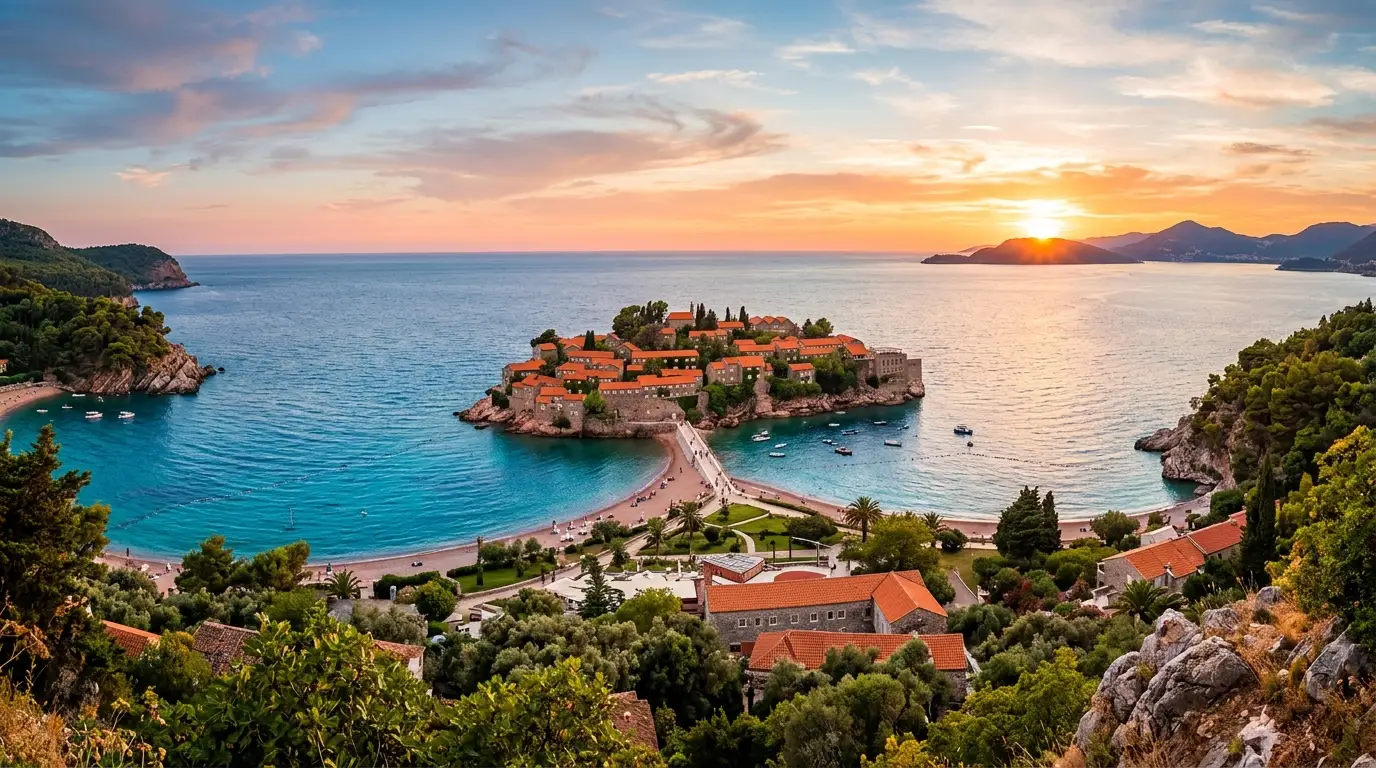
Sveti Stefan is the iconic tiny island of orange-roofed stone houses that appears on every Montenegro photo. The island is now entirely the Aman Sveti Stefan private luxury resort and is not accessible to the public. Drive up to Church of Saint Sava viewpoint for the best overhead angle at golden hour. Crvena Stijena beach beside the island gives you crystal-clear swimming with the island in the background.
Ulcinj near the Albanian border is completely different from the rest of the coast. Long Beach stretches from the Bojana River to Port Milena and is Montenegro’s finest stretch of sand, ideal for kite surfing and windsurfing due to consistent winds. Eat at clifftop Antigona restaurant for some of the best sunset views on the entire coast.
What to Do in Durmitor National Park
Durmitor National Park is Montenegro’s crown achievement in the mountains and one of the best reasons to leave the coast. The park holds 18 glacial lakes, ancient forests, and the Tara Canyon, which is the deepest canyon in Europe and the second deepest in the world after the Grand Canyon. Park entry costs €5. Base yourself in the small mountain town of Žabljak and rent an e-bike to explore the trails properly.
Black Lake (locally called Crno Lake) sits at the heart of the park and shifts from deep blue to turquoise depending on the light. Rent a paddle boat to cross it or swim in the cold water after a trail hike.
Tara River rafting is the top adventure activity in all of Montenegro. Late spring and early summer deliver the best whitewater conditions. The Đurđevića Tara Bridge stands 172 meters above the river and offers a zip-line crossing for around €20. For hikers, the Durmitor Ring Route panoramic drive passes through both Durmitor and Piva Canyon with viewpoints that stop you every few kilometers.
In winter, Durmitor transforms. Kolašin ski resort receives strong snowfall and the coastal towns empty out completely. Prices drop and you get the country largely to yourself.
Lovćen, Ostrog Monastery, Lake Skadar and Biogradska Gora
Lovćen National Park sits directly above Kotor. Drive the Serpentine Road from Kotor with Bay of Kotor views at every hairpin turn. At the summit sits the Njegos Mausoleum, dedicated to Petar II Petrovic-Njegos, the highest-altitude mausoleum in Europe. Entry costs €3.
Ostrog Monastery is carved 900 meters above the Zeta Valley into a vertical white cliff face. Pilgrims of multiple faiths visit believing in the healing powers of Saint Basil whose remains rest inside. Non-religious visitors find it extraordinary purely for how it was built into the rock. The road up is steep and narrow. Alternatively, 360 Monte and GetYourGuide run day tours from Kotor combining Ostrog with Tara Bridge and Durmitor.
Lake Skadar is the largest lake in the Balkans, shared between Montenegro and Albania. Book a boat tour from the small town of Virpazar. The lake hosts over 260 bird species including the endangered Dalmatian pelican. Most tours stop at a lakeside winery for Vranac wine, rakija, and pršut. Plantaže winery near Podgorica, the largest single-owned vineyard in the Balkans at 2,300 hectares, runs guided tastings of the indigenous Vranac grape.
Biogradska Gora National Park is almost never mentioned in travel guides and holds one of only three remaining primeval temperate rainforests in Europe. The glacial Biogradsko Lake sits inside the forest. If you are driving between the coast and Durmitor, this detour adds a genuinely rare experience.
What Should You Eat and Drink in Montenegro?
Montenegrin food splits cleanly between the coast and the mountains. On the Adriatic Coast, eat fresh seafood and Montenegrin black risotto at Cesarica restaurant in Kotor Old Town or grilled fish at Restaurant Stari Mlini near Budva. In the mountains, order Njeguški pršut (cold-smoked prosciutto from the Lovćen area), lamb under the bell (jagnjetina ispod sača), and goat cheese. Everywhere on the country, drink Nikšićko beer, Montenegro’s national lager brewed since 1896, and try rakija or Sljivovica with locals.
Can You Visit Montenegro Without Renting a Car?
Yes, with the right planning. GetByBus connects Kotor, Budva, Tivat, Bar, Ulcinj, Podgorica, and Herceg Novi regularly. Organized day tours from 360 Monte in Kotor cover Ostrog, Durmitor, and Lake Skadar without requiring you to drive. Northern mountain areas around Žabljak need either a rental car or a multi-day organized tour. The Belgrade to Bar train delivers you straight to the Montenegro coast from Serbia in 14 hours through over 250 bridges and tunnels on one of Europe’s most scenic rail journeys.
Final Thoughts
Montenegro delivers one of the most complete travel experiences in Europe inside a very small space. The medieval Bay of Kotor coastline, the Tara Canyon rafting, the glacial lakes of Durmitor, the pilgrimage cliff monastery at Ostrog, and the birdwatching silence of Lake Skadar all fit within a single trip. Knowing what to do in Montenegro means following a logical route rather than a random list: coast first, mountains second, south on return. Do that and this country will earn a permanent place on your list of favorites.
FAQs
How many days do you need in Montenegro?
Plan at least five days. Three covers the Bay of Kotor including Kotor, Perast, and Budva. Add two to three more for Durmitor National Park and Tara Canyon. An eleven-day road trip reaches every region including Ulcinj, Lake Skadar, and Biogradska Gora.
Is Sveti Stefan open to visitors?
No. The island is entirely the Aman Sveti Stefan private resort and is not accessible to the public. Drive up to Church of Saint Sava viewpoint above the island for the best photography angle or swim at Crvena Stijena beach beside it.
What time should you visit Kotor Old Town?
Before 9am. Cruise ship tours begin arriving at 10am and the town changes completely in minutes. The San Giovanni Fortress hike at sunrise gives you the entire fortress to yourself and the morning light across the bay is extraordinary.
Is rafting in Tara Canyon safe for beginners?
Yes. Group day tours on the Tara River suit complete beginners. Late spring and early summer deliver the best whitewater conditions. Later in summer it calms to a scenic float. Book through Viator or GetYourGuide.
What currency does Montenegro use?
Montenegro uses the Euro despite not being an EU member. Credit cards work at most hotels and larger restaurants. Carry cash for mountain towns and local markets.
How do you get from Dubrovnik to Montenegro?
The bus takes about 2.5 hours to Kotor for around €6-10. By car it is roughly 1.5 hours. The Verige Strait car ferry cuts drive time significantly for around $5 per car and takes ten minutes to cross.
Is Montenegro worth visiting in winter?
Yes. Kolašin ski resort and Durmitor National Park near Žabljak get strong snowfall. Coastal towns like Kotor become peaceful and crowd-free. Prices drop significantly across the whole country in the off-season.
What is the Ostrog Monastery and do you need to be religious to visit?
Ostrog Monastery is a Serbian Orthodox monastery carved 900 meters above the Zeta Valley into a vertical cliff face. Non-religious visitors are completely welcome. Most people find it breathtaking regardless of faith simply because of how it was built.


