
What to Do in Oaxaca Mexico in 2026: Your Complete Guide
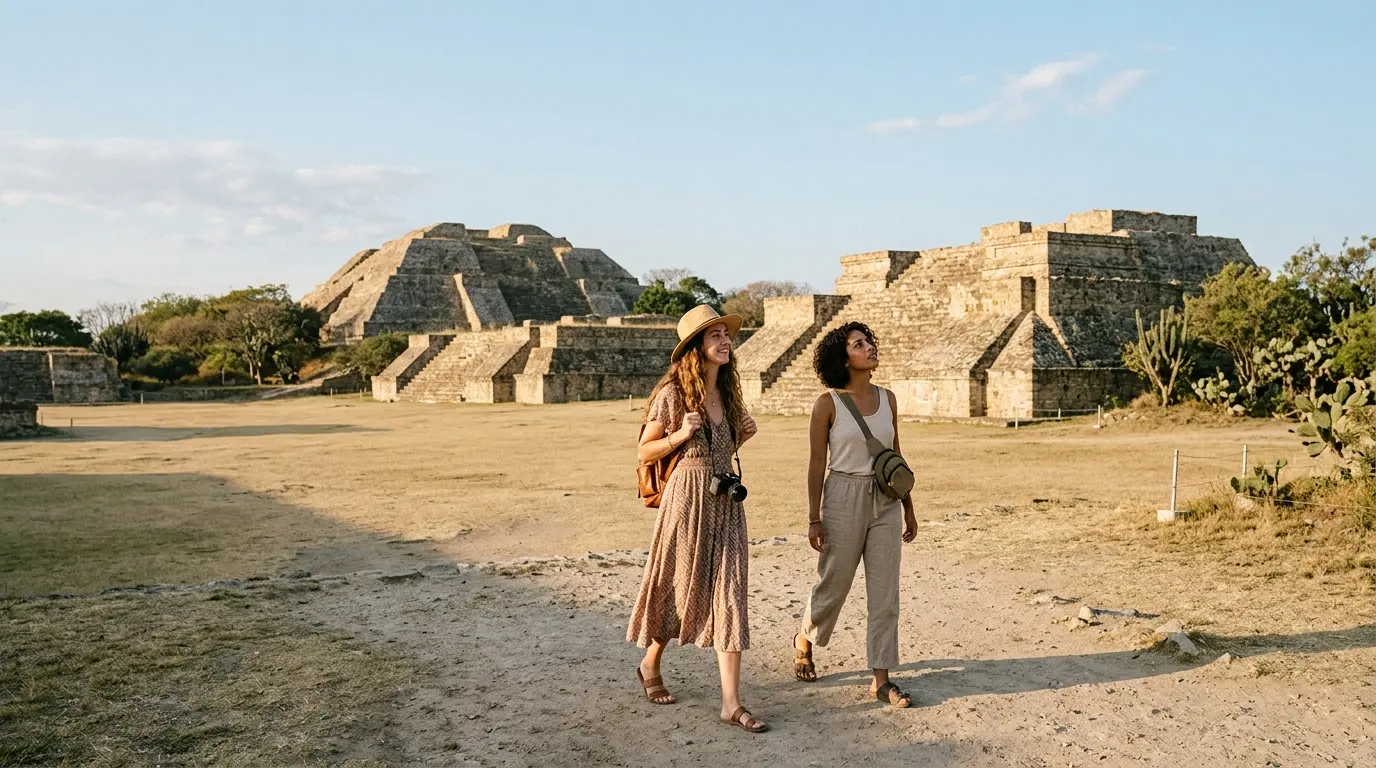
Oaxaca Mexico is one of the richest travel experiences in Latin America. From ancient Zapotec ruins at Monte Albán and petrified waterfalls at Hierve el Agua to mezcal distilleries, artisan villages, and Día de los Muertos celebrations that draw visitors from around the world, this city covers every kind of traveler. This guide tells you exactly what to do, where to go, and how to plan it right in 2026.
Why Is Oaxaca Mexico Worth Visiting?
Oaxaca de Juárez sits at 1,555 meters elevation in the Sierra Madre del Sur mountains, roughly 500 km south of Mexico City. The city holds UNESCO World Heritage status alongside Monte Albán and several surrounding sites. With 16 officially recognized indigenous groups, it carries the highest concentration of indigenous cultures of any state in Mexico.
What separates Oaxaca from other Mexican cities is how genuine it feels. The comparsas happen because Oaxaqueños love celebrating. The mole negro on your plate follows a recipe passed through generations of the same family. The Zapotec weaver in Teotitlán del Valle learned from her grandmother using natural dye techniques developed centuries before Spanish colonization.
Nothing here feels staged. That authenticity is exactly why travelers who visit once almost always come back.
What Should You Do on Your First Day in Oaxaca?
Walk from Templo de Santo Domingo de Guzmán south along Andador Macedonio Alcalá to the Zócalo. This route is the most efficient introduction to Oaxaca City because you cover colonial architecture, artisan shops, specialty coffee, and the social center of the city in one connected hour.
Templo de Santo Domingo, completed in 1666, features 300-year-old baroque golden gilding on its interior walls that genuinely stops people mid-step. Entry is free. Right beside it sits the Jardín Etnobotánico de Oaxaca, founded by artist-activist Francisco Toledo in 1993 to preserve indigenous plant knowledge of the Mixtec and Zapotec peoples.
Important update for 2026: government budget cuts have suspended English-language tours at the Jardín Etnobotánico. All tours currently run in Spanish only, offered at 10am, 11am, 12pm, and 5pm Monday through Saturday. Arrive 30 minutes early with 100 MXN in cash because spots fill fast.
From there, continue south along Andador Macedonio Alcalá through the heart of the Centro Histórico, past artisan craft shops, contemporary galleries, and specialty cafes, until you reach the Zócalo, formally Plaza de la Constitución.
At sunset, the Zócalo fills completely. Families take over every bench. Balloon sellers weave through the crowd. Brass bands start without announcement. Street food vendors appear from nowhere. Sit with a mezcal cocktail and watch. It costs nothing and belongs near the top of any list of things to do in Oaxaca Mexico.
What Are the Top Attractions Inside Oaxaca City?
The Jalatlaco Neighborhood
Jalatlaco is the most photogenic barrio in the city. Cobblestone streets run between brightly colored buildings covered end-to-end in large-scale murals by local artists including Bouler and Irving Cano. Papel picado lines the central streets overhead. The pace here is slower than Centro Histórico, with cafes, mezcalerías, and local galleries on nearly every corner. Start the morning at Once In Oaxaca or Café Blasón with a specialty coffee and walk without a plan. Most of the best photos from any Oaxaca trip come from this neighborhood.
Mercado 20 de Noviembre and Mercado Benito Juárez
These two markets sit side by side south of the Zócalo and serve completely different purposes.
At Mercado 20 de Noviembre, go straight to the meat alley. Pick your cut from chorizo, steak, or pork. Receive your tortillas and grilled peppers. Sit at a communal table surrounded by smoke, noise, and locals eating exactly the same thing beside you. This is the kind of market experience that makes Oaxaca unforgettable.
Mercado Benito Juárez covers daily goods: quesillo (Oaxacan string cheese), nieves (fruit-based sorbet), chapulines (toasted grasshoppers with chile and lime), fresh juice, and artisan crafts. Both markets stay open daily until 9pm.
Museo de las Culturas de Oaxaca
This museum inside the former Dominican convent attached to Templo de Santo Domingo displays the Tumba 7 artifacts excavated from Monte Albán: gold pieces, gemstones, and silver items from one of the richest pre-Columbian tombs ever found in Mexico. Block out two hours. Entry costs 85 MXN.
Museo Textil de Oaxaca
Free to enter and open daily, this museum houses a rotating collection of hand-woven rugs, embroidery, and regional textile traditions from across Oaxaca. Muss Café sits directly next door, making the two an easy pairing for a midday break.
What Food Should You Try in Oaxaca Mexico?
Oaxaca earned the title of culinary capital of Mexico because its food traditions run deeper and more varied than almost anywhere else in the country. These are the dishes you must try:
- Tlayuda: A large crispy tortilla with refried beans, quesillo, avocado, and meat. Think of it as Oaxacan pizza.
- Mole negro: The most complex of Oaxaca’s seven mole varieties. Rich and dark, built on dried chiles and chocolate. Try it at Ancestral Cocina Tradicional or Las Quince Letras.
- Chapulines: Toasted grasshoppers seasoned with chile and lime. Crunchy and better than they sound.
- Tamales Oaxaqueños: Steamed in banana leaves and filled with mole negro. Nothing like tamales from other regions of Mexico.
- Tejate: A pre-Hispanic drink made from ground cacao and maíz. Slightly frothy and historically significant since cacao beans once served as currency in Oaxaca.
- Quesillo: Oaxacan string cheese that appears on nearly every dish in the city.
- Nieve: Fruit-based sorbet from Plaza de las Nieves. Try nieve de tuna (cactus pear) or nieve de zapote.
- Memelas: Thick corn-based rounds topped with beans, salsa, and cheese. A strong breakfast choice.
For ancestral oaxacan hot chocolate, visit Rito Chocolatería or watch the bean-to-chocolate process live at Mayordomo shops along Andador Macedonio Alcalá.
For cooking classes, book with Alma de mi Tierra or Zapotec Travel Experiences by Lily. Both are indigenous women-owned businesses that start class with a market visit before you cook. Classes run six to eight hours and include learning to make tortillas and mole from scratch.
What Are the Best Day Trips from Oaxaca City?
Hierve el Agua
Hierve el Agua is one of only two petrified waterfall formations on Earth. Mineral-rich spring water has built dramatic travertine cliff formations over thousands of years. The natural infinity pool at the cliff edge is the single most photographed spot in Oaxaca state.
In 2026, the site enforces a strict 200-visitor daily cap. Arrive before 8am to avoid being turned away at the gate. Pay two separate fees: 20 MXN at the village entrance and 50 MXN at the springs. Self-drive is possible in a regular car as the last unpaved miles are manageable in dry season. Book through Viator for a guided group experience if you prefer not to navigate independently.
Monte Albán
Monte Albán is a pre-Columbian Zapotec city built around 500 BCE on a flattened hilltop 30 minutes from Oaxaca City. It held UNESCO World Heritage status alongside the city center and contained more than 170 tombs, a ball court, truncated pyramids, and the famous Los Danzantes carvings depicting tortured war prisoners. Go at opening time because the site has almost no shade. Hire a certified indigenous guide on arrival since most signage has faded beyond legibility.
Mitla Archaeological Site
Mitla served as the Zapotec religious center after Monte Albán declined. Its extraordinary geometric stone mosaics, cut and fitted without mortar, remain unique among all pre-Columbian ruins in Mexico. The Spanish built a church directly on top of the ruins when they arrived. Mitla is a Pueblo Mágico and sits on the same Highway 190 route as Hierve el Agua, making a combined day trip logical and straightforward.
Artisan Village Circuit
Four villages in the Oaxaca Valley specialize in crafts refined over generations:
- Teotitlán del Valle for hand-woven rugs using natural dyes from cochineal (insects harvested from nopal cactus, producing deep reds), indigo, and marigold.
- San Bartolo Coyotepec for barro negro black pottery, including workshops at Dona Rosa’s studio where the signature polishing technique originated.
- San Martín Tilcajete for alebrijes: colorful fantasy creatures carved from copal wood and painted in extraordinary detail.
- San Antonino Castillo Velasco for traditional hand embroidery.
Half a day covers two villages comfortably. Book through Zapotec Travel or Airbnb Experiences to work with community-run, indigenous-led guides.
Árbol del Tule
Ten kilometers from Oaxaca City in Santa María del Tule stands a Montezuma cypress that holds the Guinness World Record for the widest tree trunk on Earth at 9.38 meters in diameter, estimated at over 2,000 years old. You can cycle there on a marked bike path using a rental from Bicibella for 100 MXN for five hours. The local kids who point out hidden animal faces in the bark are worth a small tip.
What Unique Experiences Should You Not Miss?
Temazcal ceremony: This ancient Zapotec and Mixtec cleansing ritual takes place inside a dome-shaped stone structure designed to represent the womb of Mother Earth. A healer guides participants through herbal steam using volcanic rocks and medicinal plants. Cevarium Temazcal and Nativo Spa are trusted operators, charging approximately 65 USD solo or 50 USD per person as a pair. Approach it as the spiritual practice it is.
Lucha Libre: Look for hand-printed posters on city walls announcing upcoming events at Arena San Francisco. Arrive one hour early and buy a ticket at the door for 250 MXN. Matches run around three hours, starting with amateur fighters and building to the main event, with cheap beer and iconic lucha libre masks for sale throughout.
Mezcal distillery tour: Oaxaca produces 90% of global mezcal supply. Understanding the difference between ancestral, artesanal, and industrial production changes how you drink it. Palenque El Conejo in Santa Catarina Minas uses clay pot distillation with zero machinery. Palenque Mal de Amor in Santiago Matatlán runs organized English-language tours. In the city, Selva, Los Amantes, Sabina Sabe, and La Casa del Mezcal are the standout options for guided tastings.
Día de los Muertos: Oaxaca hosts some of the most moving Día de los Muertos celebrations in the country from October 31 through November 2, with comparsas beginning the last week of October. Book accommodation three to four months ahead. Visit the Barrio de Xochimilco cemetery on the evening of November 1st to see candlelit ofrendas and family gatherings without the densest crowds of November 2nd.
Guelaguetza festival: Held on the last two Mondays of July at Auditoria Guelaguetza, this is Oaxaca’s biggest indigenous cultural event. It celebrates 16 indigenous peoples through traditional dance, regional clothing, and ceremonial food. Free outdoor seating fills hours before showtime.
Final Thoughts
Oaxaca Mexico gives you more than a travel checklist. The calenda you stumble into on a Saturday night, the mezcalero explaining five generations of clay-pot distillation, the weaver in Teotitlán del Valle showing how a single cochineal insect produces deep crimson dye. These are the real answers to what to do in Oaxaca Mexico when you want to leave with something that photographs cannot capture. Start at the Zócalo. Follow the food. Let the city lead from there.
FAQs
How do you pronounce Oaxaca?
Say “wa-HA-ka.” The letter x makes an h sound from its Nahuatl origin. Most first-time visitors say “oh-ah-HACK-ah” until a local corrects them.
Is Oaxaca safe for tourists and solo female travelers in 2026?
Yes. Oaxaca ranks consistently among the safest states in Mexico. Solo female travelers visit regularly and report feeling comfortable throughout the Centro Histórico, Jalatlaco, and Zócalo areas. Use standard city awareness and you will be fine.
How many days do you need in Oaxaca?
Four to five days covers the city and at least two day trips comfortably. A full week gives you time for the artisan village circuit, a mezcal distillery visit, and Hierve el Agua without rushing.
What is the best time to visit Oaxaca Mexico?
Late October through early May, during the dry season, offers the most reliable weather. Come in late October for Día de los Muertos. Come in July for Guelaguetza.
Can you visit Hierve el Agua without a tour?
Yes, with a rental car. Arrive before 8am in 2026 to beat the 200-visitor daily cap. The last few miles of road are unpaved but manageable in a regular car during dry season.
Is the Jardín Etnobotánico English tour available in 2026?
No. All tours currently run in Spanish only after 2025 budget cuts. Arrive 30 minutes early with 100 MXN because tours hold only 30 people.
What is mezcal and why does it taste smoky?
Mezcal is distilled from the piña (heart) of the agave plant after roasting in underground fire pits. That roasting step creates the smoky flavor. Tequila skips this step entirely, which is why the two spirits taste completely different. Oaxaca produces 90% of the world’s mezcal.
What food is Oaxaca most famous for?
Mole negro and tlayudas. Oaxaca is called the land of seven moles because seven distinct mole varieties originate here. Quesillo, chapulines, tejate, and tamales Oaxaqueños wrapped in banana leaves are equally essential to the experience.
How do you get from Mexico City to Oaxaca?
ADO bus takes six to nine hours and costs around $20 to $35 USD. Flying into Xoxocotlán International Airport (OAX) takes 40 minutes. A rental car works well if you plan independent day trips on arrival.
What is La Noche de Rábanos?
A unique Oaxacan event held every December 23rd in the Zócalo where artists carve elaborate scenes from giant radishes and compete for prizes. What started as a colonial-era market promotion is now one of the most unusual cultural events in Mexico.


