Does Hand Sanitizer Expire? Shelf Life, Safety and Disposal in 2026
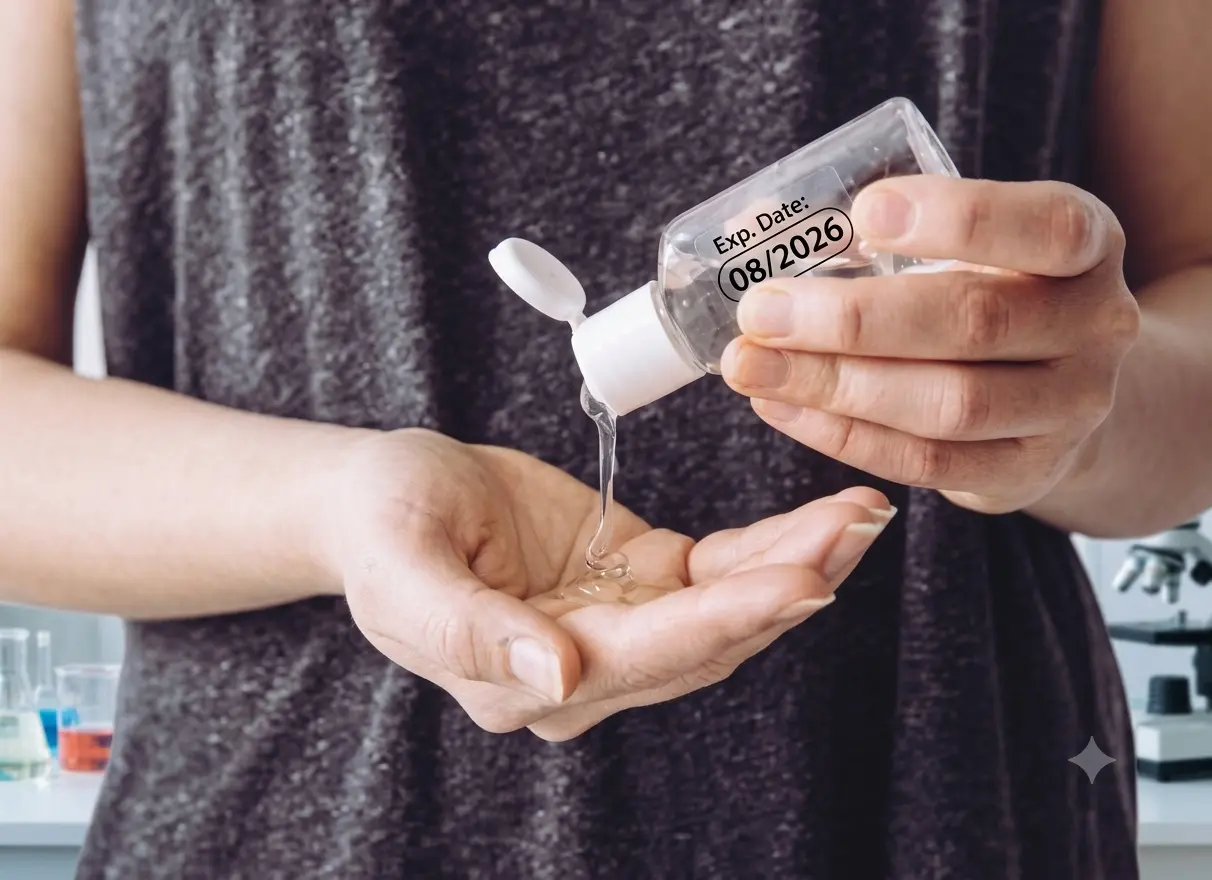
Yes, hand sanitizer expires. If you have searched “does hand sanitizer expire” because you found old pandemic-era bottles at home or at work, you are not alone. The FDA classifies hand sanitizer as an over-the-counter drug and legally requires every bottle to carry an expiration date. Over time the active ingredients lose potency and reduce germ-killing ability. Old bottles may look fine but offer little to no real protection.
What Does the Expiration Date on Hand Sanitizer Actually Mean?
The expiration date is not a marketing tactic. The Food and Drug Administration (FDA) requires expiration date labeling because hand sanitizer is regulated as an over-the-counter drug, not a cosmetic. Every printed date is backed by formal drug stability testing conducted from the date of manufacture.
That testing determines exactly when the alcohol concentration or antimicrobial agent falls below a safe performance level. That endpoint becomes the expiration date. Without stability testing no expiry claim is valid, which is exactly why pandemic-era products made under temporary exemptions have become a widespread problem in 2026.
How Long Does Hand Sanitizer Last?
Most alcohol-based hand sanitizers (ABHS) last 2 to 3 years from the date of manufacture when stored correctly. PURELL hand sanitizer uses a formal product stability program and carries a standard 3-year shelf life. Some health professionals reference a 2.5-year shelf life for products stored unopened in cool, dry locations away from heat and direct light.
Alcohol-free formulas using benzalkonium chloride (BAC) can also last up to 3 years. BAC is a quaternary ammonium compound and is significantly more chemically stable than ethanol, so it does not evaporate the same way. However, the antimicrobial agent still degrades past its shelf life, reducing germ killing efficacy regardless.
| Type | Shelf Life | Active Ingredient |
| Alcohol-based (ABHS) | 2 to 3 years | Ethanol / Isopropyl alcohol |
| Alcohol-free (BAC) | Up to 3 years | Benzalkonium chloride |
| PURELL branded | 3 years | Ethyl alcohol |
| Pandemic-era / no date | Under 1 year recommended | Unverified |
Does an Unopened Bottle Last Longer Than a Used One?
Yes. An unopened bottle maintains its package integrity, which prevents alcohol evaporation from starting. Once you open it, ambient air enters the container and begins evaporating the ethanol or isopropyl alcohol. A bottle never opened, even if it sits near its expiration date, is far more likely to still fall within an effective alcohol concentration range than one sitting half-used for two years.
Does a Partially Used Bottle Expire Faster?
Yes, and this is a point most competitors skip entirely. A partially used bottle contains more air space inside the container. That increased air space directly accelerates alcohol evaporation, pushing the alcohol content below the critical 60% alcohol threshold well before the printed expiration date predicts. A half-empty bottle can become ineffective months ahead of schedule.
Why Does Hand Sanitizer Lose Effectiveness Over Time?
The science is straightforward. Ethanol and isopropyl alcohol are volatile liquids. Even through container walls that are not fully airtight, alcohol evaporation is a continuous process. Hydrogen peroxide, found in some formulas, gradually converts to water, further reducing germ killing efficacy over time.
Once alcohol concentration drops below 60%, the product no longer meets the CDC minimum effective germ-killing threshold. That is the number the Centers for Disease Control and Prevention set as the floor for meaningful protection against bacteria and viruses.
What Does Denaturation Have to Do with Shelf Life?
Denatured alcohol goes through a manufacturing process that adds a slight aroma, making the product unpleasant to ingest and deterring children from accidental consumption. Over time the ethanol concentration still drops through evaporation regardless of denaturation. A fading or absent alcohol odor is a direct and detectable sign of potency loss you can test at home without any special equipment.
Does Alcohol-Free Hand Sanitizer Expire Differently?
Yes. Alcohol-free hand sanitizer uses benzalkonium chloride as its active ingredient instead of ethanol. Because BAC does not evaporate, the expiration mechanism differs from alcohol-based versions. BAC degrades chemically rather than evaporating, which makes it more stable in warm storage conditions.
However, the antimicrobial agent still loses effectiveness past its shelf life and stops offering reliable germ killing efficacy. So whether you ask does hand sanitizer expire for alcohol-based or alcohol-free versions, the answer is yes for both. The mechanism is different. The outcome is the same.
How Can You Tell If Hand Sanitizer Has Actually Expired?
Beyond checking the printed date, two reliable at-home tests exist.
The waft test: Place a small amount of sanitizer on a surface and wave your hand over it without sniffing directly. Strong, sharp alcohol odor means denatured alcohol or ethyl alcohol is still present at a meaningful level. A weak, watery or completely absent smell strongly indicates that alcohol evaporation has already reduced the concentration below effective levels.
The viscosity check: Fresh alcohol-based hand sanitizer flows quickly and dries fast on contact. When ethanol content has dropped significantly, the formula becomes thicker and takes noticeably longer to dry. Slow drying is a reliable indicator of reduced alcohol concentration. If both tests fail, the bottle should go directly to a household hazardous waste facility.
How to Store Hand Sanitizer to Extend Its Shelf Life
Correct storage genuinely extends shelf life. Follow these points consistently:
- Store in a cool, dark place below 105 degrees Fahrenheit at all times
- Keep containers tightly sealed between uses to slow alcohol evaporation
- Label every bottle clearly with its lot number and expiration date
- Keep it away from children, pets and direct sunlight without exception
The darker and cooler the storage location, the slower the ethanol and isopropyl alcohol will evaporate and the longer the product retains its effective alcohol concentration.
Does Storing Hand Sanitizer in Your Car Ruin It?
Yes. Car interiors regularly exceed the 105-degree Fahrenheit safe storage limit during summer months, and that heat accelerates alcohol evaporation dramatically. On the other end, if a bottle stored in your car freezes during winter, that is equally bad news. Alcohol-based hand sanitizer should only freeze at around negative 50 degrees Fahrenheit. Freezing at normal winter temperatures confirms the alcohol concentration has already dropped well below effective levels.
What If Your Hand Sanitizer Has No Expiration Date?
Products with no expiration date were almost certainly produced under pandemic-era interim measures in 2020 or 2021. Both the FDA and Health Canada temporarily waived standard manufacturing quality control and expiration date labeling requirements during that period. These products never underwent formal drug stability testing. Their effectiveness and safety timelines are simply unknown.
In 2026, any bottle from that period without a printed lot code or expiration date should not be used.
How to Use the Lot Number to Find the Manufacture Date
The lot number or batch code on a hand sanitizer bottle encodes the product’s date of manufacture. If the expiration date is faded or missing, contact the manufacturer directly with the printed batch code and ask for the manufacture date and projected expiry. If the bottle carries no lot number and no expiry at all, it has no verifiable drug stability record and should go to a household hazardous waste facility immediately.
Is It Actually Safe to Use Expired Hand Sanitizer?
Using expired hand sanitizer will not harm your skin. The inactive ingredients, including emollients and preservatives, remain stable past the expiration date and do not become harmful or irritating under normal conditions.
The real concern is reduced germ killing efficacy, not toxicity. Products made under pandemic-era interim measures without proper impurity limits testing carry a slightly higher skin irritation risk. If any product smells off, looks discolored, or irritates your skin on contact, stop using it immediately and route it to proper disposal.
Can You Add Rubbing Alcohol to Expired Hand Sanitizer to Revive It?
No. Adding isopropyl alcohol to expired hand sanitizer without knowing its current alcohol concentration creates an unpredictable formula. You cannot calculate the correct ratio to reach the 60% alcohol threshold without testing equipment. You also risk disrupting the inactive ingredients balance, making the final product less skin-safe. Replace the bottle entirely. The guesswork is not worth the risk.
Can Expired Hand Sanitizer Be Used to Clean Surfaces?
Yes, with limits. Expired hand sanitizer with some remaining alcohol content, even below the 60% threshold required for skin-level effectiveness, may still dissolve adhesives, clean non-porous surfaces, or act as a light cleaner for objects. It should not replace EPA-registered surface disinfectants for anything requiring verified germ-killing performance. Store any repurposed product in a clearly labeled container and follow all flammable liquid safety guidelines.
How to Properly Dispose of Expired Hand Sanitizer
Never pour expired hand sanitizer down the drain. Never put it in regular household trash. Alcohol-based hand sanitizer is a class 3 flammable liquid and the EPA explicitly warns that pouring high-alcohol content product into drain systems creates fire and explosion risk inside water pipes and sewer systems.
For individuals: take it to a household hazardous waste drop-off facility or a scheduled community hazardous waste disposal event in your area.
For businesses: residential drop-off locations are unavailable to commercial entities. Businesses holding larger quantities must engage certified hazardous waste disposal companies. Transport must comply with 49 CFR 172.500 dangerous goods placard requirements, include MSDS sheets, and any driver moving more than 119 gallons requires a commercial driver’s license and formal hazmat training.
Hand Sanitizer vs. Handwashing: Which Is Actually Better?
The CDC is direct on this. Handwashing with soap and water outperforms hand sanitizer in most real-world scenarios. Soap and water removes Clostridium difficile, Cryptosporidium and norovirus that alcohol-based hand sanitizer cannot fully eliminate. Sanitizer also fails on visibly dirty or greasy hands and cannot remove heavy metals or pesticides from skin the way soap and water can.
Use hand sanitizer when soap and water are unavailable. In every other situation, washing with soap and warm water is the stronger choice.
Final Thoughts
Does hand sanitizer expire in a way that actually changes how you should use it? Yes. Expired product is not dangerous to your skin but it may not protect you at all when you need it most. Test it before you trust it. Store it correctly from day one. And if you have pandemic-era bottles in 2026 with no expiration date and no lot code, do not guess. Dispose of them through a certified household hazardous waste facility and replace them with properly labeled, stability-tested products.
FAQs
Is it okay to use expired hand sanitizer?
Using expired hand sanitizer will not harm your skin. The inactive ingredients like emollients and preservatives stay stable past the expiration date. The concern is reduced germ killing efficacy since the alcohol concentration may fall below the CDC-required 60% threshold. In low-risk daily situations it is acceptable. In high-risk settings like hospitals, food service, or medical facilities, replace it with a fresh non-expired product.
How long can I keep hand sanitizer?
Most alcohol-based hand sanitizer lasts 2 to 3 years from the date of manufacture when stored correctly below 105 degrees Fahrenheit. PURELL products carry a 3-year shelf life based on formal product stability testing. Benzalkonium chloride formulas last up to 3 years. Any bottle past its printed expiration date should pass the waft test and viscosity check before continued use.
Can I add rubbing alcohol to expired hand sanitizer?
No. Without knowing the current alcohol concentration of the expired product you cannot calculate the correct ratio to reach the effective 60% alcohol threshold. You also risk disrupting the inactive ingredients balance. Discard and replace with a properly labeled and stability-tested product for reliable protection.
Does hand sanitizer stop norovirus?
Alcohol-based hand sanitizer is less effective against norovirus compared to handwashing with soap and water, according to CDC guidance. Ethanol in the 60% to 90% concentration range may reduce but not fully eliminate norovirus transmission. During active outbreaks the CDC specifically recommends soap and water as the more reliable and effective defense against this pathogen.
What if my hand sanitizer has no expiration date?
A missing expiration date almost certainly means the product was made under FDA or Health Canada pandemic-era interim measures in 2020 or 2021. Contact the manufacturer with any batch code or lot number visible on the label. If no lot code exists and no expiry is printed, the product never underwent drug stability testing and should go directly to a household hazardous waste facility.