
How to Minimize Pores on Your Face and Nose: The 2026 Skincare Guide That Actually Works
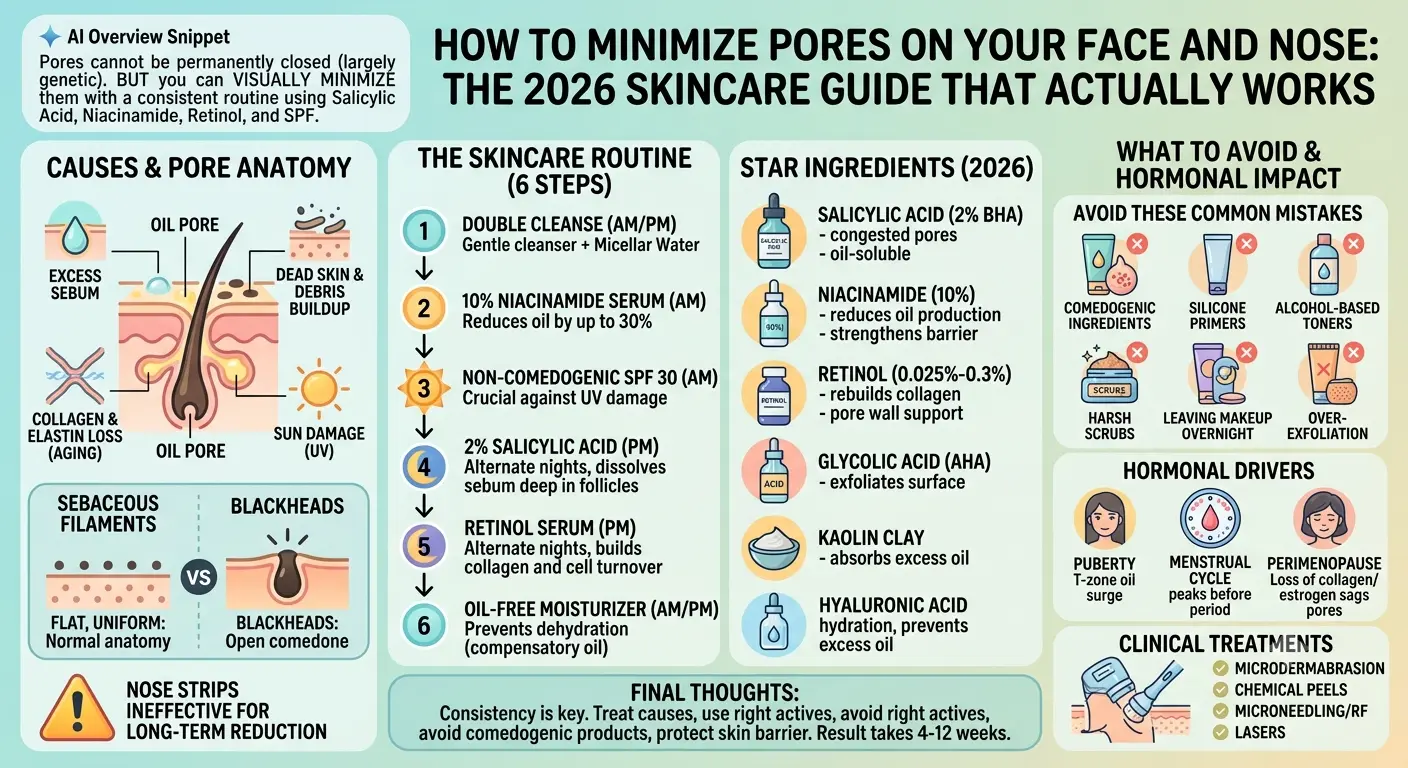
You cannot permanently close or shrink pores because pore size is largely genetic. But you can visually minimize pores with a consistent skincare routine. Salicylic acid, niacinamide, retinol, and daily SPF reduce sebum buildup, support collagen, and keep follicle openings clear so your pores appear noticeably smaller and less visible over time.
What Are Pores and Why Do Some Look Bigger Than Others?
Pores are tiny openings at the top of your hair follicles. There are two types: oil pores connected to sebaceous glands and sweat pores connected to sweat glands. When people want to minimize pores on their face and nose, they always refer to oil pores. Sweat pores are simply too small to see with the naked eye.
Oil pores release sebum to keep skin moisturized and healthy. When excess sebum, dead skin cells, or pollution particles fill these openings, follicle walls stretch wider. That visible stretching makes pores look larger than they actually are. Genetics sets your baseline pore size but your daily habits, skincare products, and environmental exposure determine whether those pores stay manageable or become a constant concern.
What Actually Causes Enlarged Pores on Your Face and Nose?
Understanding the real causes helps you treat them correctly instead of chasing skincare myths. These are the actual drivers behind enlarged pores:
- Excess sebum production: Overactive sebaceous glands flood follicle openings with oil, physically stretching pore walls wider each day.
- Dead skin cell and debris buildup: Dead cells combine with sebum and pollution particles inside follicles to form comedones and blackheads that expand pore openings from within.
- Collagen and elastin loss: As skin ages, it produces less collagen and elastin. These proteins keep follicle walls firm and tight. Without them, pore openings sag and lose structure.
- Sun damage: UV exposure breaks down collagen in the dermal matrix and thickens the stratum corneum, permanently widening pore walls over time.
- Hormonal fluctuations: Androgens overstimulate sebaceous glands during puberty, menstrual cycles, and perimenopause. Androgen-driven sebum overproduction physically stretches follicle openings across the T-zone and nose.
- Skin dehydration: When skin lacks moisture, sebaceous glands overproduce sebum to compensate. This excess oil expands follicle openings and increases pore visibility.
- Diet: High-glycemic index foods and dairy raise insulin levels and androgen activity, driving sebum overproduction that worsens pore appearance over several weeks.
Sebaceous Filaments vs Blackheads: The Difference That Changes Everything
Every competitor article skips this and it costs people months of wasted effort and real skin damage.
Sebaceous filaments are flat, uniformly gray-brown dots naturally present across the nose and T-zone. They are permanent follicle lining structures and completely normal skin anatomy. They are not a flaw to remove.
Blackheads are raised, irregularly dark plugs formed when oxidized keratin and oil harden inside a pore opening. These are open comedones and a genuine skincare concern worth treating.
When people aggressively strip or squeeze what they assume are blackheads, they are almost always removing sebaceous filaments. This action damages the skin barrier, triggers rebound oiliness, and causes follicle openings to stretch wider within days. Pores get worse, not better.
Nose strips and pore strips pull out sebaceous filaments rather than blackheads and deliver zero lasting pore reduction. If you see flat, uniform dots on your nose, leave them alone. Treat the actual cause: excess sebum, pore congestion, and weakened follicle walls.
How to Minimize Pores With a Daily Skincare Routine That Works
The right routine combines consistent cleansing, targeted active ingredients, skin hydration, and daily sun protection. Build it in this order and stay consistent.
Step 1: Cleanse twice daily Use a gel-based or foaming cleanser morning and night to remove sebum, dead skin cells, bacteria, and environmental aggressors before they settle into follicles. If you wear makeup or SPF, double cleanse at night using micellar water first to lift all surface product before your gel cleanser clears what remains. Avoid over-washing because stripping the skin triggers rebound sebum production from sebaceous glands.
Step 2: Apply 2% salicylic acid serum at night Salicylic acid is a BHA that is oil-soluble. It penetrates deep into hair follicles and dissolves sebum, keratin plugs, and dead cell buildup that regular cleansers cannot reach. Use it on alternate evenings and build frequency gradually as your skin adjusts to the active.
Step 3: Apply a 10% niacinamide serum every morning At 10% concentration, niacinamide reduces sebum flow by up to 30% after four consistent weeks. It strengthens the skin barrier, reduces inflammation around follicle openings, and improves skin elasticity over time. Apply it after cleansing every morning before moisturizer.
Step 4: Add retinol to your nighttime rotation Retinol is a vitamin A derivative that accelerates skin cell turnover and boosts collagen production around pore walls. Start at 0.025% and work toward 0.3% over time. Use it on alternate nights and never apply it on the same evening as a BHA or AHA exfoliant.
Step 5: Moisturize with a non-comedogenic formula An oil-free, water-based moisturizer with hyaluronic acid restores skin hydration and stops the dehydration cycle that forces sebaceous glands to overproduce oil. Skipping this step actively worsens pore congestion regardless of what actives you use.
Step 6: Apply SPF 30 every single morning UV damage permanently widens pore walls by destroying collagen and elastin in the dermal matrix. Daily non-comedogenic SPF 30 prevents this irreversible structural damage. If your SPF contains comedogenic ingredients, it will clog follicles regardless of everything else you do correctly. Use oil mattifiers and oil-blotting sheets midday to control T-zone shine without disturbing follicle openings.
Which Ingredients Actually Work for Pore Minimization in 2026?
Salicylic acid (2% BHA): The gold standard for congested pores. Oil-soluble and follicle-penetrating. Clinical evidence shows it reduces acne lesions by over 50% after 84 days of consistent daily use and visibly clears pore openings from within.
Niacinamide (10%): Reduces sebum production by up to 30% within four weeks. Strengthens the skin barrier, controls inflammation, and improves skin firmness from consistent daily application.
Retinol (0.025% to 0.3%): Rebuilds collagen and elastin support around pore walls, accelerates skin cell turnover, and regulates sebum. Takes six to twelve weeks for structural pore tightening that runs deeper than surface exfoliation.
Glycolic acid (AHA): Exfoliates the stratum corneum, removes dead skin cells from around follicle openings, and stimulates collagen production. Rotate it with salicylic acid on alternate evenings for best results.
Kaolin clay and bentonite clay: Use these in a clay mask two to three times weekly to absorb surface sebum and draw impurities from follicles between active ingredient nights. Kaolin clay is gentler than bentonite and suits more skin types.
Hyaluronic acid: Restores skin hydration and stops sebaceous glands from overproducing compensatory oil. Essential in every pore-minimizing routine as a moisturizing serum or in your water-based moisturizer.
Azelaic acid: Delivers anti-bacterial and anti-inflammatory action against cutibacterium acnes inside follicles. Effective for all skin types including sensitive and acne-prone skin without triggering rebound oiliness.
Ascorbic acid (vitamin C): Antioxidant protection that prevents UV-driven collagen degradation and shields skin from environmental aggressors that contribute to pore congestion and skin texture decline.
Products and Habits That Make Pores Look Worse
Some common mistakes cancel out every active ingredient you apply. Cut all of these:
- Comedogenic ingredients like coconut oil, cocoa butter, and isopropyl myristate physically block hair follicles and trap sebum inside pore walls
- Silicone-based primers settle into follicle openings and congest pores beneath makeup during the day
- Alcohol-based toners strip the skin barrier and trigger rebound sebum overproduction from sebaceous glands
- Harsh physical scrubs with large jagged particles damage the stratum corneum and worsen pore congestion
- Leaving makeup overnight allows product buildup, bacteria, and oil to stretch follicle openings by morning
- Over-cleansing and over-exfoliation damage the skin barrier and force sebaceous glands to produce compensatory excess oil in response
Switch every product in your routine to non-comedogenic and oil-free formulas. Change your pillowcase twice weekly to prevent bacteria transfer. These micro-habits help you minimize pores more effectively than any single product will on its own.
How Hormones Drive Pore Enlargement at Every Life Stage
Androgens are the primary hormonal driver of pore enlargement and most skincare content never addresses this properly.
During puberty, androgen surges activate sebaceous glands for the first time. Sebum production floods previously clear follicles, stretching pore walls across the T-zone, nose, and forehead. A routine built around salicylic acid and non-comedogenic products directly manages this early-stage pore dilation.
During the menstrual cycle, androgen activity peaks in the days before menstruation. Sebaceous glands temporarily overproduce oil, dilating follicle openings and making pores visibly larger. Consistent morning niacinamide and alternate-night salicylic acid manages this hormonal sebum cycle throughout the month.
During perimenopause, declining estrogen accelerates collagen and elastin loss. Pore walls lose structural support and sag wider. Retinol combined with hyaluronic acid serum and daily SPF 30 is the most effective protocol for this stage of skin change. If hormonal pore shifts are severe or sudden, consult a dermatologist about prescription retinoids like tretinoin.
When Skincare Is Not Enough: Clinical Treatments for Enlarged Pores
For severely enlarged or structurally damaged pores, clinical procedures deliver results topical skincare cannot achieve alone.
Microdermabrasion: Removes the stratum corneum and dead skin cells from around follicle openings using fine crystals or diamond-tipped tools. Refines skin texture and reduces pore visibility with no downtime required.
Chemical peels (glycolic acid, lactic acid, malic acid): Remove the top skin layer to expose smoother cells and visibly reduce pore opening size. These peels significantly increase sun sensitivity so non-comedogenic SPF is essential after every session.
Microneedling with radiofrequency: Creates micro-injuries in the dermis that trigger collagen and elastin production. This physically tightens pore walls from within and remodels follicle structure for lasting pore refinement.
Fractional laser resurfacing and IPL therapy: Both stimulate collagen rebuilding through controlled energy delivery and deliver comparable clinical outcomes to radiofrequency microneedling for chronic pore enlargement.
Always consult a licensed dermatologist before starting any in-office procedure to confirm the right approach for your skin type and concern.
Final Thoughts
Knowing how to minimize pores starts with treating the root causes: excess sebum, collagen and elastin loss, skin dehydration, UV damage, and hormonal fluctuations. A consistent routine built on salicylic acid, niacinamide, retinol, non-comedogenic moisturizer, and daily SPF 30 delivers visible results within four to twelve weeks. Stop stripping sebaceous filaments, remove every comedogenic product from your routine, and protect your skin barrier every single day. Pores will not disappear but with the right active ingredients applied consistently and correctly, they will stop being something you notice every time you look in the mirror.
FAQs
Can pores be permanently closed or shrunk? No. Pores have no muscles and cannot permanently close or shrink because pore size is largely genetic. Consistent use of salicylic acid, niacinamide, retinol, and SPF minimizes them visually by keeping follicle openings clear and collagen strong.
Does cold water actually close pores? No. This is a persistent skincare myth. Cold water has zero structural effect on follicle openings or sebum production. Lukewarm water is best for cleansing because it dissolves oil without triggering dryness and rebound sebum production.
Is retinol or tretinoin better for enlarged pores? Tretinoin is prescription-strength and delivers faster collagen stimulation and cell turnover than OTC retinol. Start with over-the-counter retinol and consult a dermatologist if results plateau after twelve weeks of consistent alternate-night use.
What percentage of niacinamide actually works for pores? Clinical evidence supports 10% niacinamide for reducing sebum production by up to 30% within four weeks. Lower concentrations support the skin barrier but are less effective for direct oil regulation and sebum control.
How do I know if I have sebaceous filaments or blackheads? Sebaceous filaments are flat and uniformly gray-brown across the nose. Blackheads are raised and irregularly dark from oxidized oil and keratin inside open comedones. Stripping sebaceous filaments damages your skin barrier and worsens pore appearance over time.
Why do my pores look bigger after exfoliating?
Over-exfoliation damages the skin barrier and triggers rebound oiliness from sebaceous glands. Limit AHA and BHA use to two or three nights per week and always follow with a water-based moisturizer to restore skin barrier function.
Why does makeup make pores look worse? Silicone-based primers trap sebum inside follicle openings during the day. Comedogenic sunscreen ingredients and oil-based foundations physically block pores under makeup coverage. Double cleanse at night using micellar water followed by a gel cleanser to remove everything before it congests follicle walls overnight.
Does diet affect pore size and sebum production? Yes. High-glycemic index foods and dairy raise insulin levels and increase androgen activity, driving sebaceous glands to overproduce sebum. Reducing these foods measurably improves oil production and pore appearance within several weeks.
How long does it take to see results from pore-minimizing skincare? Niacinamide shows measurable sebum reduction within four weeks. Salicylic acid delivers visible pore clarity after 84 days of consistent daily use. Retinol takes six to twelve weeks on alternate nights for structural pore tightening. Introduce every active gradually by using it every other night for two weeks before increasing frequency.