
Feining Meaning in 2026: Craving, Pretending, or Something Else?
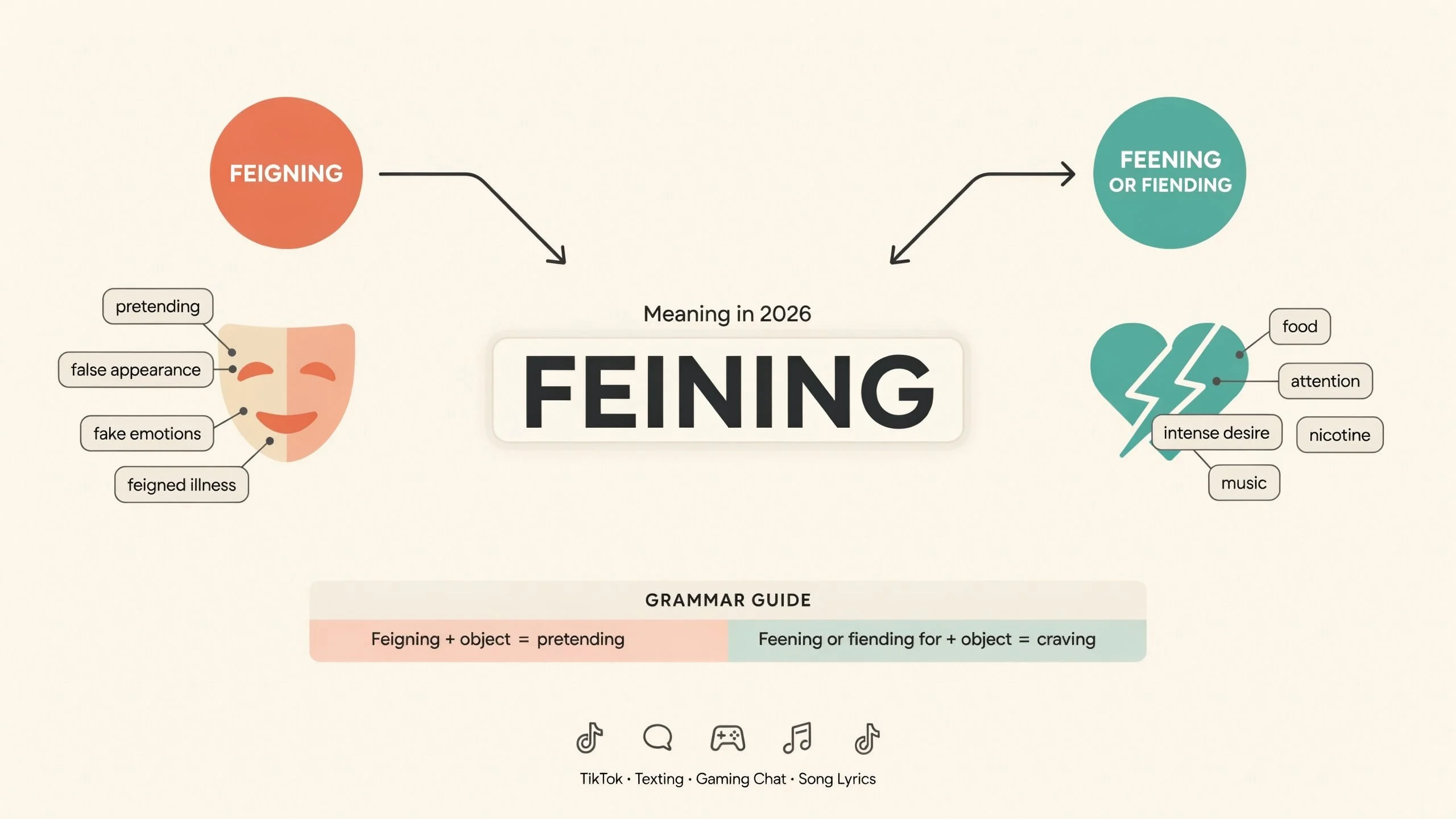
Feining meaning depends on context. In most online conversations, “feining” is a nonstandard spelling of feening or fiending, which means craving something intensely. In other cases, people use it by mistake for feigning, which means pretending. The fastest way to tell is to check the sentence pattern and topic.
That difference matters because one spelling points to strong desire while the other points to a false appearance or pretending. Social media posts, song lyrics, gaming chats, and text messages often blur these meanings. Readers need a simple way to separate them.
What Does Feining Mean?
Feining is not a stable standard English word in modern usage. It usually represents one of two ideas:
- Feening or fiending means craving food, attention, nicotine, drugs, music, a person, a game, or something else very strongly.
- Feigning means pretending to feel, know, believe, or experience something.
The feining meaning changes with context. “I’m feining for pizza” almost certainly means craving pizza. “She was feining surprise” probably means feigning surprise, which is pretending to be surprised.
Is Feining a Real English Word?
In current casual writing, feining works mainly as an informal respelling, phonetic spelling, or misspelling. It appears in internet slang, texting slang, TikTok comments, Instagram captions, Discord chats, memes, and song discussions.
A historical form of feining also appeared in Middle English with meanings linked to making or inventing. That old use does not make the modern slang form standard. Today, writers usually intend feigning, feening, or fiending.
Does Feining Mean Craving or Pretending?
It can point to either meaning, but the grammar usually gives the answer.
When someone writes feining for, the intended sense is usually craving:
- “I’m feining for more.”
- “He’s feining for attention.”
- “She’s feining for a reply.”
- “They’re feining for concert tickets.”
The clearer slang spelling would be feening for or fiending for.
When the word takes a direct object, the intended sense is often pretending:
- Feigning illness
- Feigning ignorance
- Feigning interest
- Feigning confidence
- Feigning indifference
This sentence pattern is one of the best ways to resolve contextual ambiguity.
How Can You Tell What Feining Means From Context?
Use four quick checks:
- Look for for. “Feining for something” usually signals intense craving.
- Look for a direct object. “Feining surprise” likely means feigning surprise.
- Check the topic. Food, nicotine, drugs, music, games, attention, and relationships often point to fiending or feening.
- Check the tone. False emotions, fake confidence, pretending online, and putting on a front point to feigning.
If the message says “Stop feining,” the meaning may still be unclear. It could mean stop pretending, stop exaggerating, stop acting desperate, or stop obsessing. The surrounding conversation decides.
Why Do People Confuse Feining, Feening, Fiending, and Feigning?
The words look similar and appear in fast digital conversations. Informal writing often favors speed over spelling accuracy. That creates several common mix-ups:
- Feigning means pretending or creating a false impression.
- Feening is a slang spelling connected to strong craving.
- Fiending describes intense desire, obsession, or compulsive craving.
- Feining is an unstable spelling that may point to any of the above.
Pronunciation also helps. Feign uses the vowel sound in “day.” Fiend uses a long “ee” sound and ends with a “d” sound. They are not true homophones.
Where Did These Words Come From?
The words belong to two separate families.
Feign developed into feigning, which means pretending, faking, or shaping a false appearance. It covers behavior such as feigning illness, feigning surprise, emotional masking, or pretending to care.
Feigning may also involve emotional self-protection, conflict avoidance, social courtesy, or emotional restraint. Someone may fake happiness, interest, agreement, or confidence without intending serious harm.
Fiend later developed into the slang verb fiending, which describes a powerful craving or obsession. Feening became a common informal respelling.
Over time, generification and meaning softening moved the term beyond drug craving. People now apply it to food, music, messages, entertainment, attention, and relationships. This craving-to-hyperbole shift explains why someone may say they are “feening for coffee” without suggesting addiction.
How Is Feining Used on Social Media?
On TikTok, Instagram, Snapchat, Discord, Twitter/X, meme pages, and gaming chats, feining may describe exaggerated desire or performative behavior.
A user might call someone “feining for attention” because they seem desperate for likes, replies, or clout. Another person might say someone is “feining” because they are faking emotions, overacting in a reaction video, or pretending to like a viral trend.
The term can describe:
- Attention-seeking behavior
- Clout chasing
- Social validation
- Exaggerated emotions
- Playful pretending
- Dramatic reactions
- Putting on a front
- Performative social media behavior
Platform-specific usage, regional variation, dialect variation, and audience interpretation can affect the meaning. A phrase used in a gaming chat may not carry the same tone in a public social media comment.
Between friends, the word may sound playful. In public, it can accuse someone of insincerity, desperation, addiction, or inauthentic behavior.
What Does Feining Mean in Addiction or Smoking Contexts?
In conversations about drugs, smoking, or nicotine, feining usually represents feening or fiending. It can refer to an intense substance craving, compulsive desire, or withdrawal-driven craving.
This use is more serious than saying someone is feening for pizza or a song. Calling a person a fiend may sound insulting because it can reduce them to their addiction or mock their withdrawal.
The word does not always refer to drugs. Modern slang also applies it to food, games, music, attention, relationships, and entertainment. Context determines whether the phrase is casual hyperbole or addiction-related language.
How Should You Use the Word Correctly?
Choose the spelling based on the meaning you want.
Use feigning for pretending:
- “She was feigning interest.”
- “He was feigning illness.”
- “They were feigning confidence.”
Use feening or fiending for craving:
- “I’m feening for coffee.”
- “He’s fiending for attention.”
- “She’s feening for the new game.”
Avoid feining in academic papers, legal documents, business communication, professional emails, and professional websites unless you are quoting or explaining the slang spelling.
An editor should correct feining to feigning when the sentence describes deception or false emotion. The editor should use feening or fiending when the sentence describes craving.
Is Feining Still Popular in 2026?
The term still appears in digital slang, youth slang, Gen Z and Gen Alpha conversations, hip-hop discussions, gaming slang, social media captions, and search queries. Visibility alone does not prove that its popularity is growing.
A reliable trend claim would need search demand, spelling-variant prevalence, platform usage, social media adoption, and dated comparisons. It is safer to say that the term remains visible in 2026 than to call it a rapidly growing trend without evidence.
What Is the Difference Between Feining, Feigning, Feening, Fiending, and Faking?
| Term | Meaning | Typical use |
|---|---|---|
| Feining | Ambiguous nonstandard spelling | Texts, slang searches, informal posts |
| Feigning | Pretending or creating a false appearance | Standard English |
| Feening | Craving something strongly | Informal slang |
| Fiending | Intense craving, obsession, or compulsive desire | Slang and addiction contexts |
| Faking | General pretending or insincerity | Formal and informal English |
Related words add more detail. Fronting means projecting an image while hiding the truth. Masking means concealing emotions and may become habitual. Overacting means exaggerating a reaction. Pretending is the broadest term.
What Is the Difference Between FE!N, FEIN, Fein, Feen, and Fien?
Capitalization and punctuation can change the search intent.
FE!N often points to the song title and music-related searches. FEIN commonly means Federal Employer Identification Number. Lowercase fein, feen, and fien may appear as shortened, altered, or misspelled slang forms connected to craving.
Adding words such as “slang,” “text,” “song,” or “meaning” helps search engines understand what you want.
Frequently Asked Questions
What does feining mean in text?
It usually means craving something intensely or pretending. Check whether the sentence uses “for” or describes a false emotion.
What does it mean when someone is feining?
They may be obsessing over something, acting desperate, exaggerating, or pretending. Context decides the exact sense.
What does “stop feining” mean?
It can mean stop pretending, stop exaggerating, stop acting desperate, or stop obsessing.
What does “I’m feining for more” mean?
It means “I strongly want more.” The clearer spelling is feening or fiending.
What does feining for attention mean?
It usually means craving attention, seeking social validation, or acting dramatically to get reactions.
What does feining for someone mean?
It usually means intensely wanting, missing, or obsessing over that person.
What does feining mean in smoking?
It usually refers to a strong nicotine craving or withdrawal-driven desire to smoke.
Is “feining for” grammatically correct?
It is understandable slang, but feening for or fiending for is clearer when the meaning is craving.
Is feining the same as fiending?
Not exactly. Fiending has a clear craving meaning. Feining is an ambiguous spelling that may also be confused with feigning.
Is feining the same as feigning?
No. Feigning is the standard word for pretending. Feining may be a misspelling of it, but it can also represent craving slang.
Does feining always mean drugs?
No. It can describe cravings for food, music, attention, games, nicotine, a person, or many other things.
Is calling someone a fiend offensive?
It can be. The word may sound playful among friends, but it can also stigmatize addiction or imply desperation.
What does fiend mean if a dictionary says devil?
Fiend historically refers to an evil being or cruel person. In modern slang, it can also describe someone with an intense craving or obsession.
How do I stop fiending?
For an ordinary craving, step away from the trigger and change your focus. For substance cravings or withdrawal, contact a qualified health professional or addiction support service.
Can feining function as both a noun and a verb?
It is usually used like a verb form. Fiend can also be a noun. Because feining is unstable slang, the sentence determines its role.
Does FE!N mean the same as feening?
Not always. FE!N can draw on ideas of craving or obsession, but it also refers to a stylized song title.
Why does FEIN bring up tax information?
Uppercase FEIN commonly refers to a Federal Employer Identification Number, not internet slang.
Conclusion
The feining meaning becomes clear once you separate two ideas. Feigning means pretending while feening or fiending means craving intensely. Look for “for,” check the topic, and notice whether the sentence describes desire or a false appearance. In formal writing, choose the correct standard spelling instead of relying on the ambiguous form.