
Valletta Must See: The Complete Guide to Malta’s Capital
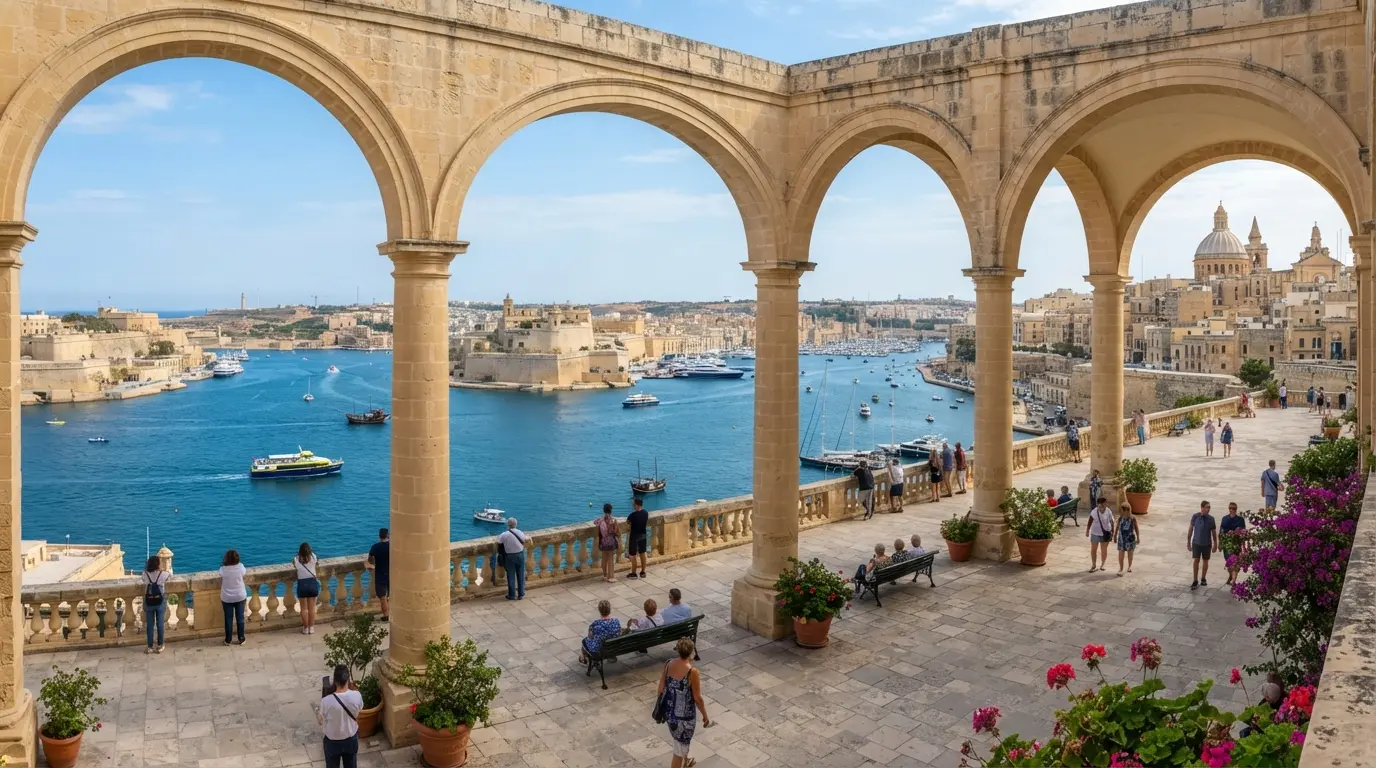
The valletta must see list starts with three things sitting almost on top of each other: St John’s Co-Cathedral, the Grandmaster’s Palace, and Upper Barrakka Gardens, all reachable on foot within fifteen minutes of each other inside this walled, UNESCO listed capital. If you have ever felt overwhelmed scrolling through “20 things to do” lists with no real order, that confusion ends here.
Valletta is tiny by capital city standards, built on a single peninsula and laid out on a strict grid by the Knights of Malta in the 16th century. That size is exactly why so many visitors get it wrong. They either rush through in two hours on a cruise stop and miss the good stuff, or they wander aimlessly for two days without a plan and still walk away unsure what they actually saw.
What Is Valletta Known For?
Valletta earned its UNESCO World Heritage status for packing an extraordinary density of history into less than one square kilometer. The city was built after the Great Siege of 1565, when the Knights of Malta, led by Grand Master Jean Parisot de la Valette, held off a massive Ottoman invasion force. Once the siege ended, the Knights built a new fortified capital designed to never fall the same way again.
That history shows up everywhere. Limestone bastions ring the city. Baroque churches sit next to buildings still scarred from World War 2 bombing. The whole nation was awarded the George Cross for enduring some of the heaviest aerial bombardment of the war, and Valletta carries that memory in memorials like the Siege Bell War Memorial overlooking the harbour.
Beyond the military history, Valletta is known for its art. St John’s Co-Cathedral holds two paintings by Caravaggio, painted while he was hiding out in Malta after fleeing Rome. It is a genuinely rare thing to see a Caravaggio still hanging in the space it was created for.
How Many Days Do You Need for the Valletta Must See Attractions?
Most travelers find that one focused day covers the core things to do in Valletta, but two days gives real breathing room. A single day works if you move efficiently between the cathedral, the palace, and the gardens without lingering too long in museums. Two days lets you add Fort St Elmo, a proper sit-down lunch, and time to wander streets that aren’t Republic Street.
Cruise passengers with only a few hours in port should prioritize ruthlessly. Here is a realistic breakdown:
| Time Available | Suggested Focus |
| Half day (cruise stop) | Upper Barrakka Gardens, Saluting Battery, St John’s Co-Cathedral |
| One full day | Add Grandmaster’s Palace or Casa Rocca Piccola, Republic Street wander |
| Two days | Add Fort St Elmo, National War Museum, museums, unhurried lunch |
| Three plus days | Add day trips to Mdina, Three Cities, or Gozo |
A common mistake first-timers make is trying to squeeze both Casa Rocca Piccola and Fort St Elmo into one afternoon. Both deserve at least an hour and a half, and rushing either one defeats the point of visiting.
What Are the Top Things to Do in Valletta If You Only Have One Day?
If your time in Valletta is limited to a single day, structure it around three anchors: St John’s Co-Cathedral in the morning before crowds build, the Grandmaster’s Palace or Casa Rocca Piccola after lunch, and Upper Barrakka Gardens in the late afternoon to catch the golden light over the Grand Harbour.
Is St John’s Co-Cathedral Worth Visiting in Valletta?
Yes, without question. From the outside, the cathedral looks plain and almost forgettable. Step inside and the entire mood shifts. Every surface is gilded, carved, or painted, and the floor is inlaid with the marble tomb markers of over 400 Knights of Malta.
The real draw sits in a side chapel: Caravaggio’s Beheading of Saint John the Baptist, his largest signed work, painted in a dark and unsettling style that marked a turning point in his career. His smaller Saint Jerome Writing hangs nearby.
Travelers consistently find that queues form quickly, even in quieter months. One visitor reported waiting around 30 minutes at the end of January, a supposedly slow season, so expect longer waits from June through September. Booking tickets online in advance or joining a guided skip-the-line tour cuts this down considerably.
A practical detail many first-timers miss: this is an active place of worship, so shoulders and knees must be covered. Locals recommend carrying a light scarf even in summer heat, since shorts and tank tops can mean turning back at the door.
What Should You Know Before Visiting the Grandmaster’s Palace?
The Grandmaster’s Palace served as the seat of power for the Knights Hospitaller and now functions as the official residence of Malta’s President. Following an extensive restoration, its State Rooms reopened to visitors, showing off frescoed ceilings, tapestries, and portraits celebrating the Order’s military campaigns.
The Palace Armoury is a highlight most visitors underestimate, holding an extensive collection of ceremonial and battlefield weapons and armour used by the Knights. Expect to spend around an hour here, less if you focus only on the State Rooms.
What Are the Best Gardens and Viewpoints in Valletta?
Valletta’s bastion-top gardens are where the city’s harbour views come alive, and each offers a slightly different experience depending on how much company you want.
Upper Barrakka Gardens is the famous one, and for good reason. From its colonnaded terrace, you get a sweeping view across the Grand Harbour toward the Three Cities. Below the gardens sits the Saluting Battery, where cannons fire in ceremony each day at noon and again in the afternoon, a tradition dating back centuries. The gardens can get genuinely crowded when cruise ships are in port, especially right around the noon firing.
Lower Barrakka Gardens sits at the opposite end of the city near Fort St Elmo, smaller and quieter, with a clear view of the Siege Bell War Memorial and the water beyond. Hastings Gardens, tucked along the western bastions near the City Gate, is the least visited of the three and rewards travelers who want a shaded bench and a view without the crowd.
| Garden | Crowd Level | Best For |
| Upper Barrakka Gardens | High, especially midday | Iconic harbour view, cannon ceremony |
| Lower Barrakka Gardens | Moderate | Siege Bell views, quieter break |
| Hastings Gardens | Low | Peaceful walk, Marsamxett Harbour views |
What Museums and Historic Sites Should Tourists Prioritize in Valletta?
Once the cathedral and palace are covered, a handful of sites reward travelers with extra time. Casa Rocca Piccola offers a genuinely personal look at Maltese noble life, since the 16th century palace is still privately lived in by a Maltese family, and the underground rooms doubled as air raid shelters during WWII. The Sacra Infermeria, once one of early modern Europe’s most advanced hospitals, now sits inside the Mediterranean Conference Centre and can be visited on a short guided tour. The National Museum of Archaeology, housed in the historic Auberge de Provence on Republic Street, holds artifacts from Malta’s Neolithic temples through the Phoenician period, and most visitors comfortably see the highlights in under an hour.
Is Fort St Elmo Worth the Extra Time?
Fort St Elmo sits at the tip of the Valletta peninsula and played a decisive role in the Great Siege of 1565, holding off Ottoman forces for over a month before falling. Rebuilt and expanded, it now houses the National War Museum, which focuses heavily on Malta’s role in World War 2, including personal stories and military equipment from the era.
Plan for at least two hours here. The honest downside is that the outer fortifications are fully exposed to the sun, so visiting in the middle of a summer afternoon can be uncomfortable. Locals recommend heading straight into the museum halls first and saving the open-air ramparts for early morning or late afternoon light.
How Do You Get Around Valletta as a Tourist?
Valletta rewards walking more than any other form of transport. The historic grid is compact enough that most major sights sit within a 10 to 15 minute walk of each other, and Republic Street alone connects a large share of the valletta must see landmarks in a single straight line from City Gate to Fort St Elmo.
The catch is that Valletta sits on a slope, with streets running steeply downhill toward the Grand Harbour and back uphill toward the City Gate. Comfortable shoes matter here more than in almost any other European capital city. A public lift connects the harbour front near the cruise terminal directly up to Upper Barrakka Gardens, saving a genuinely steep climb, and it is worth seeking out if arriving by ship or ferry.
For day trips beyond Valletta itself, public buses depart from the main bus station near the Triton Fountain, reaching Mdina, Rabat, and other parts of Malta, while ferries from Lascaris Wharf connect to the Three Cities, Sliema, and Gozo.
What Is the Best Time of Year to Visit Valletta?
Malta sits close to Sicily and gets hot, dry summers, so the most comfortable window for exploring Valletta on foot falls in spring, from April through May, and autumn, from September through October. Days are warm and sunny without the intense midday heat that makes walking the exposed bastions uncomfortable in July and August.
Winter, from December through February, brings rain and wind but also the smallest crowds of the year. One traveler who visited in late January described near empty gardens and only a single meaningful queue, at St John’s Co-Cathedral, compared to the much longer lines reported during peak summer months. If avoiding crowds matters more to you than guaranteed sunshine, winter is a reasonable trade.
Summer remains the busiest and hottest stretch, and cruise ship traffic peaks then too, meaning Upper Barrakka Gardens and the cathedral both see their heaviest foot traffic of the year.
How Much Does It Cost to Visit the Valletta Must See Attractions?
Entrance fees across Valletta’s major sites vary but generally stay moderate compared to other European capitals.
| Attraction | Approx. Entry Fee (2026) |
| Saluting Battery | Around €6 |
| Grand Harbour boat tour (Dgħajsa) | Around €8 |
| Ferry to Three Cities | Around €2 |
| St John’s Co-Cathedral | Moderate entry fee, varies by season |
| Grandmaster’s Palace | Moderate entry fee, includes State Rooms and Armoury |
| Casa Rocca Piccola | Moderate entry fee, guided or audioguide included |
| Gardens (Upper/Lower Barrakka, Hastings) | Free |
Combo tickets covering the cathedral, palace, and Casa Rocca Piccola can trim costs for travelers planning to see all three, and it is worth checking each attraction’s official website before arrival since prices shift after renovations, as happened when the Grandmaster’s Palace reopened its restored State Rooms.
What Should Tourists Eat and Where in Valletta?
Food in Valletta blends Italian, British, and North African influences into something distinctly Maltese. Pastizzi, flaky pastry parcels filled with ricotta or mushy peas, are the cheapest and most iconic snack in the city, sold from small bakeries for a euro or two apiece. Ftira, a Maltese flatbread loaded with tomatoes, capers, and tuna, makes a filling lunch, while Aljotta fish soup and slow cooked rabbit show up on more traditional Maltese menus in the evening.
Merchants Street is the go-to for restaurant variety, pedestrianized and lively at night, though it leans touristy. Caffé Cordina on Republic Square remains the city’s most recognizable coffee stop, with an ornate interior worth a look even if you only stop for an espresso and a pastry. For a more upscale evening, Michelin-listed restaurants on St George’s Square and along the harbour offer tasting menus built around Maltese ingredients, though these run considerably higher than a hawker-style pastizzi stop.
Is Valletta Worth Visiting Compared to Mdina?
Both cities reward a visit, but they offer different experiences. Valletta delivers Baroque grandeur, harbour views, and the buzz of a working capital, while Mdina, Malta’s medieval former capital, feels quieter and more intimate, with narrow stone streets and far fewer restaurants or shops. Mdina sits about 30 minutes from Valletta by bus, making it an easy half-day add-on rather than a competing destination.
Most visitors find pairing the two gives the fullest sense of Malta’s layered history, since Valletta shows the Knights at the height of their military power while Mdina reflects the island’s older, quieter medieval character.
What Are Some Hidden Gem Things to Do in Valletta Beyond the Main List?
Once the headline sights are covered, a few quieter spots reward extra time. Hastings Gardens offers the same bastion-top views as Upper Barrakka without the crowds. The Mysterium Fidei Museum, tucked inside St Catherine’s Monastery just off Republic Street, houses religious art and manuscripts most visitors walk straight past. Wuestenwind Beach, a small rocky swimming spot below Fort St Elmo, gives a genuine (if unglamorous) local swimming experience, though it has no sand, no shade, and no facilities, so it suits a quick dip rather than a full beach day.
Conclusion
The valletta must see list does not need to be complicated. Anchor your visit around St John’s Co-Cathedral, the Grandmaster’s Palace or Casa Rocca Piccola, and Upper Barrakka Gardens, then build outward based on how much time you actually have. Visit in spring or autumn if the schedule allows, wear shoes built for slopes and steps, and book cathedral tickets ahead of time to skip the worst of the queue. Do that, and even a single day in Valletta feels complete rather than rushed.
FAQs
Is Valletta worth visiting?
Yes. Its dense concentration of Baroque architecture, military history, and walkable streets make it one of the most rewarding small capitals in Europe to explore on foot.
What is Valletta famous for?
Valletta is famous for being built by the Knights of Malta after the Great Siege of 1565, for its Baroque St John’s Co-Cathedral housing two Caravaggio paintings, and for its UNESCO World Heritage status.
How many days do you need in Valletta?
One focused day covers the core sights, while two days allows for museums, a relaxed lunch, and quieter streets away from Republic Street.
Is Valletta walkable?
Yes, extremely. Almost every major attraction sits within a 10 to 15 minute walk, though the city’s slopes and steps mean comfortable shoes are essential.
What not to miss in Valletta?
St John’s Co-Cathedral with its Caravaggio paintings, Upper Barrakka Gardens for harbour views, and either the Grandmaster’s Palace or Casa Rocca Piccola for a look at how the Knights and Maltese nobility lived.
Is Valletta better than Mdina?
They serve different purposes. Valletta offers Baroque grandeur and harbour views, while Mdina offers a quieter medieval atmosphere, and most travelers benefit from visiting both.
What should you wear to visit St John’s Co-Cathedral?
Shoulders and knees should be covered since it remains an active place of worship, and carrying a light scarf is a smart backup even in hot weather.
How to avoid queues at St John’s Co-Cathedral?
Book tickets online in advance, visit right when it opens, or join a guided tour that includes skip-the-line access, especially during summer months.
Is Valletta too touristy in 2026?
Cruise ship days bring noticeable crowds to Upper Barrakka Gardens and the cathedral, but visiting early morning or in shoulder season months like April, May, September, or October largely avoids the worst of it.


