
Venice Must Do: The Complete Guide to Italy’s Floating City

Venice must do experiences include touring Piazza San Marco, taking a gondola ride, and eating cicchetti in Cannaregio at sunset. Spread across 118 small islands connected by 438 bridges, Venice genuinely feels frozen in time, and most first timers arrive with a single rushed day, only to discover far too late how much they’ve missed by not staying longer.
How Much Does It Cost to Visit Venice’s Top Attractions?
| Attraction | Cost |
| St. Mark’s Basilica entry | 3 EUR |
| St. Mark’s Bell Tower | 12 EUR |
| Doge’s Palace | 25 EUR online 30 days ahead, 30 EUR otherwise |
| Palazzo Contarini del Bovolo | 8 EUR |
| Santa Maria della Salute dome climb | 8 EUR |
| San Giorgio Maggiore Bell Tower | 6 EUR |
| Teatro La Fenice tour | 12 EUR |
| Private gondola ride, 30 minutes, day | 90 EUR, up to 5 people |
| Private gondola ride, 30 minutes, night | 110 EUR, up to 5 people |
| Traghetto crossing | 2 EUR |
Stacking Venice must do attractions genuinely adds up quickly, and a common mistake first timers make is assuming a gondola ride is priced per person, when the fixed rate actually covers up to five people riding together. Doge’s Palace tickets include same-day access to the Museo Correr, the Museo Archeologico Nazionale, and the Monumental Rooms of the Biblioteca Nazionale Marciana, all located in St. Mark’s Square, meaning one ticket genuinely covers several attractions at once. Booking Doge’s Palace online at least 30 days in advance shaves 5 EUR off the price, a genuinely easy way to save if your dates are already confirmed.
Is There a Day Tripper Entry Fee for Venice?
Yes, and this is genuinely important current information for anyone planning a quick visit rather than an overnight stay. Day trippers now pay a daily fee to enter Venice, a measure introduced specifically to address the city’s ongoing struggle with overtourism, worsened during high season by large cruise ships docking directly in the city and buses full of day trippers arriving from elsewhere in Italy. Travelers staying overnight in Venice are typically exempt from this fee, making an overnight stay not just a better travel experience but also a genuine cost consideration worth factoring into your planning.
What Are the Best Free or Cheap Alternatives to Venice’s Expensive Icons?
| Expensive Icon | Cheaper Alternative | Savings |
| Private gondola ride (90 to 110 EUR) | Traghetto crossing (2 EUR) | Genuinely budget-friendly Grand Canal crossing |
| St. Mark’s Bell Tower (12 EUR) | San Giorgio Maggiore Bell Tower (6 EUR) | Half the price, quieter crowds |
| Gondola tour of the city | Vaporetto route #1 down the Grand Canal | Fraction of the cost |
The traghetto, a genuinely no-frills version of the gondola, ferries passengers across the Grand Canal for just 2 EUR, and while the ride only lasts a couple of minutes, it delivers the same iconic gondola experience at a fraction of the private ride’s cost, typically departing from the Santa Maria del Giglio gondola station. San Giorgio Maggiore Bell Tower offers a genuinely compelling alternative to the far more crowded St. Mark’s Bell Tower, costing half as much at 6 EUR while delivering spectacular, less-crowded views over Venice and the surrounding lagoon, reachable via a 10-minute vaporetto ride on line 2. For seeing the Grand Canal itself without booking an expensive boat cruise, riding vaporetto route #1 down the canal delivers the same scenery for a genuine fraction of the price of an organized tour.
What Is There to Do in Venice with Kids?

Visiting Murano Island genuinely delights kids and adults alike, with glass-blowing studios welcoming walk-in visitors to observe live demonstrations, a craft found nowhere else quite like it in Italy, and families can even book a hands-on glass-blowing class with a local artisan for older kids interested in trying it themselves. Burano Island offers an equally photogenic stop, with houses painted in nearly every hue of the rainbow lining the canals, making for a genuinely fun, colorful walk that keeps younger visitors engaged. A Carnival mask-making workshop rounds out the family-friendly activity list, letting kids decorate their own mask under the guidance of a master artisan for a genuinely memorable, hands-on souvenir rather than simply buying one from a shop.
What Is There to Do in Venice for Couples?
A gondola ride ranks as one of the most iconic and romantic Venice must do experiences for couples, best understood as an atmospheric activity rather than a proper city tour given how slowly gondolas move through the canals. Eating cicchetti together in Cannaregio at sunset delivers a genuinely electric, romantic atmosphere, with couples able to grab a plate and sit along the edge of a canal while the city lights up. A sunset boat cruise down the Grand Canal, glass of prosecco in hand, offers a similarly romantic alternative for couples wanting to see more of the city from the water without the slower pace of a gondola.
What Is There to Do in Venice in December?
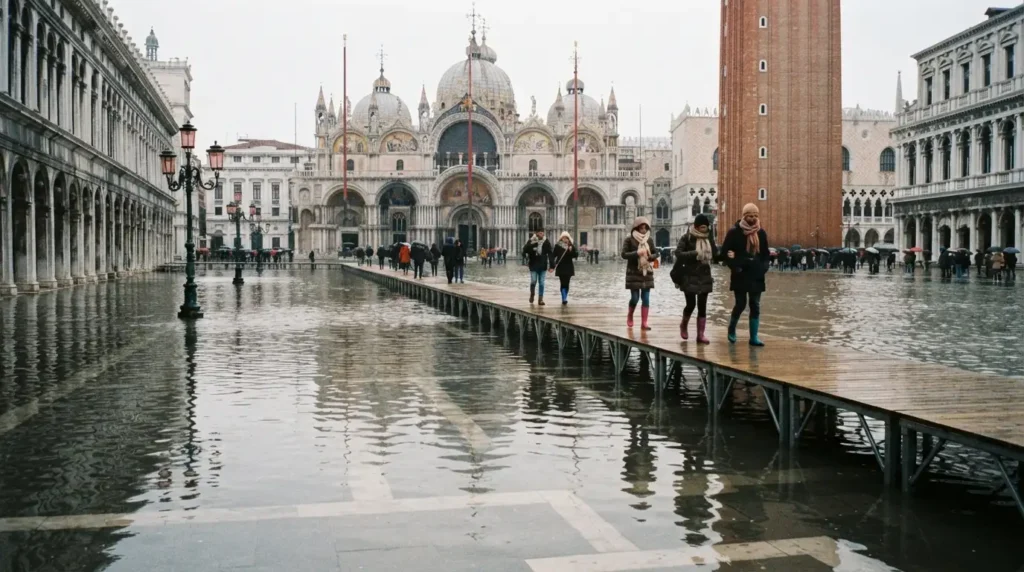
Winter genuinely suits Venice in a way many first timers don’t expect, with the canals taking on a beautiful, faded light during the colder months, museums emptying out, and restaurants becoming easy to visit without a reservation, giving December visitors a genuine taste of what it feels like to experience the city like a local. The honest caution worth knowing: acqua alta, Venice’s seasonal high water phenomenon, poses a real risk from October through February, and when it happens, water levels rise enough to flood parts of the historic center, including St. Mark’s Square itself. Locals respond by wearing knee-high rain boots, and the city installs temporary raised walkways during the worst flooding, so packing waterproof footwear genuinely matters if your December trip coincides with a flooding event. Winter also runs significantly colder in Venice than in cities like Rome, with added wind chill from being surrounded by water, so packing warm layers matters just as much as watching the flood forecasts.
Where Should You Eat in Venice?
A genuine honest warning worth knowing before you book anywhere: quite a few restaurants in Venice, especially those clustered around St. Mark’s Square and Rialto Bridge, function as overpriced tourist traps rather than genuine Venetian dining. Cicchetti, Venice’s answer to Spanish tapas, typically consists of small toppings on bread or dishes like polpette, fried meatballs, best enjoyed with a glass of wine at sunset, though not every cicchetti spot delivers equal quality, so checking what other diners are eating before committing to a place is genuinely worth doing. Cannaregio consistently earns the strongest recommendation for cicchetti given its lively, nightlife-filled atmosphere, especially once sunset lights up the neighborhood. A food tour offers a genuinely reliable way to navigate Venice’s uneven restaurant scene for first timers, typically covering eight local foods and four drinks while exploring the Grand Canal and Rialto Market together. One honest food note worth setting expectations around: Venice isn’t known for good pizza at all, since fire-prevention rules keep wood-burning ovens out of the city, so travelers craving a proper Neapolitan-style pie should save that craving for a stop in Naples instead.
Where Should You Stay in Venice?
| Budget Tier | Recommendation | Best For |
| Luxury | Hotel with Venetian Lagoon and St. Mark’s Square views | Splurge-worthy stay in the heart of the action |
| Mid-range | Hotel in a lively, central area | Balance of comfort and location |
| Budget | Simple hotel steps from St. Mark’s Square | Affordable option without sacrificing location |
Staying directly in Venice proper, rather than on the mainland, genuinely delivers a better experience despite the higher prices, since there’s something magical about walking outside your hotel directly into the bridges, canals, and squares that make the city so distinct. Luxury travelers wanting a proper splurge should look for a five-star hotel decorated in traditional Venetian style with lagoon views, while mid-range travelers do well choosing a hotel in a lively, central location close to the main sights. Budget-conscious travelers can still stay genuinely close to the action, with simple, comfortable rooms available just steps away from St. Mark’s Square without needing to sacrifice location entirely.
How Many Days Do You Need in Venice?
Two full days represents the genuine bare minimum for properly experiencing Venice, though three days or more allows for a considerably more relaxed pace that lets you settle into the rhythm of the city rather than rushing between sights. A common mistake first timers make is treating Venice as a quick day trip from another city, when experiencing Venice at night, once the day trippers clear out, genuinely transforms how the city feels compared to a rushed daytime visit alone.
Final Thoughts
Building the right venice must do list really comes down to budgeting enough time and money to get past the rushed, single-day version of the city most travelers settle for. Book Doge’s Palace tickets online 30 days ahead to save, choose the traghetto or San Giorgio Maggiore’s bell tower over their pricier counterparts, and pack rain boots if your December trip coincides with acqua alta season. Whether it’s cicchetti in Cannaregio at sunset or a quiet gondola ride once the day trippers have cleared out, venice must do experiences consistently reward travelers who stay long enough to see the city at its own unhurried pace.
FAQs
Can you take a day trip to Venice?
Technically yes, but it’s genuinely not the ideal way to experience the city, and travelers considering Venice as a base for several day trips to nearby cities should know it’s a bit more of a process getting in and out compared to bases like Florence or Bologna, so building in extra time or basing yourself elsewhere for heavy day-trip itineraries is worth considering.
What is acqua alta?
Acqua alta, meaning “high water” in Italian, is a seasonal phenomenon running from October through February when water levels rise and flood parts of Venice’s historic center, including St. Mark’s Square, prompting locals to wear rain boots and the city to install temporary elevated walkways.
Is Venice worth visiting?
Yes, genuinely so, and no other city in the world looks or feels quite like Venice, with its distinct architecture, deep history, and unmistakable pink and lavender light, though making an effort to explore beyond the main tourist attractions genuinely delivers a better trip than sticking exclusively to the busiest sights.
How do you get around Venice?
Walking and the vaporetto, the city’s water bus, are the only ways to get around, since there are no cars, buses, or even bikes allowed within Venice itself, and booking a multi-day transit pass for the vaporetto genuinely simplifies getting between islands and neighborhoods.


