
Krakow Must See: The Complete 2026 Guide to Poland’s Historic City
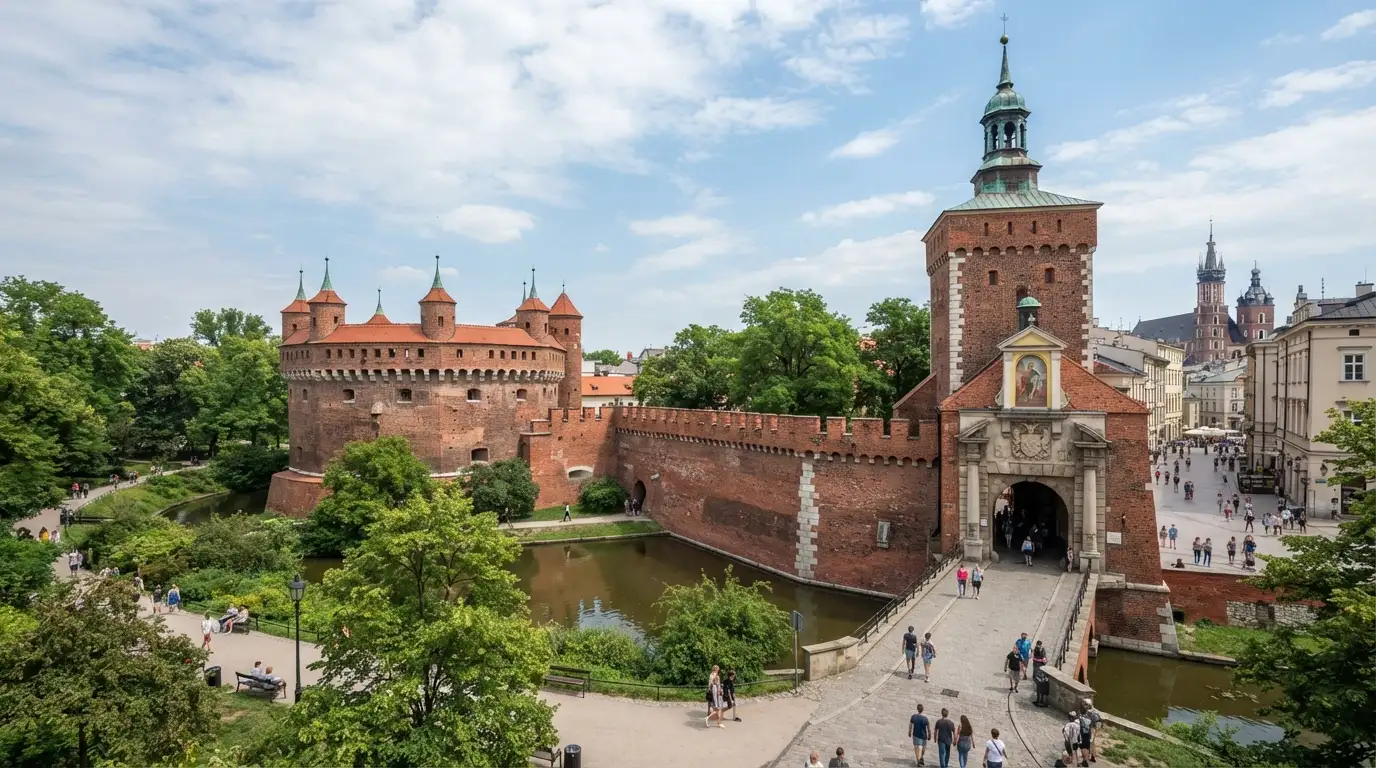
The krakow must see list comes down to a handful of things done properly rather than a long checklist rushed through in a day. The Main Square and Wawel Castle cover the medieval core, Kazimierz covers the city’s Jewish heritage, and a day trip to Auschwitz-Birkenau or Wieliczka Salt Mine rounds out a trip that balances beauty with history that genuinely matters. If you’re wondering whether Krakow is worth the flight or just another pretty European old town, the honest answer sits somewhere more layered than either extreme.
Krakow carries weight most cities don’t. It’s stunning to walk through, genuinely affordable compared to Western Europe, and home to one of the best preserved medieval centers on the continent. It’s also 70 kilometers from Auschwitz, a fact that shapes how most visitors plan their time here whether they realize it going in or not. This guide breaks down what’s actually worth your time, what it costs in 2026, and how to handle the heavier parts of a Krakow trip alongside the lighter ones.
Is Krakow Worth Visiting in 2026?
Krakow is worth visiting because it survived World War Two largely intact, giving it one of the best preserved medieval old towns in Europe, paired with a genuinely lower cost of living than cities like Prague or Vienna. It rewards travelers willing to balance the postcard old town against its heavier historical sites nearby.
The old town sits compact enough to explore entirely on foot, ringed by Planty Park, a green belt that traces the line of the old medieval walls. Beyond the old town, Krakow functions as the gateway to two very different but equally significant experiences, the underground Wieliczka Salt Mine and the memorial site at Auschwitz-Birkenau, both reachable within an hour or two of the city center. That combination, beautiful and heavy in equal measure, is what makes Krakow different from most European city break destinations.
How Many Days Do You Need for the Krakow Must See Experience?
Three full days cover the essential krakow must see list properly, including the old town, Kazimierz, and one major day trip, while two days works only if you’re willing to skip either Auschwitz or Wieliczka entirely. Four days lets you add both day trips without feeling rushed.
Day one is best spent entirely in the old town, covering Rynek Główny, Wawel Castle, and the surrounding streets on foot. Day two suits Kazimierz and a slower exploration of Jewish heritage sites, paired with an evening in the neighborhood’s bars and restaurants. Day three should be reserved for Auschwitz-Birkenau specifically, since the visit itself, including travel time, easily takes most of a day and deserves undivided attention rather than being squeezed in around other plans. A common mistake first-timers make is trying to combine Auschwitz and Wieliczka Salt Mine on the same day, which technically works logistically but leaves little room to process either site properly.
What Are the Krakow Must See Landmarks in the Old Town?
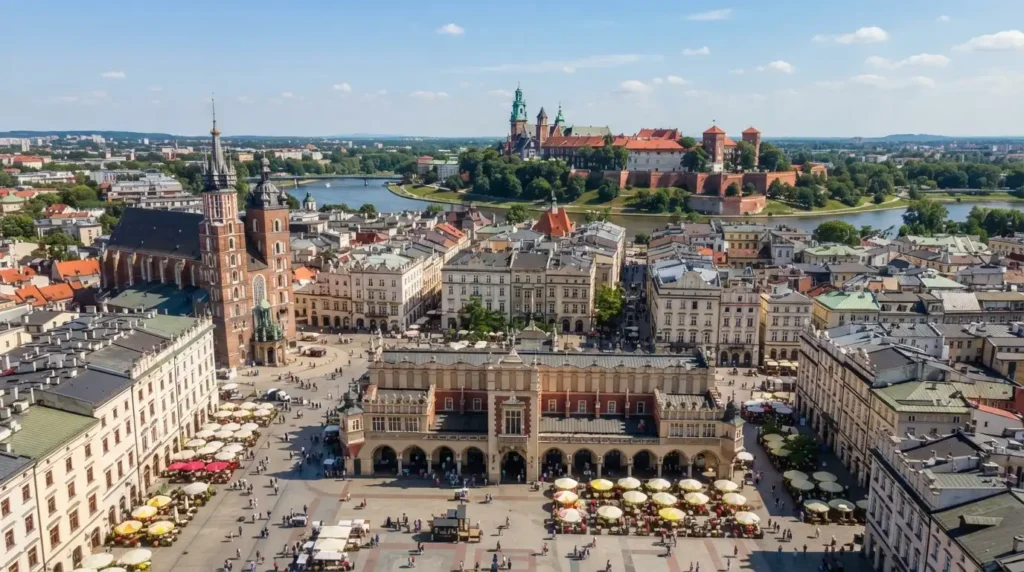
The krakow must see landmarks in the old town center on Rynek Główny, Wawel Castle, and the Rynek Underground Museum, all within a compact, walkable area that makes the old town one of the easiest parts of any Krakow itinerary to plan.
What Do You See at Rynek Główny and Sukiennice?
Rynek Główny is one of the largest medieval town squares in Europe, anchored by St Mary’s Basilica and the long Renaissance hall of Sukiennice, the Cloth Hall, which still functions as a market selling amber jewelry, wooden crafts, and Polish souvenirs. Every hour, a bugle call known as the Hejnał Mariacki plays from St Mary’s tower, cut short mid-note in reference to a medieval legend involving a trumpeter and an invading army.
Travelers consistently find the square busiest around midday through early evening, particularly in summer, when outdoor cafe seating fills the perimeter. Locals recommend an early morning walk across the square, before the crowds and tour groups arrive, for a noticeably calmer first impression of the space.
Is Wawel Castle and Wawel Cathedral Worth Visiting?
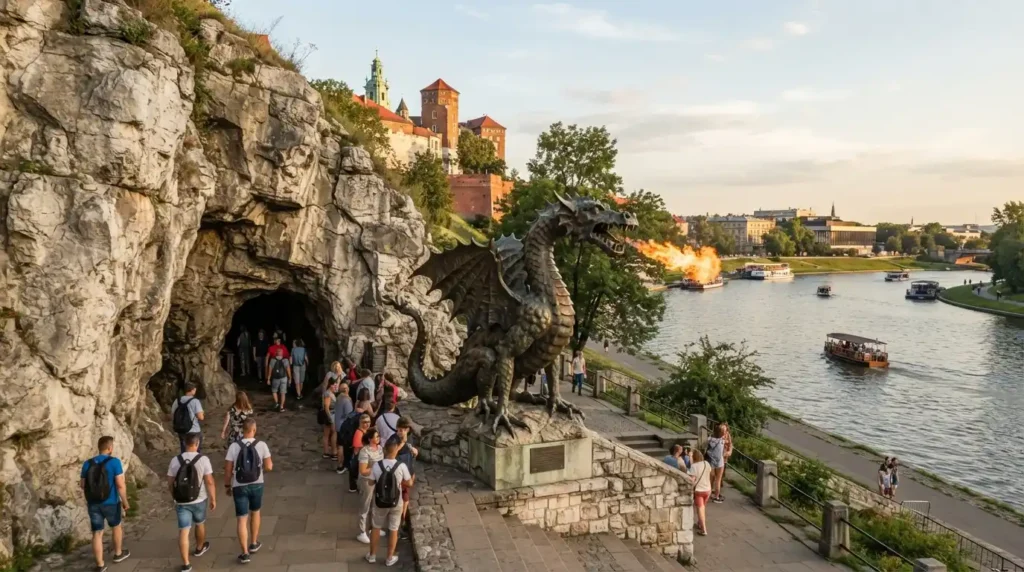
Wawel Castle and Wawel Cathedral sit together on Wawel Hill overlooking the Vistula River, and both are worth visiting for their role as the historic seat of Polish kings. Expect to pay around 30 to 45 zloty per adult for individual exhibition tickets as of 2026, since the castle sells access to its various interiors, like the State Rooms and Royal Private Apartments, separately rather than as one combined ticket.
A common mistake first-timers make is assuming one ticket covers the whole complex. Deciding in advance which specific exhibitions matter most, whether that’s the cathedral, the state rooms, or the Dragon’s Den beneath the hill, saves both money and time standing at ticket counters working out the options. The Dragon’s Den itself, a cave beneath the castle tied to Krakow’s founding dragon legend, charges a small separate entry fee and exits directly onto the riverbank near the Vistula.
What Is the Rynek Underground Museum?
The Rynek Underground Museum sits beneath the Main Square itself, showcasing archaeological remains and medieval trade route history uncovered during a major square renovation. Tickets typically cost around 25 zloty for adults, and the museum uses multimedia displays to bring the underground ruins to life in a way that surprises visitors expecting a plain archaeological site.
Is Auschwitz-Birkenau Worth Visiting from Krakow?
Auschwitz-Birkenau, located roughly 70 kilometers and about 90 minutes from Krakow, is widely considered one of the most important historical sites to visit in Poland, and most travelers describe it as a profoundly heavy but necessary experience rather than a typical day trip.
Entry to the memorial and museum itself is free, but during peak visiting hours, roughly April through October, all visitors need a timed guided tour ticket, which typically costs around 90 to 100 zloty. A common mistake first-timers make is assuming they can simply show up, particularly in summer, when guided tour slots sell out days or even weeks in advance. Booking well ahead directly through the official Auschwitz-Birkenau memorial website avoids both disappointment and inflated prices charged by some third-party resellers. Getting there works either through an organized tour departing from central Krakow, typically running 150 to 250 zloty including transport, or independently via a direct minibus or train from Krakow’s main bus station, which costs considerably less but requires more planning around timed entry slots. Most visitors say allowing a full day, including travel time, is essential, and treating it as a standalone day rather than pairing it with other sightseeing shows more respect for both the site and your own emotional bandwidth.
Is Wieliczka Salt Mine Worth Visiting?
Wieliczka Salt Mine, about 30 minutes from central Krakow, is worth visiting for its underground chapels, chambers, and sculptures carved entirely from salt over centuries of mining, including the elaborate Chapel of St Kinga. Tickets typically run 100 to 150 zloty for the standard tourist route, with tours available in English at set times throughout the day.
The mine reaches over 300 meters below ground, though the tourist route stays within a shallower, well maintained section, and the temperature underground stays cool and constant year round regardless of the season outside. Travelers consistently rate Wieliczka highly for its genuine uniqueness, unlike anything else near Krakow, though it does involve several hundred stairs descending into the mine, worth noting for anyone with mobility concerns.
What Should You Know About Kazimierz, Krakow’s Jewish Quarter?
Kazimierz, Krakow’s historic Jewish quarter just south of the old town, blends preserved synagogues, Jewish heritage sites, and a genuinely vibrant nightlife scene that has made it one of the most popular neighborhoods for both history and evening entertainment.
The Remuh Synagogue and its adjoining cemetery remain active heritage sites, while Schindler’s Factory, the former enamelware factory made famous by the film Schindler’s List, now operates as a museum covering Krakow’s occupation during World War Two. Ghetto Heroes Square, a short walk across the river in the former Jewish ghetto area, features a memorial of empty metal chairs representing those deported from the ghetto. By evening, Kazimierz transforms into Krakow’s most atmospheric nightlife district, with candlelit bars set inside old buildings and courtyards, a stark but genuine contrast to the neighborhood’s daytime historical weight.
What Are Krakow’s Underrated Neighborhoods Beyond the Old Town?
Krakow’s underrated neighborhoods beyond the old town include Zakrzówek, a flooded former limestone quarry turned swimming and rock climbing spot popular with locals in summer, and Nowa Huta, a Soviet-era planned district built as a model communist town in the 1950s.
Zakrzówek sits about 20 minutes from the old town and offers a completely different side of Krakow, all turquoise water and cliffside sunbathing, though swimming in the main lake itself is officially discouraged in certain areas due to depth and underwater hazards. Nowa Huta, meanwhile, appeals to travelers interested in 20th century political history, with wide Soviet-style boulevards, monumental architecture, and guided tours available that explore its origins as a planned industrial community built explicitly without a church, a decision later reversed after local resistance.
What Food Should You Try in Krakow?
Krakow food culture centers on pierogi, zapiekanka, and obwarzanek krakowski, a ring-shaped bread sold from street carts throughout the old town, alongside a strong milk bar tradition offering some of the cheapest proper meals in the city.
Milk bars, or bary mleczne, are cafeteria-style restaurants dating back to the communist era, still serving traditional Polish dishes like żurek, a sour rye soup, at prices locals rely on for genuinely affordable daily meals, often just a few pounds equivalent per plate. Zapiekanka, an open-faced baguette topped with mushrooms, cheese, and various toppings, remains a beloved late-night Krakow street food, most famously sold from stalls around Plac Nowy in Kazimierz. For something more adventurous, oscypek, a smoked sheep’s milk cheese traditionally from the Tatra Mountains region, appears at markets and some restaurants across the city.
Is Krakow Expensive? What Does a Krakow Trip Cost?
Krakow runs considerably cheaper than most Western European capitals, with a milk bar meal costing just a few zloty and even sit-down restaurant dinners in the old town typically running less than comparable meals in Prague or Vienna.
[Cost Table: Krakow Must See Estimated Costs 2026]
| Item | Approximate Cost |
| Wawel Castle exhibition ticket | 30–45 zloty |
| Rynek Underground Museum | ~25 zloty |
| Auschwitz-Birkenau guided tour ticket | 90–100 zloty |
| Auschwitz organized tour from Krakow | 150–250 zloty |
| Wieliczka Salt Mine ticket | 100–150 zloty |
| Milk bar meal | Under 20 zloty |
| Old town restaurant dinner | 40–80 zloty |
A common budgeting mistake is assuming old town restaurant prices reflect typical Krakow costs. Stepping a few streets away from the Main Square, or trying a milk bar for lunch, noticeably lowers the daily food bill without sacrificing quality.
When Is the Best Time to Visit Krakow?
The best time to visit Krakow is May through June or September through early October, when temperatures stay comfortable and the old town avoids both peak summer crowds and the harsh cold of a Polish winter. Winters in Krakow run genuinely cold, often well below freezing, which surprises visitors expecting a milder Central European climate.
Krakow’s Christmas market, running through the Main Square typically from late November through late December, draws its own seasonal crowds and is worth timing a visit around specifically if festive markets are the goal. Summer remains the busiest season overall, particularly around Auschwitz and Wieliczka, where booking tickets well in advance becomes essential rather than optional during July and August.
Conclusion
Krakow rewards travelers who give it more than a rushed day or two. Spend real time in the old town around Rynek Główny and Wawel Castle, walk Kazimierz slowly enough to absorb its Jewish heritage sites, and treat Auschwitz-Birkenau as its own dedicated day rather than an add-on. Book Auschwitz tickets well ahead if visiting between April and October, budget for milk bar meals alongside the occasional old town splurge, and Krakow tends to leave a deeper impression than its size and prices might initially suggest
FAQs
Is Krakow worth visiting?
Yes, Krakow offers one of Europe’s best preserved medieval old towns alongside significant historical sites like Auschwitz-Birkenau and Wieliczka Salt Mine, all at a lower cost than most Western European cities.
What is Krakow known for?
Krakow is known for its Main Square, Wawel Castle, Kazimierz’s Jewish heritage, and its proximity to Auschwitz-Birkenau and Wieliczka Salt Mine.
How many days do you need in Krakow?
Three days covers the essential krakow must see list including one major day trip, while four days allows time for both Auschwitz and Wieliczka without rushing.
Is Krakow safe for tourists?
Yes, Krakow is generally considered safe, with most visitors experiencing no issues beyond standard city precautions around belongings in crowded tourist areas.
What is the best area to stay in Krakow?
The old town suits first-time visitors wanting walking access to major sights, while Kazimierz offers a slightly quieter base with strong nightlife and dining options nearby.
Is the Krakow Pass worth it?
It’s worth it mainly for travelers planning to visit several paid attractions in a short window, since the bundled savings offset the upfront cost only with heavy sightseeing days.
How do you get from Krakow to Auschwitz?
By organized tour with transport included, or independently via a direct minibus or train from Krakow’s main bus station, taking roughly 90 minutes each way.
Is Wieliczka Salt Mine worth visiting?
Yes, most visitors find the underground chapels and salt sculptures genuinely unique, though the standard tour does involve several hundred stairs and around three hours underground.
How far in advance should you book Auschwitz tickets?
Booking several weeks ahead is recommended for summer visits, since timed guided tour slots regularly sell out during peak season from April through October.
Is Krakow cheaper than Warsaw?
The two cities run fairly similar overall, though Krakow’s old town restaurants can price slightly higher than equivalent options in Warsaw due to tourist demand.
What is the best time of year to visit Krakow?
May through June or September through early October offer the best balance of mild weather and manageable crowds, avoiding both summer heat and winter cold.
Is Kazimierz safe to walk around at night?
Yes, Kazimierz is generally safe and well populated in the evenings, given its popularity as a nightlife district, though standard city awareness still applies.


