
Catacombs Rome Tour: What You Need to Know
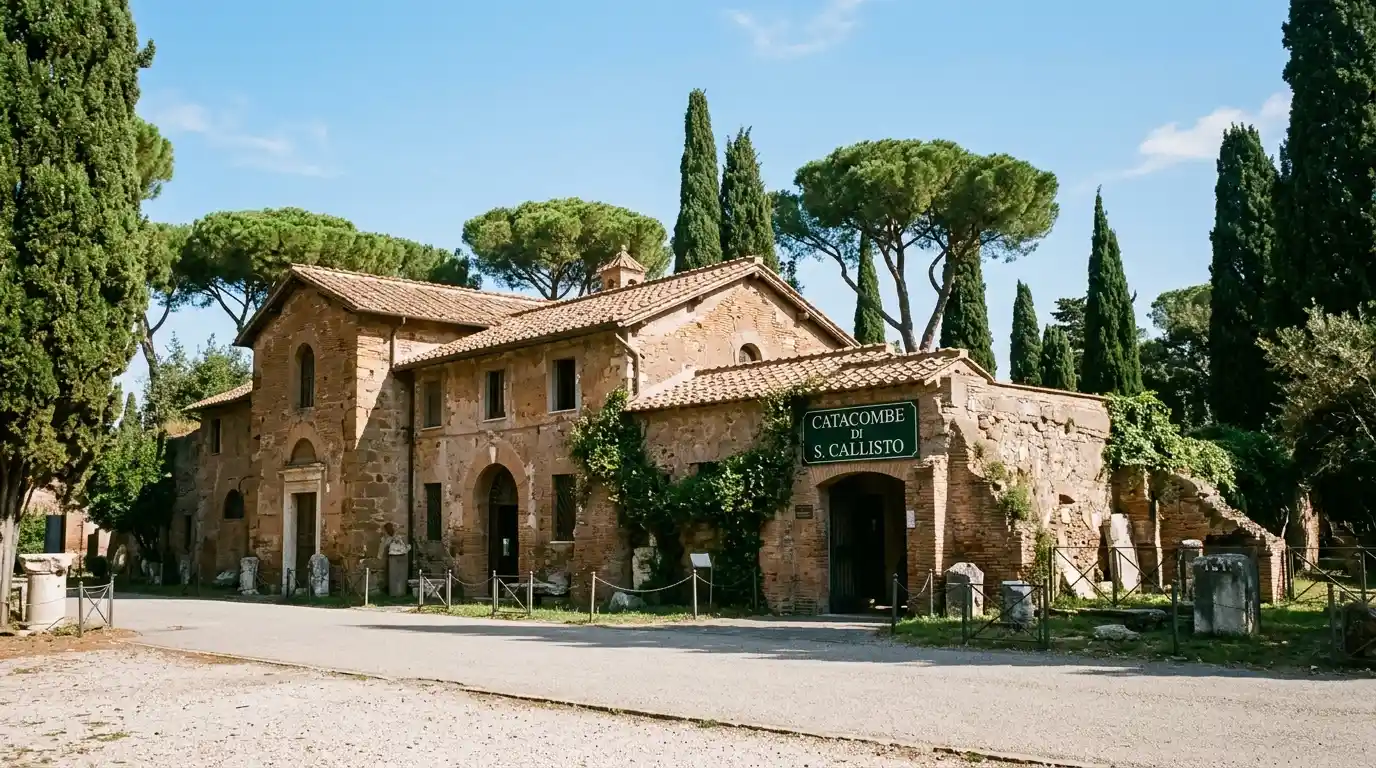
A catacombs Rome tour visits underground Christian burial tunnels along the Appian Way. Tickets cost about €10, every visit is guided, and sites stay cool year-round. Book ahead because entry requires a tour and some close on specific weekdays.
History and Layout of the Roman Catacombs
Early Christians dug the catacombs between the second and fifth centuries because Roman law forbade burial inside the city walls. The tunnels, carved from soft volcanic tufa, stretch for hundreds of kilometres beneath the outskirts. Only a small portion is open to visitors today. St Callixtus alone contains roughly 20 kilometres of galleries across multiple levels and once held half a million burials, including several early popes. The crypt of the popes is often called the little Vatican because of its historical importance. Frescoes, inscriptions, and simple niches remain visible on guided walks. Understanding the scale helps visitors appreciate why the sites feel like an underground city. Related Roman experiences appear in guides such as must do rome.
Which Catacomb Sites Are Open
Five main complexes welcome visitors. St Callixtus is the largest and includes the crypt of the popes. San Sebastiano features third-century graffiti invoking Peter and Paul. Priscilla preserves some of the finest early frescoes, including an early Madonna image in the Greek Chapel. Domitilla offers extensive tunnels and tours in multiple languages. Sant’Agnese sits closer to the city. Each site charges a standard ticket around €10, with reduced rates for children and students. Opening hours typically run morning and afternoon slots, and every entrance is by guided tour only. Closures vary: St Callixtus closes Wednesdays, San Sebastiano and Priscilla close Mondays. Checking the official site before travel avoids disappointment.
How Guided Tours Work
No independent entry is allowed. Tours last 30 to 45 minutes and depart throughout the day, often every 30 minutes. Guides explain the history, point out frescoes, and keep groups on marked paths. Languages include English and several others depending on the site. Photography rules differ; some areas restrict cameras to protect fragile paintings. The Capuchin Crypt near Piazza Barberini is a separate bone chapel often combined with catacomb visits on longer tours. Most operators provide transfers from central Rome because the main sites lie about 20 minutes outside the centre along the Appian Way. Booking online is strongly recommended during peak season. Visitors planning broader Roman itineraries can review tour in rome for additional options.
Practical Details: Tickets, Hours, and Dress Code
Standard adult tickets cost €10 at the gate or online. Concession tickets for ages 7 to 16 and qualifying students cost about €7. Children under a certain age sometimes enter free with a paying adult. Hours generally run from 9:00 to 12:00 and 14:00 to 17:00, though exact times change by site and season. The temperature inside stays around 15 to 16 °C year-round, so a light jacket or shawl is useful even in summer. Modest dress is required: knees and shoulders covered because the sites are consecrated. Steep stairs and uneven floors make the catacombs unsuitable for wheelchairs or visitors with limited mobility. Comfortable closed shoes help on the stone paths.
Getting There from Central Rome
The main catacombs sit along the Appian Way. Public buses such as the 118 or 218 reach the area in 20 to 30 minutes from central stops. Taxis or ride services cost more but drop visitors closer to the entrance. Many organised tours include hotel pickup and round-trip coach transfer, which simplifies logistics for first-time visitors. Walking the final stretch along the Appian Way passes ancient tombs and the Quo Vadis church, adding context before the underground portion. Allow extra time for security checks and group assembly. Combining a catacomb visit with other Appian Way sites makes efficient use of the trip south of the city.
What to Expect Inside the Tunnels
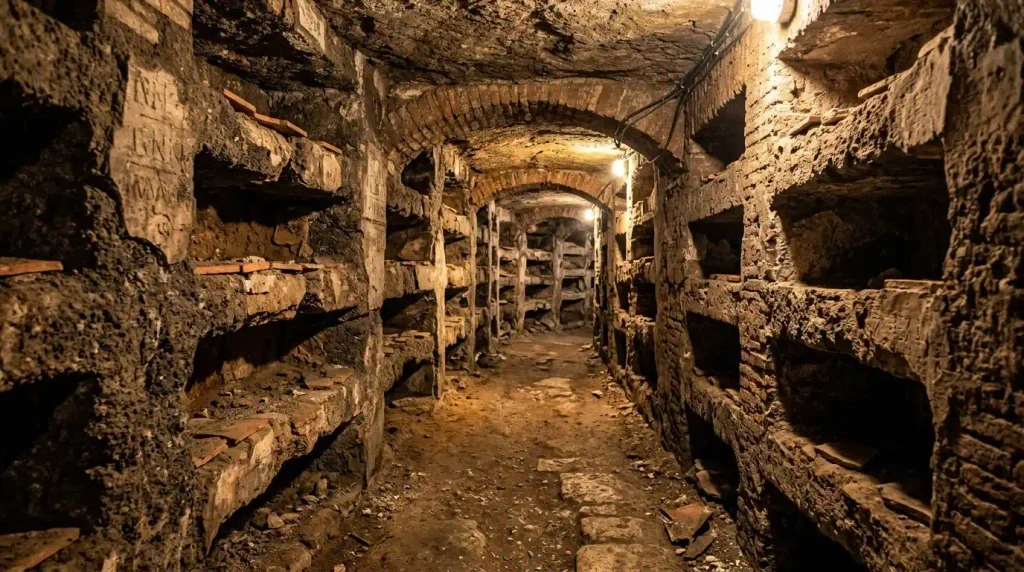
Narrow corridors lined with stacked burial niches create a striking visual. Some niches still contain bone fragments or simple inscriptions. Frescoes of biblical scenes and early Christian symbols appear in better-preserved sections. The air feels dry and cool. Guides move at a steady pace so the group stays together in the low light. Most visitors find the experience atmospheric rather than frightening. The Capuchin Crypt, if included, displays elaborate bone decorations and requires a separate mindset because the arrangement is more graphic. Children under 10 may find that particular site unsettling. Overall, the catacombs offer a quiet contrast to the crowded surface monuments of Rome.
Booking Tips and Best Times to Visit
Reserve tickets online through the official site of each catacomb to secure a preferred time slot. Morning tours tend to be less crowded than afternoon ones. Shoulder seasons in spring and autumn bring milder surface weather while the underground temperature stays constant. Avoid Wednesdays if St Callixtus is the priority, and Mondays for San Sebastiano or Priscilla. Group tours that bundle transfers and multiple sites save planning time for visitors with limited days. Independent travellers who prefer flexibility can buy tickets on arrival when availability allows, though peak summer often sells out. Checking closure days the week before travel prevents wasted trips.
Comparing the Main Catacomb Complexes
| Site | Key Feature | Typical Closure | Tour Length |
|---|---|---|---|
| St Callixtus | Crypt of the Popes, largest network | Wednesday | 40 minutes |
| San Sebastiano | Early graffiti, mausolea | Monday | 30-40 minutes |
| Priscilla | Finest frescoes, Greek Chapel | Monday | 30-40 minutes |
| Domitilla | Extensive tunnels, multi-language tours | Tuesday | 40 minutes |
Most visitors choose one or two sites. St Callixtus suits those interested in papal history, while Priscilla appeals to people focused on early Christian art. Exploring other Italian destinations such as 5 villages of cinque terre offers a different pace after the intensity of underground Rome.
FAQs
Catacombs Rome Tour: What You Need to Know?
Tours are guided only, tickets cost about €10, and the sites stay cool year-round. Book ahead, wear modest clothing, and bring a light jacket. Main complexes lie along the Appian Way about 20 minutes from the centre.
Can you visit the Roman catacombs without a guide?
No. Every open catacomb requires a guided group tour. Independent entry is not permitted at any of the sites.
How much do catacombs tickets cost?
Standard adult tickets are €10. Reduced tickets for children aged 7 to 16 and certain students cost about €7. Exact prices appear on each official website.
Which catacomb is the largest?
St Callixtus is the largest, with roughly 20 kilometres of tunnels and the famous crypt of the popes. It is the most frequently recommended first visit.
Are the catacombs cold inside?
Yes. The temperature stays around 15 to 16 °C regardless of the season outside. A light jacket or shawl is useful even in summer.
Is there a dress code?
Yes. Knees and shoulders must be covered because the sites are consecrated religious spaces. Comfortable closed shoes are also recommended for the stone floors.
How do you get to the catacombs from central Rome?
Public buses such as the 118 reach the Appian Way in 20 to 30 minutes. Many organised tours include round-trip transfers from central hotels.
Are the catacombs suitable for children?
Most children handle the Christian catacombs well. The separate Capuchin Crypt is more graphic and usually recommended for ages 10 and older.
Can you take photos inside?
Rules vary by site and section. Some areas prohibit photography to protect frescoes. Guides announce restrictions at the start of each tour.
How long does a typical tour last?
Most guided visits run 30 to 45 minutes. Tours depart regularly throughout the open hours.
Do the catacombs close on certain days?
Yes. St Callixtus closes Wednesdays. San Sebastiano and Priscilla close Mondays. Check the specific site before planning the day.
Is mobility access available?
No. Steep stairs and uneven floors make the catacombs unsuitable for wheelchairs or visitors with significant mobility limitations.