
Vietnamese Food: Signature Dishes, Origins, Ingredients and How to Eat Them
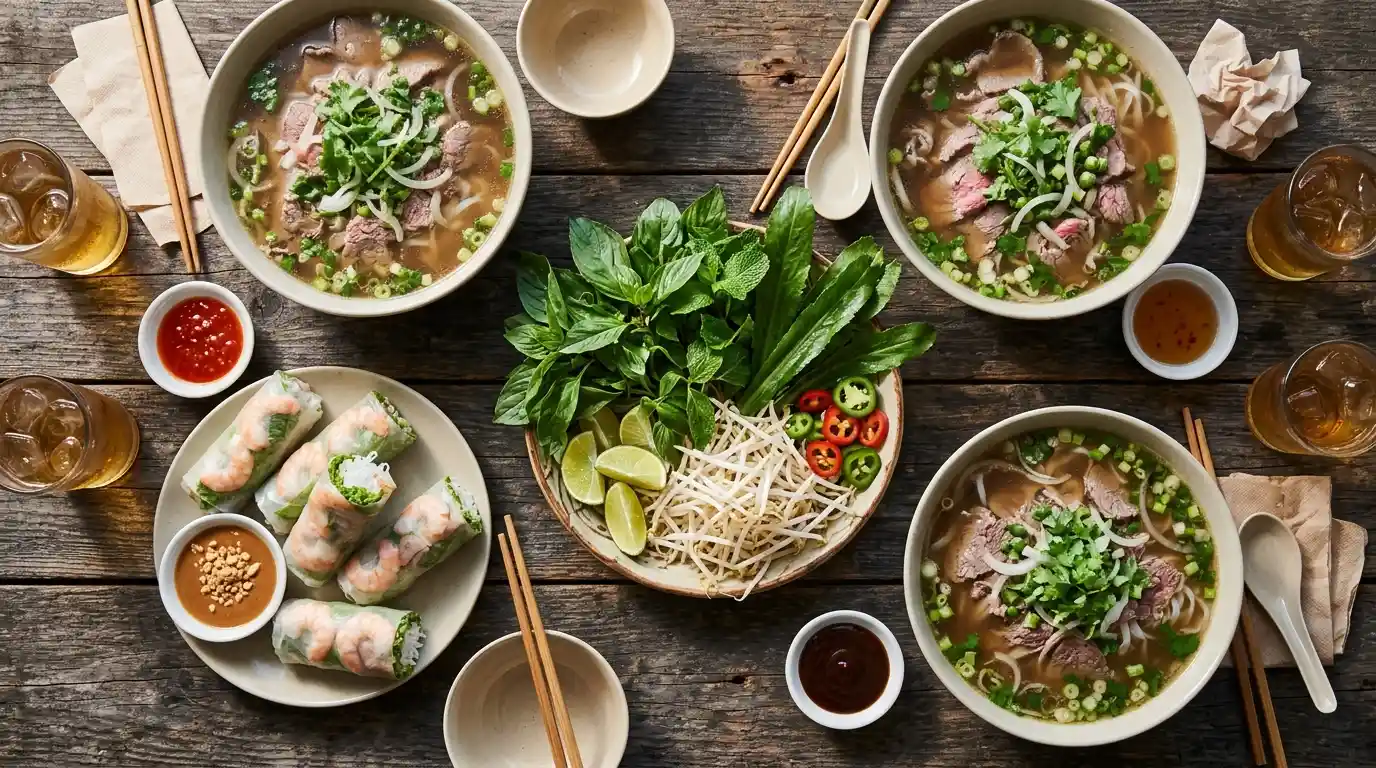
Vietnamese food centers on fresh herbs, rice noodles, fish sauce and balanced sweet-sour-salty flavors. Signature dishes such as phở, bún chả and bánh mì reflect northern, central and southern regional styles shaped by local ingredients and historical influences. Meals are typically shared or eaten at street stalls with chopsticks and small dipping bowls.
Rice forms the base of most meals. Fresh vegetables and herbs appear at nearly every table. The cuisine uses little dairy and relies on fermented fish sauce for depth. These elements create light yet flavorful dishes suited to the country’s climate.
Phở: Northern Noodle Soup
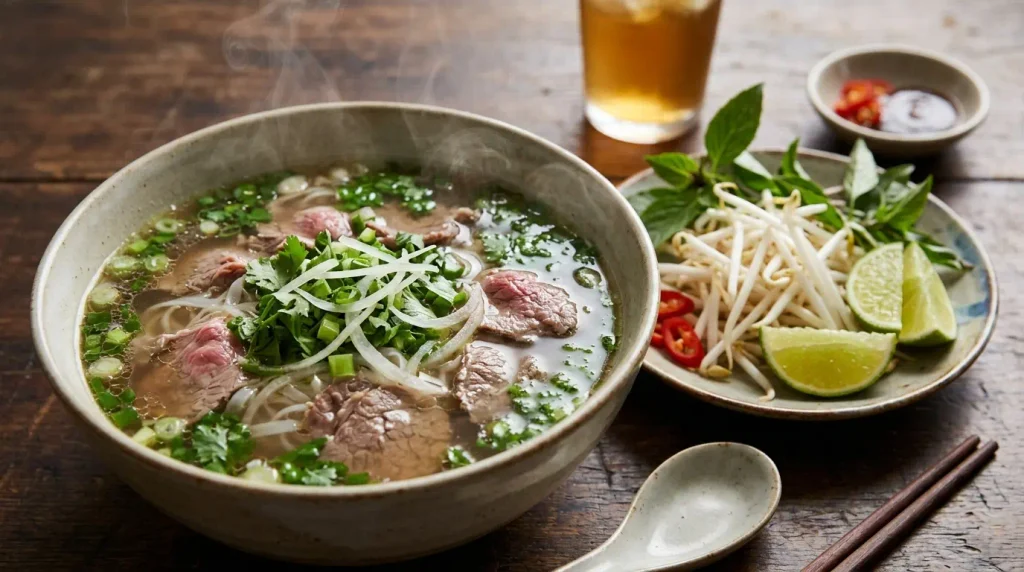
Phở originated in northern Vietnam, particularly around Hanoi. The clear broth simmers for hours with beef bones, charred onion, ginger, star anise and cinnamon. Flat rice noodles form the base, topped with thin slices of beef or chicken that cook in the hot liquid. Fresh herbs, lime, chili and bean sprouts arrive on the side for diners to add.
Northern versions stay lighter and clearer. Southern styles often include more herbs and a slightly sweeter broth. People eat phở for breakfast or lunch, usually at open-air stalls. The dish is served in a large bowl with chopsticks and a spoon. It remains one of the most recognized Vietnamese foods worldwide.
Body image under this heading shows a steaming bowl of phở with herbs, lime and sliced beef on the side.
Bún Chả from Hanoi
Bún chả comes from Hanoi and features grilled pork patties and slices served with rice vermicelli. The pork marinates in fish sauce, sugar and spices before grilling. A sweet-sour dipping sauce of fish sauce, lime, chili and sugar accompanies the noodles. Fresh herbs, lettuce and sometimes green papaya complete the plate.
Diners typically assemble bites by dipping noodles and pork into the sauce. The dish is commonly eaten at midday. Street vendors and small restaurants across northern Vietnam serve it daily. The combination of smoky pork and cool herbs defines the regional style.
Bánh Mì and French Influence
Bánh mì uses a short baguette introduced during the French colonial period. Vietnamese bakers adapted the bread for the humid climate, producing a lighter, crispier roll. Fillings include grilled pork, pâté, pickled carrots and daikon, cucumber, cilantro, chili and mayonnaise. The sandwich is assembled to order at street stalls.
It is eaten by hand as a portable snack or light meal. The contrast of crusty bread, savory fillings and fresh vegetables makes it a daily staple. Versions vary by region and vendor, but the core structure stays consistent.
Bún Bò Huế from Central Vietnam
Bún bò Huế originates in the former imperial city of Huế. The broth is richer and spicier than phở, flavored with lemongrass, fermented shrimp paste and chili. Thick rice noodles sit in the soup along with beef, pork and sometimes blood sausage. Fresh herbs and lime balance the heat.
Diners add chili oil or extra paste to taste. The dish is typically eaten with chopsticks and a spoon. Central Vietnamese food tends toward bolder seasoning than the north, and this soup illustrates the difference clearly.
Fresh Spring Rolls and Herb Plates
Gỏi cuốn, or fresh spring rolls, wrap shrimp, pork, rice vermicelli and herbs in translucent rice paper. They require no cooking after assembly and are served with a peanut or fish-sauce dip. The rolls appear as starters or light snacks across the country.
Many meals include a large plate of fresh herbs such as mint, perilla, Thai basil and lettuce. Diners wrap bites of grilled meat or noodles in the greens. This practice adds crunch, fragrance and balance to richer dishes. The herbs are grown widely and used daily.
Rice Dishes and Regional Variations
Cơm tấm, or broken rice, is popular in the south. It pairs the rice with grilled pork chop, shredded pork skin and a steamed egg-and-pork loaf. Fish sauce and pickled vegetables accompany the plate. Northern rice dishes often stay simpler, focusing on clear soups and grilled items.
Sticky rice (xôi) appears in both sweet and savory forms. It is eaten for breakfast or as a snack. Regional differences show in spice levels and ingredient availability: northern plates lean milder, central ones hotter, and southern ones sweeter and more herb-heavy.
Key Ingredients and Flavor Balance
Fish sauce (nước mắm) provides the primary savory note. Fresh herbs, lime, chili, garlic and shallots appear constantly. Rice, rice noodles and rice paper form the carbohydrate base. Protein comes from pork, beef, chicken, shrimp and fish, often grilled or simmered.
Cooks aim for balance among sweet, sour, salty, bitter and spicy elements. A single dish may include all five. Minimal oil and dairy keep the food light. These ingredients and techniques define Vietnamese food across regions.
Where and How Vietnamese Food Is Eaten
Street stalls and small family restaurants serve the majority of everyday meals. Larger cities offer both traditional spots and modern interpretations. Diners often share several dishes at a table, especially in the evening. Breakfast frequently features noodle soups, while lunch and dinner include more grilled items and rice plates.
Chopsticks and small bowls are standard. Many people customize bowls with extra herbs, lime and chili at the table. The social aspect of sharing food remains central to the dining experience.
| Dish | Origin | Main Ingredients | How It Is Eaten |
|---|---|---|---|
| Phở | Northern Vietnam | Rice noodles, beef or chicken, clear broth, herbs | Bowl with chopsticks and spoon, herbs added at table |
| Bún chả | Hanoi | Grilled pork, rice vermicelli, dipping sauce, herbs | Assembled bites dipped in sauce |
| Bánh mì | French colonial influence | Baguette, pork, pickled vegetables, herbs | Handheld sandwich |
| Bún bò Huế | Huế | Thick noodles, spicy lemongrass broth, beef | Bowl with chili adjusted to taste |
The table summarizes the core details for four widely known dishes. Each reflects its region through broth style, spice level and accompaniments. Trying them in order from north to south shows how Vietnamese food changes across the country while keeping the same foundational ingredients.
Markets and street vendors remain the best places to sample these dishes in their traditional forms. Home cooking often simplifies the same flavors for family meals. The combination of fresh produce, careful broths and balanced seasonings continues to define the cuisine.
FAQs
Vietnamese food
Vietnamese food features fresh herbs, rice noodles, fish sauce and balanced flavors. Signature dishes include phở, bún chả, bánh mì and bún bò Huế. Meals emphasize light preparations and regional variations from north to south.
What is the most famous Vietnamese dish?
Phở is the most widely recognized. The northern-style beef noodle soup has clear broth, rice noodles and fresh herbs. It is eaten for breakfast or lunch across the country and abroad.
Where did phở originate?
Phở developed in northern Vietnam, particularly the Hanoi area. The clear broth and flat rice noodles reflect local cooking methods. Southern versions later added more herbs and sweetness.
What ingredients define Vietnamese cooking?
Fish sauce, fresh herbs such as mint and Thai basil, lime, chili, garlic and rice form the core. Minimal dairy and oil keep dishes light. Balance among sweet, sour, salty and spicy elements is central.
How is bún chả eaten?
Grilled pork and rice vermicelli are served with a sweet-sour dipping sauce and herbs. Diners assemble bites and dip them in the sauce. It is a common midday meal in Hanoi.
What is bánh mì?
Bánh mì is a sandwich on a short baguette filled with pork, pâté, pickled vegetables and herbs. The bread style came from French colonial influence and was adapted locally. It is eaten by hand as a snack or light meal.
How does northern food differ from southern food?
Northern dishes tend toward milder, clearer flavors. Southern food uses more herbs, sweetness and variety. Central cuisine, such as bún bò Huế, is often spicier and bolder.
Are Vietnamese meals shared?
Yes, especially at dinner. Several dishes are placed in the center for people to share. Breakfast and lunch more often feature individual bowls of soup or noodles.
What herbs are common in Vietnamese food?
Mint, perilla, Thai basil, cilantro and lettuce appear frequently. They are served fresh on the side or wrapped around bites. The herbs add fragrance and balance to richer elements.
Is Vietnamese food spicy?
Spice levels vary by region and dish. Northern food is generally milder. Central dishes such as bún bò Huế are hotter. Diners usually adjust chili at the table.
Where can you find traditional Vietnamese food?
Street stalls, small restaurants and markets serve traditional versions daily. Larger cities also have dedicated phở and bún shops. Home cooking uses the same core ingredients and techniques.
What is fish sauce used for?
Fish sauce provides the main savory flavor in broths, marinades and dipping sauces. It is fermented and appears in nearly every savory dish. Quality and intensity vary by producer and region.


