
Best Kitten Food: Nutritional Needs, Key Ingredients and What to Look For
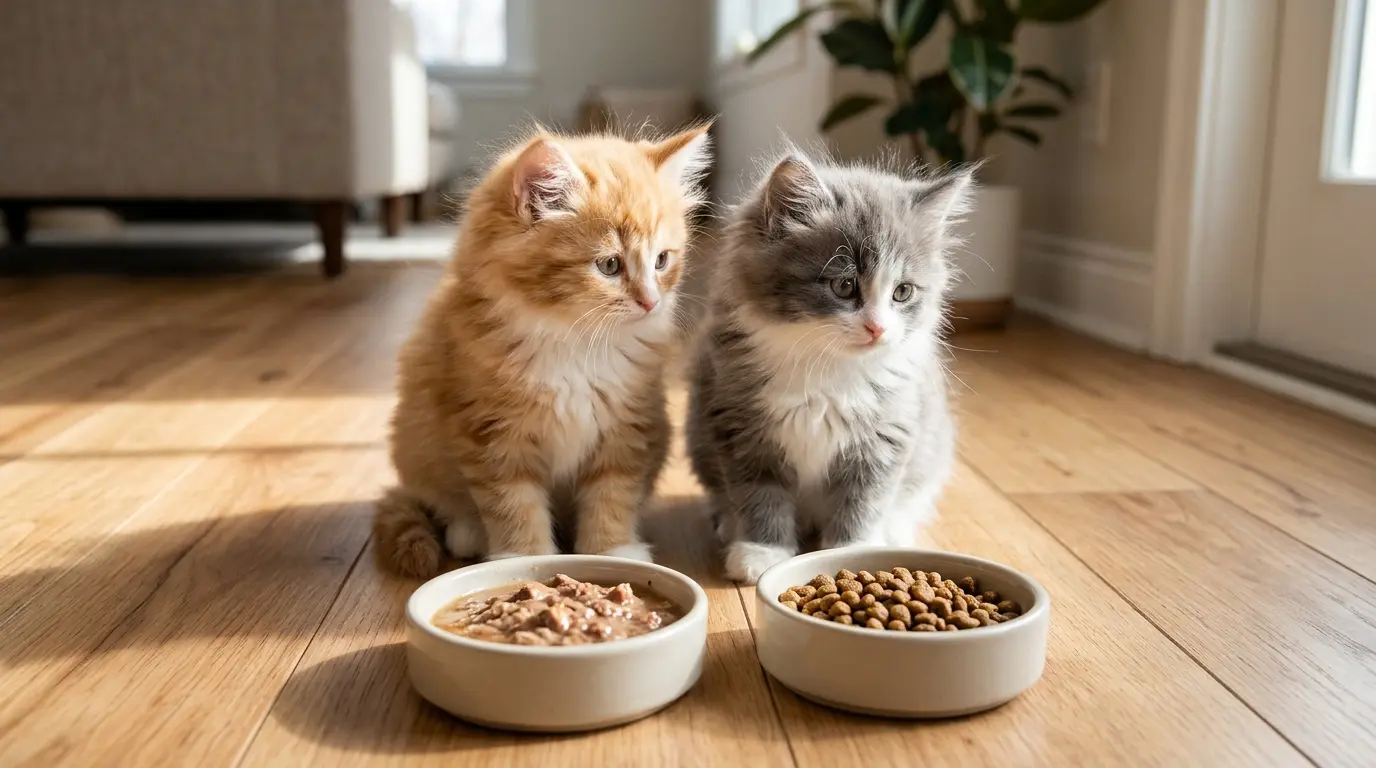
The best kitten food is a complete and balanced formula labeled for growth or all life stages. It supplies higher protein, more calories, DHA for brain and eye development, and balanced calcium and phosphorus for bones. Named animal proteins should appear first on the ingredient list, and the food must meet AAFCO standards for kittens.
Kittens grow rapidly in their first year and need more energy and nutrients per pound than adult cats. Choosing a food that matches these needs supports muscle, bone and organ development. Veterinary guidance helps confirm the right choice for an individual kitten.
Why Kittens Need Specialized Food
Kittens require roughly two to three times the calories per pound of an adult cat because of fast growth and high activity. Protein needs are higher to build muscle and organs. DHA, an omega-3 fatty acid, supports brain and vision development during the early months. Calcium and phosphorus must stay in the correct ratio to form strong bones and teeth without imbalance.
Adult maintenance formulas do not provide these elevated levels. Feeding only adult food can slow growth or leave nutritional gaps. A dedicated kitten formula or an all-life-stages food that meets growth standards covers the requirements.
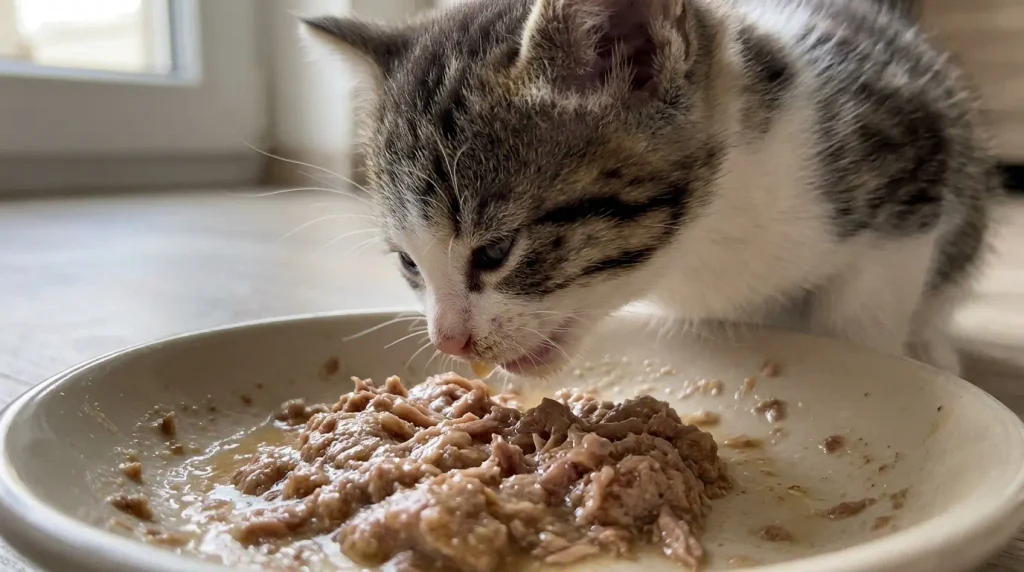
Body image under this heading shows two small kittens eating from a bowl of wet food on a light floor.
Essential Nutrients in Kitten Food
Taurine is an essential amino acid for heart and eye health; cats cannot make enough on their own. DHA from fish oil or fish meal aids neural and retinal development. Vitamins A, D and E plus B vitamins support immunity and energy metabolism. The food must also supply adequate fat for calorie density.
AAFCO sets minimum profiles for growth. Look for a statement that the food is complete and balanced for growth or all life stages according to AAFCO. Foods that have completed feeding trials under AAFCO guidelines offer additional evidence of suitability.
Wet Food Versus Dry Food for Kittens
Wet food provides higher moisture, which supports hydration and can be easier for very young kittens to eat. It typically offers high protein on a dry-matter basis and is useful during the transition from milk. Dry kibble is convenient, shelf-stable and helps with dental texture once teeth develop, but it has lower moisture.
Many owners feed a mix of both. Soften dry kibble with water for the youngest kittens. Either form works if it meets the growth standard and the kitten eats and gains weight steadily. Fresh water must always be available regardless of food type.
How to Read Labels for the Best Kitten Food
Check the first ingredients for named meats such as chicken, turkey or salmon. Avoid formulas where plant proteins dominate the top of the list. Confirm the AAFCO growth statement. Look for DHA listed among the ingredients or guaranteed analysis. Small kibble size or soft texture suits small mouths.
Guaranteed analysis shows minimum protein and fat. On a dry-matter basis, quality kitten foods often exceed 30 percent protein. The label does not list every nutrient, so the AAFCO statement remains the clearest overall assurance.
Feeding Amounts and Frequency
Young kittens usually need three to four small meals a day. As they approach six months, many move to two or three meals. Follow the feeding guide on the package as a starting point and adjust based on body condition. A kitten that stays lean and active while gaining weight is generally receiving enough.
Overfeeding can lead to rapid weight gain that stresses developing joints. Underfeeding slows growth. Regular veterinary weigh-ins help track progress. Free-choice feeding of dry food works for some households once the kitten is older, provided total intake stays appropriate.
Transitioning and Special Situations
Introduce a new food gradually over five to seven days by mixing increasing amounts with the previous diet. Sudden changes can upset the stomach. Orphaned or very young kittens may need a milk replacer before solid food. Consult a veterinarian for kittens under eight weeks or those with health concerns.
Some kittens have sensitive digestion and do better on limited-ingredient or easily digestible formulas. Others thrive on standard complete foods. The individual response matters more than any single brand ranking.
Common Mistakes When Choosing Kitten Food
Feeding adult cat food is the most frequent error. Another is selecting a food without the AAFCO growth statement. Relying only on marketing terms such as “premium” or “natural” without checking the nutritional adequacy claim can leave gaps. Grain-free formulas are not automatically better; the overall nutrient balance matters more.
Ignoring the kitten’s preference and appetite also causes problems. A nutritionally complete food that the kitten refuses will not support growth. Offer options within the growth category and monitor acceptance.
When to Consult a Veterinarian
A veterinarian can recommend formulas suited to a specific kitten’s age, breed or health status. They can also check growth curves and adjust feeding plans. Kittens with diarrhea, poor weight gain or other issues need professional evaluation before diet changes.
Routine visits during the first year confirm that the chosen food supports healthy development. Bring the food label to appointments for review.
| Feature | Why It Matters for Kittens | What to Check |
|---|---|---|
| AAFCO growth statement | Confirms complete nutrition for rapid growth | Label says complete and balanced for growth |
| Named animal protein first | Supplies essential amino acids cats need | Chicken, turkey or fish listed first |
| DHA source | Supports brain and eye development | Fish oil or fish meal in ingredients |
| Higher calorie density | Matches elevated energy needs | Feeding guide and body condition |
| Calcium-phosphorus balance | Builds strong bones and teeth | Included in AAFCO-compliant formula |
The table summarizes the practical checks that identify suitable kitten food. Meeting these points reduces the chance of nutritional shortfalls during the critical growth period. Individual kittens may still prefer one texture or flavor over another within the acceptable category.
Consistent feeding of a complete formula, regular monitoring and veterinary input produce the best outcomes. The goal is steady growth into a healthy adult cat rather than any single product claim.
FAQs
Best kitten food
The best kitten food is a complete and balanced formula labeled for growth or all life stages. It includes higher protein, DHA, and proper calcium and phosphorus levels. Named animal proteins should lead the ingredient list, and the food must meet AAFCO standards.
What nutrients do kittens need most?
Kittens need elevated protein, calories, DHA, taurine, and balanced calcium and phosphorus. These support muscle, bone, brain and eye development. A growth-formulated food supplies them in the correct amounts.
Is wet or dry food better for kittens?
Both can work if they meet growth standards. Wet food offers more moisture and is often easier for very young kittens. Dry food is convenient once teeth develop. Many owners use a combination.
How often should kittens eat?
Young kittens usually need three to four meals a day. Frequency can drop to two or three as they near six months. Follow the package guide and adjust for body condition.
Can kittens eat adult cat food?
No. Adult maintenance food lacks the higher protein, calories and specific nutrients needed for growth. Use a kitten or all-life-stages formula until the kitten reaches adulthood.
What does the AAFCO statement mean?
It confirms the food is complete and balanced for the stated life stage according to established nutrient profiles or feeding trials. For kittens, look for the growth or all-life-stages claim.
Why is DHA important in kitten food?
DHA is an omega-3 fatty acid that supports brain and vision development. It is typically added via fish oil. Deficiency during early growth can affect these systems.
How do you switch a kitten to new food?
Mix increasing amounts of the new food with the old over five to seven days. Gradual change reduces the chance of digestive upset. Monitor appetite and stool during the transition.
What if a kitten has a sensitive stomach?
Try a limited-ingredient or easily digestible growth formula. Introduce it slowly. Consult a veterinarian if diarrhea or poor appetite continues.
When should a kitten switch to adult food?
Most kittens can transition around 12 months of age. Larger breeds may need kitten food a bit longer. Follow veterinary advice for the individual animal.
Do grain-free formulas matter for kittens?
Grain-free is not required. The overall nutrient balance and AAFCO compliance matter more. Some grain-inclusive foods perform well for growth.
Should you free-feed kittens?
Free-choice dry food can work for some older kittens if total intake stays controlled. Young kittens usually do better with scheduled meals. Monitor weight to avoid overfeeding.


