
Rowing Machine Muscles Worked: Full Body Breakdown by Stroke Phase
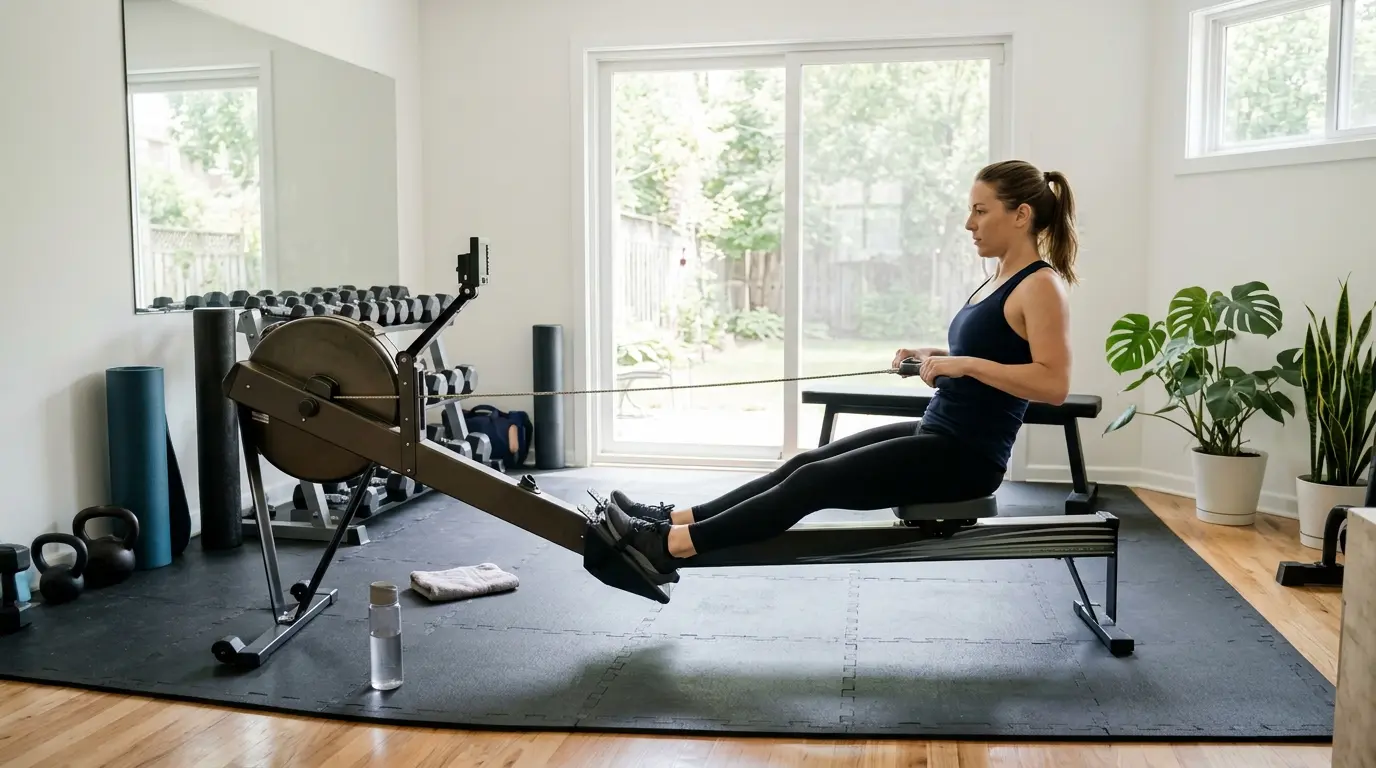
A rowing machine works about 85 to 86 percent of the body’s major muscle groups in each stroke. The primary movers are the quadriceps, glutes, hamstrings, latissimus dorsi and core. Legs generate most of the power while the back and arms finish the pull.
Proper form spreads the load across the body and reduces strain on any single area. Understanding which muscles activate during the catch, drive, finish and recovery helps users train more effectively and avoid common mistakes.
Primary Muscles Activated on a Rowing Machine
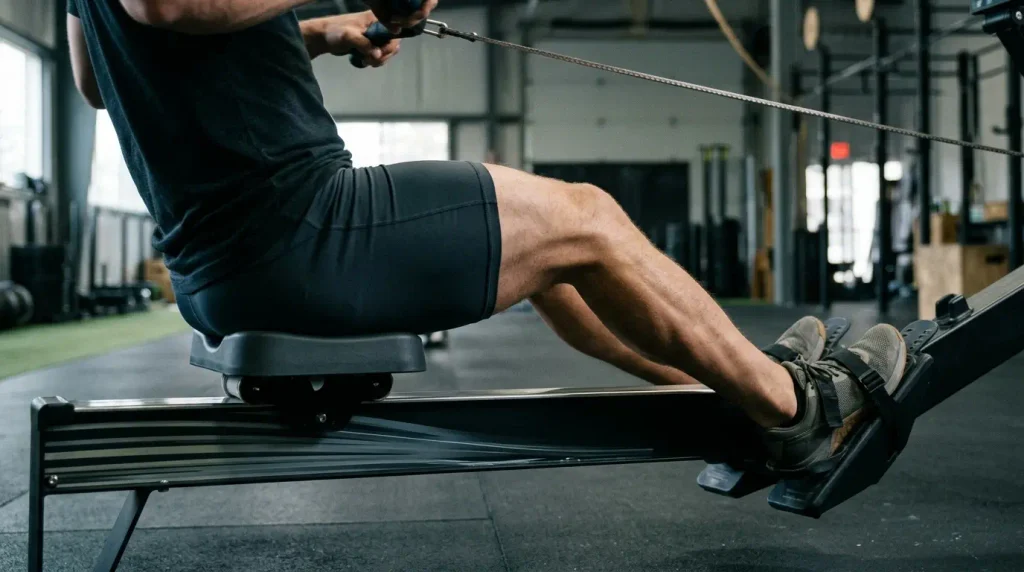
The legs provide the bulk of force. Quadriceps push against the foot plates during the drive. Glutes and hamstrings extend the hips and complete the leg push. These three groups together supply roughly 60 percent of the power in a well-executed stroke.
The latissimus dorsi pulls the handle toward the body once the legs have extended. Biceps assist the arm pull. Core muscles stabilize the torso throughout so force transfers cleanly from legs to upper body. Secondary groups include the calves, trapezius, rhomboids and forearm muscles that maintain grip.
Body image under this heading shows a person mid-drive on a rowing machine with legs extended and handle near the chest.
Muscles Worked During the Catch Position
The catch places the body in a compressed start. Knees bend, shins stay vertical and arms reach forward. Hip flexors and hamstrings hold the compressed posture. The lower back and abdominals stabilize the trunk so the spine stays neutral. Triceps keep the arms straight until the drive begins.
Activation stays moderate here. The position sets up the explosive push that follows. Rushing out of the catch reduces power and can stress the lower back if the core does not engage first.
Drive Phase: Legs, Glutes and Back
The drive starts with the legs. Quadriceps straighten the knees while glutes and hamstrings extend the hips. Calves help push through the feet. As the legs finish, the torso swings back slightly and the lats, rhomboids and biceps pull the handle.
This phase produces peak activation for the quads, glutes and lats. Core muscles stay braced to protect the lower back. Studies measuring electrical activity show the quadriceps registering the highest readings during the leg drive portion of the stroke.
Finish and Recovery Muscle Roles
At the finish the legs stay extended, the torso leans slightly back and the handle reaches the lower ribs. Biceps, lats and rear deltoids hold the contraction briefly. The recovery returns the body to the catch under control. Hip flexors, hamstrings and triceps guide the seat forward while the core keeps the spine stable.
Recovery is not rest. Controlled movement maintains tension and prepares the next stroke. Poor recovery timing often leads to early arm pull and reduced leg contribution on the following drive.
Full List of Muscles Involved
Major groups include:
- Quadriceps (rectus femoris, vastus lateralis, vastus medialis, vastus intermedius)
- Gluteus maximus and supporting gluteal muscles
- Hamstrings (biceps femoris, semitendinosus, semimembranosus)
- Latissimus dorsi
- Erector spinae and other core stabilizers
- Biceps and forearm flexors
- Trapezius and rhomboids
- Deltoids (mainly posterior)
- Calves (gastrocnemius and soleus)
Chest and triceps play only minor stabilizing roles. The pattern explains why rowing builds the posterior chain more than pushing muscles.
How Activation Changes with Form and Intensity
Correct sequencing keeps the legs first, then the torso, then the arms. Pulling with the arms too early shifts load onto the biceps and shoulders and reduces overall power. Higher resistance or faster stroke rates increase overall activation but do not change the primary muscle groups involved.
Users who keep a strong core throughout report less lower-back fatigue. Adding complementary exercises such as squats or pull-ups can address any imbalances, though the rower already covers a wide range of movers in one session.
Benefits Linked to the Muscle Work
Because so many large muscle groups contract together, a rowing session raises heart rate efficiently. The low-impact nature reduces joint stress compared with running while still taxing the legs and back. Consistent use can improve muscular endurance across the posterior chain and core stability for daily movements.
Sessions of 20 to 30 minutes at moderate intensity engage the listed muscles repeatedly. Longer rows increase endurance demands without changing the basic activation pattern.
Common Mistakes That Reduce Muscle Engagement
Rounding the lower back during the catch or recovery unloads the legs and overloads the spine. Pulling the handle before the legs finish the drive limits glute and quad work. A loose core allows the torso to collapse and reduces force transfer.
Focusing on smooth transitions and a neutral spine keeps the intended muscles working as designed. Video feedback or a short coaching session often corrects these patterns quickly.
| Stroke Phase | Primary Muscles | Activation Level |
|---|---|---|
| Catch | Hip flexors, hamstrings, core | Moderate |
| Drive (legs) | Quads, glutes, hamstrings | Very high |
| Drive (pull) | Lats, biceps, rhomboids | High |
| Finish | Biceps, lats, rear delts | High |
| Recovery | Hip flexors, triceps, core | Low to moderate |
The table shows how load moves through the body. Legs dominate early, upper body finishes the stroke, and core works continuously. Adjusting form to match this sequence maximizes the muscles the rowing machine is built to train.
Regular sessions build both strength and endurance in the listed groups. Pairing rowing with occasional pushing movements maintains balance across the upper body. The overall pattern remains consistent regardless of machine brand when the stroke is performed correctly.
FAQs
Rowing machine muscles
A rowing machine primarily works the quadriceps, glutes, hamstrings, latissimus dorsi and core. Secondary muscles include the biceps, trapezius, rhomboids and calves. Together these groups account for most of the major movers in the body.
Does a rowing machine work the whole body?
Yes. Estimates place total engagement at 85 to 86 percent of major muscle groups. Legs, back, core and arms all contribute in each stroke. The chest receives only light stabilizer work.
Which muscles get the most work on a rower?
The quadriceps, glutes and hamstrings produce the majority of power during the leg drive. The latissimus dorsi leads the pulling phase. Core muscles stay active throughout to stabilize the spine.
Do rowing machines build leg muscle?
Yes. The drive phase loads the quads, glutes and hamstrings heavily. Consistent training improves both strength and endurance in these groups. Proper form ensures the legs do the intended share of the work.
Is rowing good for the back?
The latissimus dorsi, rhomboids and trapezius receive strong work. The erector spinae stabilizes the lower back. Good form protects the spine; poor form can increase lower-back stress.
What percentage of the body does rowing use?
Research and fitness analyses commonly cite 85 to 86 percent of major muscle groups. The figure reflects the combined action of legs, core and upper body in one coordinated movement.
Does rowing work the abs?
Yes. The abdominals and obliques stabilize the torso during the drive and recovery. They transfer force from the legs to the arms. Visible definition depends on overall body fat levels as well as training.
Can rowing replace weight training?
It builds endurance and moderate strength across many groups. It does not fully replace heavy resistance work for maximal strength or hypertrophy in every muscle. Many people combine both approaches.
How long should a rowing session last?
Twenty to thirty minutes at moderate intensity engages the target muscles effectively. Longer sessions increase endurance demands. Beginners often start with shorter intervals and build duration over weeks.
What is the correct order of muscle use?
Legs drive first, then the torso swings, then the arms pull. The reverse order reduces power and shifts stress to the arms and lower back. Recovery returns the body under control to the catch.
Do rowing machines work the chest?
Only lightly. The pectorals act as minor stabilizers. The main upper-body work falls on the back and arms. Pushing exercises can be added separately if chest development is a goal.
Is the recovery phase important for muscles?
Yes. Controlled recovery keeps tension on the hip flexors, hamstrings and core. It also sets up the next stroke. Rushing the recovery reduces overall efficiency and muscle engagement.