
Trip to Hampi: The Complete Guide to Ruins, Itinerary, and Costs
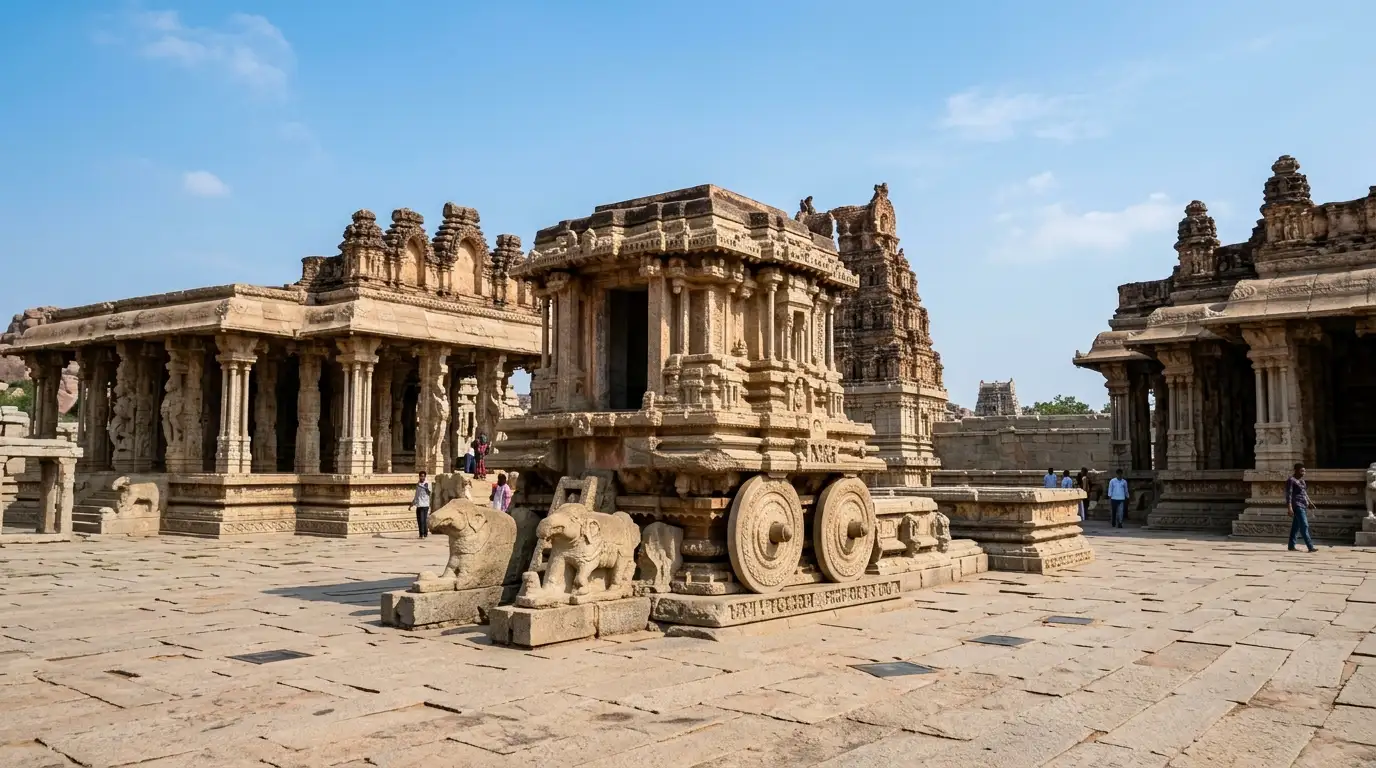
A trip to Hampi means stepping into the ruined capital of the Vijayanagara Empire, a UNESCO World Heritage Site scattered across a surreal boulder landscape in northern Karnataka. Most visitors plan a quick day trip and end up wishing they had blocked out three, because the ruins simply do not fit into a rushed schedule. This guide breaks down exactly what to see, how many days you actually need, and what it will cost you in 2026.
Hampi was once the wealthy, powerful heart of one of medieval India’s largest Hindu kingdoms before it fell to invading armies in 1565. What remains are more than 1,600 structures, temples, palaces, and stone chariots spread across a landscape so rocky and dramatic it looks almost otherworldly at sunrise.
What Is Hampi Famous For?
Hampi is famous for its Vijayanagara Empire ruins, a sprawling open air museum of temples, royal structures, and market streets that once formed one of the richest cities in the world. The most photographed symbol of Hampi is the Stone Chariot inside Vittala Temple, a stone structure so precisely carved it is often mistaken for a functioning wheeled cart from a distance.
The area also has deeper roots, believed by many to be the mythical Kishkinda from the Ramayana, home to the monkey god Hanuman. Before the Vijayanagara kings arrived, the Hoysala dynasty had already built early religious structures here, which explains why Hampi’s architecture blends several centuries of South Indian temple building styles in one place.
How Many Days Do You Need for a Trip to Hampi?
The honest answer depends on how deep you want to go, and most travelers underestimate how spread out the ruins are.
| Duration | What You Can Realistically Cover | Who It Suits |
| 1 Day | Virupaksha Temple, Vittala Temple, Stone Chariot, Royal Enclosure highlights | Travelers on a tight schedule doing a day trip from Hospet or Goa |
| 2 Days | Day 1 as above plus Lotus Mahal, Elephant Stables, Hazara Rama Temple, Queens Bath | Most independent travelers, the recommended minimum |
| 3 Days | Days 1 and 2 plus Anegundi village, Sanapur Lake, Monkey Temple, and slower boulder exploration | Travelers who want the full experience without rushing |
Travelers consistently find that trying to squeeze everything into a single day leaves them exhausted and disappointed, since the sites are spaced far apart across rough terrain. A common mistake first timers make is booking only one night in Hospet, then realizing halfway through day one that they need at least one more day to see the ruins properly.
What Are the Best Places to Visit in Hampi?
The core sites cluster around two main areas, the Hampi Bazaar side and the quieter Virupapur Gaddi side across the Tungabhadra River. On the Bazaar side, focus on:
- Virupaksha Temple, the still-active shrine dedicated to Lord Shiva, dating back to the 7th century
- Vittala Temple and its Stone Chariot, built during the reign of King Krishnadevaraya
- The Royal Enclosure, once the residence of Vijayanagara kings
- Lotus Mahal, a palace with a striking blend of Hindu and Islamic architectural styles
- Elephant Stables, a row of domed chambers that once housed royal elephants
- Hazara Rama Temple, covered in detailed carvings depicting battles, dancers, and processions
- The monolithic Sasivekalu and Kadalekalu Ganesha statues just behind Virupaksha Temple
Across the river, Anegundi village and Sanapur Lake offer a quieter, greener contrast to the dusty ruins on the main side.
What Should You Do on Day 1 of a Hampi Itinerary?

Start on the Virupapur Gaddi side, since it is quieter and greener, with rice paddies and palm trees replacing the dry boulder fields of the Bazaar side. A boat crossing over the Tungabhadra River gets you there, typically running from around 7 AM to 5 PM.
Spend the morning exploring Anegundi village, a sleepy settlement involved in local rural tourism projects, then climb to either the Durga Temple or the Monkey Temple, both requiring a steep set of steps but rewarding you with sweeping views over the boulder landscape. Locals recommend saving the Monkey Temple climb for late afternoon when the light softens, then heading to Sanapur Lake to watch the sunset over the water.
What Should You Do on Day 2 of a Hampi Itinerary?
Day two shifts to the Hampi Bazaar side, where the terrain gets rockier and dustier, making a tuk tuk or hired driver a smart choice if the heat is intense. Most visitors say the best plan is to start early, before 9 AM, to beat both the crowds and the sun.
The walk to Vittala Temple itself is roughly two kilometers over exposed rock and gravel, since vehicles are not allowed close to the temple. A crowded shuttle van runs partway for those who prefer not to walk the full stretch. From there, continue to the Royal Enclosure, Lotus Mahal, and Elephant Stables, finishing at Hazara Rama Temple, whose carved walls read almost like a storybook of the Vijayanagara court.
How Much Does a Trip to Hampi Cost?
Costs vary by season and how much you negotiate, but here is a realistic 2026 daily budget breakdown for an independent traveler.
| Expense | Typical Cost Range (2026) |
| Vittala Temple combined ticket (foreign visitors) | Approx. 500 to 600 INR |
| Bike rental (per day) | 200 to 400 INR |
| Tuk tuk full day hire | 800 to 1,500 INR |
| Boat crossing (Tungabhadra River) | 10 to 20 INR per person |
| Meals (thali, street food) | 150 to 400 INR per meal |
| Budget homestay or guesthouse | 800 to 2,500 INR per night |
Expect to pay more during the peak October to March season when demand for tuk tuks and homestays rises sharply. It varies by vendor and negotiation, so treat these as planning ranges rather than fixed prices.
How Do You Get Around Hampi, Bike, Tuk Tuk, or Walking?
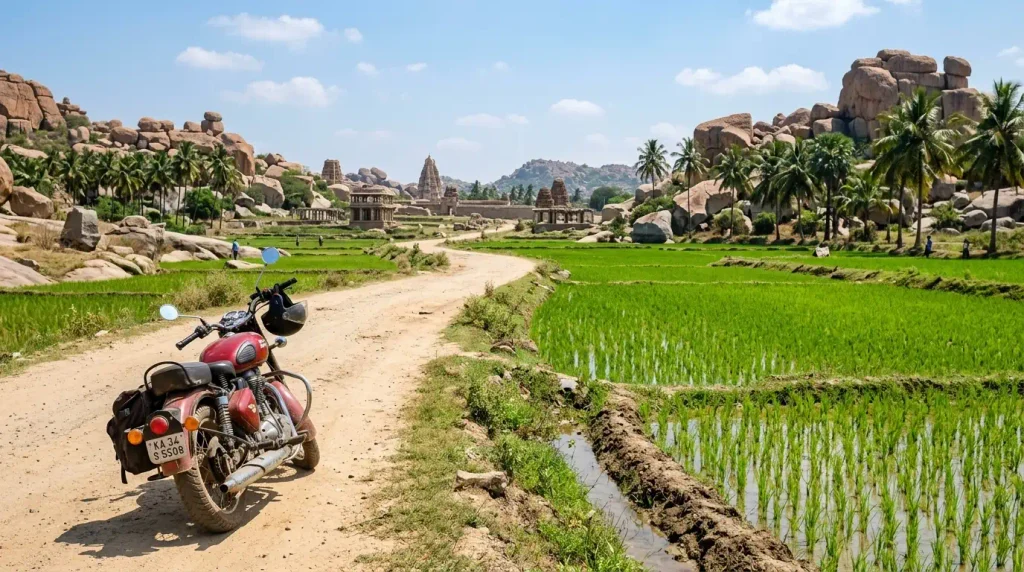
A bike works best on the Virupapur Gaddi side, where the roads are flatter and quieter, running past rice fields with far less traffic than the Bazaar side. A tuk tuk becomes the smarter option on the Hampi Bazaar side, since the roads there are rockier and dustier, and the heat between 11 AM and 3 PM makes cycling genuinely uncomfortable for most travelers.
Walking is unavoidable for the final stretch to Vittala Temple, since motorized vehicles are not permitted close to the site. A common insider tip is to combine a tuk tuk for the main loop with the mandatory walk to Vittala Temple rather than trying to cycle the entire rocky route, which can wear travelers out fast under the sun.
What Is the Vittala Temple Ticket and What Does It Include?
The Vittala Temple ticket is not a single-site pass. It doubles as a combined ticket covering the Royal Enclosure, Lotus Mahal, Elephant Stables, and the Archaeological Museum in Hospet, all on the same day. This is a detail many first-time visitors miss, and skipping it means either paying twice or missing sites that were already included in the price.
Most visitors say it makes sense to plan the Royal Enclosure cluster and Vittala Temple on the same day to get full value from the ticket, saving the Archaeological Museum for later in the day only if time and energy allow, since it is worth a quick look but not essential.
Is Virupapur Gaddi Still Open for Tourists?
This is worth checking carefully before booking. Local reports and traveler comments indicate that authorities have taken action against unauthorized homestays and restaurants on the Virupapur Gaddi side in past years, aiming to protect the archaeological heritage zone from unregulated construction. Older travel guides that recommend specific riverside guesthouses there may no longer reflect the current situation.
A common mistake first-timers make is booking a Virupapur Gaddi homestay months in advance based on an old blog post, only to find limited or no availability on arrival. It is safer to confirm current accommodation status through a recent booking platform or by contacting a local operator directly before finalizing your Hampi itinerary.
When Is the Best Time to Visit Hampi?
October through March is the best window for a trip to Hampi, with cooler, drier weather that makes long walks across the exposed boulder terrain manageable. This is also peak tourist season, so booking accommodation and transport in advance is a smart move rather than an afterthought.
From April onward, temperatures climb sharply, often making midday sightseeing among the shadeless ruins genuinely exhausting. The monsoon season, roughly July through September, brings heavy rain that can make some paths and ruins temporarily inaccessible, so it is generally the least practical time for a first visit.
Is Hampi Safe, Including for Solo Female Travelers?
Hampi is a safe destination during daylight hours, with a relaxed, backpacker-friendly atmosphere. The rocky landscape is also home to snakes and occasionally sloth bears, so walking around the ruins after dark is not recommended, and wildlife enthusiasts curious about the latter can visit the nearby Daroji Sloth Bear Sanctuary instead.
Solo female travelers face similar considerations as in other touristy parts of India. Dressing conservatively, trusting your instinct around overly friendly strangers offering free guiding, and avoiding quiet areas at night all go a long way. Romance scams involving local men who latch onto solo travelers are not unheard of, so a polite but firm boundary works better than politeness alone.
Can You Combine Hampi With Badami, Aihole, and Pattadakal?
Yes, and travelers with an extra day or two often do exactly this. Badami, Aihole, and Pattadakal sit within a few hours of Hampi and showcase the earlier Chalukya and Hoysala temple architecture that predates the Vijayanagara Empire, giving a fuller picture of how South Indian temple design evolved over centuries.
This pairing works particularly well for history-focused travelers who want to see the progression from early rock-cut cave temples to the elaborate Vijayanagara structures in Hampi, rather than treating Hampi as an isolated stop.
What Should You Eat in Hampi?
Hampi is a strictly vegetarian town, largely due to its religious significance, which makes it genuinely easy for vegetarians and vegans to eat well. Mango Tree restaurant in Hampi Bazaar, set inside a banana plantation, is a long-running favorite among travelers for its thali plates. Nearby Suresh restaurant is a solid choice for homemade pasta if you want a break from Indian food.
On the Virupapur Gaddi side, riverside cafes with rooftop seating overlooking the Tungabhadra are popular less for exceptional food and more for the relaxed atmosphere and river views, making them a good spot to unwind after a long day among the ruins.
Final Thoughts
A trip to Hampi rewards travelers who give it real time rather than treating it as a quick photo stop. Two to three days lets you properly experience the Vijayanagara ruins, the Stone Chariot, and the quieter charm of Anegundi and Sanapur Lake across the river. Plan around the October to March season, budget for the combined Vittala Temple ticket, and confirm Virupapur Gaddi accommodation before you book, and Hampi will likely turn into one of the most memorable stops on your South India itinerary.
FAQs
Is Hampi worth visiting?
Yes. Hampi’s UNESCO-listed ruins, dramatic boulder landscape, and laid-back atmosphere make it one of South India’s most rewarding historical destinations.
How many days do I need in Hampi?
Two days covers the essentials comfortably, while three days lets you add Anegundi village, Sanapur Lake, and slower exploration without rushing.
What is Hampi famous for?
Its ruins from the Vijayanagara Empire, including the Stone Chariot at Vittala Temple and the still-active Virupaksha Temple.
Is Hampi safe to visit?
Yes, during the day. Avoid walking among the ruins at night due to snakes and wildlife, and use normal caution as a solo traveler.
How do I get from Bangalore to Hampi?
A nightly train runs from Bangalore to Hospet, followed by a short 15 to 20 minute rickshaw ride to Hampi.
What is the best time to visit Hampi?
October to March, thanks to cooler temperatures suited for walking the exposed rocky terrain.
How much does the Vittala Temple ticket cost?
Roughly 500 to 600 INR for foreign visitors, and it doubles as a combined ticket for the Royal Enclosure, Lotus Mahal, Elephant Stables, and Archaeological Museum.
Is Hampi good for a solo trip?
Yes, Hampi has a strong backpacker community and relaxed pace that suits solo travelers well.
Can I rent a bike in Hampi?
Yes, bikes are easily rented, particularly on the Virupapur Gaddi side where roads are flatter and quieter than the Bazaar side.
Is Virupapur Gaddi still open for tourists?
Partially. Some accommodation there has faced government action in recent years, so confirm current availability before booking.
Is 2 days enough to cover Hampi or do I need 3?
Two days covers the main sites well; three days is better if you want to add offbeat spots like Anegundi and Sanapur Lake without rushing.
Can I combine Hampi with Badami and Aihole in one trip?
Yes, many travelers pair Hampi with Badami, Aihole, and Pattadakal to explore the fuller evolution of South Indian temple architecture.


