Beaches in Kefalonia: Best Spots, Access, and Practical Guide for 2026
The best beaches in Kefalonia include Myrtos for dramatic scenery, Skala and Makris Gialos for easy family swimming, and quieter coves such as Foki and Petani for clearer water and fewer crowds.
Overview of Kefalonia Beaches
Kefalonia, in the Ionian Islands of Greece, offers a mix of white-pebble coves backed by limestone cliffs and longer sandy stretches. The water stays clear and ranges from turquoise in the shallows to deep blue farther out. Most beaches are free to access, though some organized sections charge for sun loungers. The island uses the euro and driving is on the right. Distances between major beaches run 20 to 50 kilometers by road.
Peak season runs from June to September. Shoulder months of May and October bring milder weather and easier parking. Many visitors rent a car to reach the best spots. Boat trips also stop at remote coves. See the broader Greece must see list for island context, or compare with Rhodes must see beaches.
Myrtos Beach: The Iconic Northwest Cove
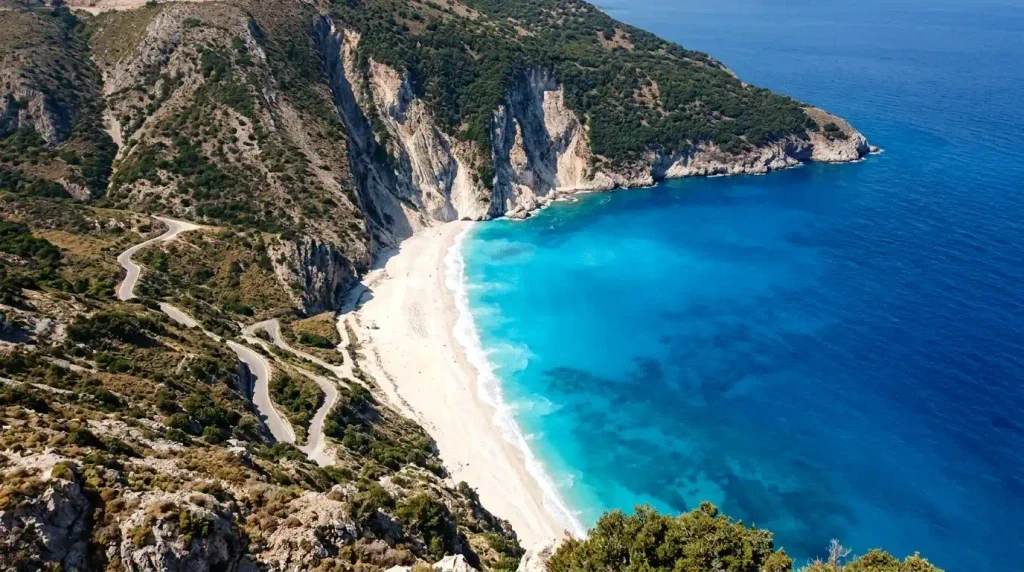
Myrtos sits on the northwest coast between steep cliffs. The white-pebble beach stretches in a crescent with water that shifts through bright turquoise shades. The view from the cliff-top parking area is one of the most photographed on the island. Access involves a steep road down; parking fills by mid-morning in August.
The beach has limited shade and one small snack bar. Swells can be strong, so it suits confident swimmers more than small children. Arrive early or late for better light and fewer people. The drive from Argostoli takes about 45 minutes. It remains the signature beach for scenery even if not the most comfortable for a full day.
Family-Friendly Beaches: Skala and Makris Gialos
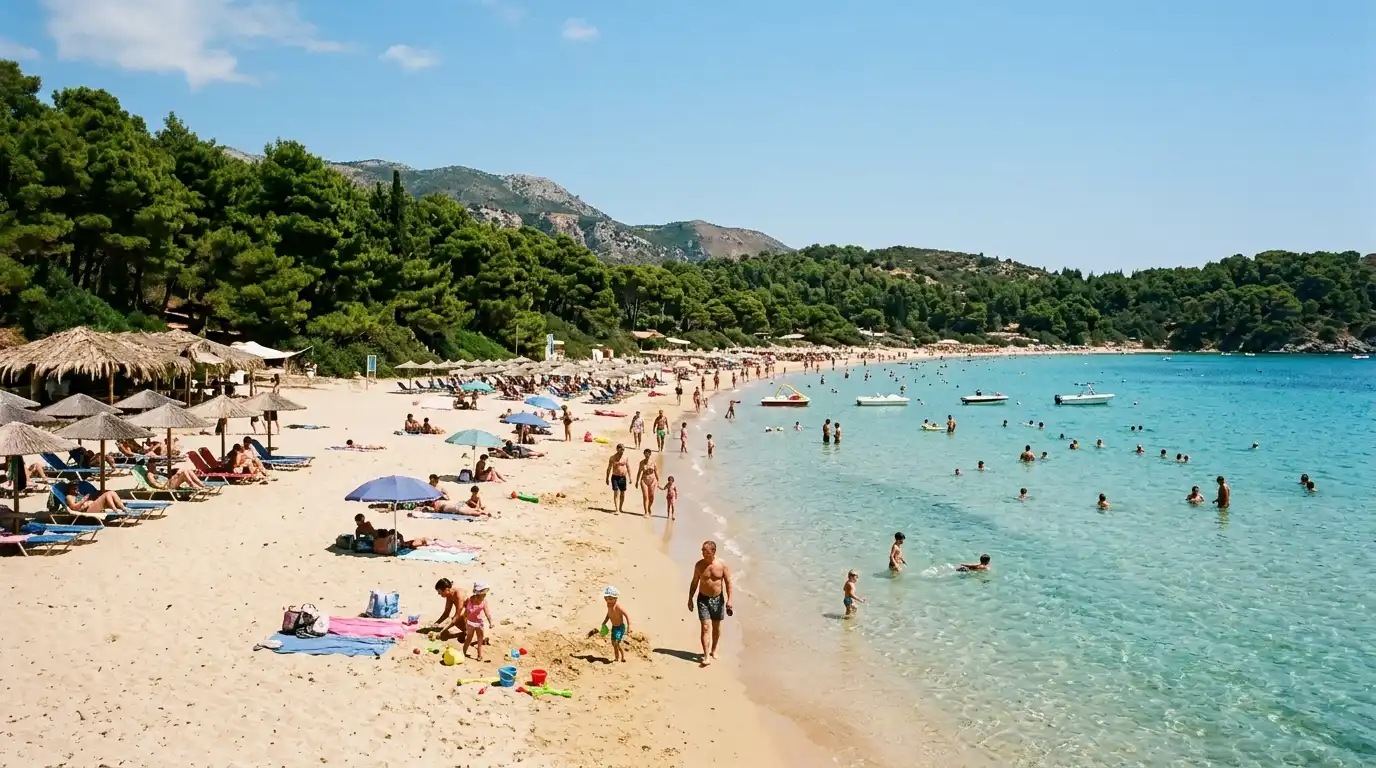
Skala on the southeast coast offers a long sandy beach with gently shelving water, pine trees for shade, and nearby tavernas. It works well for children and stays relatively calm. Makris Gialos and the neighboring Platis Gialos near Lassi provide organized loungers, watersports, and easy access from the main resort area. Both have beach bars and restaurants within short walks.
These beaches suit visitors who want a full day without long drives. Parking is simpler than at Myrtos. The water stays warm through summer. Combine a morning here with an afternoon drive to a quieter cove. Related European beach planning appears in best beaches in Italy.
Quieter and Scenic Alternatives
Foki Beach, a short drive south of Fiskardo on the northeast coast, offers a small pebble cove with natural shade from pine and cypress trees. It sees fewer visitors than Myrtos. Petani on the west coast delivers dramatic cliffs and clear water with strong sunsets; the access road is steep and winding. Antisamos near Sami is popular and photogenic but busier due to its film connection.
Xi Beach stands out for its reddish clay sand against white cliffs and shallow warm water ideal for paddling. Emblisi and other small coves reward those willing to walk or take a boat. These options reduce crowds while keeping the classic Ionian colors. Distances stay manageable with a rental car.
How to Reach and Get Around the Beaches
A rental car gives the most flexibility. Main roads are paved, though some beach access tracks are steep. Public buses serve a few popular beaches in summer but run limited schedules. Boat tours from Argostoli, Fiskardo, or Sami stop at multiple coves and include swim time.
Parking at Myrtos and other cliff beaches fills early; have a backup plan. Wear sturdy shoes for pebble beaches and bring water shoes if preferred. Sun loungers at organized beaches cost a few euros per set. Most beaches have basic facilities or nearby tavernas in season.
Best Time to Visit and Practical Tips
June and September balance warm water with smaller crowds. July and August are hottest and busiest. Water temperatures support swimming from late May through October. Pack reef-safe sunscreen, a hat, and water; shade is limited at many pebble beaches.
The island has no large waves for surfing at most spots, though some west-coast beaches see stronger swells. Snorkeling is good at calmer coves with rocky edges. Check local conditions for any temporary closures. Pair beach days with the best beaches in Bermuda style of planning if comparing island destinations, or focus on Kefalonia’s own range.
Sample Beach Day Itineraries
A northwest day starts with an early visit to Myrtos, then moves to Foki or a Fiskardo lunch. A southeast day covers Skala in the morning and a drive to Xi or Lourdata later. West-coast visitors head to Petani for sunset after a morning at a calmer beach. Boat trips combine several stops without driving between each one.
Allow 30 to 60 minutes of driving between major areas. Fuel stations are available in towns. The compact size of the island makes multi-beach days realistic. Most visitors spend three to five nights and mix beach time with village visits.
FAQs
What are the best beaches in Kefalonia?
Myrtos ranks as the most famous for scenery. Skala and Makris Gialos suit families with easier swimming and facilities. Foki, Petani, and Xi offer quieter or distinctive alternatives with clear water and fewer crowds in 2026.
Is Myrtos Beach worth visiting?
Yes for the dramatic view and turquoise water. It has limited shade and can have stronger swells, so it works better for a shorter visit than a full relaxed day. Arrive early to secure parking.
Which Kefalonia beach is best for families?
Skala and the Makris Gialos / Platis Gialos area near Lassi provide gentle entry, sand or fine pebbles, shade options, and nearby food. They are easier for children than the cliff-backed coves.
Do I need a car to visit the beaches?
A rental car makes reaching the best beaches much simpler. Buses cover a few popular spots in summer but with limited frequency. Boat tours offer another way to see multiple coves without driving.
When is the best time to visit Kefalonia beaches?
June and September give warm water with smaller crowds. July and August are peak and busiest. May and October still allow swimming on calmer days with easier access and parking.
Are the beaches in Kefalonia sandy or pebbly?
Many famous ones such as Myrtos are white pebble. Skala and parts of the Lassi area have more sand. Xi has distinctive reddish clay sand. Water shoes help on pebble beaches.
Is there parking at Myrtos Beach?
Yes, but it fills early in high season. The main area sits above the beach with a steep walk or drive down. Have an alternative beach in mind if the lot is full by mid-morning.
Can I snorkel at Kefalonia beaches?
Yes at calmer coves with rocky edges such as Emblisi or parts of the northeast coast. Visibility is generally good. Stick to protected spots on windier days when west-coast swells increase.
Are sun loungers available?
Organized beaches such as Makris Gialos and Skala offer loungers and umbrellas for a fee. Wilder beaches like Myrtos have little or no rental equipment. Bring your own shade if needed.
How far are the main beaches from Argostoli?
Myrtos is about 45 minutes north. Skala is roughly 40 to 50 minutes southeast. Lassi beaches sit closer, within 15 to 20 minutes. Driving times vary with traffic in peak season.
What should I bring to Kefalonia beaches?
Sunscreen, water, a hat, and water shoes for pebbles. A light cover-up and cash for tavernas or loungers help. Most beaches have basic facilities in season but remote ones do not.
Are there boat trips to the beaches?
Yes. Tours depart from several harbors and stop at multiple coves for swimming. They provide an easy way to reach spots with limited road access and often include time at quieter locations.