Antigua Guatemala Attractions: Top Places to Visit in 2026
Antigua Guatemala attractions include colonial ruins, volcano views, and chocolate workshops in a UNESCO World Heritage city. Visitors explore the Santa Catalina Arch, La Merced Church, and Cerro de la Cruz for free or low-cost entry in local Quetzales. Most sites sit within a 2-kilometre walk of the central park.
Central Park and Colonial Architecture
The main square, Parque Central, anchors the city with the Cathedral of San José and the Palace of the Captains General. Built in the 16th and 17th centuries, these structures show Spanish colonial style mixed with earthquake damage. Entry to the square is free, and the area fills with street vendors selling textiles and coffee in the mornings.
Walk the cobblestone streets around the park to see pastel-coloured houses and iron balconies. Distances between major sites average 500 metres. Local buses and taxis cost 10-20 Quetzales for short trips if feet get tired. Many travellers combine this with a stop at nearby cafes serving traditional Guatemalan breakfasts.
For more colonial towns in the region, check old towns in Europe for comparison on preserved historic centres. Antigua’s compact layout makes it easy to cover the core attractions in one day without a car.
Santa Catalina Arch and Iconic Views
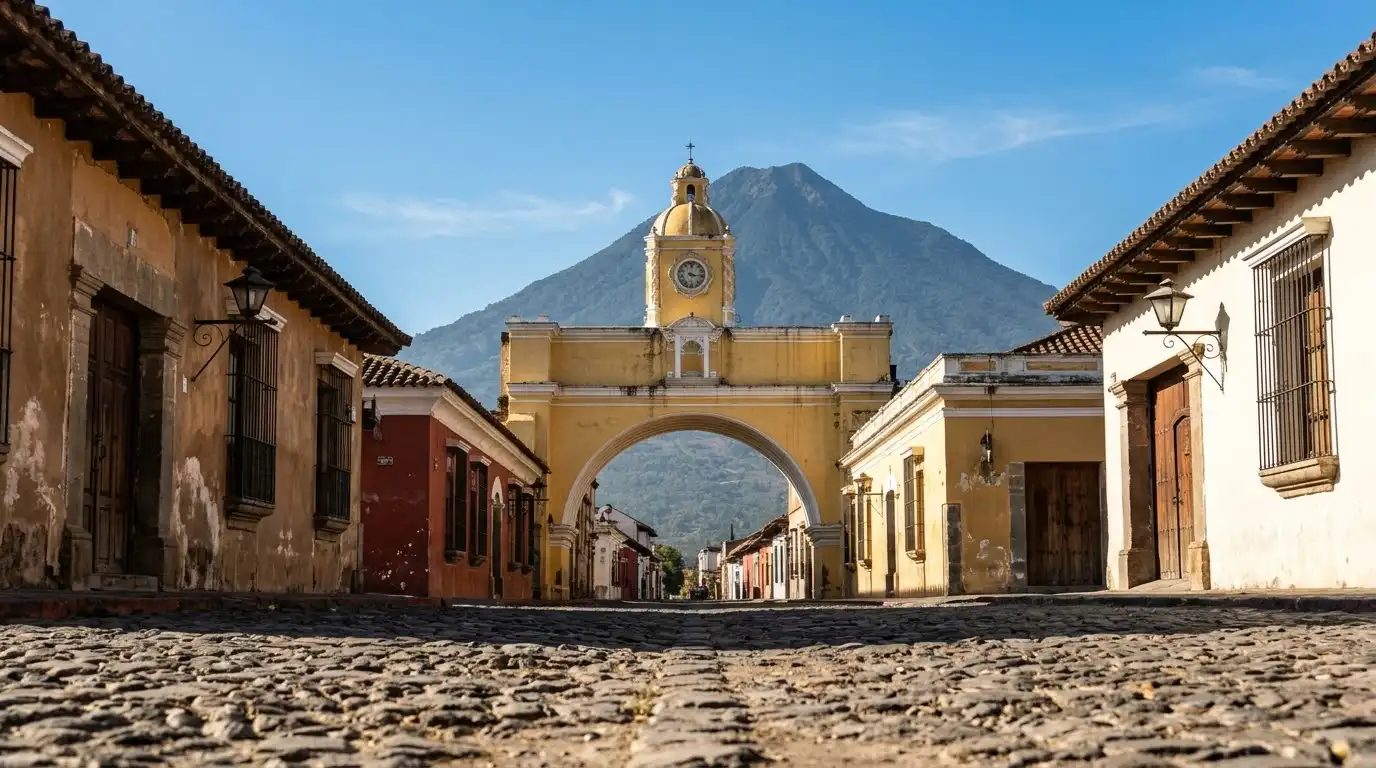
The yellow Santa Catalina Arch, built in the 17th century for nuns to cross between convents, frames Volcán de Agua perfectly. It stands on 5a Avenida Norte and draws photographers all day. The arch itself is free to view from the street, with the best light in late afternoon.
Climb the nearby Cerro de la Cruz for a full panorama of the city and three volcanoes. The short hike takes 20-30 minutes up a paved path. Entry is free, and the viewpoint stays open from dawn to dusk. On clear days the view includes Volcán Fuego’s occasional smoke plumes.
This spot pairs well with visits to other Central American sites. Travellers heading further can read about Stingray City Antigua for a different island experience, though that refers to a Caribbean location. In Guatemala, the arch remains the top photo stop.
Church Ruins and Monasteries
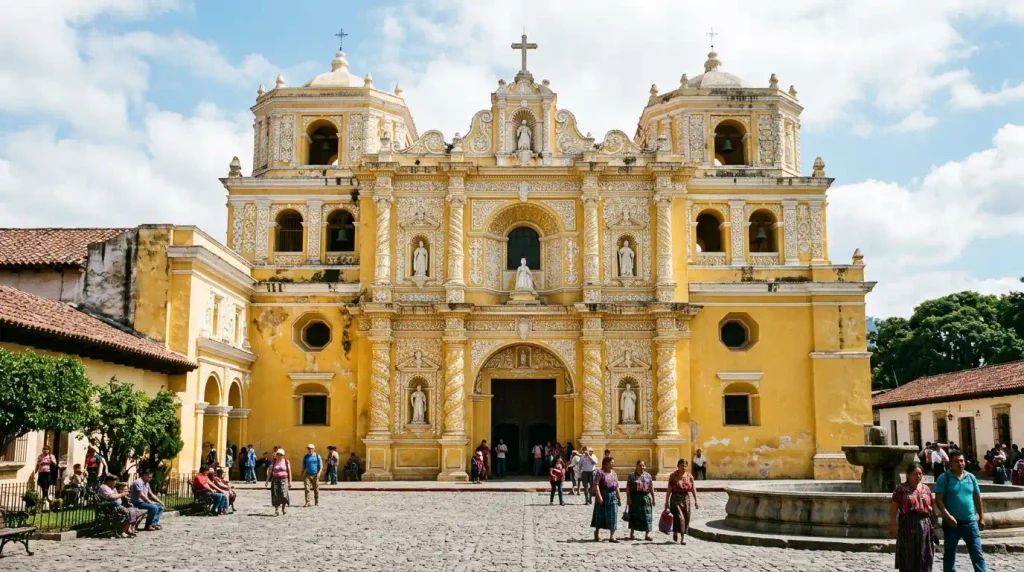
Earthquake ruins define Antigua. Iglesia La Merced features a bright yellow baroque facade and free entry to the main church. The adjacent ruins of the convent cost about 40 Quetzales and show surviving cloisters and fountains.
Las Capuchinas convent ruins offer underground chambers and cost around 40-50 Quetzales. San Francisco Church holds the tomb of Hermano Pedro and remains an active site with free access to the main nave. Most ruins open from 8:00 to 17:00 daily.
Compare these to European historic sites by looking at best castles to visit in England. Both show layered history from different eras. In Antigua, the ruins sit 1-2 kilometres from the centre and take under an hour each.
Volcano Hikes and Outdoor Activities
Volcán Pacaya offers a half-day hike with lava viewing when active. Tours leave Antigua around 6:00 and return by 14:00, covering 5-6 kilometres of trail. Costs run 200-400 Quetzales including transport and guide. No prior experience is needed for the standard route.
Acatenango provides overnight options to watch Fuego erupt from a campsite. The full hike covers 12-15 kilometres round trip and takes 10-12 hours. Guides charge 400-600 Quetzales. Weather can change quickly, so pack layers and check conditions the day before.
These outdoor options contrast with city-based trips. See Hatcher Pass hikes for another mountain experience in a different climate. In Guatemala, volcano tours include gear rental for 20-50 Quetzales extra.
Chocolate Workshops and Cultural Experiences
Bean-to-bar chocolate classes last 2-3 hours and cost 150-250 Quetzales. Participants roast cacao, grind beans, and make their own bars. Locations sit within 1 kilometre of the centre. Mayan methods form the base of most sessions.
Spanish schools offer immersion programs with homestays. Weekly rates start around 1,500-2,500 Quetzales including classes and lodging. Cultural centres host weaving demonstrations where visitors watch backstrap loom techniques passed through generations.
Food lovers can explore related guides like traditional Polish food to see how other cultures present local dishes. In Antigua, workshops often include samples of hot chocolate prepared the traditional way.
Markets, Crafts, and Local Life
The municipal market sells fresh produce, textiles, and coffee. It opens early and stays busy until mid-afternoon. Prices for handmade weavings range from 50-200 Quetzales depending on size and design. Bargaining is common but polite.
Artisan shops line the streets near the arch. Jade jewellery and pottery make popular souvenirs. Many stores open from 9:00 to 18:00. Street food stands serve pupusas and grilled corn for under 20 Quetzales.
For broader travel planning, check bucket list travel ideas. Antigua’s market scene gives a direct look at daily Guatemalan life without leaving the historic zone.
Practical Tips for Visiting Antigua Guatemala Attractions
The best months run from November to April for dry weather. Altitude sits around 1,500 metres, so evenings cool to 10-15°C. Carry a light jacket. Entry fees stay low, with most sites under 60 Quetzales. The city uses Guatemalan Quetzales as local currency.
Public chicken buses connect to Guatemala City in about 1 hour for 10-15 Quetzales. Private shuttles cost more but run on schedule. Walk most attractions; the historic centre spans less than 2 square kilometres. Stay hydrated and use sunscreen even on cloudy days.
Distances between key sites remain short. From the arch to La Merced is under 800 metres. Combine visits in the morning before crowds build. Many travellers spend 2-3 days to cover the main Antigua Guatemala attractions plus one volcano day.
| Attraction | Entry Cost | Time Needed | Distance from Centre |
|---|---|---|---|
| Santa Catalina Arch | Free | 30 min | 500 m |
| La Merced Church | Free / 40 Q ruins | 45 min | 600 m |
| Cerro de la Cruz | Free | 1 hour | 1.5 km |
| Pacaya Volcano | 200-400 Q | 6-8 hours | Tour departure |
| Chocolate Workshop | 150-250 Q | 2-3 hours | Under 1 km |
FAQs
antigua guatemala attractions
The main Antigua Guatemala attractions are the Santa Catalina Arch, colonial church ruins like La Merced, Cerro de la Cruz viewpoint, and nearby volcano hikes. Most sit within walking distance of the central park. Entry costs stay low, often free or under 60 Quetzales. Visitors typically need 2-3 days to see the highlights plus one outdoor activity.
How much time do you need in Antigua Guatemala?
Two full days cover the central ruins, arch, and a short hike. Add a third day for a volcano tour to Pacaya or Acatenango. The compact centre means little time is lost on transport. Many travellers stay longer for Spanish classes or relaxation.
Is Antigua Guatemala safe for tourists?
The historic centre is generally safe during the day with regular police presence. Stick to well-lit main streets at night. Use registered taxis or walk in groups after dark. Petty theft can occur in crowded markets, so keep valuables secure.
What is the best time to visit Antigua?
Dry season from November to April offers clear views of the volcanoes and comfortable walking weather. Rain falls more from May to October. Even in wet months, mornings often stay dry enough for outdoor sites. Crowds peak around Holy Week in spring.
How do you get to Antigua from Guatemala City?
Chicken buses leave from the terminal every 15-30 minutes and take about 1 hour for 10-15 Quetzales. Private shuttles cost 100-150 Quetzales and pick up from hotels. The drive covers roughly 40 kilometres. Taxis are available but more expensive for the full trip.
Are the church ruins worth visiting?
Yes, the ruins show the impact of 18th-century earthquakes that led to the capital moving. La Merced and Las Capuchinas stand out for their architecture and history. Entry fees are low, and most visits take under an hour. They sit close together for easy combining.
Can you hike volcanoes without a guide?
Guides are strongly recommended and often required for safety on Pacaya and Acatenango. Trails can be steep and weather changes fast. Tours include transport from Antigua and basic gear. Independent hiking is possible on some routes but less advised for first-timers.
What currency is used in Antigua?
Guatemalan Quetzales (GTQ) are the local currency. US dollars are accepted in some tourist spots but change is given in Quetzales. ATMs are available in the centre. Credit cards work at larger hotels and restaurants. Small cash is useful for markets and entry fees.
Is Antigua walkable?
Yes, the historic centre is very walkable. Major attractions lie within 1-2 kilometres of the central park. Cobblestone streets can be uneven, so sturdy shoes help. Taxis and tuk-tuks are available for longer distances or tired feet. Most visitors walk the core area easily.
What should you pack for Antigua?
Bring layers for cool evenings, comfortable walking shoes, sunscreen, and a light rain jacket. The altitude means sun feels stronger. A reusable water bottle is useful. Modest clothing is appreciated at churches. No special gear is needed beyond standard travel items.
Are there free things to do in Antigua?
Yes, Parque Central, the Santa Catalina Arch from the street, and Cerro de la Cruz are free. Walking the colonial streets costs nothing. Many church naves allow free entry. Markets can be browsed without buying. These cover a full day easily.
How expensive is food in Antigua?
Local meals at markets or simple restaurants cost 30-80 Quetzales. Tourist restaurants run 100-200 Quetzales for a main dish. Street snacks stay under 20 Quetzales. Coffee is widely available and inexpensive. Overall costs remain lower than many European cities.