
Things to Do in Varanasi:Guide to Ghats, Temples, and the Ganges
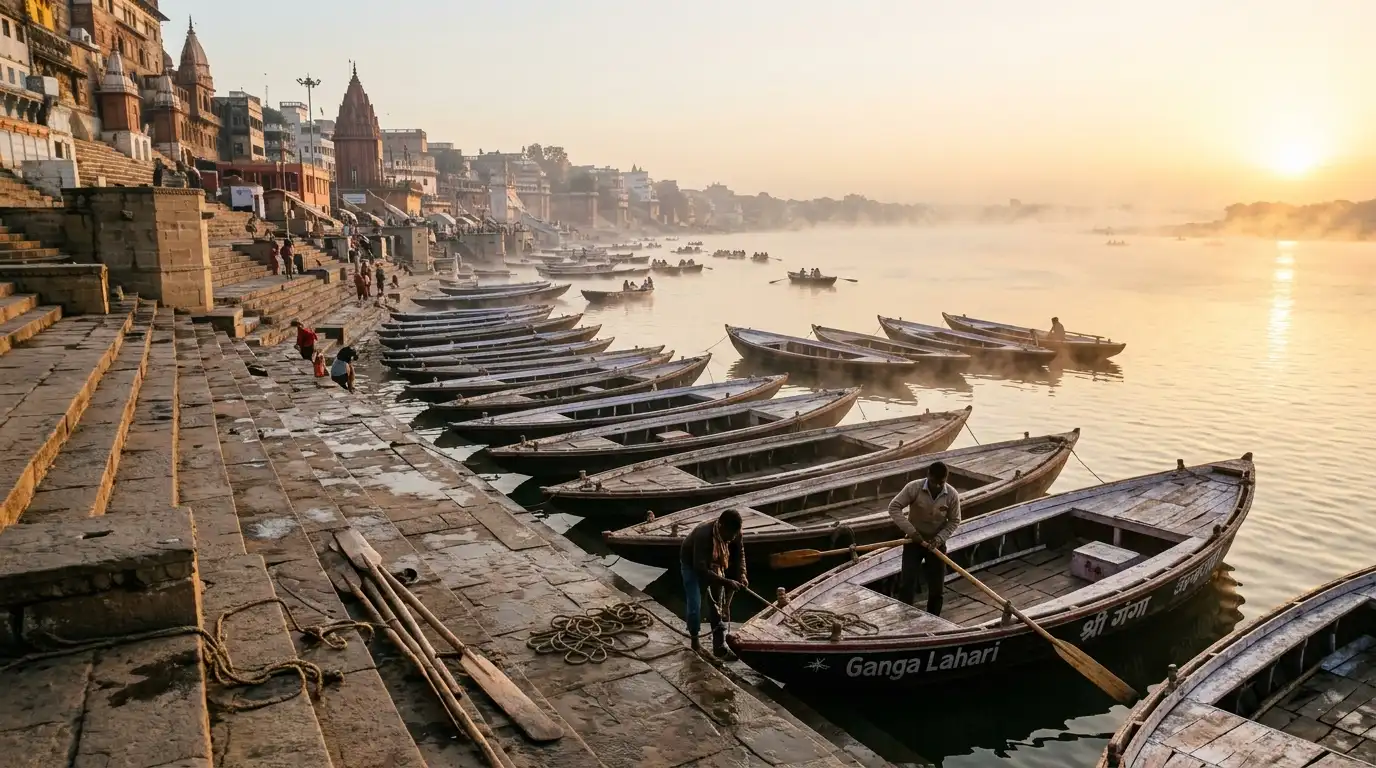
The best things to do in Varanasi are walking along the ghats at sunrise, taking a boat ride on the Ganges, watching the evening Ganga Aarti at Dashashwamedh Ghat, and visiting Kashi Vishwanath Temple. Add a half day trip to Sarnath and you have covered the heart of what makes this city one of the most talked about places to visit in India.
Varanasi does not work like most tourist cities. There is no single monument you tick off and move on from. It is a place you walk through slowly, and that confuses a lot of first time visitors who show up expecting a checklist. This guide breaks Varanasi down the way an experienced traveler actually plans it, with real costs, real timings, and honest warnings about what to skip.
What Is Varanasi Famous For?
Varanasi, also called Kashi or Banaras, is one of the oldest continuously inhabited cities in the world and the most sacred city in Hinduism. It sits on the western bank of the Ganges River in Uttar Pradesh, and Hindus believe dying here breaks the cycle of death and rebirth. The city is also known as the City of Temples, with well over a thousand shrines packed into its old town, plus a long history of Banarasi silk weaving that still supports thousands of local families.
Locals often describe Varanasi as a place where life and death sit next to each other in public view. A wedding procession can pass a funeral procession on the same lane within minutes. That contrast is part of why so many travelers say Varanasi changed how they think about the trip itself.
Which Ghats in Varanasi Should You Actually Visit?
Varanasi has around 84 ghats, and no traveler needs to see them all. Trying to cover every one in a single trip is a common mistake first time visitors make, and it usually leads to exhaustion instead of enjoyment.
Here is where to focus your time:
- Dashashwamedh Ghat – the busiest and most central ghat, best known for the nightly Ganga Aarti ceremony
- Assi Ghat – quieter, popular with long term travelers and students, with a peaceful sunrise prayer
- Kedar Ghat – colorful steps and one of the better river views, favored by photographers
- Manikarnika Ghat – the main cremation ghat, viewed respectfully from a distance
- Harishchandra Ghat – the second cremation site, smaller and less crowded than Manikarnika
- Darbhanga Ghat – home to the Brijrama Palace, once a family fort, now a heritage hotel
Travelers consistently find that visiting three or four ghats properly, rather than rushing past a dozen, gives a far richer sense of the city. Kedar Ghat and Assi Ghat in particular are undersold in most guides, since they get skipped in favor of the crowded main ghat.
What Happens at the Burning Ghats and Is It Okay to Watch?
Manikarnika Ghat and Harishchandra Ghat are active cremation grounds where bodies are cremated in full public view, day and night. Hindus believe cremation here, followed by scattering the ashes in the Ganges, frees the soul from rebirth. Around a hundred cremations reportedly take place daily at Manikarnika alone.
Tourists are allowed to watch from a respectful distance, and it is considered acceptable as long as you stay quiet and avoid intruding on grieving families. Photography is strictly forbidden at the ghats themselves, and this rule is taken seriously.
A common mistake first timers make is accepting help from a stranger who claims to work for a hospice or charity near the cremation ghats and asks for a donation. This is a well documented scam. A polite but firm “no thank you” is enough, and it is safest to walk with a licensed guide or simply observe from the public steps without engaging anyone offering unsolicited help.
What Time Is the Ganga Aarti Ceremony and Where Do You Watch It?
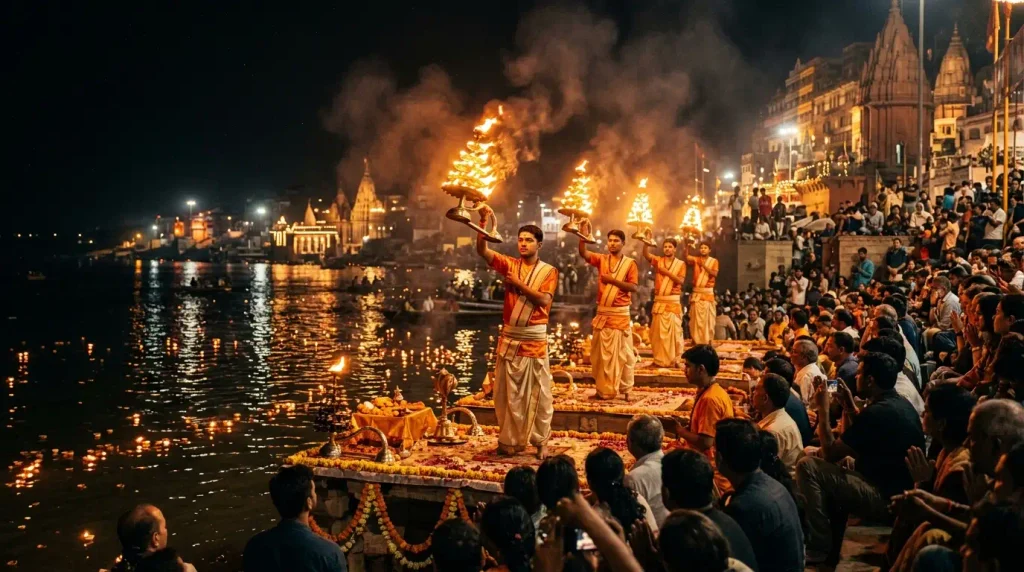
The evening Ganga Aarti at Dashashwamedh Ghat is the single most photographed ritual in Varanasi. It usually begins between 6 PM and 7 PM depending on the season, since timing shifts slightly with sunset, and runs for about 45 minutes. A row of young priests perform synchronized movements with large brass lamps called deepas, accompanied by bells, drums, and chanting, facing the river as an offering to the goddess Ganga.
You can watch it two ways. Sitting on the steps gets you close to the stage but surrounded by a thick crowd, especially from November through February. Watching from a boat on the river gives a wider view and photos with the reflected lamp light on the water, though boats do jostle for position and it can feel further from the actual action.
Most visitors say the best plan is to arrive at the ghat steps by 5:30 PM to grab a decent seated spot, or book a boat by around 5 PM if you prefer the water view. Arriving right at 6 PM usually means standing at the back.
There is also a quieter morning aarti at Assi Ghat, starting close to sunrise around 5 to 5:30 AM. It is far less crowded and gives a completely different, gentler introduction to the same ritual style.
How Much Does a Boat Ride on the Ganges Cost in 2026?
Boat pricing in Varanasi varies a lot depending on the season, the time of day, and how well you negotiate, so treat these as realistic ranges rather than fixed numbers.
| Boat Ride Type | Typical Price Range (2026) | Duration |
| Shared sunrise boat (per person) | 150 to 300 INR | 45 to 60 minutes |
| Private sunrise boat (2 people) | 400 to 700 INR | 45 to 60 minutes |
| Evening Aarti viewing boat (shared) | 200 to 600 INR per person | 30 to 45 minutes |
| Private boat, longer river tour | 800 to 1,500 INR | 1.5 to 2 hours |
Expect to pay around 200 INR per person for a decent shared sunrise ride, and always agree on the price before boarding rather than after. Boatmen who tell you it is “the perfect time for photos” no matter the hour are using a standard sales line, not a genuine tip, so don’t let it rush your decision.
What Temples Should You Visit in Varanasi?
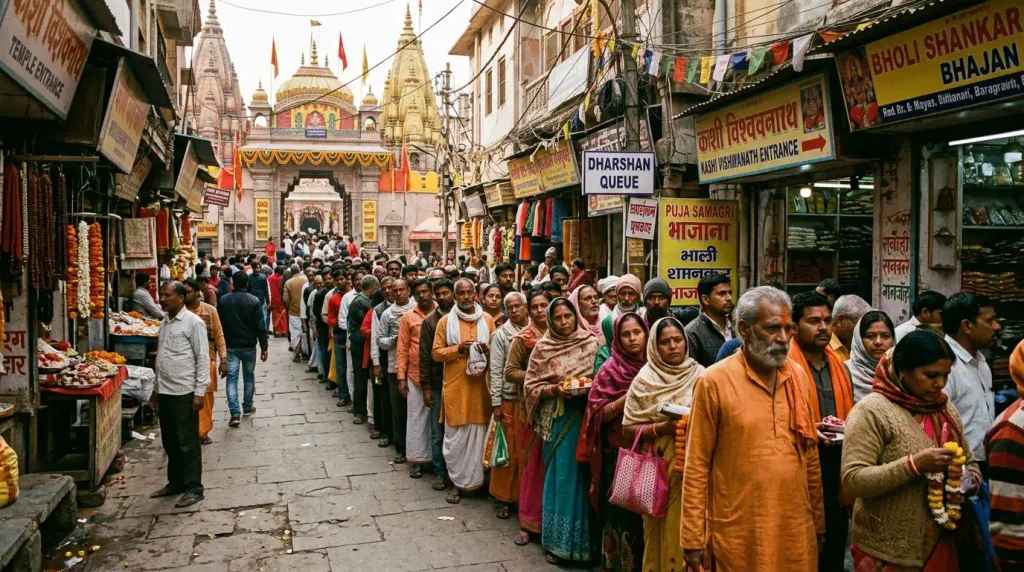
Kashi Vishwanath Temple, dedicated to Lord Shiva, is Varanasi’s most important religious site and one of twelve Jyotirlinga shrines in India. Security is tight, entry involves a security check, and non-Hindus can enter but should expect long queues, especially during Shiva-related festivals.
A short walk away is the smaller Annapurna Devi Mandir, dedicated to the goddess of food and nourishment. Durga Kund Mandir, painted bright red and nicknamed the Monkey Temple, sits a short walk from Assi Ghat and is quieter and more relaxed than Kashi Vishwanath. Tulsi Manas Temple welcomes visitors of all faiths and is worth adding if you want an easy, no-queue temple experience.
Is Varanasi Worth Visiting for Couples?
Varanasi is not a typical romantic getaway, but it works well for couples who enjoy meaningful, slower travel over resort style relaxation. A sunrise boat ride together, watching the mist lift off the Ganges, is genuinely one of the more intimate travel moments available in India, and it costs very little compared to similar experiences elsewhere.
Quiet stretches of Assi Ghat in the late afternoon, rooftop cafes overlooking the river near the old town, and a slow walk through the back lanes behind Dashashwamedh Ghat all give couples space to talk without being swallowed by crowds. The honest downside is that the main ghat area during aarti time is packed and not conducive to a quiet moment, so couples wanting intimacy should lean toward the quieter ghats and off-peak hours.
Is Varanasi Good for a Family Trip?
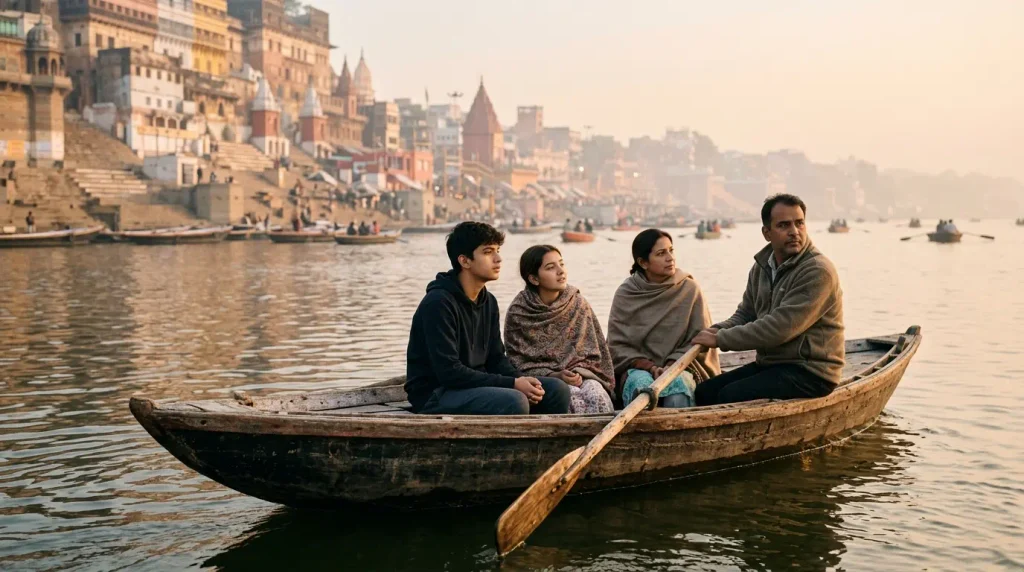
Families traveling with older children or teens tend to get the most out of Varanasi, since the city rewards curiosity and cultural questions. The sunrise boat ride works well for families because it is calm, seated, and visually striking without being overwhelming.
The cremation ghats are best skipped or handled with care for younger children, since the sights can be intense and are not something every parent wants to explain on the spot. Sarnath makes an excellent family add-on because it swaps intensity for open green space, ancient ruins to explore, and a museum that even kids tend to find interesting because of the giant stone Lion Capital.
How Do You Get to Sarnath From Varanasi and Is It Worth It?
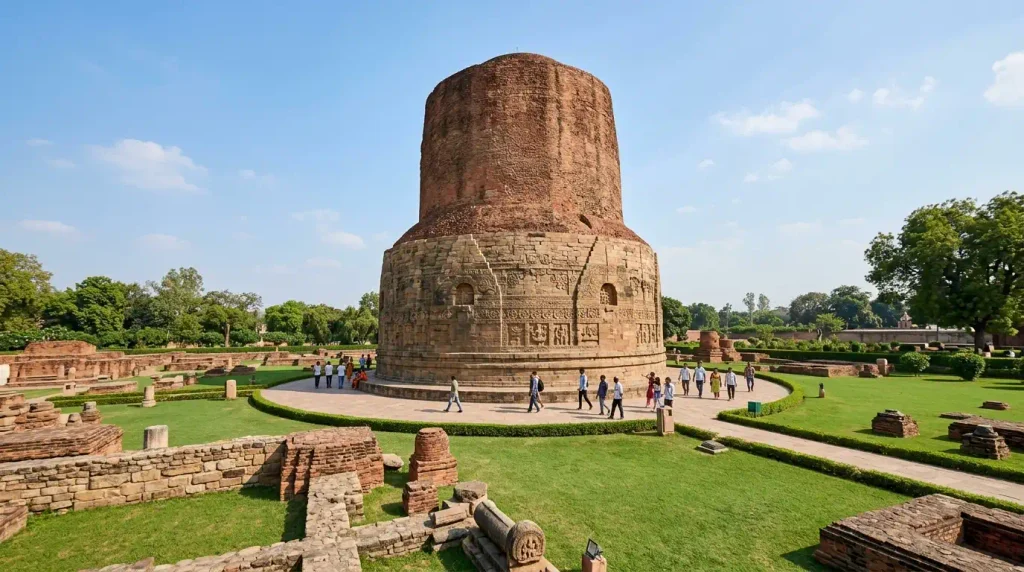
Sarnath sits about 8 to 10 kilometers from central Varanasi, which usually translates to a 30 to 40 minute tuk tuk or taxi ride depending on traffic. It is one of Buddhism’s four holiest sites, marking the spot where Buddha delivered his first sermon after enlightenment.
The main draws are the Dhamek Stupa, a massive brick structure with faint original carvings still visible, the modern Mulagandha Kuti Vihara monastery with its Bodhi tree sapling, and the Sarnath Archaeological Museum, home to the original Ashoka Lion Capital that inspired India’s national emblem. Entry to the stupa complex and museum involves a small ticket fee, generally in the range of a few hundred rupees for foreign visitors, and it varies by category, so check current signage on arrival rather than relying on an old number.
Sarnath is worth it if you have at least half a day free in Varanasi. It offers a complete change of pace from the intensity of the ghats, with open lawns, fewer touts, and a slower rhythm that many travelers say they needed after a full morning on the river.
How Many Days Do You Need in Varanasi?
| Duration | What You Can Realistically Cover |
| 1 Day | Sunrise boat ride, Dashashwamedh Ghat walk, Kashi Vishwanath Temple, evening Ganga Aarti |
| 2 Days | Day 1 as above, plus Day 2 for Sarnath excursion, Assi Ghat morning aarti, back lane exploration |
| 3 Days | Days 1 and 2 as above, plus a slower third day for Kedar Ghat, Durga Kund Mandir, local food stops, and shopping for Banarasi silk |
Two full days is the sweet spot for most travelers, long enough to see the essentials without rushing the Ganga Aarti or Sarnath trip into the same exhausting day. Three days lets you slow down and catch the ghats that get skipped by nearly everyone else, which is often where the more memorable, less staged moments happen.
When Is the Best Time to Visit Varanasi?
October through March is the best window, with cooler, drier weather that makes long ghat walks and early boat rides genuinely enjoyable. December and January can get surprisingly cold in the early mornings, so pack a layer for the sunrise boat ride.
April through June turns brutal, with daytime temperatures regularly climbing above 40 degrees Celsius, making midday sightseeing genuinely uncomfortable and sometimes unsafe. July through September brings the monsoon, adding humidity, sudden rain, and occasionally rising river levels that can affect access to lower ghat steps.
Festival dates like Dev Deepawali, Mahashivratri, and Holi bring incredible energy but also the heaviest crowds and highest hotel prices of the year, so decide in advance whether you want to be part of that intensity or avoid it.
Is Varanasi Safe for Tourists?
Varanasi is generally safe, but it demands more street awareness than a typical tourist city. The most common issues are not violent crime but persistent scams: fake guides near Manikarnika Ghat asking for cremation donations, strangers who massage your hand uninvited and then demand payment, and boat or tuk tuk drivers quoting inflated first prices to obvious tourists.
A simple rule that experienced travelers rely on works well here: agree on any price before the ride or service starts, decline unsolicited offers politely but firmly, and keep valuables secured in crowded ghat areas during the evening aarti crush. Solo female travelers should take extra care during major festival periods when crowds and alcohol consumption both spike, and avoid poorly lit back lanes after dark.
What Should You Eat in Varanasi?
Varanasi’s food scene deserves as much attention as its temples. Litti Chokha, roasted dough balls stuffed with spiced gram flour and served with mashed vegetables, is the signature regional dish and worth seeking out at a proper local stall rather than a hotel menu. Kachori sabzi, a fried bread with spicy potato curry, is a common breakfast choice near the ghats.
Banarasi paan, a betel leaf preparation stuffed with areca nut and sweet fillings, is practically a local institution, and trying one at a well known paan shop is a small but memorable ritual in itself. The Blue Lassi shop, tucked into a lane near Kashi Vishwanath Temple, has served thick fruit lassis to travelers for decades and remains a reliable stop.
Most street food in Varanasi is vegetarian, which makes it easier on sensitive stomachs, but stick to stalls with high customer turnover and freshly cooked food rather than items sitting out, and carry bottled or filtered water rather than relying on tap sources.
Final Thoughts
Varanasi rewards travelers who slow down instead of racing through a checklist. The ghats, the Ganga Aarti, Kashi Vishwanath Temple, and a Sarnath side trip together give you the full picture of why this city has drawn pilgrims and travelers for thousands of years. Plan around the October to March window, budget realistically for boats and tuk tuks, and stay alert to common scams, and Varanasi will likely become one of the most vivid places to visit in India for you.
FAQs
Is Varanasi safe for tourists?
Yes, with normal city precautions. The main risks are scams and overcharging rather than violent crime, so agree on prices upfront and avoid unsolicited guides near the cremation ghats.
How many days are enough for Varanasi?
Two full days cover the essentials, including a boat ride, the Ganga Aarti, temple visits, and Sarnath. Three days allows a slower, deeper visit.
What is Varanasi famous for?
Its status as Hinduism’s holiest city, the ghats along the River Ganga, the nightly Ganga Aarti, ancient temples, and Banarasi silk weaving.
Is Varanasi worth visiting?
Yes, for travelers seeking a culturally immersive experience rather than a relaxing holiday. It is intense, but consistently described as unforgettable.
What is the best time to visit Varanasi?
October to March, thanks to cooler and drier weather. April to June is extremely hot, and July to September brings monsoon rain.
How much does a boat ride on the Ganges cost?
Expect roughly 150 to 300 INR per person for a shared sunrise ride, and more for private boats or evening aarti viewing.
Can non-Hindus enter Kashi Vishwanath Temple?
Yes, non-Hindus can enter after a security check, though queues can be long, especially during major Shiva festivals.
Is it okay to watch the cremation ghats as a tourist?
Yes, if done respectfully from a distance, with no photography and no engagement with strangers requesting donations.
How do I get from Varanasi to Sarnath?
By tuk tuk or taxi, roughly 30 to 40 minutes covering 8 to 10 kilometers, or through a half day guided tour.
Which ghat is best for the evening Ganga Aarti, boat or steps?
Steps give a closer view of the ceremony itself, while a boat offers a wider photo angle across the river. Arrive early either way to secure a good spot.
Is Varanasi good for couples?
Yes, particularly the sunrise boat ride and quieter ghats like Assi Ghat, though the main ghat during aarti time is too crowded for an intimate moment.
Is 2 days enough to cover Varanasi and Sarnath together?
Yes, two days comfortably fit the main ghats, Ganga Aarti, temple visits, and a half day Sarnath trip without feeling rushed.


