
How Long to Boil Potatoes? Exact Times for Every Type and Cut
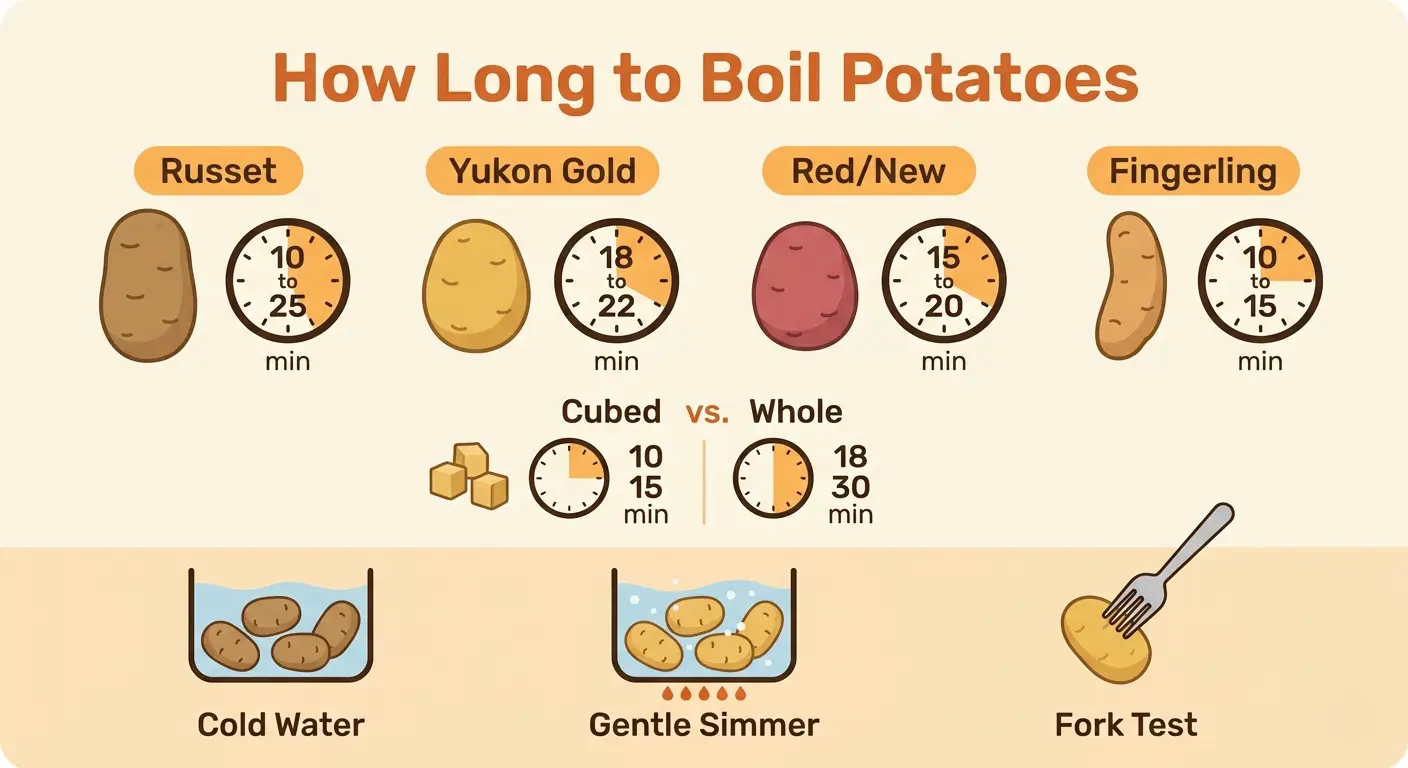
How long to boil potatoes? Most potatoes take 10 to 30 minutes depending on size and type. Small cubed potatoes turn fork tender in about 10 minutes while whole russets or yukon golds need closer to 30. Get the timing wrong and you end up with a hard center or a mushy mess.
Knowing the right time is not just about taste either. It saves you from wasting potatoes on a holiday dinner or ruining a weekday side dish in front of hungry kids. Here is exactly how long to boil potatoes for every common type, cut and recipe you might be making in 2026.
How Do You Boil Potatoes Step by Step?
Boiling potatoes the right way is simple once you know the order of steps.
- Scrub the potatoes under running water, even if you plan to peel them later.
- Place them in a large pot or saucepan and cover with cold water by about 1 inch.
- Bring the water to a boil, then reduce the heat to a gentle simmer.
- Stir once or twice as the water heats so potatoes near the bottom do not overcook first.
- Test with a fork, paring knife, cake tester or skewer near the end of cooking.
- Drain into a colander as soon as a fork slides in with no resistance.
Starting with cold water matters more than most people think. Potatoes dropped into already boiling water cook unevenly because the outside softens long before the center catches up.
How Long to Boil Potatoes by Type
Potato type changes everything about boiling time because starchy and waxy potatoes behave differently in water.
- Russet potatoes (starchy): 10 to 15 minutes cubed or 20 to 25 minutes whole. Best for fluffy mashed potatoes but they overcook fast, so check early.
- Yukon Gold potatoes (all purpose): 18 to 22 minutes whole. Purple potatoes cook about the same way. Both hold their shape well and turn creamy when mashed.
- Red, new and fingerling potatoes (waxy): 15 to 20 minutes whole, or 10 to 15 minutes for fingerlings. These rarely fall apart, which makes them the top pick for potato salad.
If you remember nothing else from this section, remember this. Starchy potatoes break down faster, so pull them the moment a fork slides in easily.
Whole Potatoes or Cubed? Which Cooks Faster?
Cubed potatoes always cook faster than whole ones. Cutting potatoes into roughly 1 and a half inch cubes increases the surface area touching the hot water so heat reaches the center sooner.
- Cubed or diced potatoes: 10 to 15 minutes.
- Whole medium potatoes: 18 to 22 minutes.
- Whole large potatoes: 25 to 30 minutes.
Keep your pieces a similar size. Uneven cubes mean some pieces turn mushy while others stay hard, and that is one of the most common complaints about boiling potatoes at home.
Should You Peel Potatoes Before Boiling?
It depends on what you are making. Boiling unpeeled potatoes first makes the skins easy to rub off afterward with a clean dish towel. Peeled potatoes cook a touch faster and give you smooth mashed potatoes, while skin on potatoes give a heartier and more rustic bite. Neither way is wrong. Pick based on the texture you want on the plate.
Should You Boil Potatoes With the Lid On or Off?
Use both. Keep the lid on while bringing the water up to a boil since it traps heat and speeds things up. Once you drop to a simmer, take the lid off. This stops the pot from boiling over and gives you better control over the final texture as the potatoes finish cooking.
How Much Salt Should You Add to the Water?
Salt the water the way you would salt pasta water. A good starting point is 1 tablespoon of kosher salt per pound of potatoes, which lands around 1 to 2 percent salinity. For bolder flavor all the way through, push closer to 3 percent. Potatoes barely absorb seasoning once they are on your plate, so the cooking water is really your only real chance to season them properly.
Can You Add Other Flavors to the Boiling Water?
Yes, and most people skip this step. Potatoes act like little flavor sponges once the skin lets water in.
- Toss in a bay leaf or two.
- Add fresh herb sprigs like thyme or rosemary.
- Drop in a few garlic cloves and some black peppercorns.
These aromatics will not change your boiling time, but they quietly improve flavor with almost no extra effort.
Why Are Your Potatoes Still Hard After Boiling?
This is one of the most common frustrations home cooks run into, and most articles never explain why it happens.
- Firm centers usually mean you started with hot water instead of cold, or cut your pieces unevenly.
- Falling apart instead means you boiled too hard. A rolling boil breaks down cell walls faster than a gentle simmer ever will.
- Hard water is an overlooked cause. Minerals in tap water can keep potatoes firm well past the typical boiling time, even when your technique is correct.
- Altitude matters too. Water boils at a lower temperature above roughly 3,000 feet, so add extra time and trust the fork test over the clock.
- Potato age plays a role as well. Older, longer stored potatoes lose moisture and often take longer to soften than fresh ones, even using the exact same method.
If your potatoes are still firm after the times listed above, one of these reasons is almost always why.
Why Add Baking Soda or Vinegar to the Water?
Both ingredients work on pectin, the substance that holds potato cells together, but they push in opposite directions.
- Baking soda makes the water alkaline. This weakens pectin and softens the outside of the potato, which is exactly what you want before roasting. A quick parboil in alkaline water before roasting gives you that craggy, crispy crust everyone loves.
- Vinegar makes the water acidic. This strengthens pectin and cell walls, helping potatoes hold their shape. It works well for french fries prep or any dish where you do not want pieces breaking down.
This reaction mostly happens in the 120 to 160 degree Fahrenheit range, which is part of why a cold water start gives you more control over the final texture.
Why Do Mashed Potatoes Turn Out Gluey?
Gluey or gummy mashed potatoes almost always come from overworked starch. Boiling too hard, leaving potatoes sitting in water too long or mashing them too aggressively all release extra starch and turn your mash into paste instead of fluff. Boil at a gentle simmer, drain the potatoes well and mash gently for a light, creamy result every time.
Can You Boil Potatoes Ahead of Time and Reheat Them?
Yes, and it can genuinely save you time on a busy day.
- You can boil potatoes up to two hours ahead if you refrigerate them right after draining.
- Warm them back up in hot water before mashing, then drain again.
- For longer storage, mash them fully, freeze in a baking dish and reheat in a 300 to 350 degree oven later.
If you want firmer pieces for potato salad instead of soft mash, let the potatoes rest in the cooling cooking water first, then chill them. This firms the starch back up through a process called retrogradation, which keeps the pieces intact once you mix in your dressing.
How Do You Store Boiled Potatoes Properly?
Let them cool completely before storing, then place them in an airtight container in the refrigerator. They stay good for 3 to 4 days. Drain well and let the steam escape before sealing the container, since trapped steam plus foil both leave potatoes waterlogged and soggy fast. Properly stored boiled potatoes work great in quick soups, fried potatoes or a same week potato salad.
What Can You Make With Boiled Potatoes?
Boiled potatoes are the starting point for more dishes than people realize. Mashed potatoes, potato salad, french fries, roast potatoes, potato chips and even gratin all begin with a pot of boiling water. Once you know how long to boil potatoes for your specific dish, the rest of the recipe usually comes together fast.
For potato salad specifically, use waxy potatoes like red or fingerling potatoes and pull them right at fork tender, about 15 to 20 minutes whole. Stopping early keeps the pieces from falling apart once you start mixing in the dressing.
Do Instant Pots, Pressure Cookers and Microwaves Boil Potatoes Faster?
They can, since pressure and direct heat speed things up compared to a large pot of simmering water on the stove. Even so, the question of how long to boil potatoes on the stovetop still comes down to the same 10 to 30 minute range covered above. Whatever method you use, the fork test still tells you when potatoes are actually done.
FAQs
Do you put potatoes in cold or boiling water?
Always start with cold water, not boiling water. Dropping potatoes into hot water cooks the outside before the center catches up, leaving you with firm spots.
How do you know when potatoes are done boiling?
Slide a fork, paring knife or skewer into the center. If it goes in with no resistance, they are done. Test a few minutes early to avoid overcooking.
How long to boil potatoes for mashed potatoes?
Boil cubed russets 10 to 15 minutes or whole yukon golds about 30 minutes. Either way, aim for fork tender, not falling apart.
How long to boil red potatoes versus russet potatoes?
Red potatoes take 15 to 20 minutes whole and hold their shape. Russets take 20 to 25 minutes whole or 10 to 15 minutes cubed and turn fluffier.
Does adding vinegar to the water keep potatoes from falling apart?
Yes. Vinegar makes the water acidic, which strengthens the pectin holding potato cells together so pieces hold their shape better during cooking.
Do older potatoes take longer to boil?
Often, yes. Potatoes that have been stored longer lose moisture and change in starch content, which can stretch out boiling time compared to fresh ones.
Can you boil sweet potatoes the same way as regular potatoes?
Sweet potatoes are a different vegetable with their own texture and moisture level, so they need their own testing rather than the times listed here.
Can you boil potatoes straight from frozen or a pre-cut bag?
You can, but expect different timing. The ranges in this guide assume raw, fresh potatoes, so frozen or pre-cut potatoes may cook faster or slower.
Now that you know how long to boil potatoes for every type and cut, you can stop guessing and start cooking with real confidence. Pick your potato, match it to the right time, and always trust the fork over the clock. Get this one step right and everything else in the recipe, from a creamy mash to a sturdy potato salad, falls into place.


