
Questions About South America: The Complete Guide to Its Countries, Landmarks, and Culture
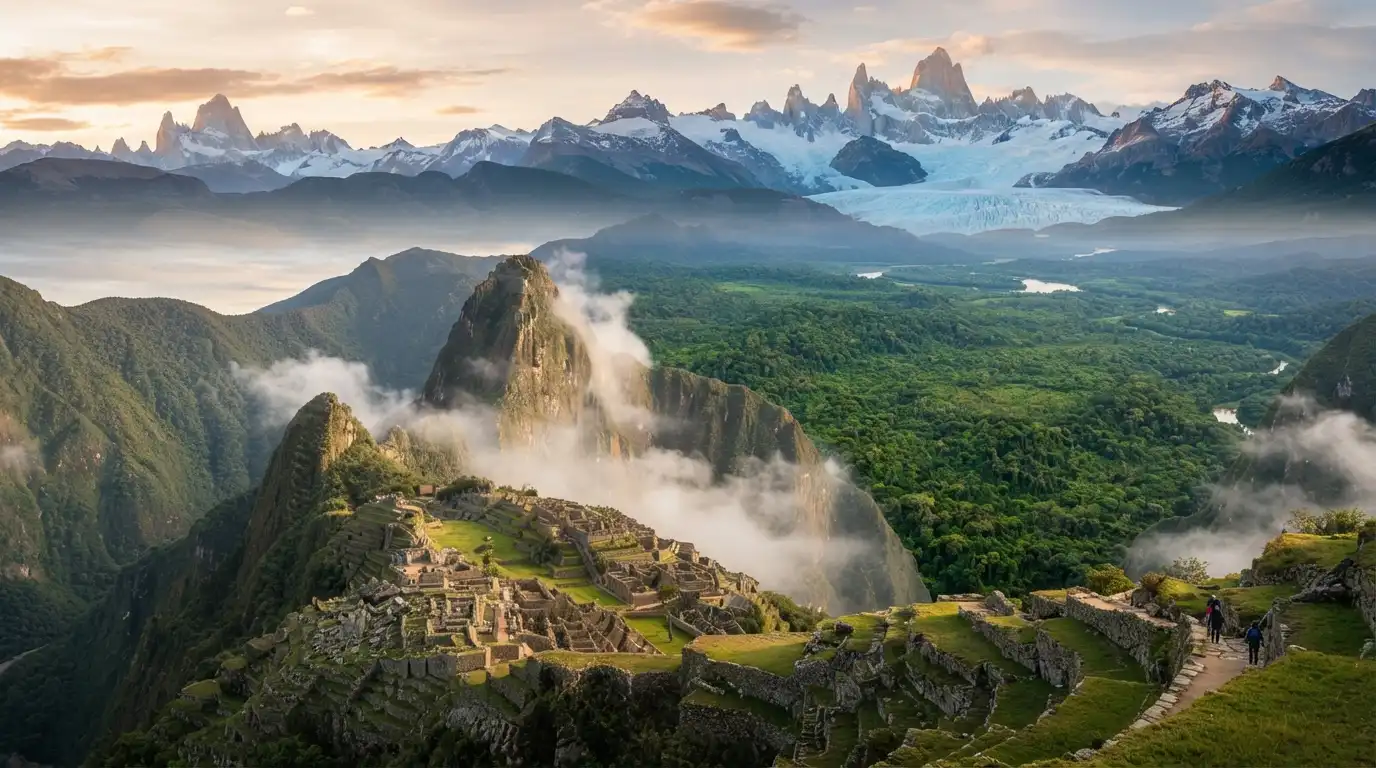
South America has 12 countries and one overseas territory, and most people asking questions about South America want quick, accurate answers about its geography, capitals, and famous landmarks. This guide answers the most common ones in plain language, with current facts for 2026, so you actually understand the continent instead of just memorizing trivia.
If you have ever tried to test your own knowledge of this continent, you know how fast things get confusing. Countries with similar names blur together, capitals mix up with each other, and half the facts floating around online are years out of date. This guide clears up the confusion, one real question at a time.
How many countries are in South America?
South America has 12 fully recognized countries. They are Brazil, Argentina, Peru, Colombia, Bolivia, Chile, Ecuador, Guyana, Paraguay, Suriname, Uruguay, and Venezuela. French Guiana sits on the continent too, but it is an overseas region of France rather than an independent country, which trips up a lot of quiz takers. Together these countries make South America the fourth largest continent by area, after Asia, Africa, and North America, stretching from the Caribbean coast of Colombia and Venezuela down to Tierra del Fuego near Antarctica.
What is the biggest country in South America?
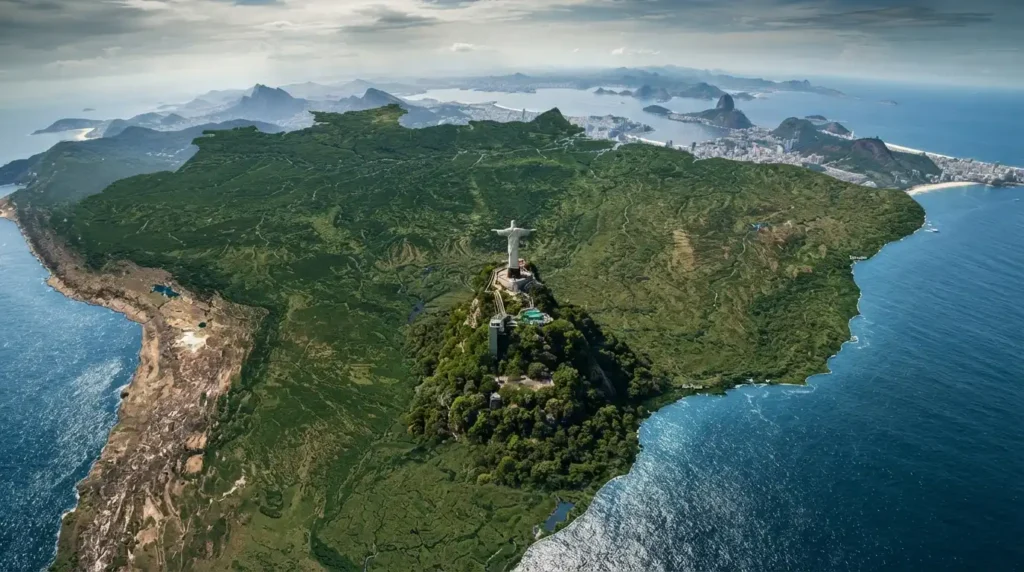
Brazil is the biggest country in South America by a wide margin. It is also the fifth largest country in the world by area, sitting just behind Russia, Canada, the United States, and China. Brazil borders every other South American country except Chile and Ecuador, a detail that trips people up constantly in geography quizzes. Brazil is also the most populous country on the continent, and Portuguese, not Spanish, is its official language, a fact that catches travelers off guard when they land in Sao Paulo expecting to get by with high school Spanish.
Which South American countries are landlocked?
This is one of the trickier questions about South America geography. Bolivia and Paraguay are the only two landlocked countries. Paraguay is nicknamed the Heart of South America for its central location, and the continent’s geographic center sits near Fuerte Olimpo in the department of Alto Paraguay.
Bolivia lost its Pacific coastline to Chile in the War of the Pacific in the 1880s, and that history still shapes Bolivian politics today. Travelers heading to Bolivia sometimes assume they can reach the coast easily from La Paz, but the nearest beach sits across the border in Chile or Peru, several hours away by bus. Landlocked does not mean isolated though. Bolivia still has Lake Titicaca, the highest navigable lake in the world, and Paraguay has the Paraguay and Parana rivers running through it, so neither country feels cut off once you are actually there.
What is the capital of Peru?
Lima is the capital of Peru, sitting on the Pacific coast as the country’s largest city, known for its coastal fog called the garua that rolls in most mornings from May through October. Peru also borders Brazil, Bolivia, Colombia, Ecuador, and Chile, making it one of the most connected countries on the continent.
Most travelers use Lima as a gateway before flying inland to Cusco, the historic capital of the Inca Empire, which sits roughly 3,400 metres above sea level. That jump in altitude is one of the most common causes of altitude sickness among first timers, so travelers consistently find it helpful to spend a day or two acclimatizing before heading to Machu Picchu.
What languages are spoken in South America?
Spanish is the most widely spoken language across South America, official in nine of the twelve countries. Portuguese comes next, spoken almost exclusively in Brazil. Suriname is the outlier with Dutch as its official language, while Guyana uses English and French Guiana uses French.
Beyond the colonial languages, indigenous languages remain very much alive. Quechua is still spoken by millions across Peru, Bolivia, and Ecuador. Guarani holds official status in Paraguay, and Aymara is common in the Andean highlands of Bolivia and Peru.
| Language | Main Countries |
| Spanish | Argentina, Chile, Colombia, Ecuador, Peru, Uruguay, Venezuela, Bolivia, Paraguay |
| Portuguese | Brazil |
| Dutch | Suriname |
| English | Guyana |
| French | French Guiana |
Which South American country was a Dutch colony?
Suriname was a Dutch colony and became independent from the Netherlands in 1975. Its capital, Paramaribo, still holds the Saint Peter and Paul Cathedral, one of the largest wooden structures in the Western Hemisphere, completed in 1901 as a legacy of that colonial period.
What is the longest river in South America?
The Amazon River is the longest river in South America and one of the longest on the planet, competing closely with the Nile for the top spot depending on the measurement method used. The Parana River, flowing through Brazil, Paraguay, and Argentina, ranks second longest, and the Orinoco River in Venezuela and Colombia ranks third. The Amazon carries more water than any other river system on earth, and boat travel remains the main way to reach many towns along it since roads do not exist in large stretches of the rainforest.
What is the highest mountain in South America?
Aconcagua, located in Argentina’s Mendoza Province, is the highest peak in South America at 6,961 metres, and also the highest point outside Asia, which puts it on serious mountaineers’ bucket lists worldwide.
Climbing season runs late November through mid March, with the safest window in January and February. Permits are required, and pricing depends on the season, but expect 900 to 1,500 US dollars for the permit alone during peak months, on top of guide fees. Most climbers spend 14 to 20 days on the mountain for proper acclimatization.
Why is Machu Picchu famous?
Machu Picchu is famous as the best preserved royal citadel built by the Inca Empire, tucked into the Andes Mountains above the Urubamba River near Cusco. It was constructed in the 15th century, abandoned during the Spanish conquest, then largely forgotten until it was brought to international attention in 1911.
Entry tickets are timed and capped daily, and travelers consistently find it easier to book two to three months ahead during high season, which runs from May through September. Expect ticket prices in the range of 40 to 65 US dollars depending on the circuit. The classic Inca Trail hike takes four days and requires permits booked five to six months ahead since only a few hundred trekking spots are released daily, so most travelers on tighter timelines take the train from Ollantaytambo or Cusco instead, cutting the journey to a few hours each way. A common mistake first timers make is treating Machu Picchu as a rushed day trip from Lima. The realistic plan involves a night in Cusco to adjust to altitude, then the train, then the site itself, ideally with an early entry slot before the midday crowds roll in.
What is the driest place on the South American continent?
The Atacama Desert in northern Chile is the driest place in South America and one of the driest non polar regions on Earth. The landscape looks closer to Mars than a typical desert, which is why NASA has tested Mars rover equipment there. Despite the extreme dryness, San Pedro de Atacama has become a major tourist base, with tours to geysers, salt flats, and stargazing sites, since the clear skies make it one of the best places on the planet for astronomical observation.
What is the largest salt flat in the world, and where is it?
Salar de Uyuni in Bolivia is the world’s largest salt flat, covering more than 10,000 square kilometres of the Altiplano above 3,600 metres elevation. In the dry season, roughly May through October, the ground cracks into hexagonal patterns stretching to the horizon. In the wet season, especially December through April, a thin layer of rainwater turns the flat into a giant mirror reflecting the sky, the image most travelers have seen online.
Day tours typically run 25 to 40 US dollars, while multi day trips connecting the flat with the nearby colored lagoons and geysers usually cost 150 to 250 US dollars depending on group size. Locals recommend sunglasses and strong sunscreen even on cloudy days, since reflected sunlight off the salt causes sunburn within a couple of hours.
Which country do the Galapagos Islands belong to?
The Galapagos Islands belong to Ecuador, sitting roughly 1,000 kilometres off the mainland coast in the Pacific Ocean. The islands are famous for wildlife that helped shape Charles Darwin’s theory of evolution, including giant tortoises, marine iguanas, and blue footed boobies found almost nowhere else. Ecuador charges a separate Galapagos National Park entry fee on top of the flight, typically around 100 US dollars, a cost that catches budget travelers off guard.
Which country do the Easter Islands belong to?
Easter Island belongs to Chile, despite sitting more than 3,500 kilometres off the Chilean coast, famous worldwide for its Moai statues, the massive carved stone figures made by the Rapa Nui people centuries ago.
What is Angel Falls, and where is it?
Angel Falls in Venezuela is the world’s highest waterfall, with a total drop of about 979 metres. Kaieteur Falls in Guyana is a different landmark, holding the title of the world’s tallest single drop waterfall at around 226 metres. These two get mixed up constantly, but one measures total cascading height and the other a single unbroken drop.
What animals live in South America?
Among the fun questions about South America, wildlife trips people up the most. South America is home to jaguars, anacondas, piranhas, tapirs, coatis, tayras, kinkajous, giant anteaters, flamingos, and fur seals. Alligators are a North American species, where caimans fill a similar role, and palm civets belong to Asia and Africa.
What did the Inca Empire accomplish?
The Inca Empire, centered in Cusco, built an extensive road and messenger system across the Andes, engineered mortarless stone structures that have survived centuries of earthquakes, and developed freeze dried potato storage along with suspension bridges made from woven grass. Despite all that, the Incas never developed a written language, relying instead on a knotted cord system called the quipu.
What traditional foods come from South America?
South American cuisine varies by country. Arepas, the corn pancakes popular in Venezuela and Colombia, are typically split and stuffed with cheese, shredded beef, or black beans. Llapingachos, Ecuador’s cheese stuffed potato patties, come served with fried egg and avocado. Locro de papa is a thick Ecuadorian potato soup, and pisco, a grape based spirit, forms the base of the pisco sour, a drink both Peru and Chile claim as their own.
Which South American countries were members of OPEC?
Ecuador and Venezuela are the only South American countries to have belonged to OPEC. Ecuador left the organization in 2020, a detail older trivia sources often get wrong.
Final Thoughts
South America rewards curiosity. The more questions about South America you dig into, the clearer it becomes how much variety sits within one continent, from Bolivian salt flats to Brazilian rainforest to Chilean desert. Use this guide as a starting point, then let the places that caught your attention pull you deeper into planning a trip.
FAQs
What is the smallest South American country?
Suriname is the smallest country in South America by area.
What is the capital of Suriname?
Paramaribo is the capital of Suriname.
What is the capital of French Guiana?
Cayenne is the capital of French Guiana.
What currency does Ecuador use?
Ecuador uses the US dollar, a policy adopted in 2000 after a major economic crisis.
Where is the source of the Amazon River?
The Amazon’s source is in Peru, high in the Andes Mountains, though geographers still debate the exact starting point.


