
Puerto Rico Food: Traditional Dishes and Where to Find Them
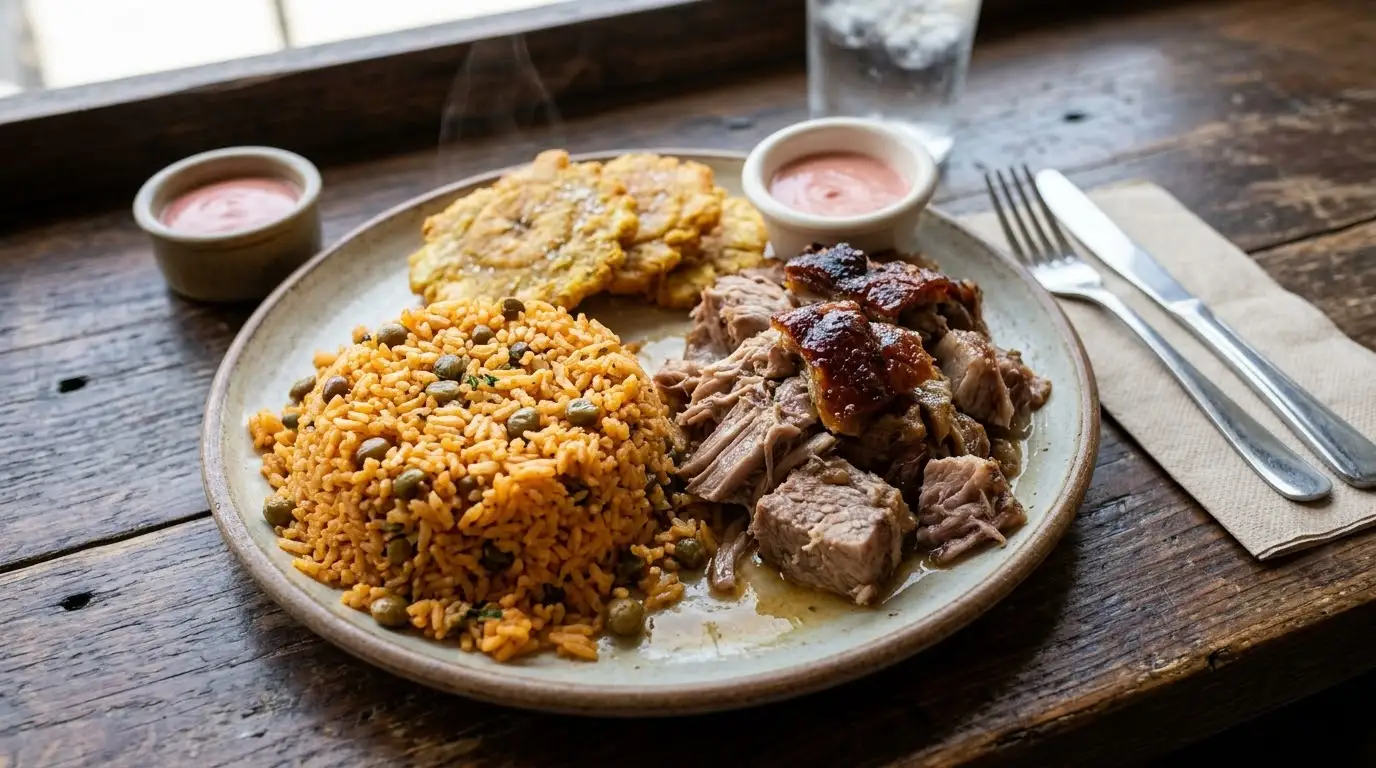
Puerto Rico food blends Taíno, Spanish, and African influences into dishes built on plantains, rice, pork, and sofrito. Mofongo, arroz con gandules, and lechón asado appear on tables across the island.
Mofongo
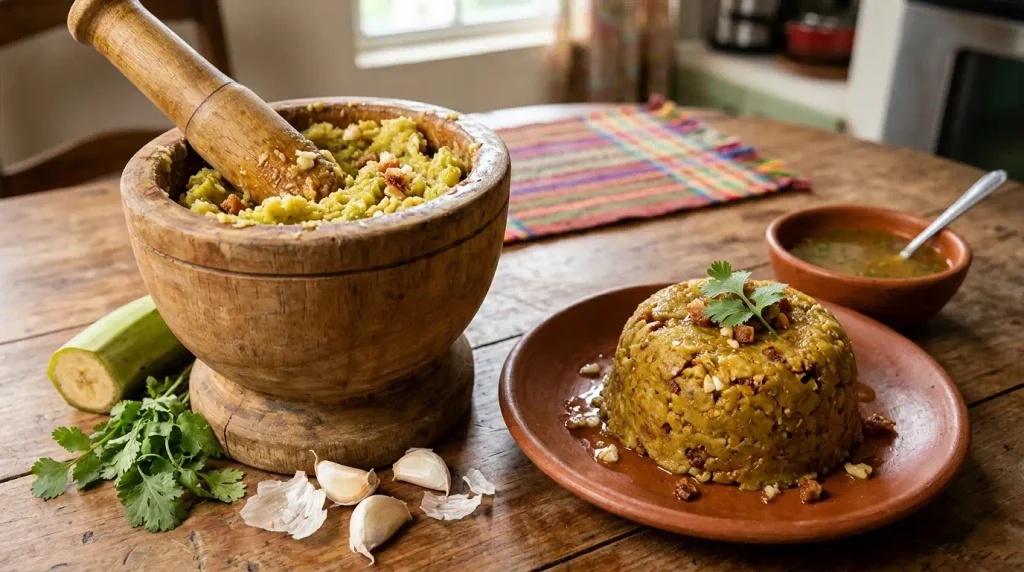
Mofongo starts with green plantains that are fried and then mashed in a wooden pilón with garlic, oil, and pork cracklings. The mash forms a mound that can be stuffed with shrimp, chicken, or more pork. It is served as a main course in restaurants and as a side in some homes.
The dish shows African pounding techniques combined with Spanish seasoning and Taíno tools. Most visitors try it on the first or second day. Portions are filling, so sharing is common.
Arroz con Gandules
Arroz con gandules is rice cooked with pigeon peas, sofrito, and usually pork or ham. The color comes from achiote oil. It is often called the national dish and appears at family gatherings and holidays. The rice is fluffy and seasoned throughout rather than plain with a side of beans.
Restaurants serve it with pernil or grilled meats. Home cooks prepare large pots for weekends. The combination of rice and peas makes a complete plate when paired with a protein.
Lechón Asado and Pernil
Lechón asado is a whole pig roasted on a spit over coals until the skin is crisp. Pernil is a pork shoulder or leg marinated in garlic, oregano, and sour orange then slow-roasted. Both appear at lechoneras along the roads outside San Juan, especially in the Guavate area known as the Pork Highway.
The meat is sold by the pound and eaten with rice and tostones. Weekends draw the largest crowds. The crackling skin is the prized part for many diners.
Tostones and Amarillos
Tostones are green plantains sliced, fried, smashed, and fried again until crisp. Amarillos use ripe plantains that caramelize and turn sweet. Both serve as sides with almost any main dish. Street vendors and restaurants sell them hot.
The double-fry method for tostones creates a crunchy exterior and soft center. Amarillos balance the saltiness of pork or rice. They require no special equipment beyond a pan and oil.
Pasteles and Other Frituras
Pasteles use a masa of green banana and root vegetables wrapped in banana leaves with a pork filling, then boiled. They appear mainly at Christmas. Alcapurrias are deep-fried torpedo shapes of grated green banana and yautía stuffed with meat. Bacalaítos are cod fritters sold at beach kiosks.
These items show up at roadside stands and festivals. Piñones near San Juan has many chinchorros that specialize in frituras. Ordering a mix lets visitors sample several at once.
Sofrito and Everyday Cooking
Sofrito is a base of onions, peppers, garlic, and culantro blended and used in most savory dishes. Home cooks keep a jar in the fridge. Adobo seasoning with garlic, oregano, and salt coats meats before cooking. These two elements give Puerto Rican food its consistent flavor profile across restaurants and homes.
Rice and beans appear daily. Stews such as asopao use the same sofrito base with chicken or seafood. The cooking style stays practical for family meals.
Where to Eat
San Juan has restaurants that serve updated versions of traditional plates. Roadside lechoneras in the central mountains offer the classic roast pork experience. Beach areas sell frituras and fresh seafood. Markets carry plantains, pigeon peas, and sofrito ingredients for anyone cooking in a rental.
Prices stay moderate at local spots. Tourist areas charge more but still feature the same core dishes. Asking for the daily special often brings the freshest option.
Practical Tips for Visitors
Plantains are the most common starch, so anyone avoiding them should check menus. Pork appears in many dishes; seafood versions of mofongo exist. Portions are large. Sharing plates works well for groups. Tap water is generally safe, but bottled water is widely available.
Learning a few dish names helps when ordering. Most menus list English translations in tourist zones. Local spots may not, but staff usually understand basic requests.
FAQs
Puerto Rico food
Puerto Rico food centers on plantains, rice with pigeon peas, and pork dishes seasoned with sofrito and adobo. Mofongo, arroz con gandules, and lechón asado are the dishes most visitors encounter first.
What is the national dish of Puerto Rico?
Arroz con gandules is widely regarded as the national dish. It is rice cooked with pigeon peas and sofrito, often served with roast pork.
What is mofongo made of?
Mofongo is mashed fried green plantains mixed with garlic and pork cracklings. It can be stuffed with meat or seafood and is served as a main course.
Where can I find lechón asado?
Lechoneras along the roads in Guavate and other central areas roast whole pigs. Many open on weekends and sell the meat by the pound with sides.
Are plantains used in many dishes?
Yes. Green plantains become tostones and mofongo. Ripe plantains become sweet amarillos. They appear as sides or main components across the island.
Is Puerto Rican food spicy?
Most dishes are savory rather than hot. Sofrito and adobo provide flavor without heavy chili heat. Hot sauce is available on the side if wanted.
Can I find vegetarian options?
Rice and beans, tostones, and some stews can be made without meat. Many traditional plates include pork, so asking in advance helps. Larger restaurants usually accommodate requests.
What are pasteles?
Pasteles are boiled packets of green banana and root masa filled with pork and wrapped in banana leaves. They are a holiday food, especially at Christmas.
Where should I eat in San Juan?
Both traditional restaurants and updated spots serve the core dishes. Beach areas and markets also offer frituras and fresh options. Local recommendations often lead to the best versions.
Do I need to try street food?
Street and roadside stands sell bacalaítos, alcapurrias, and pinchos. They are safe at busy locations and give a direct taste of everyday flavors.
What drink pairs with the food?
Coquito, a coconut and rum drink, appears at holidays. Fresh juices and local beer are common daily choices. Water and soft drinks are widely available.
Is the food heavy?
Many plates are filling because of the rice, plantains, and pork. Sharing or ordering smaller portions works for lighter meals. Salads and grilled fish appear on some menus as alternatives.