
Beach in Portugal: Best Coasts, Safety Rules and 2026 Tips
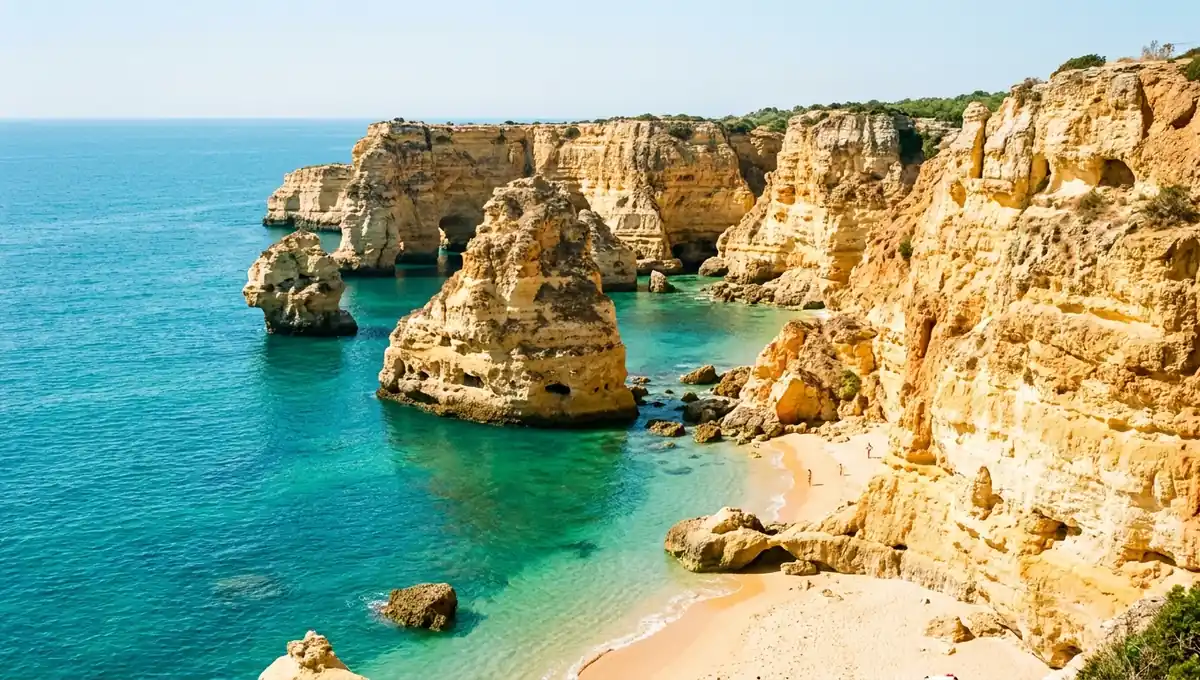
Picking a beach in Portugal comes down to three things: how warm you want the water, how big you want the waves, and how much effort you will put into getting there. The south coast of the Algarve has the calmest, warmest swimming. The west coast has wild sand, cold water and surf. The north is greener, cooler and quieter. The islands of Madeira and the Azores are a different trip again.
Table of Contents
Dates and rules below were checked against official 2026 sources in early October 2026.
Where is the best beach in Portugal for your trip?
There is no single winner. For warm, calm water and golden cliffs, head to the Algarve between Lagos and Albufeira. For long empty sand and surf, try the Costa Vicentina or the Alentejo coast. For an easy day trip from a city, use the train from Lisbon to Cascais.
Match the coast to your group. Families with small kids do best on sheltered south coast coves and the islands near Tavira. Surfers and walkers suit the west coast. If you hate crowds, look north of Lisbon or on the Alentejo coast.
In 2026, Portugal has 396 Blue Flag beaches: 350 on the coast and 46 inland, spread across seven regions, according to the Blue Flag association (ABAAE) and Turismo de Portugal. The government identified 671 official bathing waters for the year. The table shows how the regions compare.
| Region | Blue Flag beaches 2026 | Water and waves | Good for |
|---|---|---|---|
| Norte (Porto, Minho) | 86 | Cold, often rough | Quiet sand, seafood towns |
| Centro (Aveiro, Nazaré area) | 47 | Cold, big swell | Surf, wave watching |
| Tejo (Lisbon, Cascais, Oeste) | 73 | Cool, mixed | Day trips without a car |
| Alentejo (Comporta, coast) | 42 | Cool, open ocean | Space, nature |
| Algarve | 86 | Warmest, calmer on south coast | Families, cliffs, coves |
| Azores | 45 | Mild, rocky | Natural pools, volcanic scenery |
| Madeira and Porto Santo | 17 | Mild | Porto Santo’s long sandy beach |
Source: ABAAE Blue Flag 2026 regional summary.
Which beaches of Portugal do travelers rank highest?
Two Algarve beaches topped big 2026 lists. Praia da Falésia placed fifth in the world in Tripadvisor’s 2026 Travellers’ Choice awards. Praia de Monte Clérigo was named the best beach in Europe for 2026 by European Best Destinations. Both lists lean on traveler votes or reviews, so treat them as a starting point.
Algarve cliffs and coves
Praia da Falésia runs for kilometers below red and orange cliffs between Olhos de Água and Vilamoura. It is wide, so busy days feel less packed than the small coves. Travelers consistently find it the easiest big beach in Portugal for a long walk, though it sits on the APA cliff risk list. Praia da Marinha near Lagoa is the classic photo spot, with rock arches and clear water on calm days. Near Lagos, Camilo and Dona Ana are small coves reached by long stairs that fill early in summer.
A common mistake first-timers make is planning to swim or paddle into the Benagil cave on their own. Maritime Authority rules in force since August 2024 ban swimming into the cave, using floats, landing on the cave beach and renting kayaks without a guide there. You can only go in on a licensed boat or a guided kayak or paddleboard tour.
Eastern Algarve islands
Ilha de Tavira is a long sandbar reached by a short ferry. Locals recommend it for families because the water is usually calmer than on the west coast. The ferry from Quatro Águas runs all year. On the October 2026 timetable, an adult return costs 2 euros, with a midday gap in sailings, so check times before you go.
West coast and Costa Vicentina
Monte Clérigo, near Aljezur, sits inside the Southwest Alentejo and Vicentine Coast Natural Park. Nearby Amado, Arrifana and Odeceixe draw surfers. These beaches are less crowded than the south coast, but the ocean here is open, colder and windier.
Lisbon area and the Alentejo
Cascais and Carcavelos are easy to reach by train. Across the river, Costa da Caparica has miles of sand. South of Setúbal, Portinho da Arrábida and Galapinhos have clear, sheltered water. Farther south, Comporta offers long, quiet sand backed by pine woods.
The north and the islands
Nazaré is famous for giant winter waves at Praia do Norte, which are for watching, not swimming. Swim at the town beach on calm days. In the far north, Moledo and other Minho beaches are beautiful but cold. Porto Santo, next to Madeira, has a long, gentle sandy beach and a longer swimming season.
Can you swim at a beach in Portugal in October?
You can, but most lifeguards have gone home. Portugal’s 2026 bathing season rules set lifeguard dates beach by beach. Most of the Algarve ran from 1 June to 30 September. Albufeira’s official season runs to 15 October. Cascais and Costa da Caparica ended on 30 September.
The rules come from Portaria 204-A/2026/1, published on 30 April 2026. It lists each official bathing water and the dates when lifeguards must be on duty. Outside those dates, a beach in Portugal stays open to the public, but nobody is required to watch the water.
In early October:
- Albufeira beaches such as Falésia, Olhos de Água, Oura, Peneco and São Rafael keep their lifeguard season until 15 October.
- Most other Algarve beaches finished on 30 September.
- In Madeira, the regional season at some beaches, including on Porto Santo, runs until 31 October.
- Farther north, many seasons ended earlier. Nazaré’s town beach ended on 15 September.
A black and white checkered flag means no lifeguard at that moment. At many beaches in October, you will see no flag at all. Swim only where you can stand, stay near other people, and never swim alone.
October has upsides: thinner crowds, easier parking and often warm air in the south. The trade off is shorter days, more rain and bigger Atlantic swells.
What do the beach flags mean in Portugal?
Flags are not just advice. Under the Maritime Authority’s beach rules, yellow means you may not swim, only stand at the water’s edge. Red means you may not enter the water at all. Ignoring flags or lifeguard instructions when it puts others at risk can bring a fine of 55 to 550 euros.
| Flag | What it means |
|---|---|
| Green | Swimming allowed |
| Yellow | Caution. No swimming, edge of the water only |
| Red | Danger. Do not enter the water |
| Checkered black and white | Beach temporarily without a lifeguard |
| Red and yellow pair on the sand | Marks the watched swimming zone |
Source: Autoridade Marítima Nacional beach edict and Decreto Lei 96-A/2006.
Many visitors think yellow means “swim carefully.” The official meaning is no swimming. Stay between the red and yellow flags when they are up, since that is the area lifeguards watch.
How cold is the water, and how strong are the currents?
The Atlantic is cooler than the Mediterranean, even in summer. The south coast of the Algarve is the warmest part of mainland Portugal. The west and north coasts are colder and rougher. Rip currents, called agueiros in Portuguese, are a major swimming danger, and they form on calm looking days too.
Sea temperature trackers commonly show early October readings of about 20 to 21 degrees Celsius near Faro, with the west coast colder. Treat that as a rough guide and check IPMA’s sea surface temperature map on the day.
IPMA, the national weather service, issues rough sea warnings by wave height. On the mainland, yellow starts at 4 to 5 meter waves, orange at 5 to 7 meters, and red above 7 meters. On the south coast of the Algarve, when swell comes from the southeast, the bar is lower: yellow at 2 to 3 meters, orange at 3 to 5, and red above 5. During any warning, stay out of the water and away from piers and rocks.
If a current pulls you out, standard lifeguard advice is not to fight it. Swim parallel to the beach until you are out of the pull, then head back in. If you cannot, float and raise an arm to call for help.
Wind is another downside. Afternoon wind on the west coast can turn a nice morning into blowing sand. Locals recommend going early and picking a south coast beach on windy days.
Are the cliffs at Portuguese beaches safe?
Not always. Many Algarve and west coast cliffs are soft rock that falls without warning. The Portuguese Environment Agency (APA) marks risk zones at the foot of these cliffs. The danger strip is 1.5 times the cliff’s height. Do not sit, lie or walk inside it.
APA lists risk signs at dozens of beaches, including Falésia, Maria Luísa, Benagil, Camilo, Dona Ana and Arrifana. Storms in winter 2025 to 2026 made things worse. In March 2026, APA reported that 35 Algarve beaches were hit hardest, mainly by unstable cliffs and lost sand, with the beach at Peneco in Albufeira losing up to 24 meters at one point.
To stay safe:
- Set up your towel well away from the cliff base, even if shade is tempting.
- Never climb fences or walk past warning signs. Entering a closed zone can bring a fine.
- Stay back from cliff edges at the top too.
- Watch the tide. Some coves get cut off when the water comes in.
How do you get to the beaches, and what about parking?
Trains and ferries cover several top beaches, and they save a lot of stress. Parking near famous beaches fills early in summer and can be tight even in the shoulder season. Some areas also limit cars during the bathing season, so check local rules before driving.
Without a car:
- Lisbon to Cascais: the CP train from Cais do Sodré runs along the coast. A return ticket costs 5.10 euros under the CP fare table in force since 1 January 2026, plus a small fee for the card.
- Tavira to Ilha de Tavira: the Quatro Águas ferry runs all year, with fewer sailings off season.
- Setúbal to the Arrábida beaches: from 4 June to 15 September 2026, Setúbal limited car access to Portinho da Arrábida, Creiro, Galapos and Galapinhos and ran buses instead. The Creiro car park charged 5 euros a day in that period. Outside those dates the summer limits do not apply, but parking is still small.
A car gives the most freedom in the Algarve. Expect busy lots at Marinha, Falésia and the Lagos coves in July and August, so arrive before 10 a.m. Never leave valuables in a parked car. APA publishes water test results on its InfoÁgua beaches tool, worth checking after heavy rain.
Beach in Portugal FAQ
Where are the best beaches in Portugal for families?
The calm south coast of the Algarve and the islands near Tavira are the usual picks. For a different island trip, our guide to choosing a beach in Kauai uses the same check-the-flags approach. Look for a beach with lifeguards in season and a Blue Flag, which requires safety and service checks.
Do you have to pay to use a beach?
No. Every beach in Portugal is public. You pay only for umbrellas, loungers, parking or food.
Are dogs allowed?
Rules vary by town and season. Many beaches ban dogs during the bathing season, so check the local signs.
Conclusion
The right beach in Portugal depends on what you want from the water. Pick the Algarve’s south coast for warmth and calm, the west coast for surf and space, and the train from Lisbon for an easy day out. Respect the flags, keep clear of cliffs, and in October remember that most lifeguards have finished for the year.


