
Best Places to Visit in Lebanon in 2026 : What to See First
The best places to visit in Lebanon include Beirut, Byblos, Jeita Grotto, and the Cedars of God, packed into a country the size of Connecticut. One catch for 2026: parts of the country sit under active travel advisories, so where you go matters as much as what you see.
Lebanon has always been a country of contrasts, mountains and beaches within an hour of each other, Roman ruins next to beach clubs. What is different this year is that travelers cannot treat it as one destination anymore. Some regions welcome visitors normally. Others sit inside active advisory zones. This guide breaks down which is which, then covers the sites, the costs, and the food.
Is Lebanon Safe to Visit Right Now?
Lebanon is not a single safety zone in 2026, and treating it as one is where older guides go wrong. The United States, United Kingdom, Australia, and Ireland all currently advise against travel to Lebanon, most at their highest warning level. This traces back to a war between Israel and Hezbollah that restarted in March 2026, after an earlier ceasefire from late 2024 broke down. A new ceasefire took hold around June 2026, but strikes have continued since, especially in the south.
In practice, that breaks down by region. Beirut and the Mount Lebanon coast, including Byblos, Jounieh, and Batroun, see daily life continue mostly as normal, and travelers still move through them. South Lebanon, the Beqaa Valley and Baalbek Hermel region, and the city of Tripoli currently fall under stricter guidance, in some cases against all travel. These labels are not permanent and shift week to week, so check your government’s official advisory close to your travel dates, not months ahead.
A few habits matter too. Register with your embassy if that option exists and keep travel documents on you at all times. Stay away from demonstrations and areas with a heavy military presence. Follow local news rather than secondhand reassurance.
Do You Need a Visa to Visit Lebanon?
Most travelers from the United States, United Kingdom, European Union, and Canada can get a visa on arrival at Beirut Rafic Hariri International Airport. It is valid for one month and extendable for two more. Citizens of Gulf Cooperation Council countries and Jordan travel visa free. There is one rule with zero exceptions: any Israeli stamp or visa in your passport, from any past trip, gets you turned away at the border. Check this before you fly, not after you land.
When Is the Best Time to Visit Lebanon?
Spring, from March through May, and fall, from September through November, bring the most comfortable weather and thinner crowds. Summer, June through September, is peak season, when prices climb and beach towns fill up fast. Winter stays mild along the coast, but the mountains get cold enough for skiing. You really can swim and ski in the same country, just not the same day.
How Much Does It Cost to Travel to Lebanon in 2026?
Lebanon runs on a cash economy where the US dollar and the Lebanese pound circulate side by side. As of mid-2026, one dollar trades for around 89,000 to 91,000 Lebanese pounds, after the currency lost more than 98 percent of its value since 2019. Bring newer, undamaged dollar bills. Older or torn notes get refused more often than you would expect.
Budget travelers can expect to pay roughly 25 to 40 dollars a night for a basic private room. A sit-down meal runs 12 to 15 dollars, and street food costs 7 dollars or less. Car rental runs 20 to 40 dollars a day, and a local SIM card with enough data for two weeks costs around 10 dollars.
How Do You Get Around Lebanon?
Beirut itself is walkable, and Uber and Careem both work well within the city. There is no metro or national train system anywhere in the country. Between cities, flag down a shared taxi called a servis, or catch a minibus from hubs like the Cola intersection. Many travelers who want several sites in one day hire a private driver instead, often faster and not much pricier once split between two or three people.
What Are the Best Places to Visit in Beirut?
Beirut rewards travelers who explore it neighborhood by neighborhood instead of trying to see everything in one day. Start along the Corniche, the seafront promenade leading to the Raouche Rocks, two limestone formations rising out of the Mediterranean and one of the city’s best sunset spots. Downtown Beirut holds Martyrs Square and the Mohammad Al Amin Mosque, standing next to a church as a quiet symbol of how the city’s religious communities share space.
For nightlife and street art, head to Gemmayzeh and Mar Mikhael, two neighborhoods that blur together and stay lively past midnight. Hamra, home to the American University of Beirut, is the better pick for cheap, excellent street food. Plan for at least two to three days in Beirut alone.
What Are the Best Day Trips from Beirut?
Three destinations consistently top the list of places to visit in Lebanon for day trips out of the capital.
- Byblos, also called Jbeil, sits about 45 minutes north of Beirut and ranks among the oldest continuously inhabited cities on earth. Its Crusader era citadel, old souk, and working harbor make it an easy half day trip, though many travelers stay overnight once the crowds leave.
- Jeita Grotto, roughly 30 minutes from Beirut, is a two level limestone cave system. You walk through the upper cave and take a short boat ride through the lower one, past some of the largest known stalactites in the world. Cameras are not allowed inside.
- Harissa combines a cable car ride from Jounieh with sweeping Mediterranean views and the Our Lady of Lebanon statue at the top.
These three sites sit close enough together that many tours combine all of them into a single full day trip from Beirut.
Is Baalbek Worth Visiting?
Baalbek holds some of the best preserved Roman ruins anywhere in the world, including the Temple of Jupiter and the Temple of Bacchus. Both are larger and less crowded than similar sites in Greece or Italy. Under normal circumstances, Baalbek easily earns a full day trip.
The catch is location. Baalbek sits in the Baalbek Hermel region, close to the Syrian border, currently one of the areas under the strictest advisories mentioned above. Whether it belongs on your itinerary depends on the current advisory status when you are planning, not on how the site looked in an older travel guide. Confirm this closer to your travel dates rather than assuming access.
What Are the Best Places to Visit in South Lebanon?
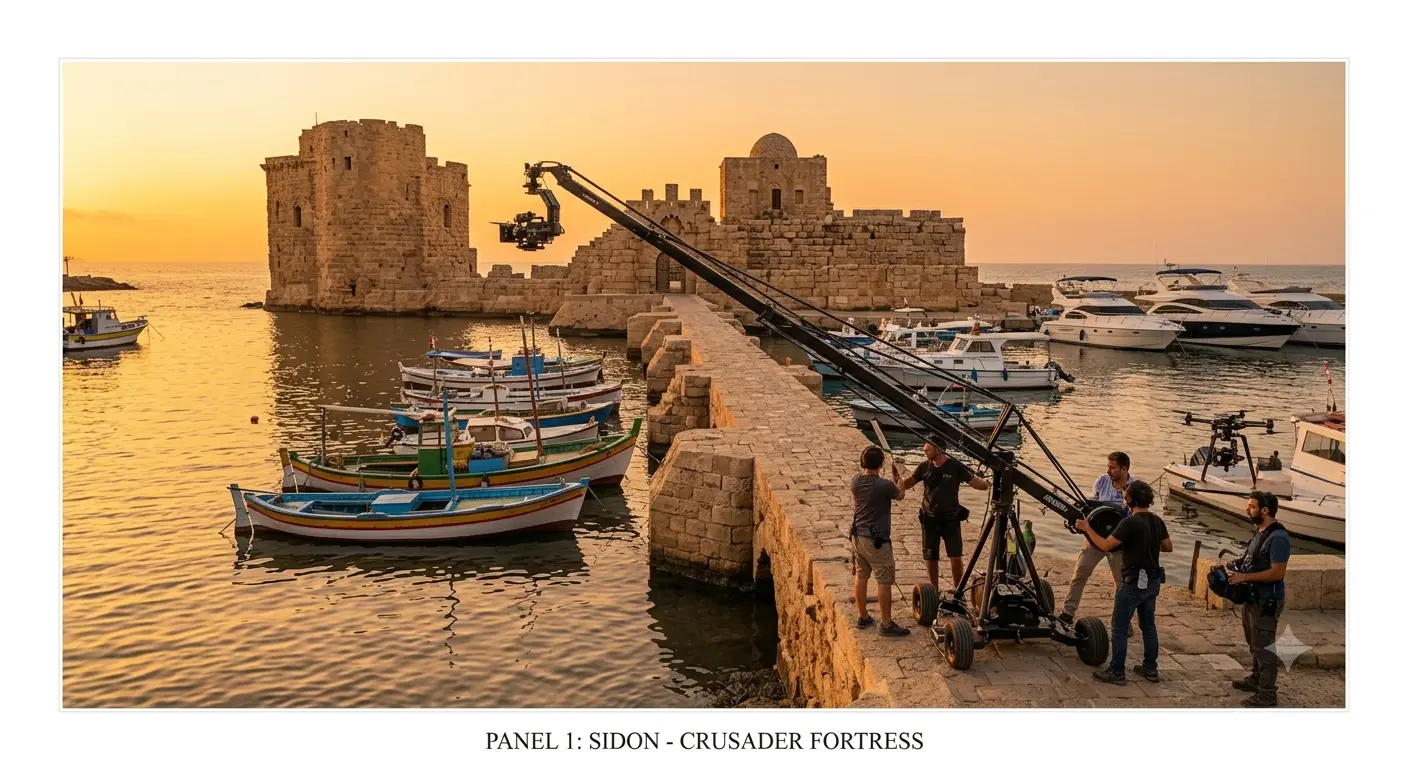
Tyre, known locally as Sour, and Sidon, known as Saida, anchor the south of the country. Tyre has Roman ruins right on the water and the longest public beach in Lebanon. Sidon offers a Crusader era Sea Castle and the Debbane Palace, an Ottoman mansion turned museum.
Both cities sit inside South Governorate, currently under the strictest advisories. Even before the conflict, traveling further south than Tyre required a permit picked up in Sidon, since the area borders the zone patrolled by United Nations peacekeepers. Treat this region like Baalbek and check the live status before building it into your route.
Is Tripoli Worth a Visit?
Tripoli is Lebanon’s second largest city, known for Mamluk era architecture, sprawling souks, and a reputation for the country’s best sweets. It sees a fraction of the tourists Beirut gets, which some travelers count as a plus.
As of 2026, though, Tripoli city itself falls under an advisory against all travel. This is a recent shift rather than a long standing pattern, so it is worth rechecking before you rule it out or build a trip around it.
What Are the Best Nature and Mountain Destinations in Lebanon?
The Qadisha Valley and the Cedars of God share a single UNESCO World Heritage listing, and together rank among the most striking places to visit in Lebanon outside the coast. Monasteries carved directly into cliff faces, including Deir Mar Antonios Qozhaya, line hiking trails through the valley. The mountain town of Bcharre holds the Gibran Khalil Museum, dedicated to Lebanon’s best known poet.
Further south, the Chouf region centers on the village of Deir al Qamar and the Beiteddine Palace, an Ottoman governor’s residence with Arabic and Italian architecture side by side. The Chouf Cedar Reserve protects Lebanon’s largest cedar forest and is the traditional home of the country’s Druze community. Both regions sit outside the current advisory zones, but pack for cold weather since mountain temperatures drop fast after dark, even in summer.
What Food Should You Try in Lebanon?
Start with street food. Manoushe, a flatbread topped with za’atar, and falafel or shawarma wrapped fresh, cost only a few dollars and show up on nearly every corner. Move on to a mezze spread, a collection of small dishes that usually includes hummus, tabbouleh, kibbeh, and baba ganoush, meant for sharing rather than ordering individually.
Save room for dessert. Knafeh, a warm cheese pastry soaked in syrup, and baklava both show up on menus everywhere. Wash it down with Almaza, a light local beer, a glass of Bekaa Valley wine, or arak, the anise spirit that Lebanese meals are traditionally built around.
What Should You Know About Dress Code and Documents?
Beirut is liberal, and you can dress however you like there. Outside the capital, especially around religious sites, cover your shoulders and knees, and keep a scarf handy for mosques. On documents, the rule that trips people up most is the Israeli stamp policy. Any evidence of past travel to Israel, even an old stamp, gets you denied entry with no appeals process.
5 Days vs 7 Days vs 10 Days in Lebanon: Which Fits You?
Five days covers Beirut plus a couple of day trips, typically Byblos and Jeita Grotto, and one destination further out depending on current access. Seven days adds room for either Tripoli or the Qadisha Valley without feeling rushed. Ten days lets you add overnight stays in the Chouf and reach more of the places to visit in Lebanon outside Beirut, assuming those regions are open when you go. Build in flexibility either way, since advisory status can change faster than a printed itinerary can keep up with.
Conclusion
Lebanon packs Roman ruins, Phoenician port cities, mountain monasteries, and some of the best food in the Middle East into a country small enough to cross in a few hours. That has not changed.
What has changed is that 2026 asks you to plan in two steps. First, check which regions are open to travel. Then build your route around the places to visit in Lebanon that are reachable right now. Do that, and it still holds up as one of the most rewarding trips in the region.
FAQs
Can I use US dollars in Lebanon?
Yes. Lebanon runs on a dollarized, cash based economy, and US dollars get accepted almost everywhere, often preferred over Lebanese pounds. Small change usually comes back in pounds.
How do you get from Beirut airport to the city?
Beirut Rafic Hariri International Airport sits about 20 to 30 minutes from downtown by taxi or Uber. Agree on a fare before you get in if using a regular taxi.
Is it worth visiting Lebanon at this time?
That depends on your risk tolerance and exactly where you plan to go. Beirut and the Mount Lebanon coast see visitors moving through them regularly. The regions under active advisories are a separate decision entirely, and no article can make that call for you.
What are the most dangerous places in Lebanon right now?
South Lebanon, the Baalbek Hermel region, and the city of Tripoli currently carry the strictest advisories. Conditions shift often, so treat any specific claim here as something to reverify before you travel.


