Things to Do in San Sebastián: The Basque Food, Coast, and Culture Guide
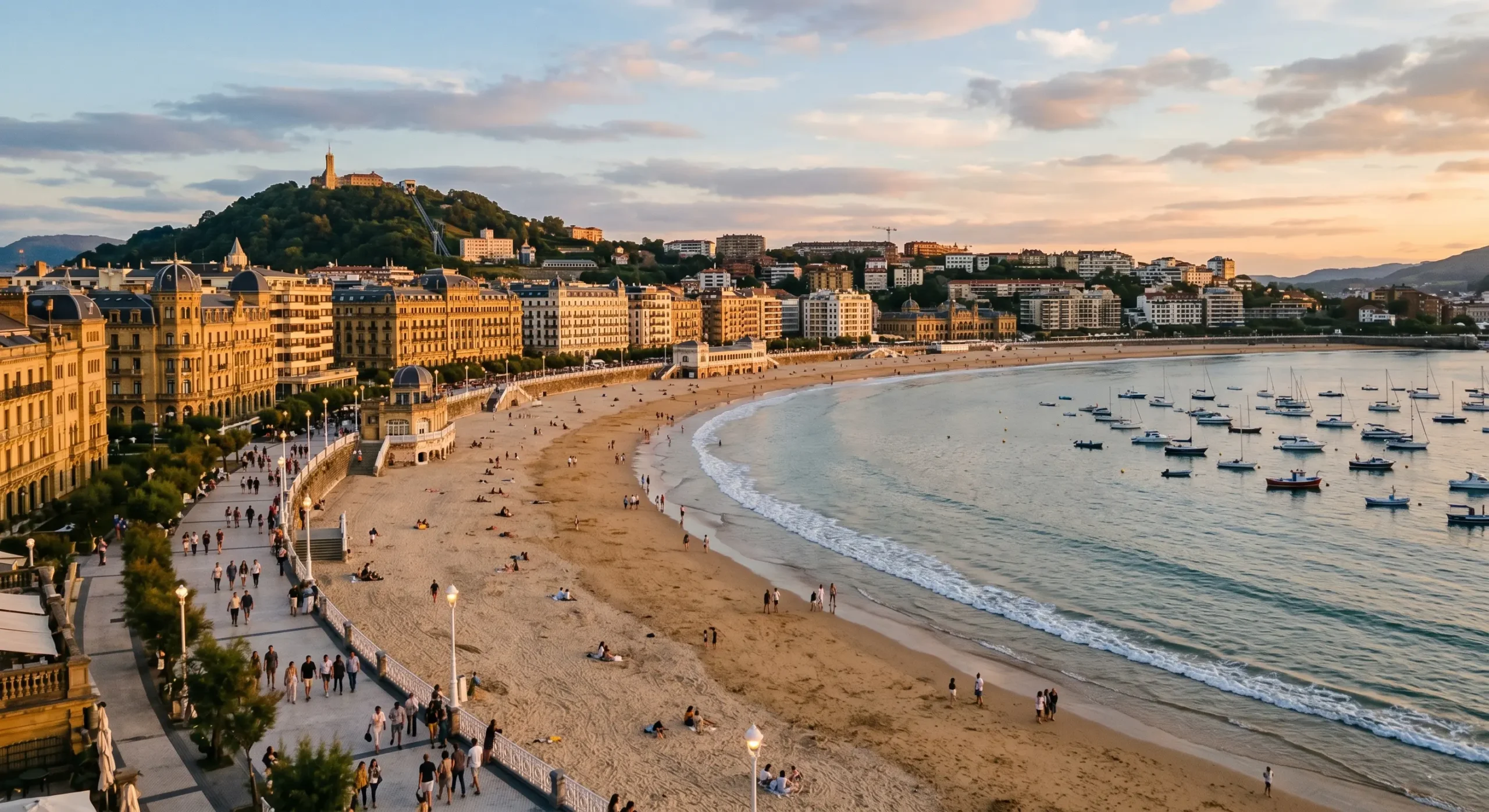
San Sebastián, locally called Donostia, is a coastal city in Gipuzkoa in the Basque Country of Northern Spain. The best things to do in San Sebastián include pintxos crawls through the Parte Vieja, riding the Monte Igueldo funicular, walking La Concha promenade, and experiencing the world’s highest concentration of Michelin stars per square metre. Famous for Basque cuisine, the Peine del Viento sculpture, Semana Grande in August, and the Tamborrada drumming festival in January, this city by the Bay of Biscay rewards every type of traveller.
What Is San Sebastián and Why Do Locals Call It Donostia?
San Sebastián goes by two names. Locals call it Donostia, the Euskara (Basque language) name for the city. Its official title is Donostia-San Sebastián. People from here are called donostiarras and they identify as Basque first. The Basque flag flies with genuine pride, and Euskara is spoken alongside Spanish across every neighbourhood.
The city’s Belle Époque architecture has a clear origin. Much of San Sebastián was destroyed during the Napoleonic Wars in the early 1800s and rebuilt entirely. When Queen Isabella II chose it as her summer retreat in the 19th century, grand promenades, elegant hotels, and the cohesive facades you see today followed.
What Should You Eat and Drink in San Sebastián?
Food is the reason most people visit, and the city earns that reputation every time. Among the most rewarding things to do in San Sebastián, the food experiences sit firmly at the top.
How Does a Pintxos Crawl Actually Work?
Pintxos (peen-chos) are individual bites, often skewered with a toothpick, displayed on bar counters across the Casco Viejo. Moving from bar to bar, ordering one or two items at each stop, is called txikiteo. Pair each bite with a glass of txakoli or Basque cider. Never grab pintxos from the counter without asking first. On Thursday evenings in the Gros neighbourhood, bars run pintxo-pote, which is Basque happy hour, with discounted food and drinks for donostiarras after work.
These are the pintxos bars worth knowing in 2026:
- Ganbera: Anthony Bourdain’s chosen favourite. Order the wild mushrooms with egg yolk. Queue expected.
- Bar Nestor: One tortilla per service, available only to the first 12 to 16 customers. Arrive 2.5 hours before noon lunch or 7 PM dinner.
- La Cuchara de San Telmo: Pintxos plus larger fish and meat raciones. Terrace seats fill up fast.
- Atari: Foie gras with white chocolate pintxo, with a serious wine list alongside it.
- Casa Valles (Centro neighbourhood): Where the Gilda was born. A customer once skewered green olives, guindilla peppers, and anchovies together, drizzled olive oil on top, and the combination was later named after Rita Hayworth’s character in the 1946 film Gilda. Salty, pickled, and umami in one bite. The olives here are not pitted.
- Bar Desy (Gros): Local craft beer paired with excellent pintxos away from tourist streets.
- Antonio Bar (Centro): Where donostiarras eat on a regular weeknight.
What Is Burnt Basque Cheesecake and Where Did It Come From?
Chef Santiago Rivera invented this crustless cheesecake at La Viña restaurant near Plaza de la Constitución in the 1980s. Five ingredients only: cream cheese, eggs, cream, sugar, and flour, baked at high heat to get the deeply caramelised top. Pair it with a glass of sherry. Every bakery in the city now has a version, but La Viña made it first.
What Is Txakoli Wine?
Txakoli (cha-ko-lee) is a light, dry, slightly sparkling white wine made from the Hondarribi Zuria grape, produced exclusively in the Basque Country. The most effervescent variety is Getariako Txakolina from the Getaria region. Bartenders pour from a height above the glass to aerate the wine and release its natural flavour. It is low in alcohol and pairs well with anything on a pintxos counter.
What Is Basque Cider and What Happens at a Cider House?
Sagardoa is traditional Basque cider: dry, flat, tart, and made only from Basque apples. Visiting a sidería (cider house) involves the txotx ritual, which is drinking directly from a freshly tapped barrel. The traditional cider house meal includes txuleta steak, salt cod omelette, padrón peppers, and quince with Idiazabal cheese, a firm, lightly smoked cheese made from latxa sheep milk. The nearest cider capital is Astigarraga, 15 minutes from San Sebastián.
Which Michelin Restaurants Are Worth Booking?
Arzak (three stars) is the family institution, run by a father-daughter team with over 1,000 rotating ingredients. Akelarré (three stars) sits on a hilltop outside the city centre. Martin Berasategui holds the most Michelin stars of any Spanish chef. El Tamboril is a Michelin-starred pintxos bar that offers an accessible entry point. Book Arzak and Akelarré on the day reservations open, months in advance. Budget at least 150 EUR per person.
What Are the Best Outdoor and Cultural Things to Do in San Sebastián?
Monte Igueldo
The funicular from Funicular Plaza in Ondarreta costs 4.50 EUR return for adults and 2.50 EUR for children. At the summit, La Concha Bay and Santa Clara Island spread out below you. The retro amusement park at the top includes the Swiss Mountain roller coaster, bumper cars, and a boating lake. It is genuinely charming and worth the ride up.
Peine del Viento (Comb of the Wind)
Eduardo Chillida’s sculpture installation is bolted into the rocks at the western end of Ondarreta Beach on Paseo Eduardo Chillida. On stormy days, blowholes in the ground shoot Atlantic air upward from the crashing waves below. Entry is free. One of the most striking free experiences in the Basque Country.
Monte Urgull
The wooded trail to the top of Monte Urgull takes around 40 minutes at a steady pace. Castillo de la Mota and the Sagrado Corazón statue sit at the summit with sweeping views over La Concha Bay and Gros. Halfway up, Urgulleko Polboriña is a wine bar open in good weather where a panoramic drink makes complete sense.
The Three Beaches
La Concha (Playa de la Concha) is the iconic shell-shaped bay, ideal for swimming through summer. Ondarreta Beach at the western end connects naturally with the Monte Igueldo funicular walk. Zurriola Beach (Hondartza Zurriola) in the Gros neighbourhood is where surfers come year-round, exposed to strong northern Atlantic swells.
San Telmo Museum and Mercado de la Bretxa
The San Telmo Museum occupies a former Dominican convent and covers Basque history through art, archaeological finds, and photography. Open Tuesday to Sunday from 10 AM to 8 PM, admission 10 EUR. The 16th-century Iglesia de San Vicente is directly next door.
Mercado de la Bretxa has operated since 1871. Head to the basement for traditional delicatessens and cheesemongers in an atmosphere largely free of tourism. Open Monday to Saturday, 9:30 AM to 9:30 PM. San Martín Market on Urbieta Kalea offers a more modern gourmet selection with local wine and gifts.
Where Should You Stay in San Sebastián?
Hotel Maria Cristina is the luxury option, a Marriott property redeemable with Marriott Points. Hotel Catalonia Donosti, a former convent with a rooftop bar and spa, covers the mid-range. Hotel Londres sits directly on La Concha promenade. La Sala Plaza in the Old Town is adults-only with a rooftop pool. Leonardo Boutique Hotel in the Gros neighbourhood delivers strong value and a genuinely local base.
When Is the Best Time to Visit and How Do You Get There?
Spring (March to May) offers mild weather and manageable crowds. Autumn (September to November) delivers warm ocean water, the start of cider season, and mushroom dishes appearing across every menu. Summer peaks in atmosphere with Semana Grande in August filling nine days with concerts and fireworks. January brings Tamborrada on the 20th, a 24-hour drumming parade rooted in Basque tradition.
For getting there, fly into Bilbao Airport (BIO) for the widest flight options, then take the hourly Pesa bus to the city centre (around 1 hour 15 minutes). Renfe trains connect from Madrid in 5 hours and Barcelona in 6. From France, SNCF reaches Hendaye, then Euskotren crosses the border. Budget travellers use ALSA or FlixBus. Once in the city, walk. The Dbus network and the Donostia public bike system cover everything beyond walking distance.
Three full days is the recommended minimum. For day trips, Bilbao is 1 hour 15 minutes by ALSA bus (Guggenheim Museum, pintxos, architecture). Getaria is 40 minutes and covers txakoli winery visits and the Cristóbal Balenciaga museum. Zumaia delivers the Flysch rock formations. La Rioja (Rioja Alta, Rioja Alavesa) is 1.5 hours away; Spain’s strict 0.05% BAC driving limit makes a guided tour the practical choice for any wine region visit.
FAQs
What is pintxo-pote?
Pintxo-pote is Basque happy hour on Thursday evenings. Bars in Gros run the best deals. Donostiarras gather after work, pintxos and drinks are discounted, and the atmosphere is entirely local rather than tourist-facing.
What is the difference between pintxos and tapas?
Pintxos are individual skewered bites specific to Basque food culture. Tapas are shared communal dishes from southern Spain. Bar-hopping between pintxos bars is called txikiteo. Larger shared portions in San Sebastián are called raciones.
Is San Sebastián expensive to visit?
Individual pintxos cost 2 to 5 EUR each. Hotels near La Concha run above the Spanish average in summer. Michelin dining starts around 150 EUR per person. Monte Urgull, La Concha promenade, and Peine del Viento cost nothing.
What Basque phrases should visitors know?
Say Kaixo (KAI-sho) for hello, Eskerrik asko (ESS-ke-reek AS-ko) for thank you, and Topa before your first glass of txakoli. Three words in Euskara earn genuine warmth from donostiarras.
Is San Sebastián better than Bilbao?
San Sebastián wins on beaches, pintxos culture, and Michelin star density. Bilbao wins on the Guggenheim Museum and significantly smaller crowds. They are 1 hour 15 minutes apart by ALSA bus. Both cities deserve separate time.
What are the best rainy day activities in San Sebastián?
The San Telmo Museum (10 EUR), San Sebastián Aquarium (14 EUR adults, 7 EUR children), and Mercado de la Bretxa are all covered options. A Basque cooking class fills a rainy morning with real purpose.
What is the Camino del Norte?
The Camino del Norte is one of the most scenic routes of the Camino de Santiago and passes through San Sebastián. Take a 30-minute train to Zarautz and hike a single day’s section independently along the Basque Coast.
Can you swim at La Concha beach?
Yes. La Concha’s natural horseshoe shape keeps water calm and safe. Summer months from June to August are ideal. Kayaking and water sports also operate during peak season.
How many days do you need in San Sebastián?
Three full days covers the Casco Viejo, key landmarks, one Michelin meal, and a day trip. With four or five days, use Donostia as a base for Bilbao, Hondarribia, Biarritz, and the French Basque Country.
What is the Tamborrada festival?
Tamborrada runs for 24 hours on January 20th. Groups parade through San Sebastián drumming in traditional costume, celebrating the feast day of Saint Sebastian. It is one of the most distinctive expressions of Basque cultural identity the city holds.
Final Overview
The things to do in San Sebastián go far beyond any single itinerary or highlights list. The txotx ritual at a cider house in Astigarraga, a Thursday pintxo-pote session in Gros, the Peine del Viento on a stormy Atlantic morning, a slow walk through Cristina Enea Park alongside the Urumea River: these moments are what Donostia actually is. Give yourself at least three days, learn Kaixo and Topa in Euskara, and let this city reveal itself properly. It will be worth every minute.