Things to Do in Denmark: The Complete 2026 Travel Guide
Denmark is a compact Nordic country packed with Viking history, dramatic coastal cliffs, fairy-tale culture, and some of the happiest people on earth. The best things to do in Denmark range from walking Copenhagen’s colorful Nyhavn harbor and hiking the chalk cliffs of Møns Klint to sitting in a hygge café over smørrebrød. It is accessible, English-friendly, and genuinely rewarding for every type of traveler.
Most people land in Copenhagen and never leave the capital. That is a mistake. Denmark is small enough to reach its northern tip in under four hours from Copenhagen, which means you can fit a Viking museum, a chalk cliff hike, and a Michelin-starred dinner into a single week without feeling rushed.
What Is Denmark Most Famous For?
Denmark is the birthplace of LEGO. The name comes from “leg godt” meaning “play well,” and the toy was invented here in the 1960s near Billund. Denmark is also the homeland of Hans Christian Andersen, the writer behind The Little Mermaid and The Ugly Duckling, and it carries deep Viking heritage visible in its museums and UNESCO monuments.
The 2024 Michelin Guide lists 31 starred restaurants in Denmark with 101 recommended spots. The New Nordic food movement, pioneered in Copenhagen, turned this small Scandinavian country into a serious global food destination. Add the concept of hygge and Denmark’s consistent ranking as one of the happiest countries in the world, and the country’s genuine pull becomes clear.
What Is Hygge and How Do You Actually Experience It?
Hygge (pronounced “hoo-gah”) is the Danish concept of finding real comfort in simple pleasures. It is not a tourist attraction. It is a way of life rooted in work-life balance, social connection, and slowing down.
You experience genuine hygge in a hyggelig coffee shop in Randers after a cold coastal walk, during a candle-lit evening at Tivoli Gardens in December, or watching the sun barely set over Skagen in a midsummer night. It is the reason Denmark tops global happiness rankings year after year and it is something travelers actually feel without being told to look for it.
What Are the Must-Do Things in Copenhagen?
Copenhagen is the right starting point. Here is what actually earns your time:
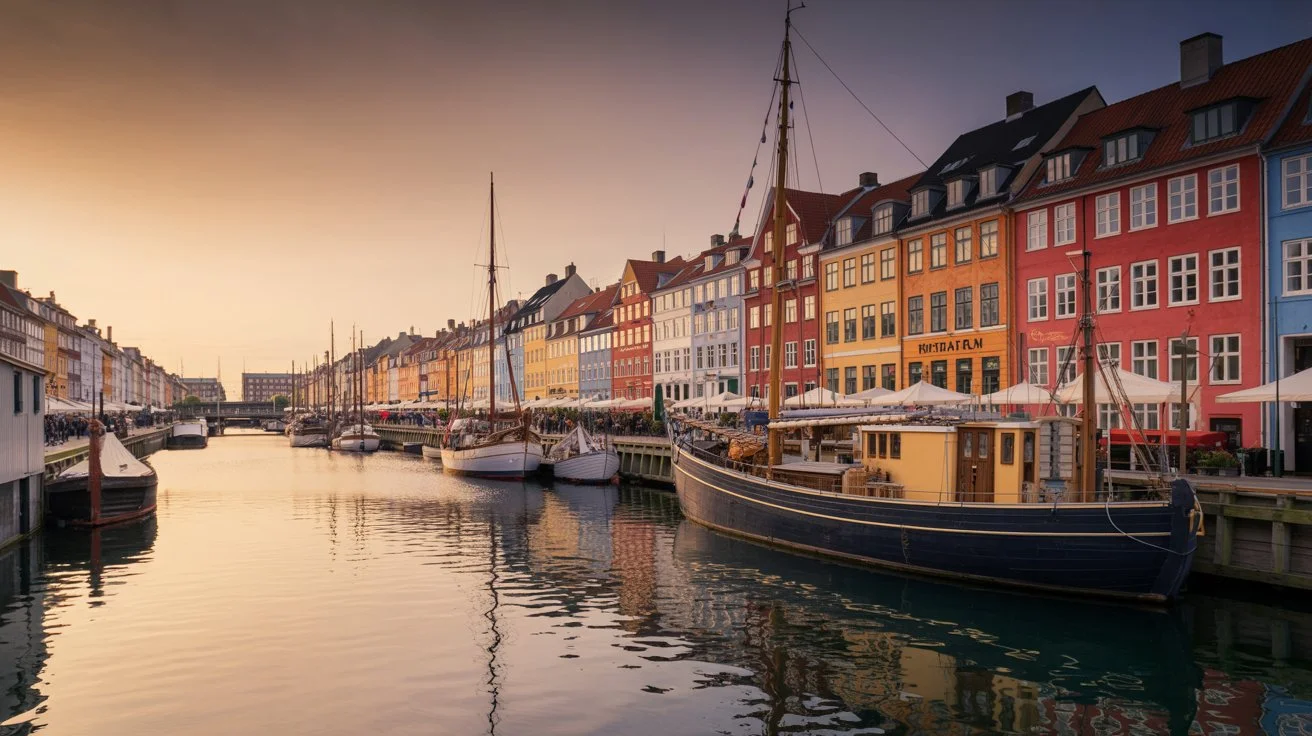
Nyhavn harbor is the most photographed spot in Denmark. This 17th-century canal lined with colorful townhouses and historic ships was also home to Hans Christian Andersen. Visit on a weekday morning to avoid crowds. Take a canal tour with Stromma Denmark or Netto-Badene for an hour-long English-language trip through Copenhagen’s waterways.
Tivoli Gardens opened in 1843 and is one of the oldest amusement parks in the world. Walt Disney said it inspired Disneyland. In the evening the park glows with thousands of lights. During the Christmas market season it is genuinely magical.
The Little Mermaid statue sits on the Langelinie promenade and costs nothing to visit. Go early morning for clean photos without crowds.
Cycling is not optional in Copenhagen. The city has dedicated bike lanes with their own traffic lights and a public bike-share program. The Green Circle Cycle Route and waterfront bike paths pass Amalienborg Palace, Kastellet fortress, and the Nordhavn neighborhood.
The Copenhagen Card is worth buying if you plan to visit three or more paid attractions per day. It covers 89 attractions including Rosenborg Castle, the National Museum of Denmark, and Tivoli Gardens, plus unlimited transport across the capital region.
What Are the Best Places to Visit in Denmark Beyond Copenhagen?
This is where the real Denmark begins. The things to do in Denmark outside the capital are what most travel articles miss entirely.
Skagen sits at the northernmost tip of Denmark where the North Sea and Baltic Sea visibly collide. At a spot called Grenen you can stand with one foot in each sea, which is a uniquely Danish tradition. Just nearby is Råbjerg Mile, the largest migrating sand dune in Northern Europe, moving roughly 18 meters every year. Over 250,000 visitors come annually and entry is free.
Møns Klint is a stretch of dramatic chalk cliffs on the island of Møn rising 120 meters above the Baltic Sea. It is Scandinavia’s first Dark Sky Park, making it exceptional for stargazing after dark. Visit the Geocenter Møns Klint for guided fossil hunts along the shoreline. It takes about 90 minutes by car from Copenhagen.
Stevns Klint is a UNESCO World Heritage Site on Zealand, closer to Copenhagen at roughly 45 minutes by car. White chalk cliffs stretch 11 miles along the coast. It is quieter than Møns Klint and perfect for long cliff-edge walks without the tourist traffic.
Aarhus, Denmark’s second largest city, deserves at least two days:
- ARoS Art Museum, the oldest art museum in Denmark (established 1859), has a rainbow walkway on its rooftop offering a 360-degree panoramic view of the city
- Den Gamla By is an open-air museum recreating cobblestone Danish town life from the 18th to 20th century with costumed interpreters
- Aarhus Street Food Market serves smørrebrød, flæskesteg sandwiches, and international cuisine under one roof at genuinely affordable prices
Camp Adventure in Gisselfeld Kloster Forest on Zealand is a 148-foot observation tower with a treetop spiral walkway. On clear days you can see all the way to Copenhagen and Malmö across the Øresund Strait. It is 50 minutes from Copenhagen and dog-friendly.
What Are the Best Viking History and Culture Experiences?
The Viking Ship Museum in Roskilde is the best starting point for Viking history in Denmark. Five preserved Viking ships are on display alongside interactive demonstrations in rope-making and woodcarving. Roskilde is 30 minutes from Copenhagen by DSB train and combines well with a visit to Roskilde Cathedral.
Kronborg Castle in Helsingør is a UNESCO World Heritage Site and the Renaissance fortress that Shakespeare used as the setting for Hamlet. Its underground casemates and panoramic ramparts are dramatic to walk through. Guided tours explain the castle’s role in Danish and European heritage.
Jelling Monuments, another UNESCO World Heritage Site, mark the birthplace of the Danish kingdom and are completely free to visit outdoors.
The Louisiana Museum of Modern Art sits in Humlebæk, 35 km north of Copenhagen, overlooking the Øresund Strait. Its outdoor sculpture garden holds works by Henry Moore and Alexander Calder. Reach it by train from Copenhagen in 35 minutes.
What Traditional Danish Food Should You Try?
Do not leave Denmark without eating properly. Here is your practical food list:
- Smørrebrød: open-faced rye bread topped with pickled herring, smoked salmon, or liver pâté
- Frikadeller: pan-fried Danish meatballs served with potatoes
- Flæskesteg: crispy roast pork, a true national comfort food
- Æbleskiver: round pancake balls served with jam and powdered sugar
- Kransekage: almond ring cake served at Danish celebrations
- Danish pastries: genuinely far better here than anywhere else
Pair any meal with a Carlsberg or Tuborg. Torvehallerne in Copenhagen is the best food market for fresh tastings and artisan produce. The Aarhus Street Food Market is the right choice for budget travelers who want variety without fine-dining prices.
Is Denmark Good for Families with Kids?
Yes. Legoland Billund near Billund Airport is the obvious draw. Day passes cost roughly $50 to $60 per person depending on season. Combine it with the nearby LEGO House for a full day. Bakken (Dyrehavsbakken), the world’s oldest amusement park opened in 1583, sits just outside Copenhagen in Dyrehaven forest and offers roller coasters, arcades, and family restaurants. Camp Adventure, Den Gamla By, and Tivoli Gardens round out an excellent family itinerary that does not require a car.
What Is the Best Time of Year to Visit Denmark?
| Season | Best For | Budget Impact |
|---|---|---|
| Summer (June to August) | Skagen beaches, long daylight, Nyhavn canal tours | Most expensive; July is peak |
| Spring (April to May) | Lejre countryside, mustard fields, fewer crowds | Sweet spot for price and weather |
| Autumn (September to October) | Black Sun murmurations, Wadden Sea, quiet castles | Budget-friendly |
| Winter (December) | Christmas markets, Tivoli lights, peak hygge | Moderate to high |
How Much Does It Cost to Travel in Denmark?
Denmark is expensive but very manageable with planning:
- Budget travelers: $50 to $100 per day in hostels, cooking some meals
- Mid-range travelers: $150 to $250 per day covering private rooms and restaurants
- A mid-range restaurant meal: 150 to 300 DKK (roughly $23 to $46)
- Fast food: 60 to 80 DKK per meal
Save money using DSB orange tickets (up to 60% cheaper when booked online), the Copenhagen Card, and focusing on Denmark’s many free attractions. Denmark is effectively a cashless society. Pay by card everywhere and leave cash at home.
How Do You Get Around Denmark Without a Car?
The DSB train network connects Copenhagen, Aarhus, Odense, and Roskilde efficiently. Use a Rejsekort travel card for the best per-journey rates. Copenhagen is best explored by bicycle. Møns Klint and more remote areas require a car or a seasonal tourist bus. Flying into Billund Airport instead of Copenhagen is practical if Legoland is on your itinerary.
FAQs
Is Denmark worth visiting?
Yes. If you are researching things to do in Denmark for the first time, you will quickly realize how much it punches above its size. It is compact, near-universally English-speaking, and rich in culture, food, nature, and Viking history. Few European countries pack this much variety into such a small footprint.
How many days do you need in Denmark?
Seven days is ideal for a well-rounded trip covering Copenhagen, Roskilde, Møns Klint, Aarhus, Skagen, and Legoland Billund. Five days works if you focus on Copenhagen and two day trips.
Is Denmark better than Norway or Sweden to visit?
They offer different things. Denmark is smaller, more affordable than Norway, richer in Viking and fairy-tale cultural experiences, and easier to navigate. Its food scene and cycling culture are hard to match in Scandinavia.
Is Denmark safe for solo travelers?
Very. Denmark ranks among the safest countries in the world. Locals speak fluent English and public transport runs reliably day and night.
What is the Black Sun in Denmark?
The Black Sun (Sort Sol) is a natural event where approximately one million starlings fly in synchronized formations over the marshlands of South Jutland every late August near the Wadden Sea National Park. Free to witness at dusk.
What are the best day trips from Copenhagen?
Roskilde for the Viking Ship Museum (30 minutes by DSB train), Helsingør for Kronborg Castle (45 minutes by train), Humlebæk for the Louisiana Museum (35 minutes by train), and Stevns Klint (45 minutes by car).
What is the Øresund Bridge?
The longest bridge in Europe, connecting Copenhagen to Malmö in Sweden. Tourists cross it freely by train or car. It became internationally known through the Nordic crime series Broen (The Bridge).
Can you visit Denmark on a budget?
Yes. Free attractions include The Little Mermaid on the Langelinie promenade, the Nyhavn harbor walk, Jelling Monuments, and all five national parks. Use DSB orange tickets and eat at food markets.
Is Copenhagen worth visiting in winter?
Absolutely. December brings Christmas markets, glowing Tivoli Gardens lights, and genuine hygge in every café and restaurant across the city.
What is Denmark’s currency and do they take cards?
Denmark uses the Danish Krone (DKK), not the Euro. Divide DKK by 6.5 for a rough USD equivalent. Denmark is essentially cashless and cards are accepted everywhere.
Final Takeaway
Denmark does not need to be rushed. The best things to do in Denmark stretch from Viking ship halls in Roskilde and chalk cliffs at Møns Klint to one million starlings dancing over South Jutland at dusk. Plan around the shoulder seasons, use the DSB network, eat at local food markets, and let the concept of hygge slow your pace. Start beyond Copenhagen and you will understand exactly why this small Nordic country keeps pulling people back.