
Things to Do in Edinburgh: A Complete 2026 Guide

The best things to do in Edinburgh include touring Edinburgh Castle, walking the Royal Mile, hiking Arthur’s Seat, and exploring the free National Museum of Scotland. Most travelers need two to five days to see the Old Town, New Town, and at least one day trip into the Highlands or Fife.
Planning a first trip here gets confusing fast. Every guide lists twenty five attractions without saying which five actually matter, and price numbers rarely match from one site to the next. This guide sorts through that noise.
What Is Edinburgh Known For?
Edinburgh is Scotland’s capital, built across seven hills around an extinct volcano. It is known for medieval architecture in the Old Town, elegant Georgian streets in the New Town, and a skyline dominated by Edinburgh Castle. Both districts are UNESCO World Heritage Sites, rare for a city this size.
The city also carries a reputation for its darker side, with ghost tours through underground vaults and closes, and a lighter side thanks to the Edinburgh Festival Fringe every August. Author J.K. Rowling wrote much of the Harry Potter series in local cafes, which draws its own steady stream of visitors.
One quick note: Edinburgh is pronounced “ed in bruh,” not “ed in burg.” It does not rhyme with Pittsburgh, and getting this wrong is a common giveaway for first timers.
How Many Days Do You Need in Edinburgh?
Two full days cover the essentials: Edinburgh Castle, the Royal Mile, and a hike up Arthur’s Seat. Three to five days let travelers add the New Town, a museum or two, and a proper day trip.
- One day: Royal Mile, Edinburgh Castle, and a quick stop at Calton Hill
- Two days: add Arthur’s Seat, Holyroodhouse, and Greyfriars Kirkyard
- Three to five days: add the New Town, Leith, free museums, and a Highlands or Fife day trip
Travelers consistently find that cramming everything into one day leads to rushed castle visits and missed lunches. Pace matters more than checklist length here.
What Is the Best Time to Visit Edinburgh?
Shoulder season, meaning April through June or September through October, tends to give the best mix of mild weather, thinner crowds, and reasonable hotel prices. Expect daytime temperatures around 10 to 16 degrees Celsius and a real chance of rain on any given day, since Scottish weather shifts fast no matter the month.
August brings the Edinburgh Festival Fringe and the Royal Edinburgh Military Tattoo, arguably the liveliest weeks on the calendar. It also roughly triples the downtown population, pushes hotel prices up sharply, and means many restaurants need reservations days ahead.
December offers a different kind of magic, with Christmas markets filling Princes Street Gardens and Hogmanay closing out the year with one of the largest New Year celebrations anywhere. Winter days are short and cold, so pack for wind more than snow.
Is Edinburgh Expensive?
Edinburgh costs noticeably less than London but more than most of the Scottish countryside. A realistic daily budget looks like this:
- Budget: around 50 to 70 pounds a day, covering hostel or budget hotel, self catered meals, and mostly free attractions
- Mid range: around 100 to 160 pounds a day, including a hotel room, sit down meals, and one paid attraction
- Higher end: 200 pounds or more a day, factoring in central hotels, tasting menus, and guided tours
A single paid attraction ticket generally runs between 18 and 25 pounds for adults, though prices shift by season, so it is worth checking the official site rather than trusting any one blog’s number. Several of the best sights, including the National Museum of Scotland and the Scottish National Gallery, cost nothing to enter.
Do You Need a Visa to Visit Edinburgh?
Most visitors from the United States, Canada, and Australia now need a UK Electronic Travel Authorization, or UK ETA, before arriving. It costs around 10 pounds, stays valid for two years, and usually processes within a few days, though it is smart to apply at least a week ahead rather than the night before. Requirements for EU travelers have shifted more than once, so it is worth double checking closer to the travel date.
How Do You Get to and Around Edinburgh?
Most international flights land at Edinburgh Airport, about 8 miles out. The Edinburgh Trams run every 7 minutes and reach downtown in roughly 30 minutes, with a return ticket costing around 7.50 pounds. Taxis and airport buses work well too.
Once in the city, walking is genuinely the best way to get around, since most major sights sit within a 20 minute walk of each other. Buses fill in the gaps for neighborhoods like Leith or Portobello Beach.
Old Town vs New Town: What’s the Difference?
The Old Town holds the medieval core of the city, including the Royal Mile, Edinburgh Castle, and narrow closes tucked between tall stone buildings. The New Town, built mostly in the 1700s and 1800s, feels more spacious with wide Georgian streets and the main shopping strip around George Street.
Most first timers gravitate toward the Old Town for its atmosphere, but the New Town rewards a slower walk with better shopping, quieter cafes, and views back toward the castle from Princes Street Gardens.
Best Things to Do in Edinburgh Old Town

Edinburgh Castle sits atop Castle Rock at the top of the Royal Mile and remains the city’s most visited paid attraction. It is genuinely worth seeing for the Crown Jewels of Scotland and the views, though some travelers find the entry fee steep for a fairly compact interior. If budget is tight, viewing the castle from Princes Street Gardens or Calton Hill costs nothing and still makes a strong photo.
Other Old Town highlights worth building a route around:
- The Royal Mile, a roughly 1 mile stretch connecting the castle to Holyroodhouse, lined with shops, pubs, and street performers
- St Giles’ Cathedral, free to enter, known for its crown shaped steeple and stained glass
- The Real Mary King’s Close, a guided tour through sealed underground streets tied to the city’s plague history, best booked ahead since it sells out often
- Greyfriars Kirkyard, linked to both the loyal dog Greyfriars Bobby and several names that may have inspired Harry Potter characters
A common mistake first timers make is trying to see the castle and Holyroodhouse in one rushed afternoon. Each deserves 90 minutes to two hours, so pairing both with a big Royal Mile walk usually means skipping lunch.
Best Things to Do in Edinburgh New Town
Princes Street Gardens sits right below the castle and makes a peaceful stop between sightseeing stretches, especially with the Scott Monument rising above it. Climbing the monument’s narrow 287 step staircase rewards visitors with one of the best rooftop level views in the city, though it is not ideal for anyone uneasy in tight spaces.
The Scottish National Gallery, free to enter, makes a smart backup plan on a rainy afternoon. A short walk further out, Dean Village offers a quiet, storybook contrast with its old stone mills along the Water of Leith. Calton Hill rounds things out, drawing crowds at sunset for arguably the most photographed skyline view in the city.
Where Are the Harry Potter Sites in Edinburgh?
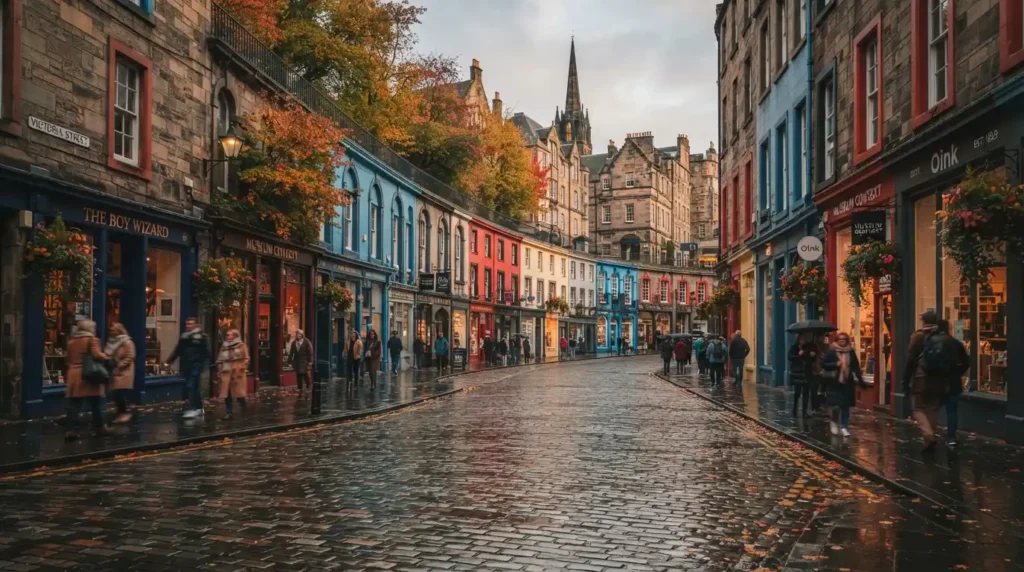
Fans of the series can visit The Elephant House, one of the cafes where J.K. Rowling reportedly wrote parts of the early books. Victoria Street, with its curved row of colorful shopfronts, is often described as a possible inspiration for Diagon Alley, though this is more legend than confirmed fact. Greyfriars Kirkyard rounds out the trail, with a gravestone bearing the name Thomas Riddell often pointed out by guides.
Is Arthur’s Seat Hard to Hike?
Arthur’s Seat is an extinct volcano rising 251 meters above Holyrood Park, and the main route to the summit runs about 2.4 miles round trip. Most travelers finish in under two hours at a relaxed pace, and no technical climbing gear is needed. The trail can get muddy after rain, and wind at the top is stronger than expected, so a light waterproof layer is worth packing even on a sunny looking morning.
What Are the Best Free Things to Do in Edinburgh?
Edinburgh is unusually generous with free attractions for a European capital. Worth prioritizing:
- National Museum of Scotland, covering everything from Scottish history to natural science
- Scottish National Gallery and the nearby Scottish National Gallery of Modern Art
- Princes Street Gardens and Royal Botanic Garden Edinburgh
- Calton Hill and the Vennel Viewpoint for skyline photos
- The Writer’s Museum, dedicated to Robert Burns, Sir Walter Scott, and Robert Louis Stevenson
What Food Should You Try in Edinburgh?
Haggis remains the dish most visitors feel obligated to try at least once, and plenty of restaurants now serve a vegetarian version alongside the traditional one, so dietary restrictions are less of a barrier than expected. Fish and chips, a proper Scotch whisky tasting, and the famously odd deep fried Mars bar round out the classic list, while Irn Bru stays the local soft drink of choice.
Old Town pubs serve hearty, affordable plates, while New Town and Leith restaurants lean toward refined, seasonal menus. Vegan and vegetarian travelers generally find solid options citywide, especially in newer food hall spaces near St James Quarter, though it is worth calling ahead at smaller traditional pubs.
What Are the Best Day Trips from Edinburgh?
Several standout day trips leave directly from the city, most without a rental car:
- Loch Ness, Glencoe, and the Scottish Highlands, a long but rewarding full day tour
- Stirling Castle and Loch Lomond, easy to fit into a half day
- St Andrews and the fishing villages of Fife, a gentler pace with coastal scenery
- The Forth Bridge in South Queensferry, a quick half day trip
Renting a car opens up more flexibility, and driving on the left takes most visitors only a short adjustment period, but organized tours remain the simpler choice for a single day trip.
Should You Visit During the Fringe Festival?
The Edinburgh Festival Fringe takes over the city every August with thousands of shows across nearly every venue. It is incredible for anyone who loves live performance, but it also means higher hotel prices, packed restaurants, and a Royal Mile that can feel impossible to walk at peak hours. Travelers who prefer a calmer visit generally do better in the shoulder months.
Where Should You Stay in Edinburgh?
Old Town hotels near the Royal Mile suit travelers who want to walk everywhere and soak up the atmosphere at night. New Town options around George Street tend to be quieter and closer to the shopping streets, while still an easy walk from the castle.
Final Thoughts
Edinburgh rewards travelers who slow down enough to enjoy it, rather than sprinting through a twenty item checklist. Two days cover the highlights, five let the quieter corners open up. Whatever the trip length, the best things to do in Edinburgh tend to be the ones paired with a coffee break, a slower walk, and room for the weather to change its mind.
FAQs
Is Edinburgh safe to walk around at night?
Yes, the main tourist areas are generally safe, though it pays to stick to well lit streets and avoid quiet closes late at night.
Is the Royal Edinburgh Ticket worth it?
It can save money for travelers visiting Edinburgh Castle, Holyroodhouse, and the Royal Yacht Britannia in one trip, but not if only one site is on the itinerary.
Can you see Edinburgh in one day?
Yes, though it means focusing on the Royal Mile, Edinburgh Castle, and a quick stop at Calton Hill, while skipping the New Town.
Is Edinburgh good for a solo trip?
Yes, the compact, walkable layout and strong hostel scene make it an easy city to explore alone.
Do I need to book Edinburgh Castle tickets in advance?
Booking a few days ahead is recommended, especially in summer, since morning time slots often sell out first.


