
New Zealand South Island Must See: The Complete Guide
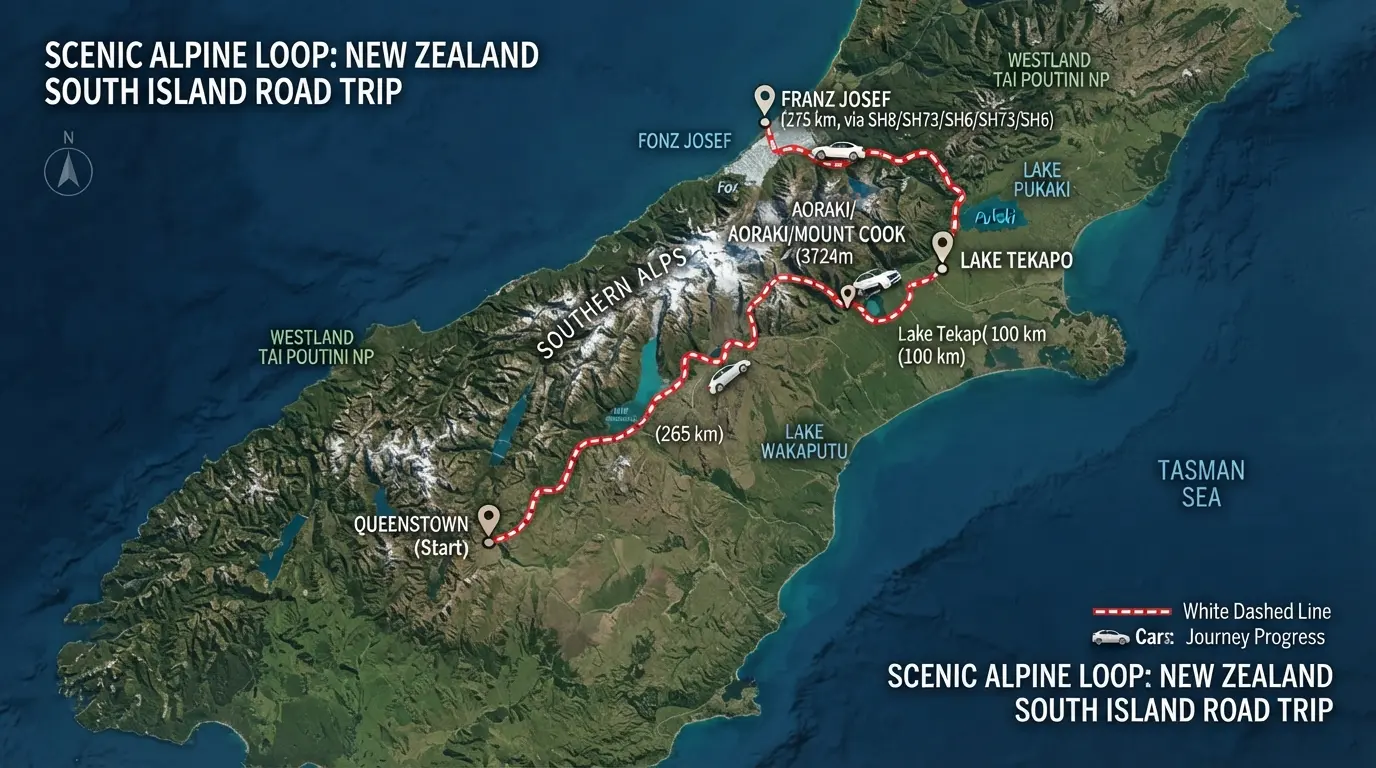
If you only remember one thing about New Zealand South Island must see places, remember this. Milford Sound, Queenstown, Aoraki Mount Cook, Wanaka, Franz Josef Glacier, Lake Tekapo, and Kaikoura form the backbone of almost every good South Island itinerary. Together they cover mountains, fjords, glaciers, and wildlife within a few hours drive of each other.
That sounds simple enough on paper. Then you start planning and the questions pile up fast. How many days do you actually need. Is Milford Sound worth the hype or is Doubtful Sound the smarter pick. Can you even do a road trip here in winter. If you have felt that mild panic scrolling ten different blog posts with ten different answers, you are not alone, and that is exactly what this guide sorts out.
How Many Days Do You Need for a South Island New Zealand Itinerary?
Most travelers need 10 to 14 days to properly cover the highlights without turning the trip into a blur of car windows. A tight 7 day version works if you focus only on Queenstown, Wanaka, and Milford Sound. Stretch to 14 days and you can add the West Coast glaciers, deeper Fiordland exploration, and the Marlborough Sounds up north.
Here is how the three common trip lengths actually break down.
| Trip length | Best for | What you’ll cover |
| 7 days | First-timers, short holidays | Queenstown, Wanaka, Milford Sound day trip |
| 10 days | Balanced first visit | Above plus Mount Cook, Lake Tekapo, Franz Josef |
| 14 days | Full South Island road trip | Above plus West Coast, Catlins or Marlborough Sounds |
A common mistake first-timers make is trying to squeeze all three regions above into 7 days. The South Island looks compact on a map, but the roads wind through mountains, and a drive that looks like two hours on Google Maps can easily become three once you stop for photos every ten minutes, which you will.
What Are the Best South Island New Zealand Attractions to Start With?
Queenstown, Aoraki Mount Cook National Park, and Milford Sound are the three attractions most first-time visitors build a trip around. They sit within a driveable loop of each other, and each one shows off a completely different side of the island: an alpine adventure town, a glacial mountain landscape, and a remote fjord.
Queenstown works as a natural base for the first few nights. It sits on the edge of Lake Wakatipu, ringed by the Southern Alps, and gives you jet boating, wine tours, and hiking without needing to move hotels every night. From there, Milford Sound and Aoraki Mount Cook both work as long day trips, or better yet, overnight stops if your schedule allows it.
Is Milford Sound or Doubtful Sound Better to Visit?
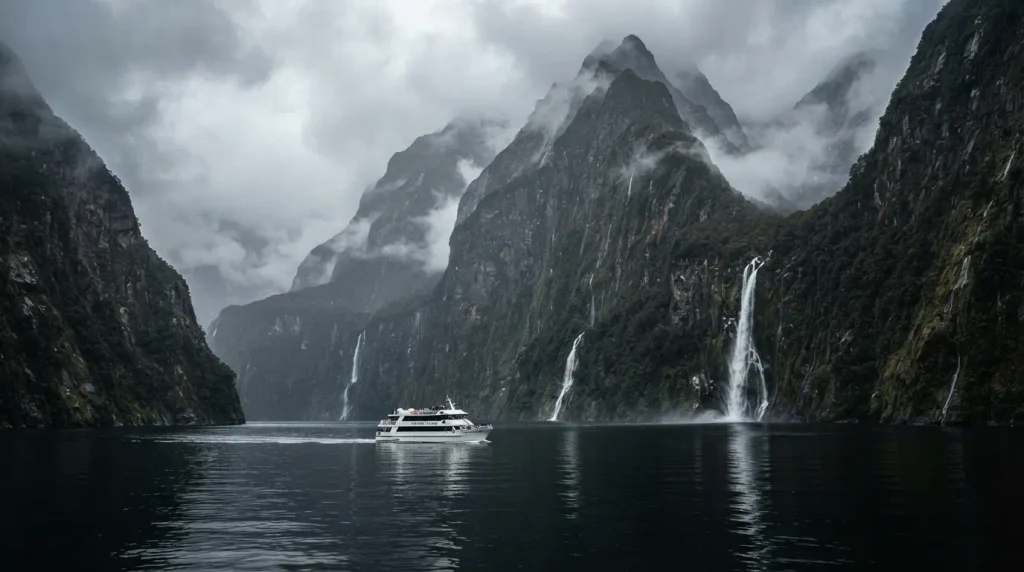
Milford Sound is more accessible, drivable in a single day from Queenstown or Te Anau, and better suited to visitors with limited time. Doubtful Sound requires a boat and bus combination just to reach the water, costs more, and takes a full day or overnight commitment, but travelers who have done both consistently say it feels quieter and more remote.
| Feature | Milford Sound | Doubtful Sound |
| Access | Drive or day tour from Queenstown | Boat plus bus, no direct road |
| Crowd levels | Busy, especially midday | Much quieter |
| Typical cost | From around $80 to $150 NZD for a cruise | From around $300 to $500 NZD for overnight cruise |
| Time needed | Half day to full day | Full day to overnight |
| Best for | First-timers, tight schedules | Travelers wanting solitude |
If your schedule only allows one, pick Milford Sound. If you have already seen it on a past trip or genuinely want fewer boats around you, Doubtful Sound earns its higher price tag.
What Things to Do in South Island New Zealand Cover Nature and Wildlife?
Wildlife lovers should build time around Kaikoura for whales and dolphins, Ōamaru and Curio Bay for penguins, and the Otago Peninsula near Dunedin for one of the most accessible albatross colonies on earth. None of these experiences are staged. They are wild animals working to their own schedules, which is part of what makes them memorable.
When Can You See Whales in Kaikoura?
Sperm whales live off the Kaikoura coast all year round, so you have a solid chance of a sighting whenever you visit. Humpback whales pass through from June to July as they migrate north away from Antarctica’s cold waters, which makes winter a surprisingly good and underrated time to plan a wildlife-focused stretch of your trip. Dusky dolphins also gather here in large, acrobatic pods, and seals lounge along the Kaikoura Peninsula Walkway in impressive numbers.
Locals recommend booking a boat tour rather than a flight if seasickness is not a concern, since boats get closer to the water level where the action happens.
What Are the Best Places to Visit South Island New Zealand for Hiking?
Hikers consistently rank the Routeburn Track, Hooker Valley Track, Roy’s Peak, and Key Summit among the best places to visit for scenery relative to effort. The Hooker Valley Track near Mount Cook Village is the easiest of the group, a mostly flat walk across a few swing bridges that ends at a glacial lake studded with small icebergs. Roy’s Peak, above Wanaka, demands a steeper 16 kilometer round trip climb but rewards you with one of the most photographed viewpoints in the country.
The Routeburn Track deserves special mention because it crosses two national parks, Mount Aspiring and Fiordland, over 32 kilometers that can be walked in two to four days. You do not need to commit to the full multi-day version either. Day hikers can walk in from either end, reaching Routeburn Flats or Key Summit and turning back the same afternoon.
Do You Need to Book New Zealand’s Great Walks in Advance?
Yes. The Great Walks, including the Routeburn, Kepler, and Milford Track, run on a defined season from late October to April, and huts or campsites along them need to be booked through the DOC website well ahead of summer. Popular huts on tracks like the Routeburn can sell out months in advance during peak season, so travelers hoping to walk in December or January should lock in dates as early as possible, ideally as soon as bookings open.
What Is the Best South Island New Zealand Winter Itinerary?
Winter changes the shape of a South Island trip more than most guides admit. A South Island New Zealand winter itinerary works best when it centers on Queenstown and Wanaka for skiing and snowboarding, rather than trying to force the same summer route.
Here is the honest downside most articles skip. The Milford Road can close for avalanche control at short notice during winter months, sometimes for hours at a time, which makes a same-day Milford Sound trip from Queenstown a gamble between roughly June and September. Many Great Walk huts also switch to a lower, unserviced winter rate with no heating or gas, meaning multi-day hiking becomes an experienced alpine traveler’s game rather than a casual one.
Instead, winter travelers get excellent value skiing at Cardrona, Coronet Peak, The Remarkables, and Treble Cone, plus quieter, cheaper visits to Lake Tekapo for stargazing, since clearer winter skies often mean better viewing at the Aoraki Mackenzie International Dark Sky Reserve.
What Are the Best Places to Visit in South Island New Zealand for Food and Wine?
Central Otago, close to Queenstown and Wanaka, is the standout wine region for Pinot Noir, with small boutique cellar doors set against mountain backdrops that make an afternoon tasting feel like a proper day out rather than a quick stop. Marlborough, near Picton at the top of the island, leads the country for Sauvignon Blanc, though its wineries tend to be larger commercial operations compared to Central Otago’s smaller scale.
What Local Food Should You Try on the South Island?
Expect to pay around $30 to $50 NZD for a dozen Bluff oysters when they are in season from around March to August, a genuine South Island delicacy from the small port town at the very bottom of the island. Kaikoura is the place for crayfish, sold fresh from roadside caravans along the coastal highway, while Marlborough Sounds mussels turn up on menus across the whole island.
For something less polished but equally loved, road trippers consistently point to small-town bakeries along the West Coast and inland highways, the kind of unglamorous pie shop that locals detour for on a normal Tuesday.
How Much Does a South Island New Zealand Road Trip Cost?
A South Island road trip typically runs between $150 and $400 NZD per day per person once you combine campervan or accommodation costs, fuel, food, and a moderate amount of paid activities. Adventure add-ons like skydiving, heli-hikes, or scenic flights sit well outside that daily figure, usually adding another $300 to $700 NZD per activity.
| Category | Approximate daily cost (NZD) |
| Campervan hire | $80 to $250 |
| Fuel | $30 to $60 |
| Food | $40 to $80 |
| One paid activity | $60 to $200 |
| Total per day | $150 to $400+ |
Prices vary a fair amount depending on season, with December through February sitting at the top of that range and the shoulder months of March to May and September to November offering noticeably better campervan and accommodation rates.
Should You Rent a Campervan or a Car for the South Island?
A campervan suits travelers who want flexibility and lower accommodation costs, since you can pull into a DOC campsite for a fraction of a hotel rate and wake up already parked at the trailhead. A rental car paired with hotels or motels tends to suit shorter trips, colder months, or anyone who values a proper shower and bed over overnight freedom.
Worth it versus skip it comes down to trip length. Under a week, a car usually wins on comfort and simplicity. Over ten days, a campervan starts paying for itself in saved accommodation costs, particularly if you are comfortable with basic facilities.
Conclusion
The South Island rewards travelers who plan around their own pace rather than someone else’s checklist. Whether you have 7 days or 14, anchoring your South Island itinerary around a small number of must see places, Milford Sound, Queenstown, Mount Cook, and one or two wildlife or wine detours, beats trying to chase every stop on every list. Book your Great Walk huts and Queenstown accommodation early, build in a buffer day for weather in Fiordland, and let the rest of the trip stay flexible. That balance of planning and freedom is what makes a South Island trip feel like an adventure instead of a schedule.
FAQs
Is South Island or North Island New Zealand better?
The South Island wins for mountains, fjords, and glaciers, while the North Island wins for geothermal activity and Māori cultural sites. Most repeat visitors to New Zealand say the South Island edges ahead for raw, dramatic scenery.
Do I need a car to see the South Island?
Yes. Public transport between South Island towns is limited, and many of the best attractions sit well outside town centers, so a car or campervan is close to essential.
How do you avoid crowds at Roy’s Peak and Hooker Valley Track?
Start both hikes before sunrise, aiming to be at the car park by around 5:30 to 6am during summer. Both fill within an hour of daylight during peak season, and arriving late often means a long walk just from the overflow parking.
Is it worth doing a Great Walk if you’re not an experienced hiker?
Yes. Tracks like the Queen Charlotte Track offer lodge-based accommodation and water taxi luggage transfer between stops, making multi-day hiking accessible without needing backcountry camping gear or experience.
What is the most beautiful part of the South Island New Zealand?
Opinions vary, but Fiordland National Park, home to Milford and Doubtful Sound, and the Aoraki Mount Cook region are the two most consistently named as the most beautiful part of the South Island.


