How to Stretch Hip Flexors Properly for Better Flexibility
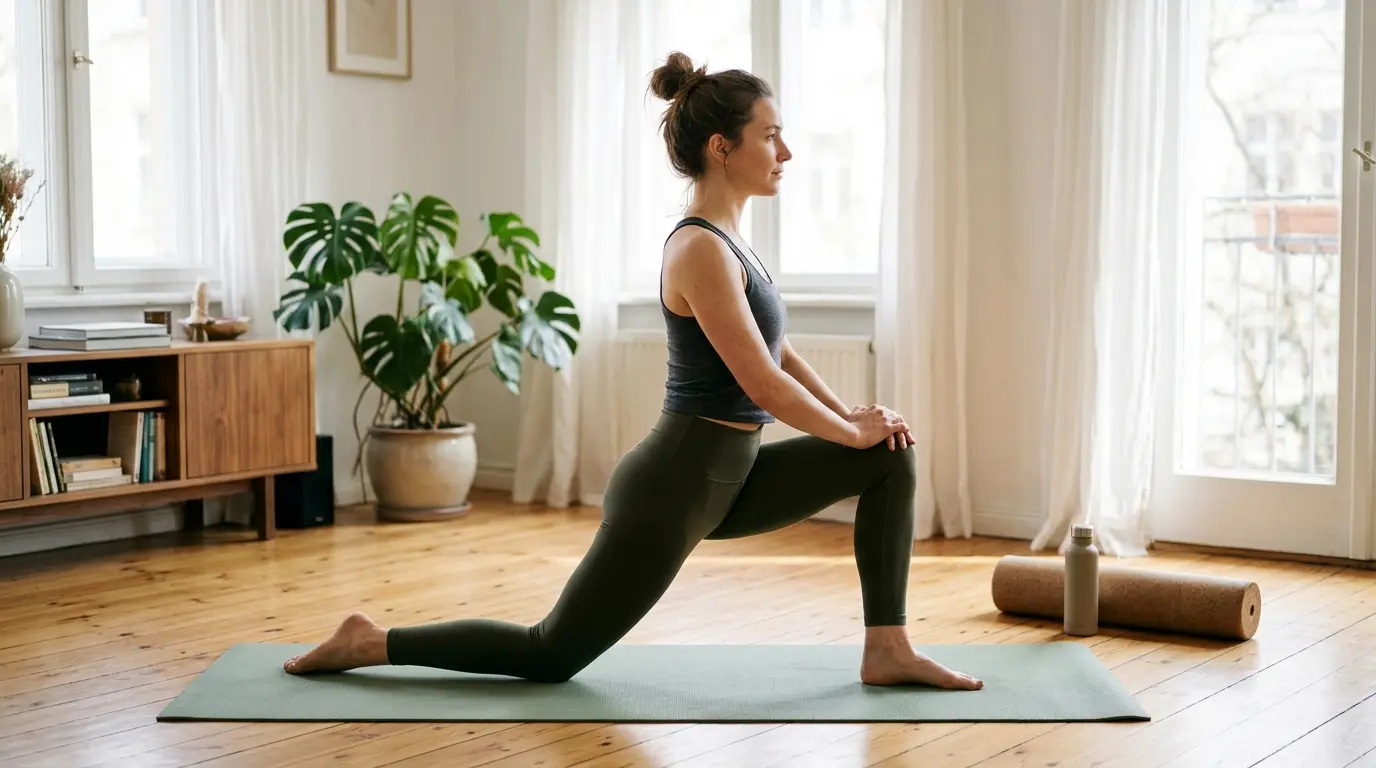
How to stretch hip flexors starts with a half-kneeling position and a posterior pelvic tilt. Hold 30 to 60 seconds per side. This targets the iliopsoas and rectus femoris. Daily practice reduces tightness from sitting. Proper form avoids lower-back arching.
Why Hip Flexors Get Tight
Sitting for long periods keeps the hip flexors in a shortened position. Over time they lose flexibility. Running, cycling and certain sports can also contribute. Tight hip flexors may pull on the lower back and limit stride length. Stretching helps restore length and ease discomfort.
The main muscles are the iliopsoas and the rectus femoris, which also crosses the knee. A good stretch addresses both. What is a sedentary lifestyle explains how prolonged sitting affects the body in multiple ways, including hip flexibility.
The Essential Half-Kneeling Hip Flexor Stretch
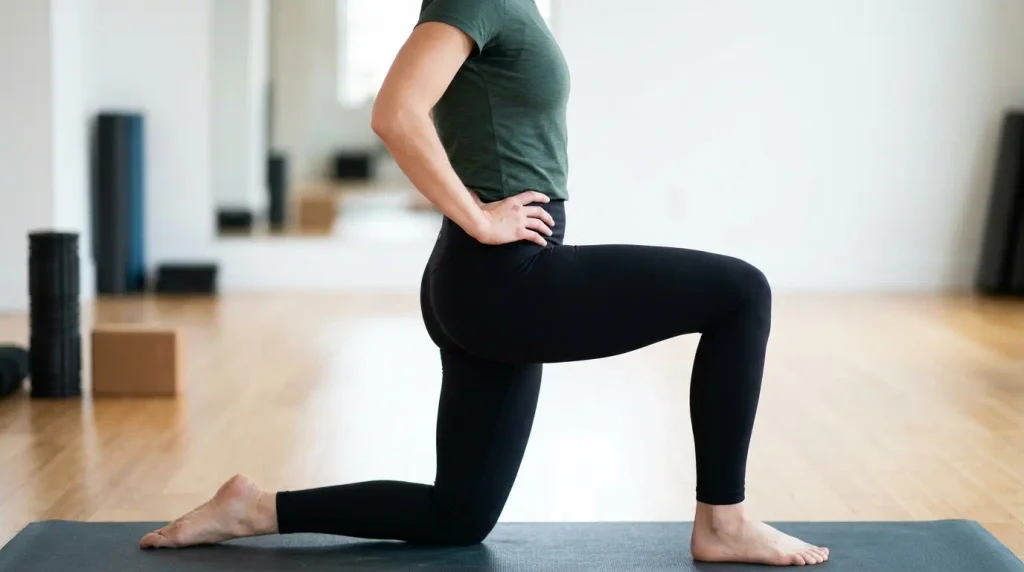
Kneel on one knee with the other foot forward so both knees form right angles. Tuck the tailbone under by squeezing the glutes. This posterior pelvic tilt is the key cue. Shift the hips forward slightly until a stretch is felt at the front of the back hip. Hold 30 to 60 seconds.
Keep the torso upright. Do not arch the lower back. If the stretch is not felt, squeeze the glute on the kneeling side harder. Switch sides. This position targets the hip flexors effectively without excessive lower-back stress. Perform it daily.
Standing and Couch Variations
For a standing version, place one foot on a low step or bench. Push the hips forward while keeping a slight posterior tilt. This is milder and useful when kneeling is uncomfortable. Start with a lower step than expected.
The couch stretch is more intense. Face away from a wall or bench, place the back knee in the corner and the shin up the surface. Tuck the pelvis and lean slightly. This lengthens both the hip flexors and the quadriceps. Hold only as long as form stays good. Best workout routines 2026 often include mobility work like this.
| Stretch | Difficulty | Hold Time | Best For |
|---|---|---|---|
| Half-kneeling | Beginner to intermediate | 30-60 sec | Daily maintenance |
| Standing with foot elevated | Beginner | 30 sec | Limited mobility |
| Couch stretch | Advanced | 30-45 sec | Deeper lengthening |
| Lying knee-to-chest | Beginner | 10-30 sec | Gentle start |
Form Cues That Matter
Posterior pelvic tilt is essential. Without it the lower back arches and the stretch misses the hip flexors. Squeeze the glute of the back leg. Keep the front knee aligned over the ankle. Breathe steadily and relax into the position rather than forcing range.
If the stretch is felt in the lower back, reduce the forward shift and increase the pelvic tuck. For the rectus femoris, a slight knee bend on the back leg can increase the stretch. Consistency beats intensity. Short daily holds outperform occasional long sessions.
A Simple Daily Routine
Start with the half-kneeling stretch on each side for 45 to 60 seconds. Add a standing version if desired. Finish with a gentle lying stretch if the hips still feel tight. The full sequence takes five to seven minutes.
Perform the routine after sitting for long periods or at the end of a workout. Avoid aggressive stretching right before intense activity. Warm the muscles lightly first if they feel very stiff. Art of fitness with a balance ball can complement hip work for core stability.
Common Mistakes to Avoid
Arching the lower back is the most frequent error. It reduces the stretch on the hip flexors and can irritate the spine. Leaning the torso forward excessively also shifts the emphasis. Skipping the pelvic tilt leaves the stretch incomplete.
Holding the breath or bouncing does not help. Stay still and breathe. Do not push into sharp pain. Mild discomfort is normal. Sharp pain means stop and reassess form. Progress gradually as flexibility improves.
When to Add Strength Work
Stretching lengthens the muscles. Strengthening the glutes and core helps them stay lengthened by improving posture. Glute bridges, dead bugs and side-lying leg lifts support the hips. Tight hip flexors often pair with weak glutes from sitting.
Combine stretching with strength for better long-term results. Address both sides even if only one feels tighter. Best workout routines 2026 include balanced programs that cover mobility and strength together.
How Long Until You Notice Change
Many people feel less tightness after a few consistent days. Measurable flexibility gains often appear within two to four weeks of daily practice. Sitting less and moving more speeds progress. Results depend on starting tightness and consistency.
Track progress by noting how far the hips can shift forward while keeping good form. Photos or simple range tests help. If tightness persists or pain increases, consult a professional. Stretching is one part of overall hip health.
Additional Tips for Daily Life
Stand and walk briefly every 30 to 60 minutes during long sitting periods. Adjust chair height so hips stay slightly above the knees when possible. Use a standing desk part of the day. These habits reduce the shortening that stretching then has to reverse.
Wear supportive shoes and avoid prolonged high-heel use if hip tightness is an issue. Stay hydrated. Combine the stretches with other mobility work for the thoracic spine and ankles. Better overall movement patterns support hip flexibility.
FAQs
how to stretch hip flexors
Kneel on one knee, tuck the pelvis under and shift the hips forward gently. Hold 30 to 60 seconds per side. Keep the lower back neutral. Do this daily for best results.
How long should I hold a hip flexor stretch?
Hold each side for 30 to 60 seconds. Two or three rounds are useful. Shorter holds done more often also help. Avoid bouncing.
Why does my lower back hurt when I stretch hip flexors?
The pelvis is probably tilting forward and arching the back. Increase the posterior tuck by squeezing the glutes and reduce the forward lean. The stretch should be felt in the front of the hip.
Can I stretch hip flexors every day?
Yes. Daily gentle stretching is safe and effective for most people. Stop if sharp pain occurs. Consistency matters more than intensity.
What is the best hip flexor stretch for beginners?
The half-kneeling stretch with a strong pelvic tuck is ideal. A standing version with the foot on a low step is even milder. Start with shorter holds.
Do hip flexor stretches help lower back pain?
They can reduce tension that contributes to lower-back discomfort for some people. They are not a complete solution. Address posture and strength as well.
Should I stretch before or after a workout?
After a workout or later in the day is better for static holds. Light dynamic movement can prepare the hips before activity. Avoid long static stretches right before intense exercise.
How do I know if my hip flexors are tight?
Difficulty standing tall after sitting, limited stride or a pull in the front of the hip during a lunge are common signs. A simple test is how far the hips shift forward in the half-kneeling position.
Can tight hip flexors affect running?
Yes. They can shorten stride and increase stress on the lower back and knees. Regular stretching and strength work support better running form.
Is the couch stretch safe?
It is intense and best after the half-kneeling version feels easy. Keep the pelvic tuck and stop if the lower back arches or pain appears. Many people progress to it over time.
Do I need equipment?
No. The floor and a wall or low step are enough. A mat adds comfort for kneeling. No special tools are required.
When should I see a professional?
If pain is sharp, radiates or does not improve with consistent gentle stretching, consult a physical therapist or doctor. Persistent tightness may need a broader assessment.