
Seattle Tourist Guide : Best Attractions, Timing, and Getting Around
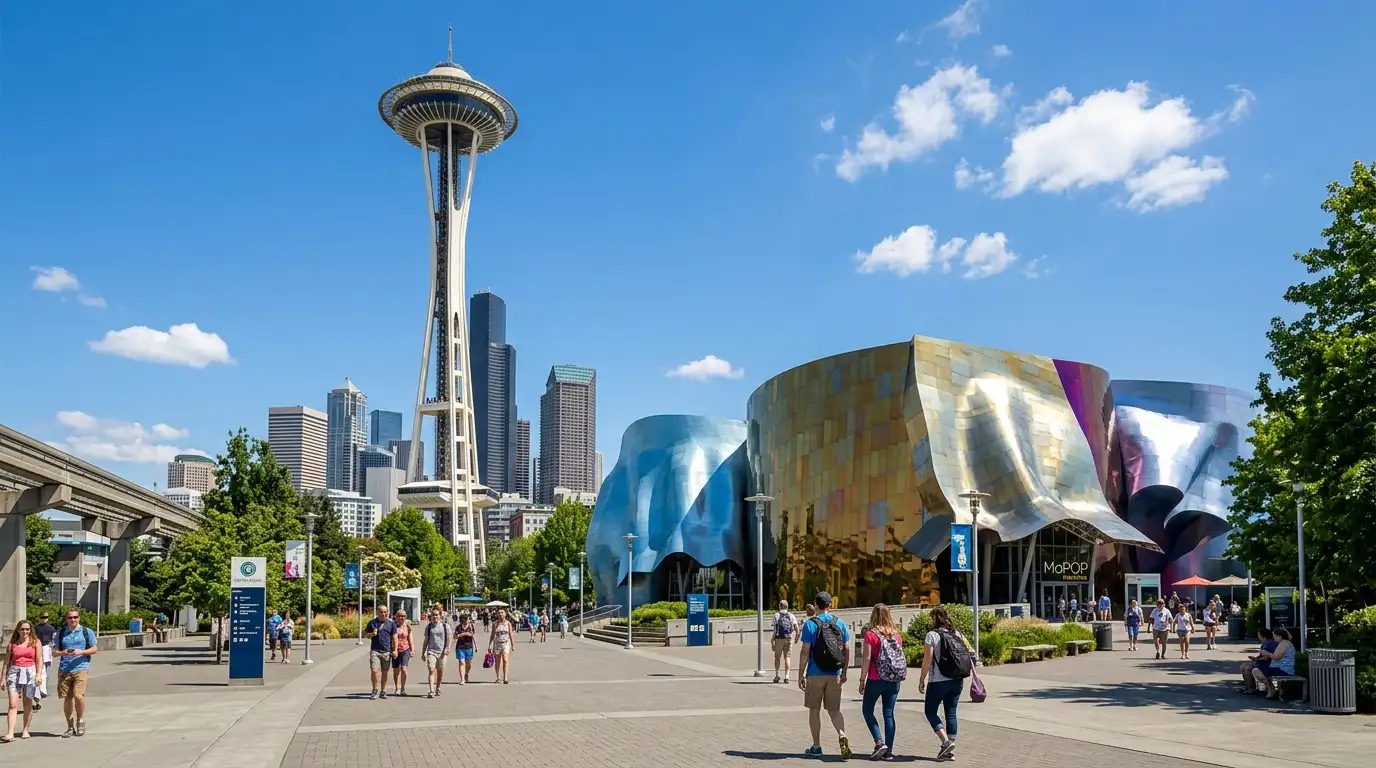
Seattle pairs an unmistakable skyline with easy access to mountains and water, and a solid seattle tourist guide should get you from the Space Needle to Pike Place Market without wasting a single rainy afternoon. Most first-time visitors show up worried about two things: whether the weather will ruin their trip, and whether the city is too spread out to see much in a short stay. Neither worry holds up once you know the actual layout and timing.
This guide walks through the top tourist attractions in Seattle, the best time to visit, realistic costs, and how to get around without overplanning. Every detail here reflects how the city actually runs day to day, not just a list of landmarks copied from a map.
What Is Seattle Known For?
Seattle is known for the Space Needle, Pike Place Market, its deep coffee culture, and a setting that puts Mount Rainier and Puget Sound within easy reach. The Emerald City nickname comes from the thick evergreen forest surrounding the metro area, visible from nearly every high point downtown.
Beyond the postcard image, Seattle built its identity on a mix of industries. Aerospace, tech, and coffee all trace roots here, and that history shows up directly in the attractions worth visiting. The Museum of Flight covers the aerospace side in depth, while the original coffee shop crowds near Pike Place Market speak to the other legacy.
What Are the Top Tourist Attractions in Seattle?
The top tourist attractions in Seattle span the Space Needle, Pike Place Market, the Museum of Pop Culture, the Museum of Flight, Olympic Sculpture Park, and Chihuly Garden and Glass. Together they cover architecture, art, music history, and aviation in a compact downtown footprint.
Here’s how they break down by interest:
- Space Needle: The 605-foot observation tower with rotating glass floor and panoramic Puget Sound views
- Pike Place Market: A working farmers market since 1907, home to the famous fish-throwing fishmongers and the Gum Wall
- Museum of Pop Culture (MoPOP): Music, film, and gaming exhibits housed in a Frank Gehry-designed building next to the Space Needle
- Museum of Flight: One of the largest air and space museums in the world, with real retired aircraft you can walk through
- Olympic Sculpture Park: A free outdoor art park along the waterfront, open year-round with no admission fee
- Chihuly Garden and Glass: Blown glass art installations by Seattle-born artist Dale Chihuly, set right next to the Space Needle grounds
A common mistake first-timers make is assuming all of these sit within a five-minute walk of each other. The Space Needle, MoPOP, and Chihuly Garden and Glass cluster together at Seattle Center, but Pike Place Market and the Museum of Flight sit in entirely different parts of the city, so plan transit time between the two clusters.
Is Seattle Worth Visiting?
Yes. Seattle earns its reputation through a genuinely walkable downtown, distinctive neighborhoods, and quick access to nature that few US cities can match. Travelers consistently find that a few days here covers both urban sightseeing and outdoor scenery without needing a car for most of the trip.
What makes Seattle stand out isn’t just the landmark list. It’s the contrast between neighborhoods. Capitol Hill brings nightlife and independent shops, Fremont leans quirky with public art and a weekend market, and Ballard delivers a working waterfront feel near the locks. That variety gives Seattle staying power beyond a single checklist day.
How Many Days Do You Need in Seattle?
Two to three days covers the core attractions comfortably, including Pike Place Market, the Space Needle, MoPOP, and a neighborhood or two. Four or more days opens room for a day trip to Woodinville Wine Country or Mount Rainier, plus a slower pace through Capitol Hill or Fremont.
A tight one-day visit is possible if you’re just passing through, but it means skipping the neighborhoods entirely and sticking to the Seattle Center cluster and Pike Place Market. Most visitors say three days feels like the right balance between seeing the highlights and not rushing every stop.
How Do You Get From Seattle Airport to Downtown?
The Link light rail runs directly from Sea-Tac Airport to downtown Seattle in roughly 35 to 40 minutes, for a flat fare typically under $4. This beats a taxi or rideshare during weekday traffic, when the same trip by car can stretch past an hour.
The station sits inside the airport terminal itself, so there’s no shuttle bus involved, just a short walk from baggage claim. Trains run frequently through most of the day, making this the most predictable way to reach downtown hotels without worrying about surge pricing or traffic delays on I-5.
Is Seattle Expensive to Visit?
Seattle runs above the US city average for hotels, parking, and dining, and downtown parking garages alone can eat a noticeable chunk of a daily budget. Balancing that cost means leaning on Seattle’s genuinely strong lineup of free attractions.
Expect to pay around $200 to $350 per night for a mid-range downtown hotel during summer, with rates dropping in the rainier months. Parking garages downtown commonly run $25 to $45 for a full day, which makes public transit or walking the smarter choice for most itineraries.
The upside is a solid list of free things to do:
- Pike Place Market entry and browsing costs nothing
- Olympic Sculpture Park has no admission fee
- Discovery Park, Seattle’s largest park, is free to explore on foot
- Volunteer Park and its conservatory grounds are free outside special exhibits
- Ballard Locks are free to watch boats pass through
[Cost Table]
| Attraction | Typical Admission (2026) |
| Space Needle | $35 to $40 |
| Museum of Flight | $26 to $30 |
| MoPOP | $32 to $36 |
| Chihuly Garden and Glass | $32 to $35 |
| Seattle CityPASS (bundled) | Roughly $120 to $130 |
Is the Seattle CityPASS Worth It?
The Seattle CityPASS pays off once your itinerary includes three or more of its bundled attractions, since the combined rate runs noticeably below buying each ticket separately. It typically bundles the Space Needle, an aquarium visit, and a choice of two more sites from a rotating list.
If your plan only includes the Space Needle and one museum, buying tickets individually might come out close to the same price once you account for the pass’s fixed structure. Run the math against your specific itinerary before committing, since the value shifts depending on which attractions you actually plan to enter.
Best Time to Visit Seattle to Avoid Rain
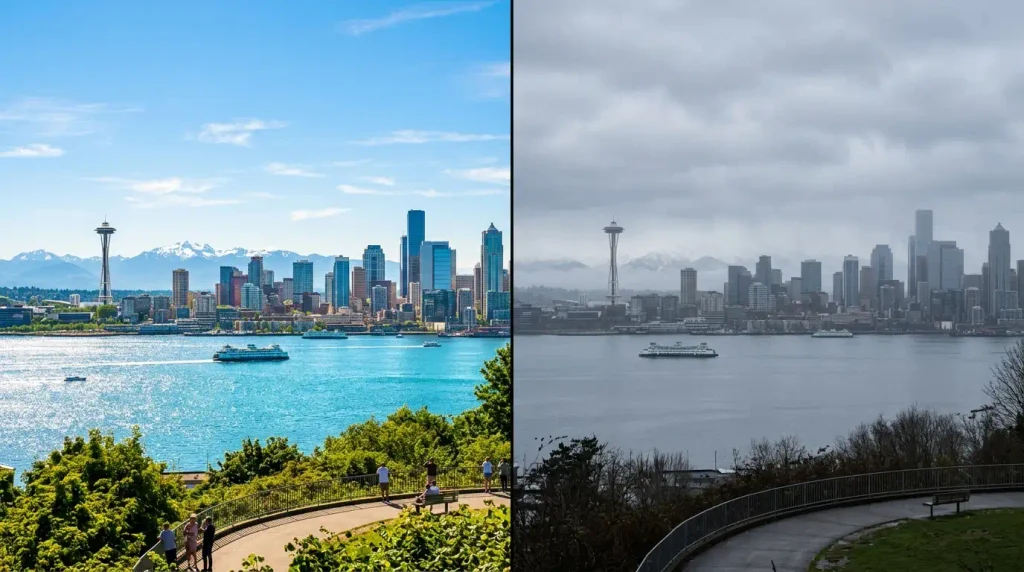
Late June through September marks Seattle’s driest, sunniest stretch, with July and August typically bringing the least rainfall and the most comfortable temperatures for walking tours. November through February is the wettest period, with gray skies and steady drizzle common through the winter months.
Locals recommend late spring, particularly May, as a quieter alternative to peak summer crowds while still avoiding the heaviest rain. September carries a similar appeal, with warm days, thinner crowds than July or August, and prices that start easing compared to peak season.
A common mistake visitors make is assuming rain gear means a big umbrella. Seattle’s rain tends to fall as light, steady drizzle rather than downpours, and locals mostly rely on a hooded rain jacket instead, since wind off Puget Sound makes umbrellas impractical on many days.
What to Do in Seattle in One Day?
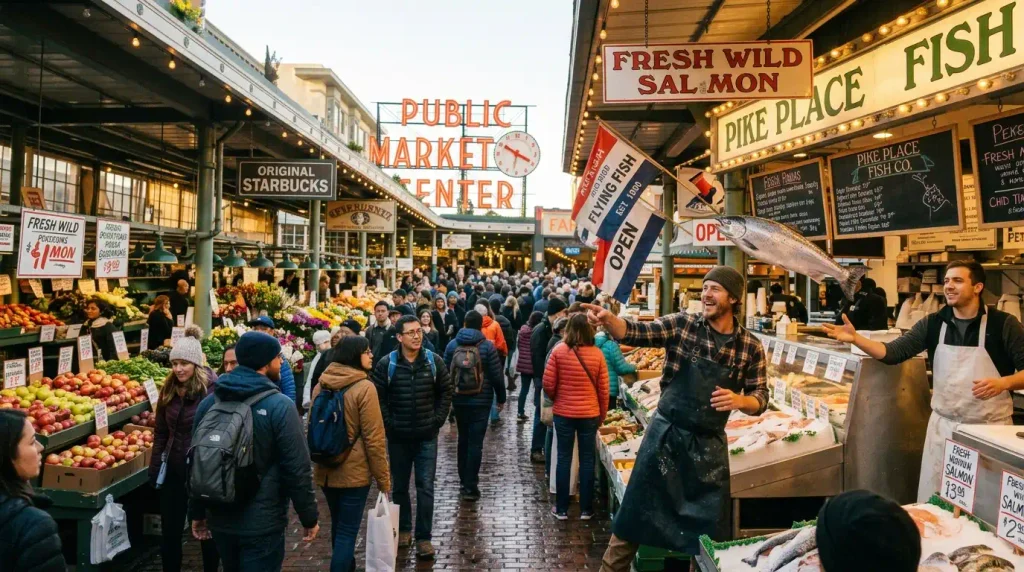
A single day works best starting at Pike Place Market in the morning before the crowds peak, then moving to the Space Needle and MoPOP at midday, followed by Olympic Sculpture Park or the waterfront in the afternoon. This route keeps travel time manageable since the two clusters sit roughly a 20 to 25 minute walk or a short bus ride apart.
Arriving at Pike Place Market by 9am avoids the thickest crowds around the fish-throwing display and Gum Wall, which get considerably busier by late morning. Save Seattle Center for after lunch, since the Space Needle line typically shortens in the early afternoon compared to opening hour.
What Are the Best Neighborhoods to Stay in Seattle?
Downtown Seattle and Belltown suit first-time visitors who want walking access to the Space Needle, Pike Place Market, and the waterfront without relying heavily on transit. Capitol Hill and Fremont appeal more to travelers prioritizing local restaurants, nightlife, and a neighborhood feel over landmark proximity.
Pioneer Square sits close to the ferry terminals and stadiums, convenient for sports fans, though it’s worth knowing this area can feel quieter and less polished after dark compared to Belltown or Capitol Hill. The International District, just east of Pioneer Square, offers some of the city’s best and most affordable food, making it worth a dedicated visit even if you’re not staying there.
What Are the Best Day Trips From Seattle?
Woodinville Wine Country sits under an hour from downtown and packs dozens of tasting rooms into a compact area, ideal for a half-day or full-day trip without an overnight stay. Mount Rainier requires a full day given the drive time, but rewards visitors with alpine scenery that contrasts sharply with the city skyline.
Both trips work better with a rental car, since neither destination has strong direct public transit from downtown Seattle. If a car isn’t part of your plan, several tour operators run scheduled day trips to Mount Rainier that handle the driving.
Conclusion
A solid seattle tourist guide comes down to timing your visit for the driest months, using the light rail instead of fighting downtown traffic, and mixing paid landmarks with the city’s genuinely strong free attractions. Whether you have one day or five, anchoring your plan around Pike Place Market, the Space Needle cluster, and one nearby neighborhood gives you a realistic, well-paced trip. Book major attraction tickets ahead for summer visits, pack a hooded rain jacket over an umbrella, and leave room in the schedule for at least one day trip if your stay runs past three days.
FAQs
What is Seattle known for?
The Space Needle, Pike Place Market, coffee culture, and proximity to Mount Rainier and Puget Sound.
Is Seattle worth visiting?
Yes, its walkable downtown, distinct neighborhoods, and nearby nature make it a strong multi-day destination.
How many days do you need in Seattle?
Two to three days covers the main attractions, four or more allows for a day trip.
What are the top tourist attractions in Seattle?
The Space Needle, Pike Place Market, MoPOP, Museum of Flight, Olympic Sculpture Park, and Chihuly Garden and Glass.
Best time to visit Seattle to avoid rain?
Late June through September, with July and August as the driest months.
How do you get from Seattle Airport to downtown?
The Link light rail, roughly 35 to 40 minutes for a low flat fare.
Is Seattle expensive to visit?
Yes, above average for US cities, though free attractions like Pike Place Market and Olympic Sculpture Park help offset costs.
What to do in Seattle in one day?
Pike Place Market in the morning, Space Needle and MoPOP at midday, waterfront or Olympic Sculpture Park in the afternoon.
Is the Seattle CityPASS worth it?
Worth it once your itinerary covers three or more bundled attractions.
Best neighborhoods to stay in Seattle?
Downtown and Belltown for walkability, Capitol Hill and Fremont for local flavor.


